Rattled by Trump, US allies eye Japan’s biggest arms opening since WWII受特朗普政策影响,美国盟友正考虑自二战以来对日本进行最大规模的武器出口。
Japan’s imminent easing of arms export rules has sparked strong interest from Warsaw to Manila.
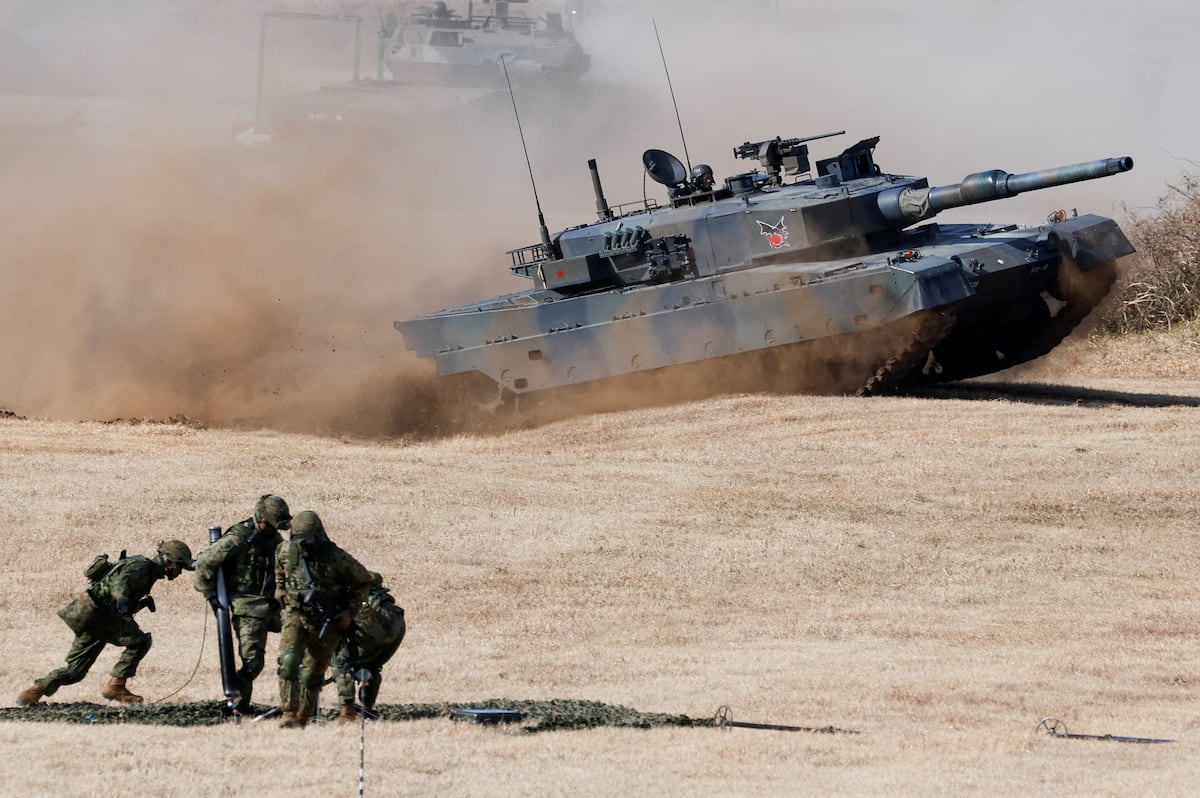
Japan’s imminent easing of arms export rules has sparked strong interest from Warsaw to Manila, Reuters reporting found, as President Donald Trump wavers on security commitments to allies and the wars in Iran and Ukraine strain U.S. weapons supplies.
Prime Minister Sanae Takaichi’s ruling party approved the changes this week as she tries to invigorate the pacifist country’s military industrial base . Her government will formally adopt the new rules as soon as this month, three Japanese government officials told Reuters.
Despite largely isolating itself from global arms markets since World War II, Japan spends enough on its own military — $60 billion this year — to sustain a sizable defense industry capable of manufacturing advanced systems like submarines and fighter jets.
Among the potential new customers are the Polish military and the Philippine navy, which are undergoing modernization amid regional security challenges, according to Reuters interviews with Japanese officials and foreign diplomats in Tokyo. Defense contractors Toshiba and Mitsubishi Electric are hiring staff and adding capacity to capitalize on demand, their executives said, providing previously unreported details.
One of the first deals Takaichi’s government will likely approve are exports of used frigates to the Philippines, which is locked in maritime confrontation with Beijing in the South China Sea, according to two of the Japanese officials. Reuters is the first to report the timeframe of the likely sale, which may be followed by missile defense systems, the officials said.
Warsaw and Tokyo can help plug gaps in each other’s arsenals, cooperating in areas like anti-drone and electronic warfare systems, said Mariusz Boguszewski, deputy chief of mission at Poland’s embassy in Japan.
“There are some bottlenecks that we can overcome having Japan on board,” he added, without providing details of specific deals. Poland’s WB Group, one of Europe’s largest private defense contractors, last year signed a tentative drone deal with Japanese aircraft maker ShinMaywa.
Three other European diplomats said Japan’s easing provided a chance to lessen their heavy dependence on U.S. weapons production, which is strained by conflicts. Trump’s unpredictability, such as his threats to leave the NATO security alliance and invade Greenland, have also heightened the push to diversify, according to the diplomats, who requested anonymity to discuss sensitive matters.
“Offers are coming from everywhere,” said Masahiko Arai, senior vice president at Mitsubishi Electric’s defense unit, which has been adding staff in London and Singapore to facilitate defense exports.
Takaichi’s office declined to answer specific questions for this story, instead referring Reuters to a February 20 speech where she said she was reviewing the controls to bolster Japan’s defense production and strengthen capabilities of allies.
Tokyo’s export overhaul has previously been encouraged by successive U.S. administrations, including Trump’s, eager for allies to contribute more to collective defense efforts.
The Global Combat Air Programme booth at the DSEI Japan 2025 exhibition, May 21, 2025. (Stanislav Kogiku/SOPA Images/LightRocket via Getty Images)
White House spokeswoman Anna Kelly did not respond to questions from Reuters about the changes to Japanese policy but said that the two nations were closer than ever under Trump and Takaichi.
China’s foreign ministry did not respond to questions about Japanese frigates potentially being sent to the Philippines. Ministry spokeswoman Mao Ning told reporters in April that Beijing was concerned about changes in Tokyo’s arms export policy and that it should “act prudently in military and security areas.”
The Philippines defense ministry declined to comment.
Japan’s first steps to relax the rules began more than a decade ago when Takaichi’s mentor, the late premier Shinzo Abe, eased a near-blanket ban on exports to encourage joint arms development with allies that would help counter China’s growing military might.
The push largely stalled, however, as many restrictions — including on lethal equipment — remained. Companies continued to shy away from overseas defense sales.
Buoyed by a bumper election win and shorn of the longtime coalition partner that had opposed more radical change, Takaichi hopes the latest easing will nudge arms makers to add the production capacity Japan needs for a major military buildup.
Some Japanese defense firms say they are ready to pivot.
Air defense systems builder Toshiba told Reuters it plans to hire about 500 people over the next three years and is constructing new testing and manufacturing facilities. It has also established a new department to handle defense exports.
“Reputational risk is not what it used to be,” said Kenji Kobayashi, vice president in Toshiba’s defense division.
Some big Japanese brands that have sidelines in defense equipment and also make consumer goods have expressed concerns that arms sales will put off their broader range of customers.
“Rather than worrying about that, we focus on fulfilling our role and growing the business,” Kobayashi said.
A recruitment listing reviewed by Reuters from Mitsubishi Electric, whose products include fridges and missiles, shows the firm is hiring for an overseas sales role covering fighter aircraft and other military exports.
Demand for finished systems is strongest in Asia, while Europe, Australia and the United States offer markets for components and co-development of new products, said Arai, the Mitsubishi Electric defense executive.
He expects overall sales at his unit, including domestic and international, to increase by 50% to 600 billion yen ($3.8 billion) by 2031.
There remains a gap between the political messaging and the policies of some companies, however, said Latvia’s envoy to Japan, Zigmars Zilgalvis.
He gave the example of carmaker Toyota, whose subsidiary turned down an attempted purchase of engines and related parts by Latvian firm VR Cars for a military utility vehicle in 2023.
The Latvian mission had tried to help broker the failed sale, Zilgalvis said.
Toyota Customizing & Development said in response to Reuters questions that it could not accommodate the request for military vehicles “based on our business scope and policy.” It declined to comment on the upcoming revisions to Japan’s arms export policy.
VR Cars said it respected the decision.
While Tokyo is expected to maintain strict controls on sending arms to conflict zones, even Ukraine has sensed an opportunity.
Kyiv’s chamber of commerce in Tokyo will soon launch a new industry group of Ukrainian and Japanese drone firms to spur development of new technologies, timed to coincide with the rule changes, its head Kateryna Yavorska exclusively told Reuters.
The U.S. has long dominated global military supply chains. It accounted for 95% of Japan’s defense imports, 85% of Australian and British purchases and 77% of Saudi Arabian buys between 2021-2025, according to a March report by the Stockholm International Peace Research Institute (SIPRI) think-tank.
But Washington’s foreign military sales program, often blamed for late deliveries and rising costs, and its tight control over defense technologies has long been a source of frustration, officials and analysts said.
One objective of Japan’s rule changes is to build defense supply chains in Asia that do not rely on the United States, said a ruling party official involved in drafting security policy.
Neighboring South Korea offers something of a blueprint: It has become the largest defense supplier to Poland and the Philippines after steady growth over the last five years, SIPRI data shows.
But the potential for Japan, the world’s fourth largest economy, is greater.
Even with the curbs, Japan’s arms industry is on a par with South Korea, Germany, Italy and Israel, and nearly twice the size of India’s, according to SIPRI’s analysis of leading defense contractor revenues in 2024. The U.S. industry, however, is 25 times bigger.
“Japan has been kind of in the timeout box because of World War Two, frankly. But they were inevitably going to swing closer towards the centre of global politics,” said Andrew Koch, founder of Nexus Pacific, a Tokyo-based defense-industry advisory.
路透社报道发现,日本即将放宽武器出口规则,引发了从华沙到马尼拉的强烈关注。与此同时,美国总统唐纳德·特朗普在对盟友的安全承诺上摇摆不定,而伊朗和乌克兰的战争也使美国的武器供应捉襟见肘。
日本首相高市早苗所在的执政党本周批准了这些改革,她试图以此振兴这个爱好和平的国家的军工产业基础。三位日本政府官员告诉路透社,她的政府最早将于本月正式实施这些新规。
尽管自二战以来日本在很大程度上与全球武器市场隔绝,但其军费开支(今年为 600 亿美元)足以维持一个规模庞大的国防工业,能够制造潜艇和战斗机等先进系统。
据路透社在东京采访日本官员和外国外交官后透露,潜在新客户包括波兰军方和菲律宾海军,这两家军方正因地区安全挑战而进行现代化改造。东芝和三菱电机的高管表示,这两家国防承包商正在招聘员工并扩大产能,以满足市场需求,并提供了此前未公开的细节。
据两位日本官员透露,高市政府很可能批准的首批交易之一是向菲律宾出口二手护卫舰。菲律宾目前正与北京在南海陷入海上对峙。路透社率先报道了这笔可能的交易时间表,官员们表示,随后可能还会出售导弹防御系统。
波兰驻日本大使馆副馆长马里乌什·博古谢夫斯基表示,华沙和东京可以互相弥补彼此武器库中的不足,在反无人机和电子战系统等领域开展合作。
他补充说:“如果日本参与进来,我们可以克服一些瓶颈问题。”但他没有透露具体交易的细节。波兰WB集团是欧洲最大的私营国防承包商之一,去年与日本飞机制造商新明和签署了一项无人机初步交易协议。
另三位欧洲外交官表示,日本的宽松政策为其减轻对美国武器生产的严重依赖提供了契机,而美国武器生产正因冲突而承受着巨大压力。这些外交官还表示,特朗普的反复无常,例如他威胁退出北约和入侵格陵兰岛,也加剧了欧洲寻求武器多元化的步伐。由于讨论的是敏感问题,这些外交官要求匿名。
“来自四面八方的邀约纷至沓来,”三菱电机防务部门高级副总裁新井正彦表示。该部门一直在伦敦和新加坡增派人手,以促进国防出口。
高市的办公室拒绝回答有关此报道的具体问题,而是让路透社参考她 2 月 20 日的讲话,她在讲话中表示,她正在审查相关控制措施,以加强日本的国防生产并增强盟友的能力。
东京的出口改革此前一直受到包括特朗普政府在内的历届美国政府的鼓励,这些政府渴望盟友为集体防御努力做出更多贡献。
2025年5月21日,日本防务展(DSEI Japan 2025)全球作战航空计划展位。(图片来源:Stanislav Kogiku/SOPA Images/LightRocket via Getty Images)
白宫发言人安娜·凯利没有回应路透社关于日本政策变化的提问,但她表示,在特朗普和高市亮司的领导下,两国关系比以往任何时候都更加紧密。
中国外交部没有回应有关日本护卫舰可能被派往菲律宾的问题。外交部发言人毛宁4月份曾对记者表示,北京对东京武器出口政策的变化表示关切,并认为日本在军事和安全领域应该“谨慎行事”。
菲律宾国防部拒绝置评。
日本放松管制的第一步始于十多年前,当时高市的导师、已故首相安倍晋三放宽了几乎全面禁止武器出口的禁令,以鼓励与盟友联合开发武器,从而对抗中国日益增长的军事实力。
然而,由于诸多限制——包括对致命性装备的限制——依然存在,这一努力基本停滞不前。各公司继续回避海外国防销售。
在选举大获全胜,且摆脱了长期反对更激进变革的执政联盟伙伴之后,高市希望最新的宽松政策能够促使武器制造商增加日本大规模军事建设所需的产能。
一些日本国防企业表示,他们已做好转型准备。
防空系统制造商东芝告诉路透社,该公司计划在未来三年内招聘约500名员工,并正在建设新的测试和制造设施。该公司还成立了一个新的部门来负责国防出口业务。
“声誉风险已经不像以前那么大了,”东芝防务部门副总裁小林健二表示。
一些在国防装备领域有副业、同时也生产消费品的日本大型品牌表示担忧,认为军售会吓跑他们更广泛的客户群体。
“我们不会为此担忧,而是专注于履行我们的职责,发展业务,”小林说道。
路透社查阅的三菱电机(其产品包括冰箱和导弹)的招聘信息显示,该公司正在招聘海外销售人员,负责战斗机和其他军事出口业务。
三菱电机防务部门负责人荒井表示,亚洲对成品系统的需求最为强劲,而欧洲、澳大利亚和美国则为零部件和新产品的合作开发提供了市场。
他预计到 2031 年,他所在部门的整体销售额(包括国内和国际销售额)将增长 50%,达到 6000 亿日元(38 亿美元)。
拉脱维亚驻日本大使齐格马尔斯·齐尔加尔维斯表示,一些公司的政治宣传和政策之间仍然存在差距。
他以汽车制造商丰田为例,丰田的子公司在 2023 年拒绝了拉脱维亚公司 VR Cars 为军用多用途车购买发动机及相关零部件的请求。
齐尔加尔维斯说,拉脱维亚代表团曾试图帮助促成这笔失败的交易。
丰田汽车改装与开发公司在回复路透社的提问时表示,根据公司业务范围和政策,无法满足军用车辆的定制需求。该公司拒绝就日本即将进行的武器出口政策修订置评。
VR Cars表示尊重这一决定。
尽管预计东京将继续严格控制向冲突地区输送武器,但就连乌克兰也嗅到了机会。
基辅驻东京商会主席卡捷琳娜·亚沃斯卡独家向路透社透露,该商会即将成立一个新的乌克兰和日本无人机公司行业组织,以促进新技术的发展,此举旨在配合规则的改变。
长期以来,美国一直主导着全球军事供应链。根据斯德哥尔摩国际和平研究所(SIPRI)智库3月份发布的一份报告,2021年至2025年间,美国占日本国防进口的95%,澳大利亚和英国国防采购的85%,沙特阿拉伯国防采购的77%。
但官员和分析人士表示,华盛顿的对外军售计划经常被指责交付延迟和成本上升,而且对国防技术的严格控制长期以来一直是令人沮丧的根源。
一位参与制定安全政策的执政党官员表示,日本规则改革的目标之一是在亚洲建立不依赖美国的国防供应链。
邻国韩国提供了一些借鉴:斯德哥尔摩国际和平研究所的数据显示,经过过去五年的稳步增长,韩国已成为波兰和菲律宾最大的国防供应国。
但作为世界第四大经济体的日本,其潜力更大。
即使受到限制,根据斯德哥尔摩国际和平研究所(SIPRI)对2024年主要国防承包商收入的分析,日本的军工产业规模仍与韩国、德国、意大利和以色列相当,几乎是印度的两倍。然而,美国的军工产业规模是日本的25倍。
“坦白说,由于二战,日本一直处于停滞状态。但他们不可避免地会更加接近全球政治的中心,”总部位于东京的国防工业咨询公司Nexus Pacific的创始人安德鲁·科赫说道。