White House offers no hint of Iran war cost as it seeks military funding surge白宫在寻求大幅增加军费开支的同时,并未透露伊朗战争的成本。
"I don't have a ballpark," White House budget director Russell Vought told lawmakers Wednesday about the cost of the Iran war.
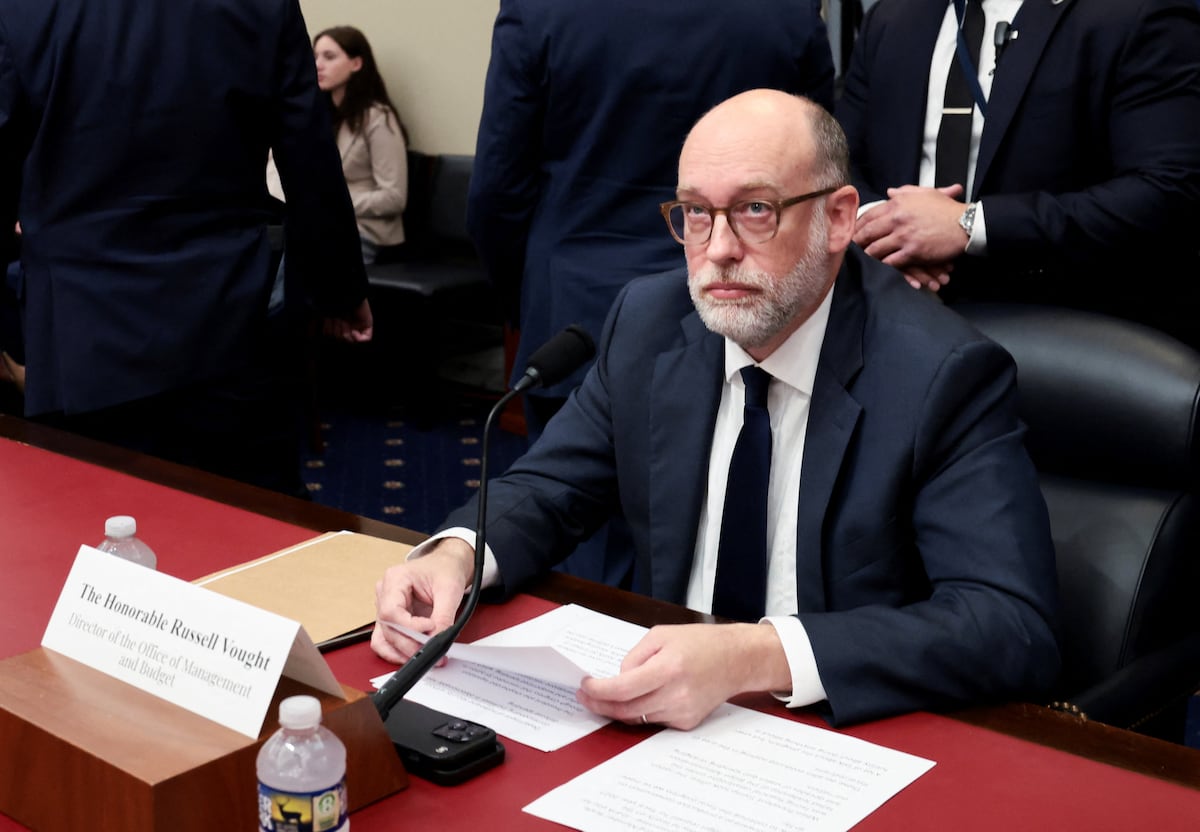
White House budget director Russell Vought said on Wednesday he could not estimate the cost of the Iran war, as he defended President Donald Trump’s request for a massive $1.5 trillion annual military budget against bipartisan criticism from U.S. lawmakers who cited the Pentagon’s historic lack of financial accountability .
“We’re not ready to come to you with a request. We’re still working on it. We’re working through to figure out what’s needed,” Vought told a hearing of the House of Representatives Budget Committee. “I don’t have a ballpark.”
The cost of the war with Iran , which Trump began alongside Israel on February 28, has remained an open question on Capitol Hill. An initial $200 billion request for additional funding for the war met with stiff opposition in Congress last month.
Vought appeared before the panel to discuss Trump’s proposed budget for fiscal year 2027, with its $500 billion increase in military spending and 10% reduction for non-defense programs.
The request is intended to reflect Republican priorities heading into the November midterm elections, in which Trump’s Republicans hope to retain control over the House of Representatives and the Senate but face growing public concern about the cost of living, energy prices and the U.S.-Israeli war with Iran.
‘Never passed an audit’
Democrats took issue with Vought’s assertions that healthcare, education and low-income energy assistance programs were marred by fraud.
“I’m so glad you asked about fraud, because you are coming back to ask for a $1.5 trillion budget for the Department of Defense,” Democratic Representative Pramila Jayapal of Washington state told the budget director. “The Department of Defense is the only federal agency that has never passed an audit ... But you’re not going after any of that.”
Vought said the administration is pursuing “inefficiencies” at the Pentagon.
“I don’t think you’re doing enough,” said Republican Representative Glenn Grothman, who called for a Pentagon audit to be completed before Congress votes on defense spending.
“There is so much arrogance in that agency,” added Grothman, of Wisconsin. “They just say we don’t have to do it on audit. We’re so damn important. We don’t care what Congress thinks.”
Vought promoted Trump’s budget proposal for the fiscal year beginning October 1 as aimed at reducing spending. He promoted Trump’s 2025 tax-cut-and-spending package known as the “One Big Beautiful Bill Act” as an initiative that achieved $2 trillion in mandatory savings through cuts to Medicaid health coverage and food assistance to low-income families.
That bill, which extended 2017 tax cuts, will add $4.7 trillion to U.S. deficits over the next decade, while reduced immigration will add another $500 billion, according to the nonpartisan Congressional Budget Office.
Representative Brendan Boyle of Pennsylvania, the budget panel’s top Democrat, pointed to forecasts saying the legislation’s healthcare cuts would mean the loss of health coverage for more than 15 million people. Vought said they were able-bodied adults, people in the country illegally or ineligible for benefits.
“You’re going to sit here with a straight face and say they’re all illegals? They were all defrauding the system? That’s actually your position?” Boyle asked.
“Yes,” Vought replied.
Democratic Representative Scott Peters of California pointed out to Vought that the watchdog Government Accountability Office has found the administration illegally withheld billions of dollars allocated for National Institutes of Health grants, public schools and Head Start early education programs nationwide.
“Do you dispute GAO’s findings?” Peters asked.
“Yes. GAO is typically wrong. They’re very partisan,” Vought replied.
GAO disputed that claim.
“That’s not accurate,” spokesperson Sarah Kaczmarek said in an email. “GAO is an independent, nonpartisan agency that Congress has long relied on for fact-based analysis of federal spending and compliance with the law.”
To become law, Trump’s proposed budget needs approval from Congress at a time when Republicans are trying to overcome Democratic opposition to funding for Trump’s immigration crackdown, just months after the longest government shutdown in U.S. history. Democrats have already declared the budget proposal dead on arrival, leaving government funding to closed-door negotiations between appropriators.
白宫预算主任拉塞尔·沃特周三表示,他无法估算伊朗战争的成本。此前,他为唐纳德·特朗普总统提出的每年高达 1.5 万亿美元的巨额军费预算请求辩护,该请求遭到美国两党议员的批评,他们指出五角大楼长期以来缺乏财务问责制。
“我们还没准备好向你们提出请求。我们还在研究。我们正在努力弄清楚需要什么,”沃特在众议院预算委员会的听证会上说。“我没有大概的估算。”
特朗普于2月28日与以色列联手发动了对伊朗的战争,这场战争的成本一直是国会山悬而未决的问题。上个月,国会最初提出的2000亿美元追加战争拨款请求遭到了强烈反对。
沃特出席了小组会议,讨论了特朗普提出的 2027 财年预算,其中包括增加 5000 亿美元的军费开支,以及削减 10% 的非国防项目开支。
这项请求旨在反映共和党在11月中期选举中的优先事项,特朗普的共和党人希望保住对众议院和参议院的控制权,但他们面临着公众对生活成本、能源价格以及美以对伊战争日益增长的担忧。
“从未通过审计”
民主党人对沃特关于医疗保健、教育和低收入能源援助计划存在欺诈行为的说法提出异议。
“我很高兴你问到了欺诈问题,因为你接下来还要要求国防部1.5万亿美元的预算,”华盛顿州民主党众议员普拉米拉·贾亚帕尔对预算主管说。“国防部是唯一一个从未通过审计的联邦机构……但你却对此视而不见。”
沃特表示,本届政府正在追查五角大楼的“效率低下”问题。
“我认为你们做得还不够,”共和党众议员格伦·格罗斯曼说道,他呼吁在国会就国防开支进行投票之前完成五角大楼的审计。
“那个机构真是太傲慢了,”来自威斯康星州的格罗斯曼补充道,“他们就说我们不用接受审计。我们自以为是,根本不在乎国会怎么想。”
沃特大力宣传特朗普从10月1日开始的财政年度预算提案,称其旨在削减开支。他还宣传特朗普2025年的减税和支出方案,即所谓的“一项宏伟法案”,称其通过削减医疗补助和对低收入家庭的食品援助,实现了2万亿美元的强制性节省。
据无党派的国会预算办公室称,该法案延长了 2017 年的减税措施,将在未来十年内使美国赤字增加 4.7 万亿美元,而减少移民将再增加 5000 亿美元。
宾夕法尼亚州众议员、预算委员会首席民主党成员布伦丹·博伊尔指出,有预测称,该法案削减医疗保健支出将导致超过1500万人失去医疗保险。沃特表示,这些人都是身体健全的成年人,或是非法移民,或是不符合领取福利资格的人。
“你打算面不改色地坐在这里说他们都是非法移民?他们都在欺骗社会?这真的是你的立场吗?”博伊尔问道。
“是的,”沃特回答道。
加州民主党众议员斯科特·彼得斯向沃特指出,监督机构政府问责局发现,本届政府非法扣留了数十亿美元的拨款,这些资金原本将用于国家卫生研究院的拨款、公立学校和全国范围内的启蒙教育计划。
“你是否对美国政府问责局的调查结果有异议?”彼得斯问道。
“是的。美国政府问责局(GAO)通常都会出错。他们带有很强的党派偏见,”沃特回答道。
美国政府问责局对这一说法提出异议。
发言人萨拉·卡兹马雷克在电子邮件中表示:“这种说法不准确。美国政府问责局是一个独立的、无党派的机构,国会长期以来一直依赖该机构对联邦支出和法律遵守情况进行基于事实的分析。”
特朗普提出的预算案要想成为法律,需要国会批准。而此时,共和党人正试图克服民主党人反对为特朗普的移民政策提供资金的阻力,此前几个月,美国经历了历史上持续时间最长的政府停摆。民主党人已经宣布该预算提案胎死腹中,政府拨款问题只能交由拨款委员会成员进行闭门谈判。