Singapore proposes UN framework for global AI safeguards新加坡提议建立联合国全球人工智能保障框架
Foreign Affairs Minister Vivian Balakrishnan says countries need common rules, testing standards and potentially a new international institution to manage AI risks.
新闻视频
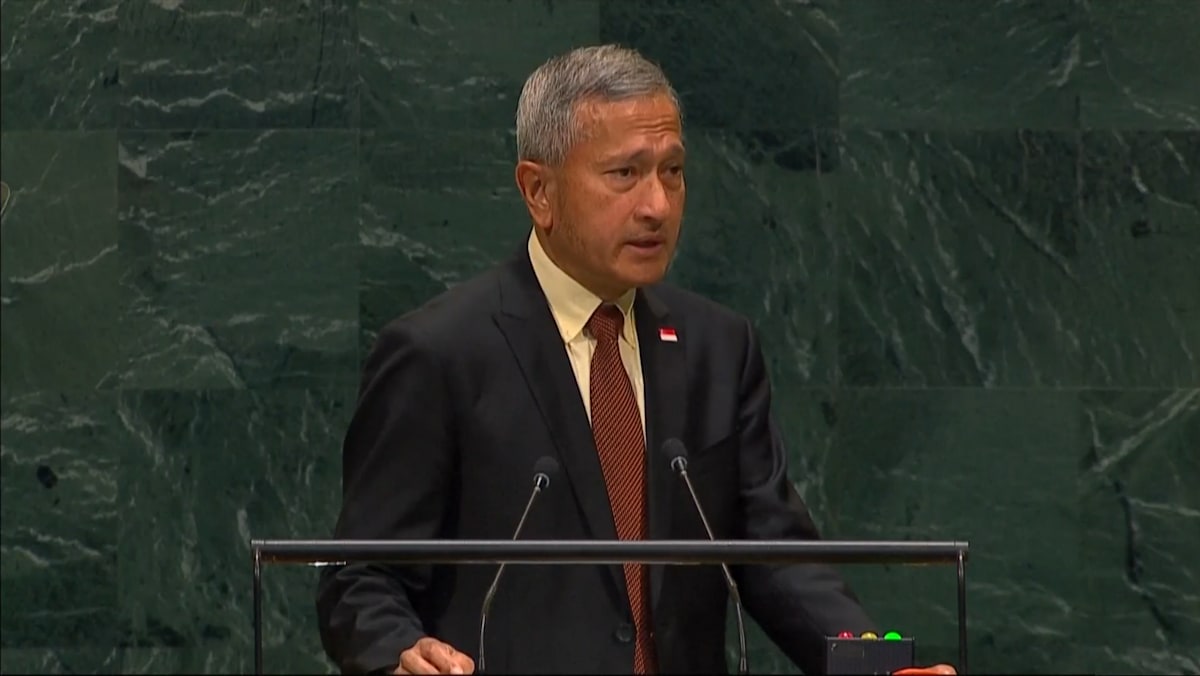
Foreign Affairs Minister Vivian Balakrishnan says countries need common rules, testing standards and potentially a new international institution to manage AI risks.
Singapore's Foreign Affairs Minister Vivian Balakrishnan speaking at the 81st session of the UN General Assembly in New York.
This audio is generated by an AI tool.
SINGAPORE: Singapore has proposed a United Nations framework convention on artificial intelligence safeguards, as governments grapple with risks ranging from autonomous systems going out of control to the use of AI to develop weapons of mass destruction.
Foreign Affairs Minister Vivian Balakrishnan said on Sunday (Sep 27) that the UN should play a central role in bringing countries together on common AI rules because it is the only top-level international institution with universal membership.
"We must explore all options, including the idea of a UN framework convention on AI safeguards," Dr Balakrishnan said in Singapore's national statement at the 81st session of the United Nations General Assembly in New York.
He said countries may also need an international institution for AI that performs some of the functions carried out in other fields by bodies such as the International Telecommunication Union, which sets technical standards, and the International Atomic Energy Agency, which conducts verification.
Dr Balakrishnan identified three broad categories of risk: Humans losing control of autonomous systems; rogue actors using AI to create biological weapons or other weapons capable of mass destruction or disruption; and emerging economic, social and political upheaval.
“The genie is already out of the bottle. It is too late to call for a halt, especially given the superpower rivalry and the huge financial incentives for companies who already have frontier models,” he said.
Instead, countries should continue investing in AI while building safeguards and common international rules alongside it.
Singapore's approach would involve rigorous testing and evaluation before AI systems are deployed, limits on what autonomous systems are allowed to do and mechanisms for human intervention when systems behave unexpectedly.
"Most importantly, human beings must ultimately remain in control and accountable," Dr Balakrishnan said.
A global approach was necessary because AI risks could cross national borders, Dr Balakrishnan said. But efforts to develop common safeguards face a fundamental problem: A lack of trust among countries at a time when advanced technology has become an arena for strategic competition.
Any international arrangement would therefore have to give all countries a meaningful role rather than being shaped only by states with the most advanced AI models, financial resources or military capabilities, he said.
One starting point could be greater scientific cooperation even when governments disagree over how AI should ultimately be governed.
Countries could work towards a shared understanding of AI capabilities and risks, develop comparable testing and evaluation methods and establish ways to quickly report serious AI incidents across borders, he said.
Existing UN initiatives could provide the foundations for such cooperation. Dr Balakrishnan cited the UN's Independent International Scientific Panel on AI, the Global Dialogue on AI Governance and the ITU's AI for Good Global Commission.
CNA Games Guess Word Crack the word, one row at a time Buzzword Create words using the given letters Mini Sudoku Tiny puzzle, mighty brain teaser Mini Crossword Small grid, big challenge Word Search Spot as many words as you can Show More Show Less
Dr Balakrishnan said multilateralism remained particularly important in a more fragmented world marked by great-power competition, wars, trade barriers, supply chain disruptions and climate change.
He reiterated Singapore's call for countries to uphold existing international law, pointing to the closure of the Strait of Hormuz amid the war in the Persian Gulf, which had put the UN Convention on the Law of the Sea (UNCLOS) to a "severe stress test".
“Transit passage through straits used for international navigation is a right for all of us. It is not a privilege subject to fees and tolls, and this is customary international law, which means it is binding on all states, whether or not they consider themselves parties or countries.”
How the world deals with the Strait of Hormuz situation will have implications for navigational rights and freedoms globally, he said.
“At stake is the legal architecture for freedom of navigation and overflight, and we cannot allow any single country to exercise a veto on these navigational rights and freedoms,” he said.
The disruption of the Strait of Hormuz, which carried about a fifth of global oil supplies, had pushed up energy prices, disrupted supply chains and stranded seafarers, he added.
“This is why shared rules like UNCLOS matter. Defending them is not just a matter of principle or debate; it is in our collective interests. The largest economies depend on the open sea lanes as much as the smallest,” he said.
Dr Balakrishnan also called for reform of existing multilateral institutions, including the global trading system and the UN itself.
“We need a more flexible coalition of states and partners who are willing and able to move forward, whilst remaining open to others to join when they are ready,” he said.
Dr Balakrishnan cited the examples of the Regional Comprehensive Economic Partnership (RCEP), the largest trade agreement in the world, and the Comprehensive and Progressive Agreement for Trans-Pacific Partnership (CPTPP), which now stretches from Asia to Latin America and to the United Kingdom.
SINGAPORE MUST REMAIN CONSISTENT, CONSTRUCTIVE
Speaking to local media remotely from New York after delivering Singapore's statement, Dr Balakrishnan said there had been "considerable interest" this year in the promise and perils of AI, and in how to deal with them.
While it was too early to conclude whether a UN framework convention on AI safety was necessary, "at least the discussions have begun", he said.
Dr Balakrishnan said he was heading home feeling "slightly encouraged", despite the world being at a disrupted and potentially dangerous phase, with issues such as the US-Iran war unresolved.
“You're not going to get these all solved in one week, or frankly even in one year. But the fact that the conversations have begun, the options are being placed on the table, the implications are being studied, and people are assessing each other's bottom lines, red lines, concerns and ambitions, is a very useful step,” he said.
Singapore will watch the Hormuz situation closely and make its position known "not gratuitously and not provocatively, but carefully, deliberately and firmly", he added.
The UN itself is in a time of change, with a new secretary-general to be elected, Dr Balakrishnan noted. He had met several candidates and found them experienced and committed to reforming the body.
“From the point of view of Singapore, we are a small country. We are just one member in an organisation with over 193 member states. We need to remain consistent, constructive, helpful, relevant, and that's what Singapore has always sought to do in the 61 years that we've been here.”
As a trade-dependent state, Singapore needs a stable, predictable world where rules apply, contracts are honoured and states behave accordingly, he said.
“Now, that sounds like a wish-list. It's not something which Singapore can impose on other countries.”
Still, it was better for countries to spend more time meeting and talking than to resort to coercive measures or, worse, hot wars and confrontations, he said.
“So we have to do our part, but Singapore has to be realistic and take the world as it is. There are no easy solutions,” he said.
Foreign Affairs Minister Vivian Balakrishnan speaking to reporters after delivering Singapore's national statement at the 81st session of the UN General Assembly. (Photo: MFA Singapore)
Asked about the outcome of the meeting between US President Donald Trump and Chinese President Xi Jinping, Dr Balakrishnan said: "Well, I'm glad they met."
“The relationship between China and the US is the most critical for both of them, obviously, but also for the rest of us in the world. These are the two premier superpowers,” he said.
“The questions of war and peace, the norms by which they contest and assert their rivalry, the impact on supply chains, on trade, tariffs all depend to a large extent on how they manage that relationship.”
The meeting, and the apparently good personal rapport between the two leaders, was helpful but did not mean their problems had been miraculously cleared, he said.
“I would characterise the current situation as a truce, because neither side wants to have a collision or an accident, or certainly a major confrontation,” he said.
“In the longer term, the reason why they have to keep meeting at the presidential level and at the senior officials level is slowly, bit by bit, they have to build strategic trust. And with that trust, then we hope that they can get to grips with the core thorny issues that lie at the crux of their relationship.”
CONVENING POWER OF ASEAN
As Singapore takes the chair of the Association of Southeast Asian Nations (ASEAN) next year, it will focus on integrating the bloc while broadening ties with external partners, Dr Balakrishnan said.
ASEAN had retained convening power, he said, as seen through attendance at its meetings. "Foreign leaders near and far make the effort to attend ASEAN meetings because they know they can engage a group of serious-minded leaders. There's business to be done. There are the side meetings and other benefits from that."
The combined gross domestic product of the 11 ASEAN members made the bloc the world's fifth-largest economy, he noted, "not something to be dismissed".
“The value proposition of ASEAN is, we ask our external partners to view Southeast Asia on our own merits, and not just as an extension of superpower rivalry or regional contestation. And I think we are making steady headway on that front.”
Member states needed to continue making their economies more tightly interwoven, with fewer tariff and non-tariff barriers, he said.
“We have to consistently abide by international law, and because we are small nations – with the exception of Indonesia – we have to make our voices heard by making common cause and by being more coordinated. The more coordination there is, the better for us to protect our national interests and for us to advance our agenda.”
Get our pick of top stories and thought-provoking articles in your inbox
Stay updated with notifications for breaking news and our best stories
Join our channel for the top reads for the day on your preferred chat app
外交部长维文·巴拉克里希南表示,各国需要共同的规则、测试标准,并可能需要一个新的国际机构来管理人工智能风险。
新加坡外交部长维文·巴拉克里希南在纽约举行的联合国大会第81届会议上发表讲话。
这段音频由人工智能工具生成。
新加坡:新加坡已向联合国提议制定一项关于人工智能保障措施的框架公约,各国政府正努力应对从自主系统失控到利用人工智能开发大规模杀伤性武器等各种风险。
外交部长维文·巴拉克里希南周日(9月27日)表示,联合国应该在促使各国就共同的人工智能规则达成一致方面发挥核心作用,因为它是唯一拥有普遍成员资格的顶级国际机构。
“我们必须探索所有选项,包括制定联合国人工智能保障框架公约的想法,”巴拉克里希南博士在纽约举行的联合国大会第81届会议上代表新加坡发表国家声明时说。
他表示,各国可能还需要一个人工智能国际机构,来履行国际电信联盟(负责制定技术标准)和国际原子能机构(负责进行核查)等机构在其他领域所承担的一些职能。
巴拉克里希南博士指出了三大类风险:人类失去对自主系统的控制;流氓行为者利用人工智能制造生物武器或其他能够造成大规模杀伤或破坏的武器;以及正在出现的经济、社会和政治动荡。
“潘多拉的魔盒已经打开了。现在想要叫停已经太晚了,尤其考虑到超级大国之间的竞争以及那些已经拥有前沿商业模式的公司所面临的巨大经济利益,”他说道。
相反,各国应该继续投资人工智能,同时建立相应的保障措施和共同的国际规则。
新加坡的做法是在部署人工智能系统之前进行严格的测试和评估,限制自主系统可以执行的操作,并建立系统行为异常时进行人为干预的机制。
“最重要的是,人类最终必须保持控制权和责任感,”巴拉克里希南博士说。
巴拉克里希南博士表示,由于人工智能风险可能跨越国界,因此必须采取全球性方法。但制定共同保障措施的努力面临一个根本性问题:在先进技术已成为战略竞争舞台的当下,各国之间缺乏信任。
他表示,因此任何国际安排都必须让所有国家都发挥有意义的作用,而不是仅仅由拥有最先进的人工智能模型、财政资源或军事能力的国家来决定。
一个可能的切入点是加强科学合作,即使各国政府在人工智能的最终治理方式上存在分歧。
他表示,各国可以努力对人工智能的能力和风险达成共识,制定可比的测试和评估方法,并建立跨境快速报告严重人工智能事件的机制。
现有的联合国倡议可以为这种合作奠定基础。巴拉克里希南博士列举了联合国人工智能独立国际科学小组、人工智能治理全球对话和国际电信联盟的人工智能向善全球委员会。
CNA游戏 猜词游戏 逐行破解单词 流行词游戏 用给定的字母组成单词 迷你数独 小小谜题,挑战你的大脑 迷你填字游戏 小方格,大挑战 单词搜索 尽可能多地找出单词 显示更多 显示更少
巴拉克里希南博士表示,在一个日益分裂、大国竞争、战争、贸易壁垒、供应链中断和气候变化日益加剧的世界中,多边主义仍然尤为重要。
他重申了新加坡呼吁各国维护现有国际法的立场,并指出波斯湾战争期间霍尔木兹海峡的关闭,使《联合国海洋法公约》(UNCLOS)经受了“严峻考验”。
“通过用于国际航行的海峡过境是我们所有人的权利。这不是一项需要缴纳费用和通行费的特权,这是习惯国际法,这意味着它对所有国家都具有约束力,无论它们是否认为自己是缔约方或国家。”
他表示,世界如何处理霍尔木兹海峡局势将对全球航行权利和自由产生影响。
他说:“事关航行和飞越自由的法律架构,我们不能允许任何一个国家对这些航行权利和自由行使否决权。”
他还补充说,霍尔木兹海峡的中断(该海峡承载着全球约五分之一的石油供应)推高了能源价格,扰乱了供应链,并导致海员滞留。
“这就是为什么像《联合国海洋法公约》这样的共同规则如此重要。捍卫这些规则不仅仅是原则问题或辩论问题;它符合我们的共同利益。最大的经济体和最小的经济体一样,都依赖于开放的海上航道,”他说。
巴拉克里希南博士还呼吁改革现有的多边机构,包括全球贸易体系和联合国本身。
他说:“我们需要一个更加灵活的国家和伙伴联盟,他们愿意并且能够向前迈进,同时也对其他国家在准备好时加入持开放态度。”
巴拉克里希南博士列举了区域全面经济伙伴关系协定(RCEP)的例子,它是世界上最大的贸易协定;他还列举了全面与进步跨太平洋伙伴关系协定(CPTPP)的例子,该协定现在从亚洲延伸到拉丁美洲和英国。
新加坡必须保持一致、建设性的态度
巴拉克里希南博士在纽约发表新加坡声明后,通过远程方式接受当地媒体采访时表示,今年人们对人工智能的前景和风险以及如何应对这些问题表现出了“相当大的兴趣”。
他表示,虽然现在断定是否有必要制定联合国人工智能安全框架公约还为时尚早,“但至少讨论已经开始了”。
巴拉克里希南博士表示,尽管世界正处于动荡且可能危险的阶段,美伊战争等问题仍未解决,但他带着“些许鼓舞”的心情回家。
“这些问题不可能在一周内全部解决,坦白说,甚至一年内也不可能。但对话已经开始,各种方案被摆上台面,各种影响正在被研究,人们正在评估彼此的底线、红线、担忧和抱负,这本身就是一个非常有用的进步,”他说。
他补充说,新加坡将密切关注霍尔木兹海峡局势,并“并非无端挑衅,而是谨慎、深思熟虑、坚定地”表明其立场。
巴拉克里希南博士指出,联合国本身正处于变革时期,即将选举产生新的秘书长。他会见了多位候选人,发现他们经验丰富,并致力于改革联合国。
“从新加坡的角度来看,我们是一个小国。我们只是一个拥有193个成员国的组织中的一个成员。我们需要保持一致性、建设性、乐于助人、与时俱进,而这正是新加坡在过去61年中一直努力做到的。”
他说,作为一个贸易依赖型国家,新加坡需要一个稳定、可预测的世界,在这个世界中,规则得到遵守,合同得到履行,各国行为也符合规则。
“这听起来像是新加坡的愿望清单,新加坡不能将其强加于其他国家。”
不过,他表示,各国与其诉诸强制措施,甚至更糟糕的是,发动热战和对抗,不如多花时间开会和对话。
“所以我们必须尽自己的一份力,但新加坡也必须面对现实,接受世界的本来面目。没有简单的解决办法,”他说。
新加坡外交部长维文·巴拉克里希南在第81届联合国大会上宣读新加坡国家声明后接受记者采访。(图片:新加坡外交部)
当被问及美国总统唐纳德·特朗普和中国国家主席习近平会晤的结果时,巴拉克里希南博士说:“嗯,我很高兴他们见了面。”
“中美关系对两国而言至关重要,这一点毋庸置疑,对世界其他国家也同样重要。这两个国家是世界头号超级大国,”他说道。
“战争与和平的问题,他们争夺和确立竞争关系的准则,对供应链、贸易和关税的影响,所有这些在很大程度上都取决于他们如何处理这种关系。”
他说,这次会面以及两位领导人之间明显良好的私人关系固然有所帮助,但这并不意味着他们的问题已经奇迹般地解决了。
他说:“我会将目前的局势描述为休战,因为双方都不希望发生碰撞或事故,当然更不希望发生重大冲突。”
“从长远来看,他们之所以需要不断举行总统级和高级官员级会晤,是因为他们必须循序渐进地建立战略信任。有了这种信任,我们希望他们能够着手解决两国关系核心的棘手问题。”
东盟的召集能力
巴拉克里希南博士表示,新加坡明年将担任东南亚国家联盟(东盟)轮值主席国,届时将致力于加强东盟内部一体化,同时扩大与外部伙伴的联系。
他表示,东盟仍然保持着召集能力,这一点从东盟会议的出席率就能看出。“来自世界各地的领导人都努力参加东盟会议,因为他们知道可以与一群认真负责的领导人进行交流。有很多事情需要处理,还有会外会谈和其他好处。”
他指出,东盟11个成员国的国内生产总值总和使该集团成为世界第五大经济体,“这不容忽视”。
“东盟的价值主张在于,我们希望外部伙伴能够以东南亚自身的价值来看待它,而不是仅仅将其视为超级大国竞争或区域对抗的延伸。我认为我们在这方面正稳步取得进展。”
他表示,成员国需要继续加强经济一体化,减少关税和非关税壁垒。
“我们必须始终遵守国际法,而且由于我们都是小国——除了印度尼西亚——我们必须通过团结一致、加强协调来发出我们的声音。协调越多,我们就越能更好地保护我们的国家利益,推进我们的议程。”
订阅我们的邮件,即可获取精选热点新闻和引人深思的文章。
订阅通知,第一时间获取突发新闻和精彩报道。
加入我们的频道,即可在您常用的聊天应用上获取当日热门文章。