NKF sets up mock home at Sengkang centre to help patients adjust to home dialysisNKF在盛港中心设立模拟家庭环境,帮助患者适应居家透析。
NKF’s new Sengkang centre offers a home-like dialysis set-up to help patients overcome fears and adopt peritoneal dialysis confidently at home. Read more at straitstimes.com.
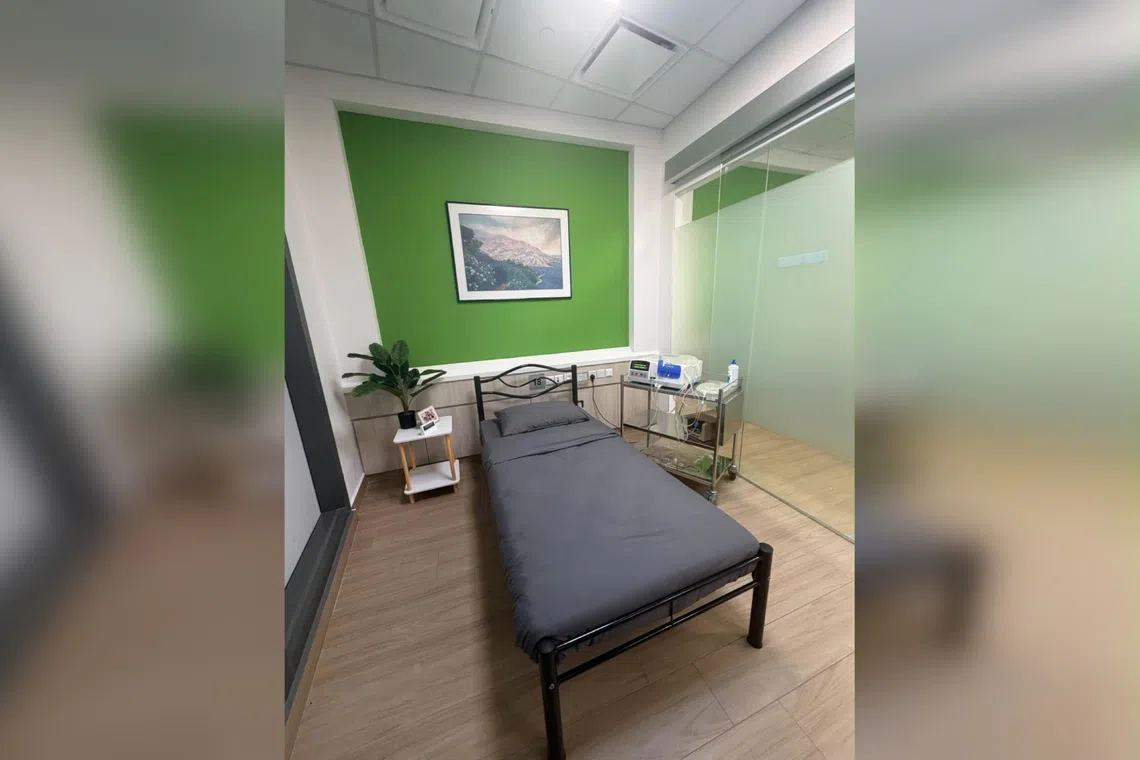
To boost the home dialysis rate, the National Kidney Foundation has introduced a PD Home Experience set-up at its Sengkang dialysis centre.
Published Sep 27, 2026, 11:00 AM
Updated Sep 27, 2026, 11:00 AM
NKF has opened a PD Home Experience set-up at its Sengkang centre to help kidney patients practise home peritoneal dialysis (PD) in a familiar environment and reduce fear of managing treatment alone.
The initiative supports rising chronic kidney disease patients by encouraging PD, which offers lifestyle independence and continuous blood cleansing, unlike haemodialysis at centres.
NKF works with hospitals to place PD nurses for training and home assessments, aiming to get 300 patients on PD in three years, with 70 starting within six months so far.
SINGAPORE – Twice a week, in between driving passengers, Huang Bingshen, 42, will park his private-hire vehicle, hang up a bag of dialysis solution in his car, and start his kidney failure treatment.
His peritoneal dialysis (PD) session lasts about 30 minutes, usually between 2pm and 4pm. The air-con in the car has to be turned off to maintain a still, clean environment.
The in-car session is one of three PD sessions that he undergoes each day. He does this when he has to attend a meeting outside or is too far from home. Most of the time, all three sessions are done at home.
PD continuously removes waste products and excess fluid from the blood, closely mimicking the constant functioning of healthy kidneys. It is done either during the day by using fluid bags or overnight using a small machine about the size of a small printer.
In contrast, haemodialysis is typically done at dialysis centres, where the patient is hooked up to a machine three times a week, with each session lasting several hours.
Huang Bingshen sometimes undergoes a peritoneal dialysis session in his private-hire car, in between ferrying passengers. PHOTO: COURTESY OF HUANG BINGSHEN
Huang Bingshen sometimes undergoes a peritoneal dialysis session in his private-hire car, in between ferrying passengers.
PHOTO: COURTESY OF HUANG BINGSHEN
Huang is among patients who have chosen PD amid efforts in Singapore to increase the take-up rate as the number of chronic kidney disease cases rises.
Despite the lifestyle independence offered by PD, most end-stage kidney disease patients continue to choose haemodialysis at centres with nurses present.
To boost the home dialysis rate, Singapore’s largest dialysis provider, the National Kidney Foundation (NKF), has introduced a PD Home Experience set-up. This is located at its Sengkang dialysis centre, which officially opened on Sept 27.
Located within Sengkang Community Hospital, the centre, which has 15 haemodialysis stations, was built with a $2 million sponsorship from the San Wang Wu Ti Religious Society.
The home set-up recreates a living room and a bedroom equipped with PD equipment, allowing patients to go through their initial treatment sessions in a home-like setting under the guidance of NKF’s PD nurses.
“By allowing patients to practise dialysis in an environment that resembles their own home, we hope to make the transition from hospital-based training to home treatment less daunting and more achievable,” said NKF chairman Ang Hao Yao in a media statement.
NKF has been pushing for more people to be on PD as its centres continue to see patients for dialysis. The Sengkang centre is one of 45 centres run by NKF.
NKF said Sengkang Community Hospital is the sixth public hospital that it is working with under a three-year initiative to get 300 patients to adopt PD.
Under the initiative launched in March 2026 , NK deploys its PD nurses to hospitals so they can work alongside hospital renal teams to help patients and their families better understand home-based options before dialysis becomes urgent.
Its nurses conduct home assessments, provide hands-on training and offer clinical services including catheter care and medication.
So far, the initiative has enabled 70 patients to begin PD within six months, putting NKF well on track to reach its first-year goal of 100 patients, said NKF chief executive Yen Tan.
For patients like Huang, overcoming that initial fear of managing treatment on his own was a significant hurdle.
Until January 2026, he was living a normal life, unaware that his kidneys were failing.
He had gone to the accident and emergency department of a public hospital on the advice of his general practitioner to seek help for a severe leg swelling that left him fatigued after walking just 500m.
At the hospital, “the doctor told me I have Stage 4 kidney failure”, he said.
If not for PD, Huang would have to frequently go to a dialysis centre.
“I cannot be stuck to a machine... It was terrifying. In fact, I wanted to stop treatment. I felt that I had done everything in life. I had completed a big business project and managed to clear off my debts after eight years,” said Huang, who has a side gig selling construction materials.
He was initially unsure about operating the PD equipment but hands-on training and home visits from an NKF nurse gave him the confidence to do so.
Huang said he had a choice of doing overnight PD, but that did not appeal to him because the session lasts for at least eight hours.
Although he has to undergo regular treatment, he is thankful that his condition has helped repair his relationship with his mother.
Previously estranged from him, she was the one who encouraged him to undergo treatment.
“I got my mum back,” he said.
为了提高居家透析率,国家肾脏基金会在其盛港透析中心引入了PD居家体验项目。
发布于 2026 年 9 月 27 日上午 11:00
更新于2026年9月27日上午11:00
NKF 在其盛港中心开设了 PD 家庭体验中心,旨在帮助肾病患者在熟悉的环境中进行家庭腹膜透析 (PD),并减少独自管理治疗的恐惧。
该倡议旨在通过鼓励腹膜透析来支持日益增多的慢性肾病患者,腹膜透析能够提供生活方式上的独立性和持续的血液净化,这与在透析中心进行的血液透析不同。
NKF 与医院合作,安排 PD 护士进行培训和家庭评估,目标是在三年内让 300 名患者接受 PD 治疗,目前已有 70 名患者在六个月内开始接受治疗。
新加坡——42岁的黄炳申每周两次,在载客的间隙,他会停好自己的网约车,在车里挂上一袋透析液,开始接受肾衰竭治疗。
他的腹膜透析疗程大约持续30分钟,通常在下午2点到4点之间。为了保持车内环境安静清洁,必须关闭车内的空调。
车内训练是他每天进行的三次专业发展训练之一。当他需要外出开会或离家太远时,他就会进行车内训练。大多数情况下,这三次训练都是在家完成的。
腹膜透析持续清除血液中的代谢废物和多余液体,高度模拟健康肾脏的持续功能。透析可在白天使用输液袋进行,也可在夜间使用一台小型机器进行,该机器大小与小型打印机相仿。
相比之下,血液透析通常在透析中心进行,患者每周三次连接到机器上,每次持续数小时。
黄炳深有时会在自己开的出租车上,趁着载客的空档,进行腹膜透析。照片:黄炳深提供
黄秉申有时会在自己开的出租车上,趁着载客的空档,进行腹膜透析。
照片:由黄炳申提供
黄医生是新加坡为提高腹膜透析(PD)普及率而做出的努力之一,因为慢性肾病病例数量不断增加。
尽管腹膜透析能够带来生活方式上的自由,但大多数终末期肾病患者仍然选择在有护士在场的中心进行血液透析。
为了提高居家透析率,新加坡最大的透析服务提供商——国家肾脏基金会(NKF)推出了“腹膜透析居家体验中心”。该中心位于盛港透析中心,已于9月27日正式启用。
该中心位于盛港社区医院内,设有 15 个血液透析站,由三王五帝宗教会出资 200 万美元建造。
家庭式治疗方案重现了客厅和卧室,并配备了 PD 设备,让患者可以在 NKF 的 PD 护士的指导下,在类似家庭的环境中完成最初的治疗疗程。
“通过让患者在类似自己家的环境中练习透析,我们希望使从医院培训到家庭治疗的过渡不那么令人畏惧,更容易实现,”NKF主席Ang Hao Yao在一份媒体声明中表示。
NKF一直在积极推广腹膜透析,其下属中心也持续接收透析患者。盛港中心是NKF运营的45家透析中心之一。
NKF表示,盛港社区医院是其三年计划中合作的第六家公立医院,该计划旨在让300名患者采用PD疗法。
根据 2026 年 3 月启动的这项计划,NK 将其 PD 护士派往医院,以便他们能够与医院肾脏团队合作,帮助患者及其家人更好地了解居家透析方案,以免透析变得迫在眉睫。
其护士进行家庭评估,提供实践培训,并提供包括导尿管护理和用药在内的临床服务。
NKF首席执行官颜坦表示,到目前为止,该计划已使70名患者在六个月内开始接受腹膜透析,使NKF有望实现其第一年100名患者的目标。
对于像黄医生这样的患者来说,克服最初对独自接受治疗的恐惧是一个很大的障碍。
直到 2026 年 1 月,他一直过着正常的生活,丝毫不知道自己的肾脏正在衰竭。
他遵照全科医生的建议,前往公立医院的急诊科就医,因为他的腿部严重肿胀,走了 500 米后就感到疲惫不堪。
他说:“在医院,医生告诉我,我患有第四期肾衰竭。”
如果不是因为腹膜透析,黄女士就得经常去透析中心。
“我无法忍受被机器束缚……这太可怕了。事实上,我当时想停止治疗。我觉得我已经完成了人生中所有该做的事情。我完成了一个大型商业项目,并在八年后还清了所有债务,”黄先生说道,他还有一份兼职,销售建筑材料。
他起初对操作腹膜透析设备不太确定,但经过实践培训和美国肾脏基金会护士的家访,他获得了操作的信心。
黄表示他可以选择参加通宵的PD课程,但他并不想参加,因为课程至少要持续八个小时。
虽然他需要定期接受治疗,但他很感激自己的病情帮助修复了与母亲的关系。
她之前与他关系疏远,是她鼓励他接受治疗。
“我找回了我的妈妈,”他说。