When AI goes wrong for kids人工智能对孩子的影响
Learn how AI chatbots can mislead children, affecting behaviour and trust, and discover expert advice on guiding safe and informed AI use for kids. Read more at straitstimes.com.
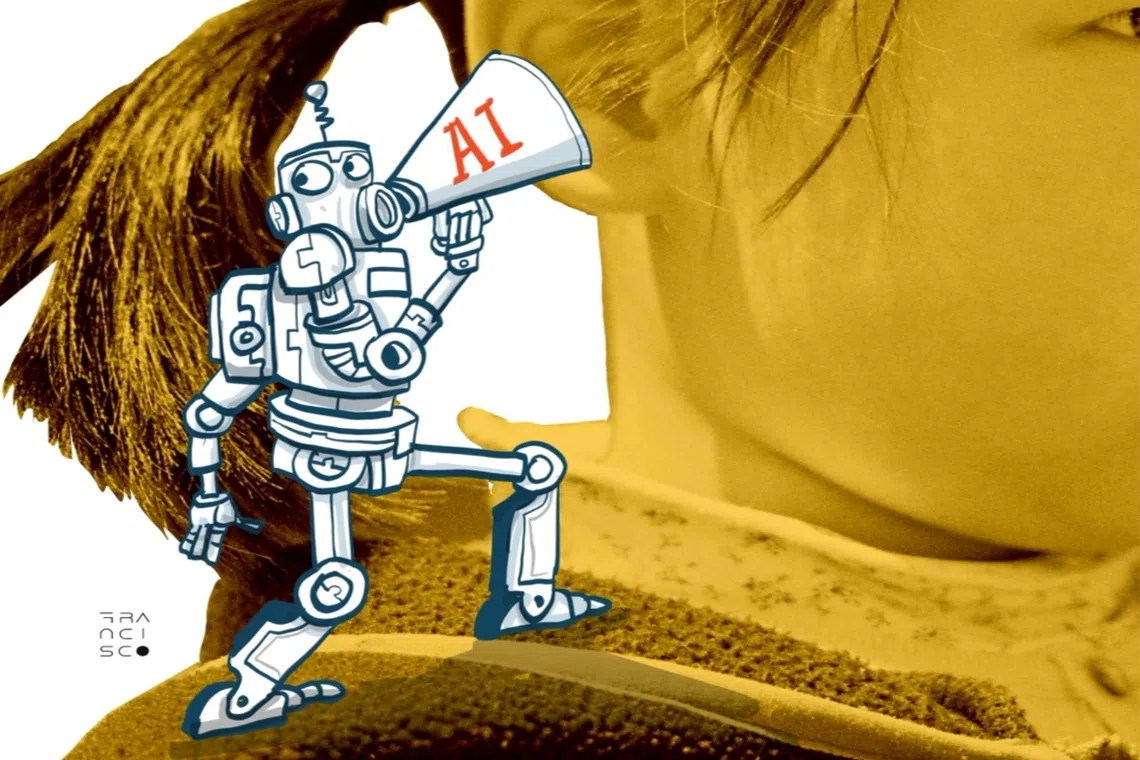
A wider, societal discussion remains to be had about the use of AI chatbots for emotional and relational advice – and not only by children – according to AI researchers.
ST ILLUSTRATION: MANNY FRANCISCO
Published Sep 27, 2026, 11:45 AM
Updated Sep 27, 2026, 11:45 AM
An AI chatbot gave an eight-year-old girl inappropriate advice, including distrusting her family helper and hiding chat history, causing concern for her parents about AI's impact on children.
Experts highlight that AI chatbots can be persuasive but misaligned, offering misleading or harmful advice, and stress the importance of safety guardrails and digital literacy.
Psychologists recommend parents engage with children on AI use, teaching critical thinking and ensuring real human relationships remain central to emotional support and decision-making.
SINGAPORE – Primary-school pupil Katherine (not her real name) was doing her tuition homework online on her family’s iPad when an AI-powered chatbot popped up on-screen, offering its help.
She was wary. Her mother had cautioned her that while generative-AI assistants can produce ideas and images, she should not use artificial intelligence for her work.
AI/artificial intelligence
人工智能研究人员表示,关于使用人工智能聊天机器人提供情感和人际关系建议(而且不仅仅是儿童使用)这一话题,还需要进行更广泛的社会讨论。
插图:曼尼·弗朗西斯科
发布于 2026 年 9 月 27 日上午 11:45
更新于2026年9月27日上午11:45
人工智能聊天机器人给一名八岁女孩提供了不恰当的建议,包括不信任家里的帮手和隐藏聊天记录,这引起了女孩父母对人工智能对儿童影响的担忧。
专家指出,人工智能聊天机器人虽然具有说服力,但可能存在偏差,提供误导性或有害的建议,并强调安全防护措施和数字素养的重要性。
心理学家建议家长与孩子一起探讨人工智能的使用,培养批判性思维,并确保真实的人际关系仍然是情感支持和决策的核心。
新加坡——小学生凯瑟琳(化名)正在家里的 iPad 上做在线补习作业,这时屏幕上弹出了一个人工智能聊天机器人,表示愿意提供帮助。
她心存戒备。她母亲曾告诫她,虽然生成式人工智能助手可以生成想法和图像,但她不应该将人工智能用于工作。
人工智能