Commentary: Pressures of platform work in Singapore push drivers and riders to take risks评论:新加坡平台工作的压力迫使司机和乘客承担风险。
Platform workers operate in an environment shaped, in part, by the expectations of the people they serve, says SUSS’ Victor Seah.
新闻视频
Platform workers operate in an environment shaped, in part, by the expectations of the people they serve, says SUSS’ Victor Seah.
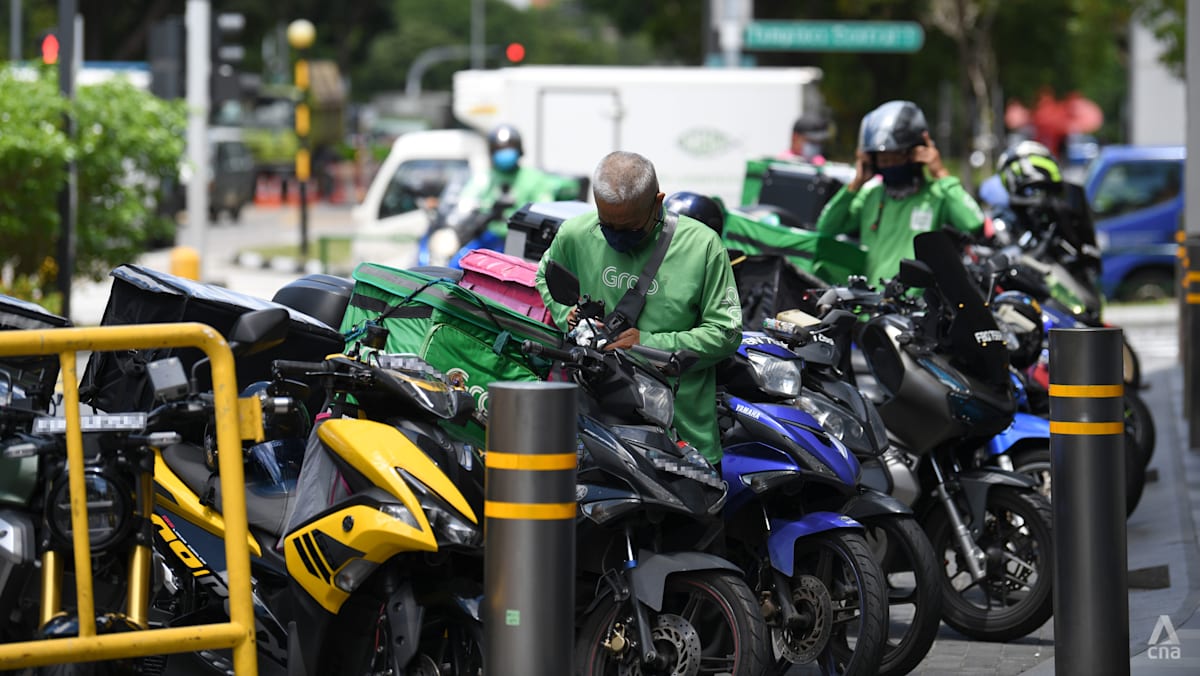
Food delivery riders in Singapore. (File photo: CNA/Calvin Oh)
This audio is generated by an AI tool.
SINGAPORE: Construction, manufacturing, platform work, or transportation and storage: Which is the most dangerous work in Singapore?
Many might guess construction, the sector many might associate with workplace accidents and fatalities. But the Ministry of Manpower’s (MOM) workplace safety and health data for the first half of 2026 gives a different answer.
It is platform work, by a long shot.
The fatal and major injury rate for platform workers stood at 92.1 per 100,000 workers in the first half of 2026, compared with 24.1 for construction, 28.4 for manufacturing, and 19.8 for transportation and storage. In other words, the rate for platform workers was approximately 3.8 times that of construction workers.
CNA Games Guess Word Crack the word, one row at a time Buzzword Create words using the given letters Mini Sudoku Tiny puzzle, mighty brain teaser Mini Crossword Small grid, big challenge Word Search Spot as many words as you can Show More Show Less Of the nine fatal workplace incidents attributed to vehicular causes, four involved platform workers: three delivery workers and one ride-hailing driver. These numbers deserve attention when Singapore’s pool of platform workers is growing. The risks that come with the job are now impossible to ignore.
Of the nine fatal workplace incidents attributed to vehicular causes, four involved platform workers: three delivery workers and one ride-hailing driver.
These numbers deserve attention when Singapore’s pool of platform workers is growing. The risks that come with the job are now impossible to ignore.
A ROAD SAFETY PROBLEM ABOVE ALL ELSE
The data points clearly to what kind of safety problem this is. Approximately 86 per cent of platform worker deaths and serious injuries arose from vehicular incidents. This is not a conventional workplace safety problem, where machinery safeguards or site supervision might suffice.
Platform worker safety is, above all, a road safety problem.
This coincides with growing concerns about Singapore’s roads more broadly. An inaugural road safety survey this year found that only 61 per cent of respondents considered Singapore’s roads safe. Accidents involving cyclists hit a four-year high in 2025, with 772 incidents, of which 17 were fatal.
For platform workers whose livelihoods depend on navigating these roads under time pressure, in bad weather and unpredictable traffic, the risks are compounded daily. Minister of State for Manpower Dinesh Vasu Dash has described the rise in fatal injuries from vehicular incidents as “a serious concern”.
It is tempting to attribute accidents to individual recklessness. We have all seen delivery riders run amber lights or weave through heavy traffic. Similarly, clips of dangerous driving from private-hire vehicles are readily available online.
While poor judgment and human error may contribute to accidents, this framing is incomplete and may lead to solutions that are poorly targeted.
In interviews with more than 50 platform workers conducted at the Behavioural Insights Centre of Excellence at SUSS, a more nuanced picture emerged. Many workers describe themselves as problem solvers who genuinely want to do a good job.
For instance, delivery riders cope with slow kitchens, bad weather and difficult traffic, and must use soft skills to manage the fallout. “We’ll be the one who gets scolded by the customer. So we are the person who is being targeted, ” one delivery rider told us.
For private-hire drivers, a similar tension plays out on the road itself. As one explained: “(Passengers) say, uncle, can you drive faster? So I just fakely oblige. I will say, okay, I will try, but I will still drive as per normal because I don’t want to get traffic summons, or worse, get into an accident.”
What these accounts describe is what organisational psychologists call prosocial rule-breaking: voluntary rule-bending driven not by indifference to safety, but by a genuine desire to serve customers and protect one’s income and ratings.
Research suggests this kind of rule-breaking tends to backfire: It does not improve performance or customer satisfaction, and it increases the risk of accidents. Perhaps more importantly, it can be contagious – workers are more likely to bend rules when they observe colleagues doing so for seemingly good reasons.
This reframes the problem. The question is not simply, “Why are some platform workers reckless?” It is, “What features of the system make conscientious workers feel they have little choice but to take risks?”
A platform worker safety workgroup, formed in March, is studying measures including training, safety technology and data collection, and is expected to conclude its work by end-2026. Separately, three groups can act now.
Policymakers and unions have a role in addressing the structural conditions of platform work. Questions have been raised in parliament about whether platform incentive structures encourage workers to rush, and MOM’s investigations have not found direct local evidence of this.
But the pressure workers describe is real even when it is not formally encoded. Initiatives like free monthly defensive riding sessions, offered through driving schools in partnership with the National Delivery Champions Association and platform operators, are a step in the right direction.
Expanding access to such programmes, and ensuring they are practically accessible to workers who operate on irregular schedules, matters.
Platform companies have both the reach and the data to make a significant difference. Some already use algorithms to identify risky riding behaviours and prompt rest breaks, and some inform customers of longer wait times during difficult conditions rather than penalising workers.
More can be done. Soft skills training designed to give workers concrete ways to manage difficult customers and de-escalate impatience deserves more investment, given what our interviews reveal. When a worker feels unable to reassure an agitated customer, the temptation to speed up becomes harder to resist.
Platforms might also consider moving beyond advice to take breaks, toward stronger interventions such as temporary suspensions of job allocation when the algorithm detects that a worker has been on the road for an extended period without rest.
Making break time mandatory and paid when risk thresholds are exceeded would go further still, directly addressing the financial pressure that keeps fatigued workers from stopping.
Finally, there is a role for all of us as patrons. Platform workers operate in an environment shaped, in part, by the expectations of the people they serve. A delay caused by a slow kitchen, heavy rain or a traffic jam is beyond a rider’s control, but whether we penalise them with a low rating is our choice.
Understanding this, and resisting the impulse to press a driver to go faster, can make a small but meaningful difference to the choices workers feel they must make. Your fast food or milk tea can wait.
Victor Seah is Director of Behavioural Insights Centre of Excellence at the Singapore University of Social Sciences.
Get our pick of top stories and thought-provoking articles in your inbox
Stay updated with notifications for breaking news and our best stories
Join our channel for the top reads for the day on your preferred chat app
新加坡新跃社科大学 (SUSS) 的 Victor Seah 表示,平台工作者所处的环境在一定程度上受到他们所服务对象的期望的影响。
新加坡的外卖骑手。(资料照片:CNA/Calvin Oh)
这段音频由人工智能工具生成。
新加坡:建筑、制造、平台作业或运输和仓储:在新加坡,哪项工作最危险?
许多人可能会猜测是建筑业,因为很多人会将建筑业与工伤事故和死亡联系起来。但人力部(MOM)发布的2026年上半年工作场所安全与健康数据却给出了不同的答案。
这完全是平台工作。
2026年上半年,平台工人的致命和重伤事故发生率为每10万名工人92.1例,而建筑业为24.1例,制造业为28.4例,运输和仓储业为19.8例。换句话说,平台工人的事故发生率约为建筑工人的3.8倍。
CNA游戏 猜词游戏 逐行破解单词 流行词游戏 用给定的字母组成单词 迷你数独 小谜题,大挑战 迷你填字游戏 小方格,大挑战 单词搜索 尽可能多地找出单词 显示更多 显示更少 在九起因车辆事故造成的致命工作场所事故中,有四起涉及平台工作者:三名外卖员和一名网约车司机。鉴于新加坡平台工作者的数量不断增长,这些数字值得关注。这份工作带来的风险如今已不容忽视。
在九起因车辆事故造成的致命工作场所事故中,有四起涉及平台工作人员:三名送货员和一名网约车司机。
新加坡平台工作者人数不断增长,这些数据值得关注。这份工作带来的风险如今已不容忽视。
道路安全问题高于一切
数据清晰地表明了这是哪种类型的安全问题。约86%的平台工人死亡和重伤事故是由车辆事故造成的。这并非传统的工地安全问题,不能简单地通过机械防护装置或现场监管来解决。
平台工人安全首先是一个道路安全问题。
这与人们对新加坡道路安全日益增长的担忧不谋而合。今年首次开展的道路安全调查发现,仅有61%的受访者认为新加坡的道路安全。2025年,涉及骑行者的交通事故数量达到四年来的最高水平,共发生772起,其中17起为致命事故。
对于那些生计依赖于在时间紧迫、天气恶劣、交通状况难以预测的情况下穿梭于这些道路的平台工作者来说,风险与日俱增。人力部国务部长迪内什·瓦苏·达什已将交通事故致死人数的上升描述为“一个令人严重关切的问题”。
人们很容易将事故归咎于个人的鲁莽行为。我们都见过送餐员闯黄灯或在拥挤的车流中穿梭。同样,网上也很容易找到网约车司机危险驾驶的视频。
虽然判断失误和人为错误可能导致事故发生,但这种观点并不全面,可能会导致解决方案缺乏针对性。
在新加坡新跃社科大学行为洞察卓越中心对50多名平台工作者进行的访谈中,呈现出一幅更为细致的图景。许多工作者将自己描述为问题解决者,并且真心希望把工作做好。
例如,外卖员要应对厨房出餐慢、恶劣天气和交通拥堵等问题,还必须运用人际交往技巧来处理各种突发状况。“我们会成为顾客责骂的对象。所以我们是被针对的目标,”一位外卖员告诉我们。
对于网约车司机来说,类似的紧张气氛也体现在路上。一位司机解释说:“(乘客)会说,‘叔叔,你能开快点吗?’所以我只能假装答应。我会说,‘好的,我试试,’但我还是会按正常速度开,因为我不想收到交通罚单,更不想发生交通事故。”
这些描述所描述的正是组织心理学家所说的亲社会规则破坏行为:自愿违反规则,这种行为并非出于对安全的漠视,而是出于服务客户、保护自身收入和声誉的真诚愿望。
研究表明,这种违反规则的行为往往会适得其反:它既不能提高绩效或客户满意度,反而会增加事故风险。更重要的是,这种行为具有传染性——当员工看到同事出于看似合理的理由违反规则时,他们自己也更有可能效仿。
这重新定义了问题。问题不再仅仅是“为什么有些平台工作者会鲁莽行事?”,而是“系统的哪些特性使得那些尽职尽责的工作者觉得他们别无选择,只能承担风险?”
3月份成立的平台工人安全工作组正在研究包括培训、安全技术和数据收集在内的各项措施,预计将于2026年底完成工作。此外,还有三个小组可以立即采取行动。
政策制定者和工会应在解决平台工作的结构性问题上发挥作用。国会曾提出质疑,平台激励机制是否会鼓励工人赶工,但人力部(MOM)的调查并未发现本地有直接证据支持这一观点。
但即便没有正式的编码形式,员工们所描述的压力也是真实存在的。例如,驾校与全国配送冠军协会和平台运营商合作,提供免费的每月防御性驾驶培训课程,这样的举措是朝着正确方向迈出的一步。
扩大此类项目的覆盖范围,并确保工作时间不规律的劳动者能够切实获得这些项目,这一点至关重要。
平台型公司拥有覆盖范围广、数据量大的优势,能够带来显著的改变。一些平台公司已经开始使用算法来识别危险的骑行行为并提醒乘客休息,还有一些平台公司会在恶劣天气条件下告知乘客等待时间延长,而不是惩罚工作人员。
还有很多工作要做。鉴于我们的访谈结果,旨在为员工提供应对难缠顾客和缓解顾客不耐烦情绪的具体方法的软技能培训值得加大投入。当员工感到无法安抚情绪激动的顾客时,他们就更难抵制加快速度的诱惑。
平台还可以考虑不只是建议员工休息,而是采取更有力的干预措施,例如当算法检测到员工长时间未休息时,暂时中止工作分配。
如果超过风险阈值,强制规定休息时间并支付工资,这将更进一步,直接解决导致疲惫的工人无法休息的经济压力。
最后,作为顾客,我们每个人都扮演着重要的角色。平台工作人员的工作环境在一定程度上受到他们服务对象期望的影响。厨房出餐慢、暴雨或交通堵塞造成的延误并非乘客所能控制,但我们是否因此给予低分评价,则取决于我们自己的选择。
理解这一点,并克制住催促司机加速的冲动,就能对员工必须做出的选择产生虽小但意义重大的影响。你的快餐或奶茶可以等等。
Victor Seah 是新加坡社会科学大学行为洞察卓越中心主任。
订阅我们的邮件,即可获取精选热点新闻和引人深思的文章。
订阅通知,第一时间获取突发新闻和精彩报道。
加入我们的频道,即可在您常用的聊天应用上获取当日热门文章。