She once interviewed boy bands – now she fights for migrant workers’ dignity and rights她曾采访过男子组合,如今却为农民工的尊严和权利而奋斗。
Almost two decades of advocating for migrant workers in Singapore have changed how Stephanie Chok sees everyday life. From restaurant staff’s work passes to whether a domestic worker gets her day off, the HOME executive director says she is always alert to the inequalities migrant workers face.
Almost two decades of advocating for migrant workers in Singapore have changed how Stephanie Chok sees everyday life. From restaurant staff’s work passes to whether a domestic worker gets her day off, the HOME executive director says she is always alert to the inequalities migrant workers face.
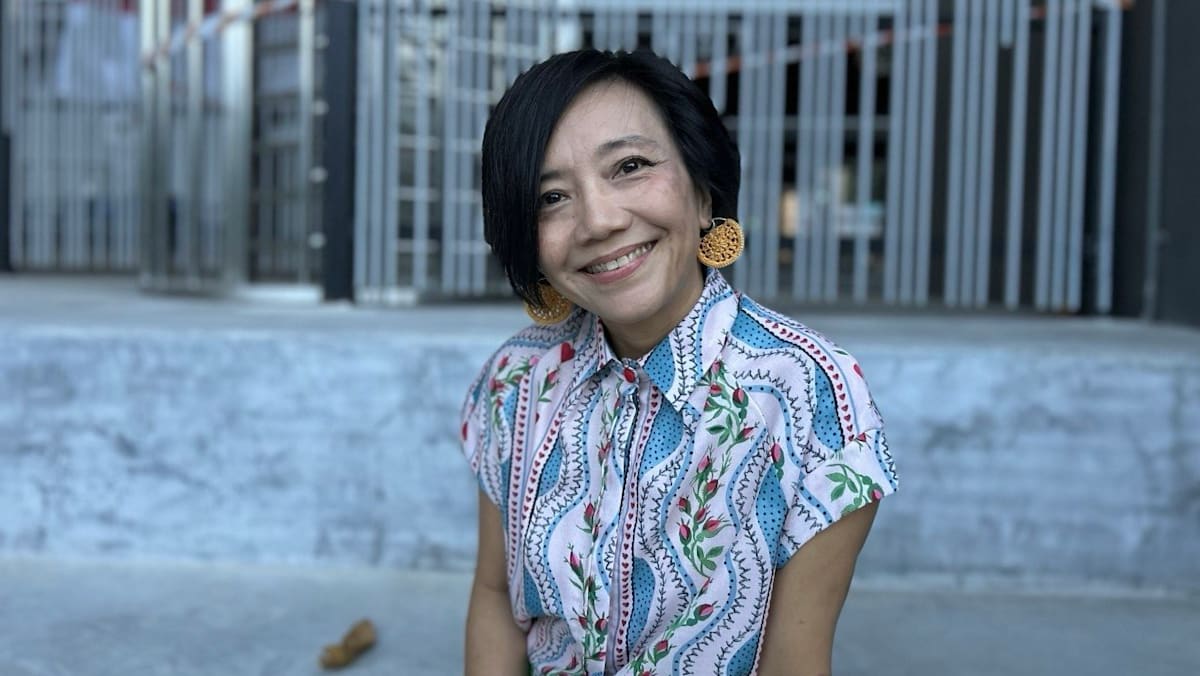
Stephanie Chok is the executive director of the Humanitarian Organization for Migration Economics, which advocates for the rights of migrant workers in Singapore. (Photo: Stephanie Chok)
This audio is generated by an AI tool.
For most people, dining out or visiting someone at home is an ordinary, even routine, experience. But for Stephanie Chok, it might leave her feeling unsettled or uneasy.
In a restaurant, she might observe the waitstaff and wonder what kind of work pass they’re on. What might they be earning? Is everything about their employment above board?
On the street, encountering a migrant worker might prompt her to wonder if they’re from an approved source country, or what their recruitment fees were like.
If she’s in someone’s home, and it’s a Sunday, she might notice if the helper doesn’t have the day off.
Work-life balance? Try work-life boundary blurriness instead.
After almost two decades of working with and advocating for migrant workers, the executive director of the Humanitarian Organization for Migration Economics (HOME) and mother of two said she no longer knows how to switch off.
“I don’t know how to separate [my work life and private life] anymore,” Chok said. “I don’t feel off duty. Maybe I won’t check my emails, but if I’m out somewhere and I see a migrant worker in distress or who needs assistance, I wouldn’t say, ‘Oh, I’m not involved, I’m not going to call the helpline. I’m not going to ask questions’.
“I don’t think that kind of separation is so neat.”
Chok (left) with community members at a Hari Raya iftar event at City Plaza organised by HOME. (Photo: Stephanie Chok)
Chok is perhaps best known for being one of the key figures who supported Indonesian domestic worker Parti Liyani throughout her high-profile, four-year legal ordeal, in which she was accused of stealing from her employer, former Changi Airport Group chairman Liew Mun Leong, and his family.
To think that Chok almost trod a path in entertainment and lifestyle journalism instead – in her younger days, she wrote for the now-defunct Lime and i-S magazines. And while she enjoyed her time there, those stints did little to satisfy her deep-rooted yearning to help others.
Chok, 53, grew up with a prominent architect father and a medical social worker mother. Her late father, Chok Yan Hoi, was the brains behind two of Singapore’s most iconic structures: Tan Boon Liat Building in Outram and the former Crown Prince Hotel on Orchard Road (where Pullman Singapore Orchard stands today).
While her dad played a role in shaping Singapore’s built environment, her mum, Judy Chok, who worked at the former Woodbridge Hospital (now the Institute of Mental Health), also contributed to society in her own quiet way.
As a child, Chok would sometimes tag along on outings with her mother’s patients. Later, when her mother volunteered at Singapore Cheshire Home, which supports adults with physical disabilities, she went along too.
“I watched her being part of interactions with people who are generally stigmatised in the community, but were not treated as stigmatised in that setting,” she recalled.
A young Chok (third from left) with her parents and older sister. (Photo: Stephanie Chok)
Perhaps being exposed to that distinction from a young age made her more attuned to those who existed on the fringes of society. As a young woman, she volunteered with the Society for the Prevention of Cruelty to Animals and wrote complaint letters to newspapers and magazines when celebrities appeared in fur. In her 20s, she travelled alone to Cambodia to volunteer at a children’s home, an experience that exposed her to different forms of inequality and human trafficking .
FROM BOY BANDS TO MARINA BAY SANDS
In her late 20s, Chok landed a job at Lime, a youth-oriented magazine whose pages were filled with celebrity gossip and pop culture buzz. The job was enjoyable enough but she couldn’t foresee herself endlessly asking boy bands their favourite things or who they would take to a desert island. Neither could she envision a future revolving around reporting on restaurant openings.
Her breakthrough came when she decided to return to Murdoch University in 2006 to do a PhD. She already had a master’s degree in development studies from the same institution in Perth, Australia, where women’s rights, environmental issues, development and inequality were part of her academic landscape.
Her doctoral thesis revolved around labour justice and political responsibility. The plight facing construction workers who were building Marina Bay Sands at the time became her central case study. Many of the workers she encountered were seeking help from HOME over salary disputes and work injuries. Her research brought her into closer contact with the organisation, and she began volunteering there during her fieldwork.
Community members and staff at HOME’s charity screening of Mongrel at the now-defunct The Projector on International Migrants Day in 2024. (Photo: Stephanie Chok)
That led her to volunteer gigs with other nonprofits like Transient Workers Count Too (TWC2) and Migrant Voices, both of which support and advocate for migrant workers.
“It was one of those situations where, what you see you cannot unsee,” she offered. “Once you understand the kind of structural injustices migrant workers are exposed to on a regular basis, then you see it everywhere.”
In 2017, HOME offered her a job as casework and research manager, specifically related to domestic workers, and she was based at the shelter. She remained in that role for almost two years before taking up other jobs. In 2023, she returned to HOME as its executive director.
THE PROBLEM WITH TURNING A BLIND EYE
While cases like that of Parti Liyani and Piang Ngaih Don , the Myanmar domestic worker who was abused to death, tend to grab headlines, it’s the day-to-day indignities and injustices faced by migrant workers that get to Chok most. These are the cases that the public tends to turn a blind eye towards.
“What was really frustrating was hearing stories of domestic workers who are verbally abused every day, being called names, or belittled. They are treated with a lack of respect and dignity by not just adults in the household, but even children, who poke their feet at them to wake them up, or wipe their faces with dirty dish cloths.
“Sometimes they are not fed properly in the home. And even though they suffer these indignities, they still have to ask that same employer for permission to transfer to another employer. That’s the system in Singapore, where migrant workers have limited job mobility and are so dependent on employers for their basic needs and rights,” Chok told CNA Women.
Chok (right) speaking about the rights of temporary migrant workers in Singapore at the panel of the UN Responsible Business and Human Rights Forum in Bangkok in 2024. (Photo: Stephanie Chok)
Listening to these stories week in and week out made her realise how normalised exploitation and dehumanisation of migrant workers are in Singapore.
Food, in particular, has become an unexpectedly revealing lens.
At HOME’s shelter, she says, domestic workers have consistently complained about food. Some describe being given only instant noodles and white bread. Others rail at being allowed to eat only leftovers, being denied fresh food or having their portions controlled. Some have their food monitored so closely that the number of eggs in the refrigerator is counted.
It sounds almost too mundane to constitute abuse. But therein lies the problem.
Ask these women about their lives back home, Chok said, and the contrast can be striking. Some come from places where fruit is so plentiful that they can pick mangoes and papayas from trees in their backyard or eat rice for breakfast.
A PURPOSE-DRIVEN LIFE
Chok is careful not to take all the credit for the work. The HOME team consists of 11 full-timers and a large pool of volunteers, all of whom she describes as being values-aligned, empathetic, justice-minded and collaborative.
Chok (right) filming Kopi Sessions, HOME’s social media videos on migrant worker issues, with Jaya Anil Kumar, HOME’s Director of Casework and Legal. (Photo: Stephanie Chok)
Asked how she finds fulfillment in her work, Chok pointed to the everyday occurrences where she can make a difference: Providing shelter to someone who needs it, helping a worker understand a salary claim, liaising with authorities when someone is struggling to access medical care, offering subsidised training and creating opportunities for migrant workers to have their voices heard.
“Each and every one of these things that we do feels important and meaningful to me,” she affirmed.
For someone dealing with stories of exploitation and abuse on a daily basis, surely the emotional toll has been heavy? Chok brushed off the suggestion.
“If I think back to a different life path or trajectory… Let’s say I stayed in publishing. Would I have had a meaningful and fulfilling life?
“I don’t seriously consider the ‘what ifs’ anymore. I drifted away from publishing because I was unanchored and searching for purpose. But I feel very fortunate and privileged right now to have a job that I find deeply meaningful.”
Chok’s work has been inextricably intertwined with her private life. In fact, she met her husband, musician Patrick Chng of indie rock band The Oddfellows, during her short tenure in MTV Asia.
Chok met her husband, musician Patrick Chng, during her stint at MTV Asia – the couple have two sons. (Photo: Stephanie Chok)
The pair stayed friends over the years. He was there when she was doing her PhD fieldwork. He drove her around to meet workers, brought them food, accompanied her to the Ministry of Manpower and went to the airport with her to meet workers.
He was, as she put it, “in the thick of it”.
Today, Chng has made his own midlife career pivot. He works as an allied educator on an adjunct basis while also busking. The flexibility means he often takes their two sons, aged 11 and 15, to and from school. He also donates portions of his busking proceeds to charity.
But perhaps the most telling evidence of the family’s values comes from Chok’s younger son, who accompanies her to HOME events – many of which fall on a Sunday – because he wants to be involved.
The family has a domestic worker with whom he is very close. Recently, the boy accompanied her to give food to another domestic worker in their block who wasn’t getting enough to eat.
When Chok told him that this was, in fact, common, he had a simple response. “But isn’t that abuse? Why isn’t anything being done about this?” he asked.
CNA Women is a section on CNA Lifestyle that seeks to inform, empower and inspire the modern woman. If you have women-related news, issues and ideas to share with us, email CNAWomen [at] mediacorp.com.sg .
A single handpicked story that we think you shouldn't miss. Just one a day.
在新加坡,Stephanie Chok 近二十年来一直致力于为外籍劳工争取权益,这改变了她看待日常生活的方式。从餐厅员工的工作证到家政工人能否休息,这位 HOME 的执行董事表示,她始终关注着外籍劳工面临的不平等。
Stephanie Chok是人道主义移民经济组织的执行主任,该组织致力于维护新加坡外籍劳工的权益。(照片:Stephanie Chok)
这段音频由人工智能工具生成。
对大多数人来说,外出就餐或拜访亲友是件稀松平常的事,甚至是例行公事。但对斯蒂芬妮·乔克来说,这却可能让她感到不安或焦虑。
在餐厅里,她可能会观察服务员,并想知道他们持有什么样的工作证。他们的收入是多少?他们的工作是否完全合法合规?
在街上遇到一名外来务工人员,可能会让她想知道他们是否来自正规的来源国,或者他们的招聘费用是多少。
如果她在别人家,而且那天是星期天,她可能会注意到帮手那天是否休息。
工作与生活平衡?不如试试模糊工作与生活的界限。
在与移徙工人一起工作和倡导他们的权益近二十年后,人道主义移徙经济组织 (HOME) 的执行主任、两个孩子的母亲表示,她已经不知道如何放松下来了。
“我不知道该如何将工作和生活分开了,”卓克说。“我感觉不到自己处于下班状态。也许我不会查看邮件,但如果我在外面看到有外籍劳工遇到困难或需要帮助,我不会说,‘哦,这与我无关,我不会拨打求助热线,我不会问问题’。”
“我不认为这种划分方式很清晰。”
图为Chok(左)与社区成员在城市广场参加由HOME组织的开斋节开斋晚宴。(摄影:Stephanie Chok)
Chok 最为人所知的或许是,他是印尼女佣 Parti Liyani 在长达四年的备受瞩目的法律诉讼中,给予她支持的关键人物之一。在诉讼中,她被指控从雇主、前樟宜机场集团主席刘文龙及其家人那里偷窃。
想想看,Chok差点就走上了娱乐和生活方式新闻记者的道路——年轻时,她曾为现已停刊的《Lime》和《iS》杂志撰稿。虽然她很享受在那里工作的时光,但这些经历并不能满足她内心深处帮助他人的渴望。
现年 53 岁的 Chok 出身于一个著名建筑师父亲和医疗社工母亲的家庭。她已故的父亲 Chok Yan Hoi 是新加坡两座标志性建筑的幕后功臣:位于欧南园的陈文烈大厦和位于乌节路的原皇冠王子酒店(现为新加坡乌节铂尔曼酒店所在地)。
她的父亲在塑造新加坡的建筑环境方面发挥了作用,而她的母亲朱迪·卓(Judy Chok)曾在伍德布里奇医院(现为心理卫生学院)工作,也以她自己默默的方式为社会做出了贡献。
小时候,卓有时会跟着母亲一起外出探望病人。后来,当她母亲在新加坡柴郡之家(一家为肢体残疾成年人提供支持的机构)做义工时,她也跟着去了。
“我看到她与社区中普遍受到歧视的人们互动,但在那种环境下,这些人并没有受到歧视,”她回忆道。
年轻的Chok(左三)与她的父母和姐姐合影。(摄影:Stephanie Chok)
或许正是从小就接触到这种区别,让她对那些生活在社会边缘的人们更加感同身受。年轻时,她曾在防止虐待动物协会做志愿者,并就名人身穿皮草的事件向报刊杂志投稿投诉。二十多岁时,她独自前往柬埔寨,在一家儿童之家做义工,这段经历让她亲眼目睹了各种形式的不平等和人口贩卖。
从男孩组合到滨海湾金沙
二十七八岁的时候,Chok在面向年轻人的杂志《Lime》找到了一份工作,杂志内容充斥着名人八卦和流行文化热点。这份工作本身挺有意思,但她无法想象自己会没完没了地问男团成员他们最喜欢的东西是什么,或者他们会带谁去荒岛。她也无法想象自己的未来会围绕着报道新餐厅开业展开。
她的突破性进展出现在2006年,当时她决定回到默多克大学攻读博士学位。此前,她已在该校(位于澳大利亚珀斯)获得发展研究硕士学位,妇女权利、环境问题、发展和不平等是她学术研究的重点。
她的博士论文围绕劳动正义和政治责任展开。当时正在建造滨海湾金沙的建筑工人的困境成为她的核心案例研究对象。她遇到的许多工人都在向HOME寻求帮助,以解决薪资纠纷和工伤问题。她的研究使她与该组织建立了更紧密的联系,并在实地考察期间开始在那里做志愿者。
2024年国际移民日,HOME在现已关闭的The Projector影院举办慈善放映活动,放映电影《杂种》(Mongrel),图为社区成员和工作人员。(照片:Stephanie Chok)
这促使她开始在其他非营利组织担任志愿者,例如 Transient Workers Count Too (TWC2) 和 Migrant Voices,这两个组织都支持和倡导移民工人。
“这种情况就是,你看到的就无法视而不见,”她说道。“一旦你了解了移工们经常遭受的各种结构性不公,你就会发现这种不公无处不在。”
2017年,HOME为她提供了一份个案和研究经理的工作,主要负责家政工人的相关事务,工作地点设在庇护所。她在这个岗位上工作了近两年,之后从事了其他工作。2023年,她重返HOME,担任执行主任。
视而不见的问题
虽然像帕蒂·利亚尼和被虐待致死的缅甸女佣皮昂·恩盖·顿这样的案件往往会登上新闻头条,但真正让乔克感到痛心的是外籍劳工每天遭受的屈辱和不公。这些案件往往被公众视而不见。
“真正令人沮丧的是,我听到一些家政工人每天都遭受言语虐待、被辱骂或被贬低的故事。她们不仅受到家中成年人的不尊重和不体面对待,甚至连孩子也不例外,孩子们会用脚戳她们来叫醒她们,或者用脏抹布擦她们的脸。”
“有时候,他们在家里都吃不饱饭。即便遭受这些屈辱,他们仍然需要请求同一雇主的许可才能换工作。这就是新加坡的制度,外籍劳工的就业流动性有限,他们的基本需求和权利都高度依赖雇主,”卓女士告诉亚洲新闻台女性频道。
2024年,在曼谷举行的联合国负责任商业与人权论坛小组讨论会上,Chok(右)就新加坡临时外籍劳工的权利发表讲话。(照片:Stephanie Chok)
每周听到这些故事,让她意识到在新加坡,剥削和非人化移工现象已经多么普遍。
食物尤其成为了一个出人意料的、能够揭示真相的窗口。
她说,在HOME的庇护所里,家政工人一直抱怨食物不足。有些人说只能吃到方便面和白面包。另一些人则抱怨只能吃剩菜剩饭,没有新鲜食物,或者食物分量被严格控制。有些人的食物甚至被严密监控,连冰箱里的鸡蛋数量都要数。
这听起来似乎太过平常,不足以构成虐待。但问题就出在这里。
乔克说,问问这些女性她们家乡的生活,就会发现两者之间的对比非常鲜明。有些女性来自水果极其丰富的地区,她们可以在自家后院的树上摘芒果和木瓜,早餐也能吃到米饭。
目标明确的人生
Chok非常谨慎,不愿将所有功劳都揽在自己身上。HOME团队由11名全职员工和大量志愿者组成,她形容所有成员都价值观一致、富有同理心、秉持公正意识并乐于合作。
(右)Chok 与 HOME 的个案及法律事务主管 Jaya Anil Kumar 一起拍摄 Kopi Sessions,这是 HOME 针对外籍劳工问题的社交媒体视频系列。(照片:Stephanie Chok)
当被问及如何从工作中获得满足感时,Chok 指出,她可以在日常生活中做出贡献:为需要帮助的人提供住所,帮助工人了解工资索赔,在有人难以获得医疗保健时与当局联络,提供补贴培训,并为移工创造机会,让他们能够表达自己的意见。
“我们做的每一件事对我来说都很重要,很有意义,”她肯定地说。
对于一个每天都要面对剥削和虐待故事的人来说,精神上的创伤肯定很沉重吧?Chok对此不以为然。
“如果我回想一下不同的人生道路或轨迹……比如说,我留在出版业。我会拥有有意义、有成就感的人生吗?”
“我不再认真考虑那些‘如果……会怎样’的问题了。我离开出版业是因为我感到迷茫,找不到人生的意义。但我现在感到非常幸运和荣幸,能拥有一份对我来说意义非凡的工作。”
Chok的工作与她的私生活密不可分。事实上,她是在MTV亚洲短暂工作期间结识了她的丈夫,独立摇滚乐队The Oddfellows的音乐人Patrick Chng。
赵婷在MTV亚洲工作期间结识了她的丈夫、音乐人Patrick Chng,两人育有两个儿子。(图片:赵婷)
多年来,两人一直保持着朋友关系。她攻读博士学位期间,他一直在她身边。他开车送她去见工人们,给他们带食物,陪她去人力部,还陪她去机场接机。
正如她所说,他“身处风暴中心”。
如今,Chng先生也实现了中年职业转型。他目前担任兼职教育工作者,同时还从事街头卖艺。这份工作的灵活性让他经常能够接送11岁和15岁的两个儿子上下学。此外,他还将部分街头卖艺收入捐赠给慈善机构。
但或许最能说明这个家庭价值观的证据来自 Chok 的小儿子,他经常陪母亲参加 HOME 的活动——其中很多活动都在周日举行——因为他想参与其中。
这家人有一位家政工人,男孩和她关系非常亲密。最近,男孩陪着这位家政工人去给楼里另一位吃不饱饭的家政工人送饭。
当乔克告诉他这种情况其实很常见时,他的反应很简单。“但这难道不是虐待吗?为什么没人管管呢?”他问道。
CNA Women是CNA Lifestyle旗下的一个版块,旨在为现代女性提供信息、赋能和灵感。如果您有与女性相关的新闻、议题或想法想要与我们分享,请发送电子邮件至CNAWomen[at]mediacorp.com.sg。
每天一篇,我们精心挑选一篇您不容错过的精彩故事。