Translating Across Borders Jehovah’s Witnesses have been forerunners in producing content in foreign languages
From Abaknon to Zulu, one nonprofit has been a global pioneer in translating Bible-based information.
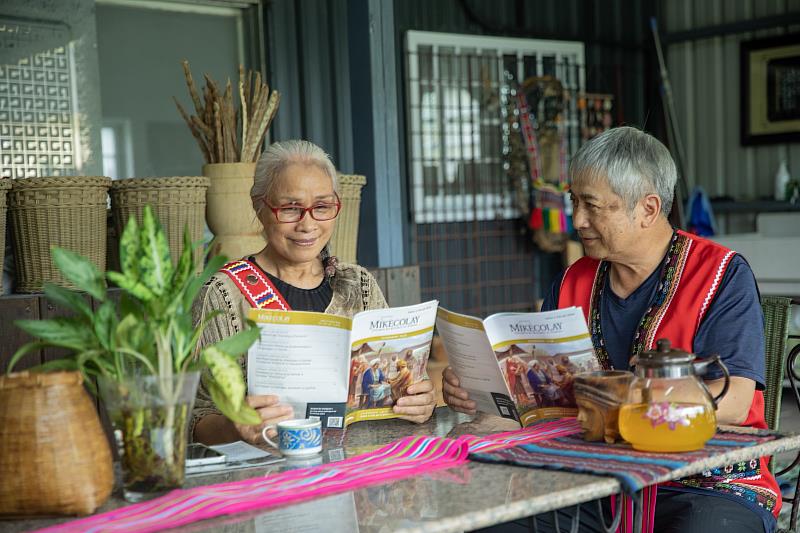
(中央社財經訊息服務20260924 18:08:51)From Abaknon to Zulu, one nonprofit has been a global pioneer in translating Bible-based information.
Jehovah’s Witnesses, well-known for their house-to-house ministry, have historically translated the Bible and Bible-study material into scores of languages. Their official website, jw.org, has been recognized as the most widely translated website in the world.
An Indigenous couple uses publications in Amis to learn about the Bible. (Photo courtesy of Jehovah’s Witnesses.)
“Translation at this scale is a major undertaking,” said Jarrod Lopes, a spokesman for Jehovah’s Witnesses who is based at their world headquarters in New York. “We are committed to adapting to accomplish it because we believe that the best way to reach people is through the languages of their hearts.”
Realizing the important role of translation in promoting unity and understanding, the United Nations has even established an International Translation Day. On September 30, many will recognize the tireless work of language professionals around the world.
Over the years, the Witnesses have used the power of translation to share their message of peace and unity with people living even in the remotest parts of the earth. For example, jw.org is available in Guna, a rare Indigenous language spoken only in certain parts of Panama and Colombia. Likewise, in Taiwan, both Amis-speaking Indigenous people and individuals who use Taiwan Sign Language can explore the Bible in a language familiar to them, making its message accessible across languages and cultures.
Sign-language interpreters are dedicated to making content accessible to those who are deaf or hard of hearing. (Photo courtesy of Jehovah’s Witnesses.)
JW.ORG has content in more than 1,100 languages, including more than 100 sign languages and many Indigenous dialects – some with no other publications on the web. Over the past two years, an average of one new language has been added to the website each month.
“The internet connects computers, but languages connect people,” said John Yunker, author of The Web Globalization Report Card. “The jw.org website shows great respect for those who speak languages that may not be supported by the Fortune 500.” To translate the ever-expanding digital library on their website, the Witnesses have established more than 300 remote translation offices around the world.
At these offices, native-speaking volunteers translate videos, music, articles and audio recordings. Much of the work supports underserved communities. For instance, volunteers in Africa have helped translate the Gospel of Matthew into Malawi Sign Language. Currently, there are more than 18,000 volunteers supporting the organization’s translation work.
Behind the scenes of a Taiwan Sign Language video production. (Photo courtesy of Jehovah’s Witnesses.)
In 1979, the Witnesses began developing a computerized system that revolutionized their translation efforts.
MEPS, which stands for Multilanguage Electronic Publishing System, organizes the simultaneous translation and production of print and digital materials in more than 1,000 languages.
With the use of MEPS, the organization’s flagship Watchtower and Awake! magazines are available in 490 and 275 languages, respectively. The New World Translation of the Holy Scriptures is available in whole or in part in more than 340 languages. This includes 16 translations in braille, with a recently released 33-volume Bible in Polish braille.
All content and literature published by Jehovah’s Witnesses is available to the public at no charge. For more information, please visit jw.org/pressroom.
–––– Yifan Wang Director of Communications Email: yiwang@jw.org