Spot electricity prices have hit a 2026 high. Will this raise my household bill?现货电力价格已达到2026年的最高水平。这会增加我家的电费吗?
Wholesale electricity prices in Singapore hit a 2026 high, driven by fuel costs and Middle East tensions, impacting tariffs and household electricity bills. Read more at straitstimes.com.
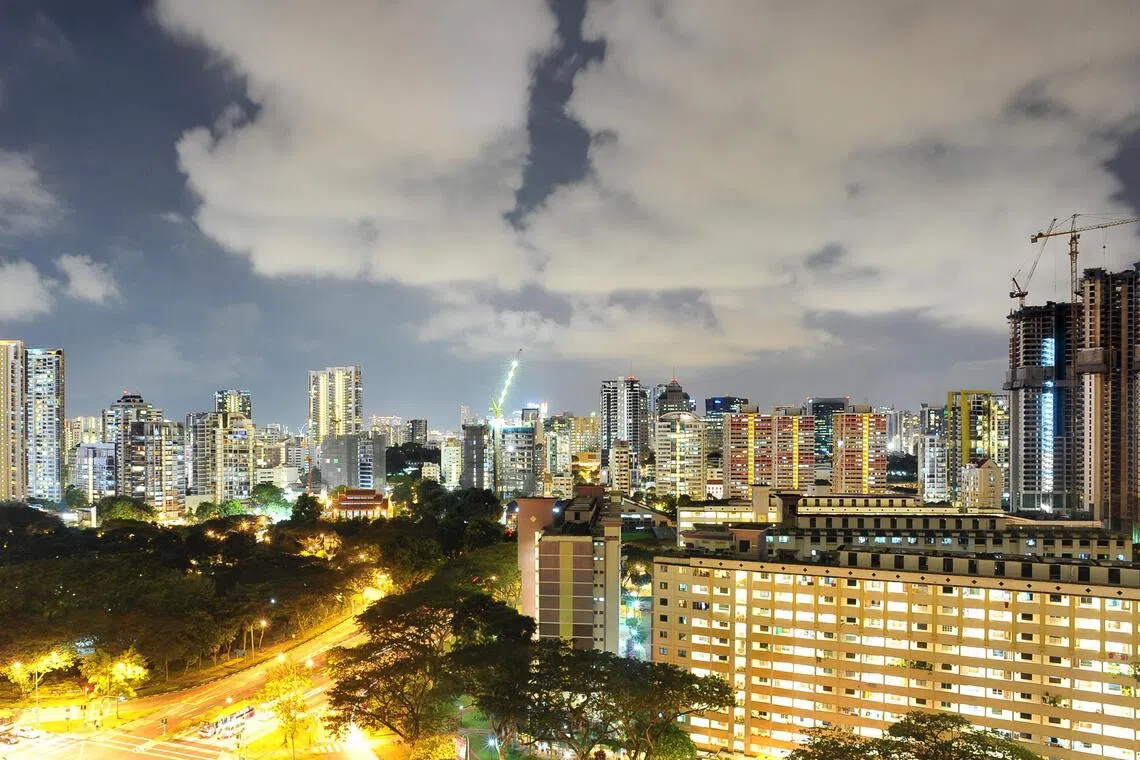
The weekly Uniform Singapore Energy Price, a measure of the wholesale cost of electricity, hit $486.21 per megawatt-hour in the week of Sept 13 to 19 – the highest level so far in 2026.
Published Sep 28, 2026, 05:00 AM
Updated Sep 28, 2026, 05:00 AM
Wholesale electricity prices in Singapore recently reached their highest level in 2026, as the Middle East conflict causes volatility in the cost of natural gas used for power generation.
Most households in Singapore buy electricity through a regulated tariff.
Households on fixed-price plans are protected from immediate price changes, but may face higher rates upon contract renewal if wholesale prices remain high.
SINGAPORE – Wholesale electricity prices in Singapore have been climbing in recent weeks as the conflict in the Middle East continues to cause volatility in the price of natural gas used by power generation companies to produce electricity.
The weekly Uniform Singapore Energy Price (USEP), a measure of the wholesale cost of electricity, hit $486.21 per megawatt-hour (MWh) in the week of Sept 13 to 19 – the highest level so far in 2026.
Besides being heavily influenced by fuel costs, the USEP – the spot price in Singapore’s wholesale electricity market – is affected by real-time power supply and demand. This is because power generation companies submit information every half hour indicating how much electricity they can supply and at what price.
The Energy Market Company (EMC), the independent operator of Singapore’s wholesale electricity market, has likened this to “dynamic ride-hailing surge pricing”.
“Just as fares rise during evening rush hours and drop late at night, USEP recalculates wholesale electricity prices every 30 minutes based on real-time power supply and demand,” the operator said in a recent LinkedIn post.
For instance, weekly USEP reached a previous year-to-date high of $439.35 per MWh in the week of Sept 6. This is a 71.5 per cent increase from the preceding week because of higher electricity demand and a fall in supply.
Meanwhile, the USEP fell in the week of July 26 as cooler temperatures contributed to a drop in demand, while supply increased.
Electricity supply depends on factors such as the availability of natural gas. Imported natural gas accounts for about 95 per cent of Singapore’s electricity generation, and its price is largely tied to market prices.
Here’s how your electricity bill could be affected by wholesale electricity prices.
Wholesale electricity buyers
If your household is part of the under 0.1 per cent in Singapore buying electricity at wholesale prices, you would have been hit by price increases stemming from factors including the Middle East conflict.
This is because your electricity purchase rate changes according to half-hour fluctuations in the USEP.
The Energy Market Authority (EMA) has warned that, in view of developments in the Middle East, households buying electricity at wholesale rates may end up paying more than those on regulated tariff or fixed-price retail contracts.
The agency added that wholesale electricity prices may become higher and more volatile as fuel costs rise because fuel costs make up the majority of power generation costs.
Households on electricity tariff
The USEP has no impact on the regulated tariff at which most households buy electricity through SP Group.
But fuel cost fluctuations that affect the USEP also impact the tariff.
David Broadstock, partner at energy consultancy The Lantau Group, said: “The current mechanism (to calculate the tariff rate) gives a heavy weight to fuel prices, which, under a predominantly natural gas system, anchor quite closely to USEP.”
This tariff is set quarterly by national grid operator SP Group and is largely based on average daily natural gas prices in the first 2½ months of the preceding quarter.
This means the rate for the fourth quarter of 2026, which will be announced in late September, will be heavily weighted by energy costs from July to mid-September.
Spot liquefied natural gas prices in Asia have more than doubled since late February, when the US and Israel launched strikes on Iran.
The Singapore Government warned that the resulting disruptions to oil and gas production in the region would take time to recover, and consumers should be prepared for the regulated tariff to increase in subsequent quarters.
However, regarding the upcoming fourth-quarter tariff rate, Broadstock was more optimistic, saying he does not expect a dramatic increase or decrease as the Iran-US conflict has reached a phase of relative stability and that “a downward revision may be possible”.
He also noted that a considerable part of Singapore’s supply of natural gas is hedged and purchased at prices locked in via contracts, instead of spot natural gas prices.
Still, the Government has said that supply disruptions due to the Middle East conflict meant that generation companies have to source for replacement fuel, which is more expensive and raises the costs of power generation.
Households in Singapore saw a 17 per cent increase in their electricity tariff in the third quarter ending Sept 30. The tariff is currently at its highest level to date.
Any increase in the electricity tariff will translate to higher bills if households on the tariff do not lower their electricity usage.
For the third quarter, the tariff rose to 31.91 cents per kilowatt-hour (kWh), which is 4.64 cents per kWh higher than the previous quarter.
SP Group said this could result in a four-room HDB household’s monthly electricity bill rising by $17.14, before GST.
Households on fixed-price plans
Households on fixed-price plans have signed a contract with electricity retailers, which have to buy electricity on the wholesale market but hedge against pricing spikes by securing future prices through contracts.
The proportion of households on fixed-price retail plans increased between Feb 1 and June 1, 2026, from around 36.6 per cent to 37.1 per cent.
Fixed-price plans allow households to lock in the rate at which they buy electricity for the duration of a contract – which means they are not affected by changes in the USEP for the length of their contract.
However, if the USEP stays high, their next contract renewal with an electricity retailer may be at a higher rate, the EMC said.
There are currently six electricity retailers offering plans for households, namely Geneco, Keppel Electric, PacificLight Energy, Sembcorp Power, Senoko Energy and Tuas Power Supply.
The retailers are “gentailers”, whose revenue from power-generating assets can help hedge against fluctuations in the USEP.
Flo Energy, which is the only independent retailer on the Open Electricity Market, currently does not supply electricity to households.
Its co-founder and chief commercial officer, Ernst Westendorp, told ST that it is scheduled to serve residential customers in 2027.
“With energy markets still unsettled due to global tensions, we’re more cautious and try to hedge 100 per cent of our contracted customer load in advance,” he said.
A global energy crisis in 2021 saw six electricity retailers close down following wild swings in wholesale prices.
But regulatory changes were made in 2023 to make retailers more resilient to market volatility.
Annabelle Liang is a business correspondent at The Straits Times, where she specialises in trade and macroeconomics.
Electricity and power
新加坡每周统一能源价格(衡量电力批发成本的指标)在 9 月 13 日至 19 日这一周达到每兆瓦时 486.21 美元,这是 2026 年迄今为止的最高水平。
发布于 2026 年 9 月 28 日上午 5:00
更新于2026年9月28日上午5:00
由于中东冲突导致用于发电的天然气价格波动,新加坡的批发电力价格最近达到了 2026 年的最高水平。
新加坡大多数家庭都通过受管制电价购买电力。
签订固定价格计划的家庭用户不会立即受到价格变动的影响,但如果批发价格居高不下,则在合同续签时可能会面临更高的费率。
新加坡——近几周来,由于中东冲突持续导致发电公司用于发电的天然气价格波动,新加坡的批发电力价格一直在攀升。
新加坡每周统一能源价格(USEP)是衡量电力批发成本的指标,在 9 月 13 日至 19 日这一周达到每兆瓦时 (MWh) 486.21 美元,这是 2026 年迄今为止的最高水平。
除了受燃料成本的显著影响外,新加坡批发电力市场的现货价格(USEP)还受到实时电力供需的影响。这是因为发电公司每半小时提交一次信息,表明其能够供应多少电力以及价格是多少。
新加坡电力批发市场的独立运营商能源市场公司(EMC)将此比作“动态网约车溢价”。
“就像晚高峰时段电价上涨,深夜电价下降一样,USEP会根据实时电力供需情况,每30分钟重新计算一次批发电力价格,”该运营商在最近的LinkedIn帖子中表示。
例如,9 月 6 日当周,美国每周电价 (USEP) 达到今年迄今为止的最高值 439.35 美元/兆瓦时。由于电力需求增加和供应下降,这比前一周上涨了 71.5%。
与此同时,由于气温下降导致需求减少,而供应增加,USEP 在 7 月 26 日当周下降。
电力供应取决于天然气供应等因素。新加坡约95%的电力依赖进口天然气,其价格很大程度上与市场价格挂钩。
以下是批发电力价格可能对您的电费产生的影响。
电力批发买家
如果您的家庭是新加坡不到 0.1% 的以批发价购买电力的家庭之一,那么您就会受到中东冲突等因素导致的价格上涨的影响。
这是因为您的购电价格会根据 USEP 每半小时的波动而变化。
能源市场管理局 (EMA) 警告称,鉴于中东局势的发展,以批发价购买电力的家庭最终可能比那些签订受监管电价或固定价格零售合同的家庭支付更多费用。
该机构补充说,随着燃料成本上涨,批发电力价格可能会更高且波动更大,因为燃料成本占发电成本的大部分。
按电价计费的家庭
USEP 对大多数家庭通过 SP 集团购买电力所适用的管制电价没有影响。
但影响USEP的燃料成本波动也会影响关税。
能源咨询公司兰陶集团的合伙人戴维·布罗德斯托克表示:“目前的(计算关税率的)机制赋予燃料价格很大的权重,而在以天然气为主的系统中,燃料价格与USEP(美国能源价格指数)密切相关。”
该收费标准由国家电网运营商SP集团按季度制定,主要依据上一季度前两个半月的平均每日天然气价格。
这意味着将于 9 月下旬公布的 2026 年第四季度利率将很大程度上受到 7 月至 9 月中旬能源成本的影响。
自2月下旬美国和以色列对伊朗发动袭击以来,亚洲液化天然气现货价格已经翻了一番多。
新加坡政府警告称,该地区石油和天然气生产中断造成的损失需要时间才能恢复,消费者应该做好准备,因为管制价格将在接下来的几个季度上涨。
然而,对于即将到来的第四季度关税税率,布罗德斯托克则更为乐观,他表示,由于伊朗与美国的冲突已进入相对稳定的阶段,他预计关税不会出现大幅上涨或下跌,“可能会出现下调”。
他还指出,新加坡相当一部分天然气供应是通过合约锁定价格进行套期保值购买的,而不是按现货天然气价格购买。
不过,政府表示,由于中东冲突导致的供应中断意味着发电公司不得不寻找替代燃料,而替代燃料价格更高,从而提高了发电成本。
截至9月30日的第三季度,新加坡家庭用电价格上涨了17%。目前电价已达到历史最高水平。
如果按现行电价收费的家庭不降低用电量,那么电价上涨将导致电费上涨。
第三季度电价上涨至每千瓦时 31.91 美分,比上一季度上涨了每千瓦时 4.64 美分。
新加坡能源集团表示,这可能会导致四房式组屋家庭每月电费增加 17.14 美元(不含消费税)。
固定价格计划的家庭
实行固定价格计划的家庭已经与电力零售商签订了合同,这些零售商必须从批发市场购买电力,但通过合同锁定未来价格来对冲价格飙升的风险。
2026 年 2 月 1 日至 6 月 1 日期间,采用固定价格零售计划的家庭比例从约 36.6% 增加到 37.1%。
固定价格计划允许家庭在合同期内锁定购电价格——这意味着在合同期内,他们不会受到USEP变化的影响。
然而,EMC表示,如果USEP价格居高不下,他们下次与电力零售商续签合同的电价可能会更高。
目前有六家电力零售商提供家庭用电计划,分别是 Geneco、Keppel Electric、PacificLight Energy、Sembcorp Power、Senoko Energy 和 Tuas Power Supply。
这些零售商是“发电零售商”,他们从发电资产中获得的收入可以帮助对冲美国电力供应波动。
Flo Energy 是开放电力市场上唯一的独立零售商,目前不向家庭用户供电。
其联合创始人兼首席商务官恩斯特·韦斯特多普告诉《海峡时报》,该公司计划于 2027 年开始为住宅客户提供服务。
他说:“由于全球局势紧张,能源市场仍然不稳定,我们更加谨慎,并尝试提前对冲我们与客户签订合同的全部用电量。”
2021 年全球能源危机导致批发价格剧烈波动,六家电力零售商倒闭。
但2023年出台了监管改革措施,旨在增强零售商抵御市场波动的能力。
梁安娜贝尔是《海峡时报》的商业记者,专门报道贸易和宏观经济。
电力