With 60 years of history, Restoran Hup Kee on Jalan Sultan Azlan Shah is an institution for old school Chinese dishes位于苏丹阿兹兰沙路的合记餐厅拥有60年的历史,是传统中式菜肴的代表。
KUALA LUMPUR, Sept 28 — Blink and you probably would have driven past Restoran Hup Kee, as the restaurant sits slightly away from the road framed under a huge tree.There’s no...
Restoran Hup Kee, a longstanding eatery in Kuala Lumpur, retains its traditional charm under the management of its third generation, offering classic dishes like Sweet and Sour Pork and Fried Prawns with Taro.
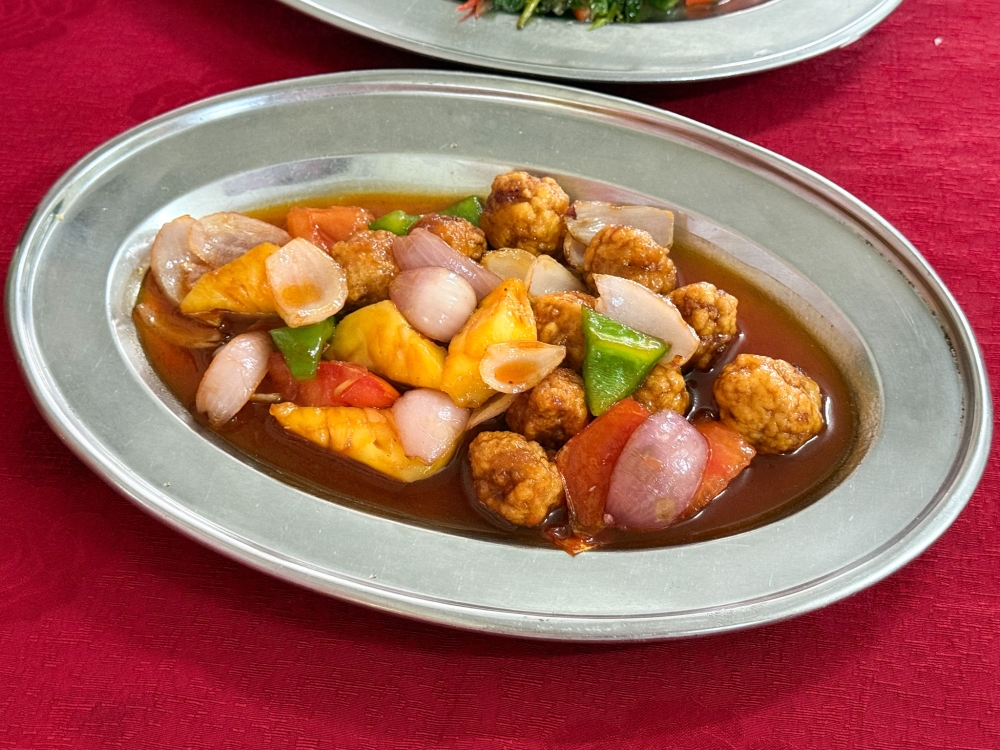
Known for its unique take on the traditional dish, the sweet and sour pork is prepared with round batter-coated pieces of lean pork, reminiscent of the Fuzhou dish, lychee pork.
This independent review highlights Hup Kee's assortment of flavors with dishes like Deep Fried Ma Yau Fish and Mui Choy Kaw Yoke, alongside greens like Stir Fried Paku Pakis and Siong Tong Spinach, all served in a welcoming old-school setting.
KUALA LUMPUR, Sept 28 — Blink and you probably would have driven past Restoran Hup Kee, as the restaurant sits slightly away from the road framed under a huge tree.
There’s no flashy signboard. Just a banner proclaiming its presence.
Tables and chairs in striking fire engine red line the front. Walk ahead and push the sliding glass doors to find a small dining area plastered with festive Chinese New Year posters.
The place has aged but remains clean and welcoming.
Now the third generation runs the restaurant, carrying on their grandparents’ legacy with signature dishes like the Sweet and Sour Pork (RM13).
The simple everyman dish looks very different here: instead of flat, diamond-shaped battered meat pieces, this place serves them in round shapes, making them resemble batter-covered meatballs.
The friendly proprietress told me the dish evolved from being made with pork belly to lean pork as diners made healthier choices.
With its round shape, it resembles lychee pork or lizhi rou , a Fuzhou dish served with a sauce and water chestnuts.
Famed Taiwanese television chef Fu Pei Mei featured the dish in her cookbook from the 1950s and 1960s, where the pork loin is cut into thick slices, scored and marinated with soy sauce and red colouring.
She prefers to roll it into a cylinder shape before deep frying the pork and combining it with a sauce that uses sugar and vinegar thickened with cornstarch. There’s no tomato ketchup like her recipe for sweet and sour pork.
The recipe has evolved; now many marinate the meat with red glutinous rice for the colour and pair it with the same sweetish, tangy sauce used in sweet and sour pork.
This version served at Hup Kee feels like a blend of both styles: it has the circular shape of lychee pork but is married to the same sauce used in classic sweet and sour pork.
Typically, ketchup and vinegar weren’t used in China; haw flakes provided that refreshing acidity in the sauce. As far as I know, only one other restaurant in Kuala Lumpur upholds that tradition with haw flakes.
Hup Kee’s sauce isn’t as sharp or sweet compared to other places and its viscosity is thinner because the sauce needs to cling to the pork; otherwise, it will soften the crispy pork.
It is that lack of acidity and cloying sweetness along with the stir fried capsicum, onions and pineapple which makes it one of my favourite renditions of this classic dish.
I probably missed some other old-school items, as I only managed two dishes: Sweet and Sour Pork and Fried Prawns and Taro (RM24).
The fried prawns are covered with a golden batter coating that is shatteringly crispy, contrasting with the chewy bouncy prawn meat and the fluffy sticks of taro.
It would have been better with more taro but again with rising costs, taro is now a premium item.
On its own, it lacks much flavour so dip it in the bottled chilli sauce served on the side.
I prefer eating it plain to taste the mild sweetness from the prawn found under its crunchy layer.
Fish is of course a must for any meal and this place offers steamed fish, a much lauded assam fish served cut into pieces instead of whole, and one of my favourites, Deep Fried Ma Yau Fish (RM68).
When deep-fried, the elongated threadfin fish offers a glorious contrast of crunch and tenderness, making you want to relish every fin and the head till everything is clean.
Hup Kee’s version is even more addictive as it pairs the fish with a syrup-like soy sauce and fine crispy shreds of ginger.
As I am rather salt-averse, I anointed the fish sparingly to just lightly season it rather than letting it soak up the sauce.
It takes some time but there’s a sense of satisfaction when every bone is clean of the glorious flesh.
Mui Choy Kaw Yoke (RM30) comes in a super dark mahogany brown hue that scared me into thinking it must be very salty but it wasn’t.
Distinct layers of creamy fat and lean pork melt in the mouth along with the preserved mustard greens ( mui choy ), which isn’t salty, ensuring every bit of the sauce was wiped clean.
You can taste that the pork belly was properly pan-fried until it formed a crust before being steamed with the mui choy and sauce until it softened.
Most diners order greens as if it’s a chore but I like how each restaurant goes beyond just stir-fried vegetables with garlic.
Refresh the palate with Stir Fried Paku Pakis (RM13), brightened up with thin slices of red capsicum, tomatoes and onions to make it look appetising with its red-green colour contrast.
The surprise addition was tiny dried shrimps that gave a short burst of briny flavour when caught amidst the greens.
Siong Tong Spinach (RM18) is on every Chinese restaurant’s menu but this place puts its own spin on the dish.
Under a mound of spinach swimming in broth dotted with red goji berries, it is partially blanketed with a layer of wispy beaten fried egg peppered with cubes of salted egg white, century eggs and strips of Spam!
It’s the home-style broth that entices you to happily finish your greens without any nagging from the parents.
Last but not least, their homemade jelly for dessert is the perfect end to the heart warming meal here with its wobbly tanginess that leaves a sweet aftertaste in my mouth and a vow to return for more old school dishes.
4A, Jalan Sultan Azlan Shah,
Open daily: 11:30am to 3pm, 5pm to 10pm
*This is an independent review where the writer paid for the meal.
**Follow us on Instagram @eatdrinkmm for more food gems.
At Lucky Garden’s Madam Tim Chicken Rice, a comforting chicken rice laced with a remarkable ginger paste
Double the ‘tong sui’ thrill with this smooth and fragrant black and white sesame paste
OFFNIC Coffee brings their unique soybean curd latte to Petaling Street for a fun experience
Thunderstorms, heavy rain expected in Sarawak, Sabah and Labuan this afternoon
Mohamad Hasan warns West Asia war, Hormuz closure ripple globally, urges UN reforms
King and Queen of Malaysia express condolences on passing of Dr Siti Hasmah
吉隆坡老字号餐厅合记在第三代经营下依然保留着传统魅力,提供糖醋里脊和芋头炒虾等经典菜肴。
糖醋里脊以其对传统菜肴的独特诠释而闻名,它用裹着面糊的圆形瘦猪肉块制成,让人想起福州荔枝肉。
这篇独立评论重点介绍了合记的各种口味,包括炸麻油鱼和梅菜豉肉等菜肴,以及炒白菜和松桐菠菜等蔬菜,所有菜肴都在温馨的传统环境中供应。
吉隆坡,9 月 28 日 — 一眨眼,你可能就会错过合记餐厅,因为这家餐厅位于路边稍远处,坐落在一棵大树下。
这里没有醒目的招牌,只有一条横幅宣告着它的存在。
醒目的消防车红色桌椅摆放在门前。向前走,推开玻璃推拉门,你会发现一个贴满了喜庆春节海报的小用餐区。
虽然地方有些老旧,但依然干净整洁,令人感到舒适宜人。
现在,这家餐厅由第三代经营,他们继承了祖辈的事业,继续供应招牌菜,例如糖醋里脊(13 马币)。
这道简单的家常菜在这里看起来截然不同:它不是扁平的菱形裹面糊的肉块,而是圆形的,看起来像裹着面糊的肉丸。
友好的女老板告诉我,这道菜最初是用五花肉做的,后来随着食客们追求更健康的饮食习惯,改用瘦猪肉。
它圆圆的形状,很像荔枝肉,这是福州的一道菜,通常配以酱汁和荸荠食用。
台湾著名电视厨师傅佩梅在 20 世纪 50 年代和 60 年代的食谱中收录了这道菜,做法是将猪里脊肉切成厚片,划上刀口,用酱油和红色色素腌制。
她喜欢先把猪肉卷成圆柱形,再油炸,最后拌上用糖和醋勾芡的玉米淀粉酱汁。她的糖醋里脊做法独具特色,堪称番茄酱的典范。
这道菜的做法已经发生了变化;现在很多人会用红糯米腌制肉,使其呈现红色,并搭配与糖醋里脊相同的酸甜酱汁。
合记供应的这款荔枝肉感觉像是两种风格的融合:它有着荔枝肉的圆形形状,但搭配的是经典糖醋里脊的酱汁。
在中国,番茄酱和醋通常不用;山楂片能为酱汁带来清爽的酸味。据我所知,吉隆坡只有另一家餐厅也沿用了这种用山楂片烹制菜肴的传统。
合记的酱汁与其他地方相比,味道没那么浓烈或甜腻,而且粘稠度也比较稀,因为酱汁需要附着在猪肉上;否则,会把酥脆的猪肉弄软。
正是因为缺乏酸味和甜腻感,再加上炒青椒、洋葱和菠萝,才使这道菜成为我最喜欢的经典做法之一。
我可能错过了其他一些老式菜肴,因为我只吃到了两道菜:糖醋里脊和炸虾芋头(24 令吉)。
炸虾裹着一层金黄酥脆的面糊,与有嚼劲、弹牙的虾肉和蓬松的芋头条形成鲜明对比。
如果芋头能多一些就好了,但是随着价格上涨,芋头现在已经成为一种高档商品了。
单吃味道比较淡,所以要蘸着旁边配的瓶装辣椒酱吃。
我喜欢直接吃,这样可以品尝到酥脆外皮下虾肉的淡淡甜味。
当然,鱼是任何一餐必不可少的,这家店提供清蒸鱼、备受赞誉的亚参鱼(切成块而不是整条),以及我最喜欢的炸麻油鱼(68 马币)。
油炸后,细长的丝鳍鱼呈现出酥脆与鲜嫩的绝妙对比,让人忍不住想把每一片鱼鳍和鱼头都吃得干干净净。
合记的版本更令人上瘾,因为它将鱼肉与糖浆状的酱油和酥脆的姜丝搭配在一起。
由于我不太喜欢咸味,所以我只在鱼身上涂抹了少许调料,只是轻轻地调味,而不是让它吸收酱汁。
虽然需要一些时间,但当每一根骨头上的肉都被剔除干净时,会有一种满足感。
梅菜豉(RM30)呈深红褐色,吓得我以为它一定很咸,但其实并不咸。
肥瘦相间的猪肉和嫩滑的猪肉在口中融化,搭配不咸的腌芥菜,确保每一滴酱汁都被吃得干干净净。
可以尝出来,五花肉先用平底锅煎至表面金黄酥脆,然后与梅菜和酱汁一起蒸至软烂。
大多数食客点蔬菜就像是完成一项任务,但我喜欢每家餐厅都不仅仅提供蒜蓉炒蔬菜。
用炒巴库巴基(RM13)来清新味蕾,加入薄薄的红甜椒片、西红柿和洋葱,使其红绿相间的色彩对比更加诱人。
令人惊喜的是,菜里还加入了小小的干虾,当在绿叶菜中发现它们时,会迸发出一丝咸鲜的味道。
松桐菠菜(RM18)几乎每家中国餐馆的菜单上都有,但这家店对这道菜进行了创新。
汤汁里漂浮着一堆菠菜,汤里点缀着红色的枸杞,菠菜上部分覆盖着一层薄薄的煎蛋,煎蛋里还撒着咸蛋清丁、皮蛋和午餐肉条!
正是这碗家常风味的肉汤,让你心甘情愿地吃完蔬菜,而不用听父母唠叨。
最后,他们自制的果冻甜点为这顿暖心的晚餐画上了完美的句号,它酸甜可口,在我的嘴里留下了甜蜜的回味,让我发誓要回来品尝更多传统菜肴。
苏丹阿兹兰沙路4A号
每日开放时间:上午11:30至下午3:00,下午5:00至晚上10:00
*这是一篇独立评论,作者自行支付了餐费。
**关注我们的Instagram账号@eatdrinkmm,获取更多美食资讯。
幸运花园的添妈鸡饭,一份暖心的鸡饭,佐以令人惊艳的姜蓉酱。
这款顺滑香浓的黑白芝麻酱,让您体验双倍的“糖水”乐趣。
OFFNIC Coffee 将其独具特色的豆腐拿铁带到茨厂街,为您带来趣味十足的体验。
今天下午,沙捞越、沙巴和纳闽预计将有雷暴和强降雨。
穆罕默德·哈桑警告称,西亚战争和霍尔木兹海峡关闭将在全球范围内产生连锁反应,并敦促联合国进行改革。
马来西亚国王和王后对西蒂·哈斯玛博士的逝世表示哀悼