Tourism minister directs acute airport baggage crisis caused by workers who failed to turn up for shifts旅游部长指示处理因工作人员未按时上班而导致的机场行李严重短缺危机。
Tourism Minister Surasak rushes to Suvarnabhumi as the baggage crisis hits its third day. Passengers wait six long hours, flooding leaves Thai Airways short of… Read More ›
新闻视频
September 28, 2026 at 11:50 am
by James Morris and Son Nguyen
in Economy , Living , Media , Politics , Thailand
Tourism and Sports Minister Surasak Phancharoenworakul rushed to Suvarnabhumi Airport on Monday as a crippling baggage crisis entered its third day. Passengers waited up to six hours while exhausted Thai Airways crews battled mountains of stranded luggage after flooding stopped replacement workers reaching the airport. Broken baggage carts deepened the breakdown, forcing office staff and managers into ground operations as military personnel were deployed. Officials warned the backlog could take another two to three days to clear. Meanwhile, Mr Surasak demanded passengers be warned before landing and pushed QR registration with luggage delivered later to homes and hotels. The crisis struck on Suvarnabhumi’s 20th anniversary, as Thailand’s main international gateway marked almost 900 million passengers while fighting to restore normal operations.
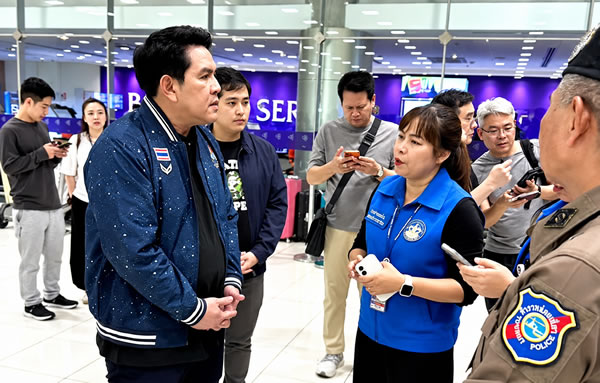
Tourism and Sports Minister Surasak Phancharoenworakul rushes to Suvarnabhumi as six-hour baggage delays hit passengers and military personnel join exhausted crews. ( Source: Thansettakij )
Tourism and Sports Minister Surasak Phancharoenworakul made an urgent inspection of Suvarnabhumi Airport on Monday morning as its baggage crisis continued. Passengers had waited four to six hours as Thai Airways struggled with a mounting luggage backlog.
Flooding had prevented ground workers reaching the airport, while baggage-cart failures compounded the disruption. In response, Thai Airways drafted office and management staff into baggage operations. Military personnel were also being deployed to reinforce exhausted workers. Officials warned the backlog could take another two to three days to clear.
Mr Surasak arrived at Thailand’s principal international gateway immediately after returning from Japan. He was accompanied by Pasakorn Rangsiwattanasak, secretary to the minister and Tourism and Sports Ministry spokesman. Notably, his visit followed direct instructions from Prime Minister and Interior Minister Anutin Charnvirakul. The Prime Minister wanted Mr Surasak to follow developments personally and ensure passengers received assistance.
Surasak orders urgent airport intervention as baggage delays leave passengers waiting up to six hours
The minister had already intervened before reaching Thailand. On Sunday, he remained on his return journey from Japan as the baggage disruption intensified. Consequently, he ordered Tourism and Sports Ministry Permanent Secretary Natthriya Thaweevong to inspect Suvarnabhumi. She was instructed to assess conditions and coordinate assistance for affected tourists. Mr Surasak also pledged to visit the airport immediately after returning.
By Monday morning, he was at Suvarnabhumi examining the operation himself. The disruption had already entered its third day. Thai and foreign passengers had endured waits reaching four to six hours. In parallel, large quantities of delayed baggage remained inside the airport handling system. Some passengers had already left without their checked luggage.
Thai Airways was arranging deliveries to homes and hotels for those passengers. Separately, officials warned that restoring normal baggage operations would take time. Initial estimates suggested another two to three days could be required. However, the timetable depended heavily on flood conditions improving across Bangkok and surrounding provinces.
The central problem was manpower. Mr Surasak spoke directly with Thai Airways personnel during his inspection. They told him flooding had prevented baggage-handling employees from reaching Suvarnabhumi. As a result, workers completing earlier shifts had remained at their posts. Some continued working because replacement staff simply could not reach the airport.
Exhausted Thai Airways crews battle growing baggage backlog as replacement workers fail to arrive
That created another operational problem. Staff already dealing with the backlog became increasingly exhausted as their working hours stretched. At the same time, scheduled aircraft continued arriving with fresh passengers and luggage. Therefore, workers were clearing delayed baggage while additional bags continued entering the system.
Equipment problems then intensified the pressure. Thai Airways was also dealing with baggage carts that were unavailable or out of service. Thus, fewer workers were attempting to move increasing quantities of luggage with reduced equipment. The combination slowed baggage movement further.
Suvarnabhumi Airport had already ordered urgent coordination with Thai Airways. Specifically, the airline was instructed to increase ground-handling manpower. It was also directed to repair defective baggage carts and secure replacement equipment. Those measures were aimed at restoring capacity while normal flight operations continued.
The disruption affected both sides of the airport operation. Incoming aircraft faced difficulties unloading luggage. Departing services were also affected as baggage moved slowly through the system. In turn, the ground-handling problems contributed to flight delays and growing quantities of stranded luggage.
Flooding and failed baggage carts hit arriving and departing flights as delays spread at Suvarnabhumi
The crisis began on Saturday, September 26. Severe flooding across Bangkok and neighbouring provinces had disrupted roads and journeys throughout the capital region. Yet Suvarnabhumi itself remained open. Flights continued operating despite worsening transport conditions outside the airport.
Access became the critical weakness. Ground employees needed to travel through flooded areas before reaching their workplaces. Many could not complete those journeys. Accordingly, Suvarnabhumi remained operational while a crucial part of its workforce became severely stretched.
The consequences soon became visible inside the terminal. Passengers reached baggage reclaim but waited hours for luggage. Behind the scenes, bags accumulated as ground workers struggled to unload aircraft. Meanwhile, fresh flights continued feeding passengers and baggage into the same strained operation.
Mr Surasak focused closely on that passenger experience during Monday’s visit. Above all, he raised concerns about how travellers were being informed. He accepted that the flood emergency had caused serious operational difficulties. Nevertheless, passengers needed information before finding themselves stranded at baggage reclaim.
The minister said travellers should not leave their aircraft and then face uncertainty about their luggage. Instead, he wanted warnings delivered before landing whenever substantial baggage delays were expected. That would give passengers time to change their onward arrangements.
Surasak demands advance warnings for passengers facing hours of uncertainty at airport baggage reclaim
The measure could be particularly important for international arrivals. Many foreign passengers reach Suvarnabhumi with hotel transfers or onward transport already arranged. A four-to-six-hour baggage wait can disrupt those arrangements immediately. Hence, advance information would allow travellers to make alternative plans before entering the terminal.
Mr Surasak also proposed a QR-code registration system for delayed luggage. Under that proposal, passengers could electronically provide their contact details and destination. Crucially, registration could potentially begin while travellers remained aboard their aircraft. They could then leave Suvarnabhumi instead of waiting several hours.
Their bags would follow separately after processing. Once located and cleared, luggage could be delivered to passengers’ homes or hotels. As part of this, the system would reduce the number of travellers waiting around baggage reclaim. It could also ease pressure on passenger service counters.
Thai Airways had already started using a similar emergency arrangement. Registration points were opened for passengers unable or unwilling to continue waiting. Travellers could provide delivery information before leaving the airport. Afterwards, Thai Airways would arrange delivery of their delayed baggage.
The airline was also moving employees into unfamiliar operational roles. Office staff were drafted into the baggage operation as the backlog grew. Management personnel were mobilised as well. In effect, Thai Airways was drawing manpower from across the company to reinforce its depleted ground crews.
Even that was insufficient. On another front, the military was being brought into the recovery effort. Thai Airways and the Tourism and Sports Ministry coordinated assistance from the Royal Thai Air Force. Defence Minister Lt Gen Adul Bunthamcharoen was also involved in deploying military personnel.
QR baggage delivery plan lets delayed passengers leave airport as military manpower joins operation
Those personnel were being sent to help move accumulated baggage. Accordingly, the recovery effort now involved ground workers, office employees, managers and military personnel. Each group was being used to increase manpower while regular staff struggled to reach work.
The task remained substantial. Delayed bags had to be processed while normal flights continued operating. Every incoming aircraft could add another load of luggage. For that reason, additional manpower was needed both to reduce the backlog and handle current arrivals.
Flooding remained at the centre of the staffing problem. Employees living across affected areas faced difficult journeys to Suvarnabhumi. Some roads were inundated, preventing workers from reaching scheduled shifts. Meanwhile, employees already inside the airport were required to continue working.
That extended the pressure beyond simple absenteeism. Previous-shift employees remained because replacement personnel could not arrive. Consequently, fatigue became another constraint on baggage operations. Staff were working extended hours while handling an abnormal volume of luggage.
Baggage-cart failures added another bottleneck. Ground handling depends on carts moving luggage between aircraft and terminal systems. Yet some Thai Airways equipment was unavailable or out of service. As such, additional workers alone could not immediately restore full capacity.
Military and airline staff reinforce exhausted ground crews as flooding blocks replacement workers
Airport officials therefore pursued manpower and equipment solutions simultaneously. Defective carts needed repairs, while replacements were also required. At the same time, Thai Airways needed more people on the ground. Military reinforcements and reassigned airline employees addressed the immediate staffing shortage.
Despite the disruption, Suvarnabhumi remained open throughout the crisis. General airport operations were not suspended. Aircraft continued arriving and departing. Still, individual flights and passenger journeys were affected by the ground-handling breakdown.
That created a difficult recovery environment. Workers were not clearing a fixed stockpile after operations had stopped. Rather, the airport remained active while they attacked the backlog. Fresh baggage kept entering the system as delayed luggage awaited processing.
The two streams placed continuing pressure on workers and equipment. Furthermore, passengers who had already departed still needed their luggage delivered. Thai Airways was therefore managing baggage inside Suvarnabhumi while organising deliveries outside the airport.
Mr Surasak’s Monday intervention broadened official attention towards the passenger impact. Suvarnabhumi is Thailand’s principal international gateway and a major entry point for foreign tourists. Many visitors begin their trips to Thailand inside its arrival halls.
Suvarnabhumi stays open as workers tackle fresh arrivals and a growing backlog of stranded luggage
During the disruption, some instead spent four to six hours waiting for baggage. The minister therefore concentrated on reducing unnecessary waiting inside the terminal. His proposals targeted communication, registration and subsequent luggage delivery.
Advance warnings were the first element. Passengers would know about expected baggage delays before their aircraft landed. Next, QR registration could allow them to provide delivery information electronically. Finally, home or hotel delivery would allow their journeys to continue without their luggage.
The approach would not eliminate the operational backlog. Ground workers would still need to locate, move and process every delayed bag. However, passengers would no longer necessarily need to remain inside Suvarnabhumi throughout that process.
Existing Thai Airways registration counters were already moving in that direction. Passengers could leave their details and depart without their baggage. Subsequently, the airline would deliver their luggage when it became available.
The underlying recovery still depended on manpower and equipment. More workers were needed to reach Suvarnabhumi as flood conditions improved. Functioning baggage carts were also required. In addition, the existing stockpile had to be cleared while scheduled flights continued.
Advance warnings and baggage delivery aim to move passengers through Suvarnabhumi without long waits
Officials consequently remained cautious about the recovery timetable. The working estimate on Monday was another two to three days. Better road conditions could allow more employees to return to their posts. Even then, however, accumulated luggage would still require processing and delivery.
The chronology shows how rapidly the disruption escalated. Problems began on Saturday, September 26, as flooding interfered with airport access. By Sunday, serious baggage delays were affecting passengers and ground operations. Mr Surasak was still returning from Japan as the situation worsened.
At that point, he dispatched Permanent Secretary Natthriya to the airport. She was ordered to inspect conditions and coordinate assistance for tourists. Subsequently, Mr Surasak returned to Thailand and headed to Suvarnabhumi himself on Monday morning.
His appearance was therefore the promised direct ministerial intervention. It followed two days of mounting disruption and severe passenger delays. By then, Thai Airways had already taken exceptional staffing measures to keep baggage moving.
Office personnel were working outside their normal duties. Senior staff had also been mobilised. In addition, military assistance was being coordinated to reinforce the operation. Passengers were simultaneously being offered baggage delivery rather than indefinite waits inside the terminal.
Officials warn baggage recovery may take three days as Surasak completes promised airport intervention
Monday also carried unusual significance for Suvarnabhumi. September 28 marked exactly 20 years since the airport began commercial operations. Suvarnabhumi opened on September 28, 2006, becoming Thailand’s principal international gateway.
The airport separately marked that anniversary on Monday. It said almost 900 million passengers had travelled through Suvarnabhumi during those two decades. At the same time, officials reiterated ambitions to strengthen its role as a global aviation hub.
The milestone coincided directly with the baggage recovery operation. Ground crews were tackling a substantial accumulation of delayed luggage. Airline office staff and managers had joined the effort. Military personnel were also being deployed to assist.
At the ministerial level, attention centred on passengers and restoring smoother movement through the airport. Mr Surasak wanted travellers warned before landing when lengthy baggage delays were expected. He also wanted electronic registration to allow passengers to leave sooner.
For Thai Airways, the operational challenge remained broader. It needed to strengthen ground staffing while repairing or replacing baggage carts. Furthermore, delayed luggage had to reach passengers who had already left Suvarnabhumi.
Suvarnabhumi marks 20 years and nearly 900 million passengers amid major baggage recovery operation
The airline was consequently handling several tasks at once. It had to process the existing baggage backlog. It also had to manage luggage arriving on current flights. Beyond that, delayed bags required delivery to homes and hotels.
Military reinforcements were intended to provide immediate additional manpower. Reassigned office and management employees offered another temporary resource. Separately, improving flood conditions were expected to allow regular workers to return.
Until then, extended shifts and emergency staffing measures remained necessary. The airport also needed enough functioning carts to move baggage efficiently. Accordingly, officials expected recovery to be gradual rather than immediate.
By Monday, the disruption had entered its third day. Passengers had faced waits reaching six hours. Ground workers had remained beyond scheduled shifts because replacements could not reach Suvarnabhumi. Equipment failures had further restricted baggage movement.
Thai Airways tackles backlog, new arrivals and home deliveries while military reinforces ground crews
Meanwhile, Thai Airways had drafted office staff and managers into the operation. Military personnel were being deployed to reinforce them. Passengers were also leaving the airport without luggage under delivery arrangements.
Suvarnabhumi nevertheless remained open, and flights continued operating. Behind those continuing services, however, a large baggage recovery operation was underway. Workers were clearing delayed luggage while handling bags from newly arriving aircraft.
On Suvarnabhumi’s 20th anniversary, that operation remained far from complete. Officials estimated another two to three days could be needed. For Mr Surasak, the immediate priorities were passenger information, faster movement and alternative baggage delivery.
For Thai Airways and airport workers, the task was more physical. They had to restore manpower, secure working equipment and move the accumulated luggage. At the same time, Thailand’s busiest international gateway had to keep its flights moving.
Royal Thai Army deployed to Suvarnabhumi Airport after baggage chaos gets the better of exhausted staff
Bangkok airports open and flights running but there are delays and baggage issues at Suvarnabhumi
Flooding tragedy in Samut Prakan near Bangkok. Two die from electrocution after family car is submerged
Engineers work through night after Sunday’s fire on Bangkok’s Blue Line saw more damage than thought
State Railway company brings charges against private drivers linked to last Saturday’s Bangkok train disaster
Police to review 58 rail crossings after 8 people died in train bus smash. Train driver had a drug habit
Police probe into train bus smash in Bangkok focuses on the train driver as police still find body parts
Rail crash in central Bangkok kills eight. Train struck a bus stuck in traffic. Junction barriers failed to lower
Prime Minister calls for contractors on high speed line to be blacklisted after 32 die in express rail disaster
Italian Thai boss and 16 others arrested on Thursday charged with Auditor General building deaths
Arrested man linked with Chatuchak building collapse now tells police he is a Chinese state employee
James Morris is a pename for an international writer based in Bangkok who works on various international news media. He is a sub editor with the Thai Examiner news website since it began in 2015. Son Nguyen is an international writer and news commentator specialising in Thai news and current affairs. He commenced working with the Thai Examiner News Desk in May 2018.
All posts by James Morris and Son Nguyen
Prime Minister and his team grilled by Wall Street on Thailand’s geopolitical stance and growth plans September 25, 2026 Hard-boiled Wall Street investors put PM Anutin and
Four sentenced to life for deadly 2022 insurgency bombing in Pattani. Death sentences commuted to life September 24, 2026 Death sentences for four men are reduced to life
Bhumjaithai political overlord in Prachin Buri to spend life in prison after death sentence is commuted by court September 24, 2026 Ex-minister Sunthorn Wilawan, 87, gets life after his
Prime Minister Anutin readies defences as Thamanat Prompow’s Kla Tham Party positions for government September 24, 2026 Capt Thamanat Prompow’s 58-MP Kla Tham moves towards
Canadian arrested for rape of a UK tourist in Chiang Mai just hours before he was due to leave Thailand September 24, 2026 Police swoop on Canadian Aldo Ochoa Saenz, 38, at his
Oil fund bleeds nearly 5 billion baht a week as the government struggles to cope with Middle East crisis September 23, 2026 Thailand’s Oil Fuel Fund bleeds ฿700 million daily
Interior Ministry probes Israeli network of Chabad in Thailand with reports of southern land purchases September 23, 2026 Polpeera widens Thailand’s Israeli-linked land probe
Concerns for the plight of the King’s third son whose health is reported to have declined in Malaysia September 22, 2026 Dr Chakriwat, King Maha Vajiralongkorn’s third son,
Local government examination scandal moves closer to a crunch. Rangsiman Rome calls on PM for answers September 22, 2026 Pressure mounts on Anutin over the ฿4.5bn local exam
Light at end of the tunnel for Thai flight attendant Meena arrested in Melbourne for drug trafficking offences September 22, 2026 Meena Kondo’s Australian drug case takes a hopeful
Anutin heads to New York but no sign yet of news on the US Thai trade deal as problems simmer at home September 21, 2026 Washington adds a fresh condition to Thailand’s US
Vietnam is taking Thailand’s quality tourists in huge numbers while Bangkok flails about with crackdowns September 21, 2026 Vietnam’s tourism boom is closing the gap on
Serving police officer investigated over commotion and shots fired on Saturday morning at Pattaya condo September 21, 2026 Gunfire tears through a South Pattaya apartment as a
Engineers work through night after Sunday’s fire on Bangkok’s Blue Line saw more damage than thought September 20, 2026 Race to save Bangkok’s Monday commute after MRT fire
Thailand’s Royal Navy announces ambitious South Korean deal to build next frigate partly at home September 20, 2026 Thailand turns to South Korea for a ฿16.73 billion
Irate daughter in law kills mother in law at home and also tried to execute estranged partner and others September 20, 2026 Durian dispute turns deadly as Thanyathorn Songserm
Defence volunteers killed in Narathiwat insurgency bomb and gun ambush. Bangkok seeks peace talks September 19, 2026 Bomb and gun ambush leaves two Volunteer Defence Corps
Ministers accused of neglecting Thai farmers. Crucial aid support has not yet reached the cabinet table September 25, 2026
Prime Minister Anutin Charnvirakul formally summoned by parliament over local government exam scandal September 24, 2026
Former Justice Minister hails major bankruptcy bill which could help reduce the household debt burden September 24, 2026
Nene Royal wins big for Thailand with blistering ‘Seven Nation Army’ final act. Nets $1 million prize September 24, 2026
Chinese men arrested on rape and extortion charges after Pattaya raid. Woman locked up and chained September 23, 2026
Digital Minister (36) and heir to powerful Chidchob dynasty has a fortune of hundreds of millions September 23, 2026
Latest cannabis bill agreed by cabinet on Tuesday to rein in the out of control weed industry in Thailand September 23, 2026
Legal heavyweights plan seminar to review Election Commission’s move to let top politicians off the hook September 22, 2026
Culture Minister’s press briefing rebuffs use of 120 year old photo of Thai women by Cambodian Ms Universe pageant September 22, 2026
Family of murdered 35 year old Thai woman in Taiwan seek return of her ashes and financial compensation September 22, 2026
Thai women ‘Freya Ice Queen’ sex trafficking ring smashed by London’s Metropolitan police after tip off September 21, 2026
Spider Man ‘peace’ protest and arrest the latest news from the ongoing Koh Samui animal park controversy September 21, 2026
Assistant Headman dies in Yala attack on night of mayhem in the southern province into Sunday September 20, 2026
Phuket drug checkpoint scandal. Defence Corps unit set up to target the menace is accused of extortion September 20, 2026
Thaksin era minister reflects on Thailand’s 2006 coup d’état. Calls for a democracy dedicated to people September 20, 2026
45 year old Australian Simon Peter Carman is refused bail as he pleaded not guilty to murder in Pattaya September 19, 2026
Time for government to tighten its belt as debt ceiling looms and public debt surges from the pre Covid era September 18, 2026
Thailand prepares to impose a 30% tax on EVs built outside the kingdom in a move to boost its auto base September 18, 2026
Good Samaritan in Pattaya gets punched for his trouble by erratic farang after he lost motorbike keys with girlfriend September 17, 2026
Purchaser of foreclosed Chiang Mai property shocked on Tuesday to find skeletal remains of former owner September 17, 2026
Mother urges police to find Chinese national involved in road traffic crash that claimed her son’s life September 17, 2026
Thaksin seeks injunctive relief from Revenue efforts to collect 17 billion tax judgment in August 2025 September 16, 2026
© 2026 Thai Examiner. All rights reserved.
2026年9月28日上午11:50
作者:詹姆斯·莫里斯和孙阮
经济、生活、媒体、政治、泰国
旅游与体育部长素拉萨·潘查伦沃拉库尔周一紧急赶赴素万那普机场,此时严重的行李危机已进入第三天。由于洪水阻断了接班人员抵达机场,疲惫不堪的泰国航空公司工作人员不得不与堆积如山的滞留行李搏斗,乘客们苦等长达六个小时。损坏的行李车加剧了混乱,迫使办公室工作人员和管理人员转战地面,军方也已部署到位。官员警告称,积压的行李可能还需要两到三天才能清理完毕。与此同时,素拉萨部长要求在乘客降落前发出警告,并提倡使用二维码办理登机手续,之后再将行李送至乘客家中或酒店。这场危机发生在素万那普机场启用20周年之际,泰国的主要国际门户机场在努力恢复正常运营的同时,也迎来了近9亿人的旅客吞吐量。
旅游与体育部长素拉萨·潘查伦沃拉库尔紧急赶往素万那普机场,此前长达六小时的行李延误影响了乘客,军方人员也加入了疲惫不堪的机组人员队伍。(来源:Thansettakij)
旅游与体育部长素拉萨·潘查伦沃拉库尔周一上午紧急视察了素万那普机场,因为该机场的行李危机仍在持续。由于泰国航空公司难以应对不断积压的行李,乘客们已经等待了四到六个小时。
洪水阻碍了地勤人员抵达机场,行李车故障也加剧了混乱。为此,泰国航空公司调集了办公室和管理人员参与行李处理工作。军方人员也被部署到机场,以增援疲惫不堪的工作人员。官员警告说,积压的行李可能还需要两到三天才能清理完毕。
苏拉萨克先生从日本返回后立即抵达泰国主要国际门户。陪同他的是旅游与体育部部长秘书兼发言人帕萨空·朗西瓦塔纳萨克。值得注意的是,此次访问是奉总理兼内政部长阿努廷·查恩维拉库尔的直接指示。总理希望苏拉萨克先生亲自关注事态发展,并确保旅客得到妥善帮助。
由于行李延误导致乘客等待长达六小时,苏拉萨克下令机场紧急介入。
部长在抵达泰国前就已介入此事。周日,由于行李延误情况加剧,他仍在从日本返回泰国的途中。随后,他指示旅游与体育部常务秘书纳特里亚·塔维翁(Natthriya Thaweevong)前往素万那普机场视察。她被要求评估机场状况并协调对受影响游客的援助。苏拉萨克先生也承诺返回后立即前往机场。
周一早上,他亲自前往素万那普机场视察运营情况。混乱已经持续了三天。泰国和外国旅客的等待时间长达四到六个小时。与此同时,大量延误的行李仍滞留在机场处理系统中。一些旅客甚至在没有托运行李的情况下离开了机场。
泰国航空公司正在安排将行李送至乘客家中或酒店。与此同时,官员们警告称,恢复正常的行李托运业务需要时间。初步估计可能还需要两到三天。然而,具体时间表很大程度上取决于曼谷及周边府的洪水情况何时好转。
核心问题是人手不足。苏拉萨克先生在视察期间直接与泰国航空公司的员工交谈。他们告诉他,洪水导致行李搬运工无法抵达素万那普机场。因此,之前完成轮班的员工不得不继续留在岗位上。有些人之所以继续工作,是因为接替他们的员工根本无法到达机场。
由于替补人员迟迟未能到岗,疲惫不堪的泰航机组人员仍在努力应对日益严重的行李积压问题。
这又造成了另一个运营问题。原本就负责处理积压行李的员工,随着工作时间的延长,越来越疲惫。与此同时,定期航班仍在不断抵达,运送着新的乘客和行李。因此,工作人员既要处理延误的行李,又要应对不断涌入系统的新增行李。
设备故障加剧了压力。泰国航空还面临着行李推车无法使用或停运的问题。因此,人手不足的工作人员试图用更少的设备搬运越来越多的行李。这些因素叠加在一起,进一步减缓了行李搬运速度。
素万那普机场已紧急指示泰国航空公司进行协调。具体而言,机场要求泰国航空公司增加地勤人员,并维修故障行李车,同时购置替代设备。这些措施旨在恢复机场运力,同时确保航班正常运营。
此次中断对机场运营的进出环节都造成了影响。进港飞机在卸载行李时遇到困难,而出港航班也因行李流转缓慢而受到影响。反过来,地面服务问题又导致航班延误和行李滞留数量不断增加。
素万那普机场遭遇洪水和行李车故障,导致进出港航班延误,延误范围扩大。
危机始于9月26日星期六。曼谷及其周边府发生严重洪灾,导致首都地区道路交通中断。然而,素万那普机场本身却依然开放。尽管机场外的交通状况日益恶化,航班仍继续运行。
交通不便成为最大的软肋。地面工作人员必须穿越洪水区域才能到达工作地点,许多人无法完成这段旅程。因此,素万那普机场在维持运营的同时,其关键员工队伍却面临着巨大的压力。
后果很快在航站楼内显现。乘客到达行李提取处后,却要等待数小时才能拿到行李。与此同时,地勤人员正忙于卸货,行李在后台堆积如山。新的航班仍在不断将乘客和行李输送到这个已经不堪重负的航站楼。
苏拉萨克先生周一的访问重点关注了旅客体验。他尤其关注旅客获取信息的方式。他承认洪水紧急情况造成了严重的运营困难。然而,旅客需要在行李提取处滞留之前获得相关信息。
部长表示,旅客不应下飞机后才面临行李延误的不确定性。他希望,如果预计行李会严重延误,航空公司应在飞机降落前发出预警,以便旅客有时间调整后续行程。
苏拉萨克要求提前告知乘客,以免他们在机场行李提取处面临数小时的不确定等待。
这项措施对国际旅客尤其重要。许多外国旅客抵达素万那普机场时已经安排好了酒店接送或其他后续交通。行李等待四到六个小时会立即打乱他们的行程安排。因此,提前告知可以让旅客在进入航站楼前做好其他安排。
苏拉萨克先生还提议采用二维码登记系统来登记延误的行李。根据该提议,乘客可以通过电子方式提供联系方式和目的地。至关重要的是,登记过程甚至可以在旅客留在飞机上时就开始。这样,他们就可以离开素万那普机场,而无需等待数小时。
他们的行李将在处理完毕后单独运送。行李找到并核实后,即可送至乘客家中或酒店。该系统将减少在行李提取处等待的旅客人数,并缓解旅客服务柜台的压力。
泰国航空此前已开始实施类似的应急方案。航空公司为无法或不愿继续等待的乘客开设了登记点。旅客可在离开机场前提供行李递送信息。之后,泰国航空将安排递送延误的行李。
该航空公司还将员工调配到他们不熟悉的运营岗位。随着积压行李的增加,办公室人员被临时调到行李处理部门。管理人员也被调动起来。实际上,泰国航空正在从公司各个部门抽调人力来补充其人手不足的地勤人员。
即便如此,也远远不够。另一方面,军方也被调入灾后重建工作。泰国航空公司和旅游与体育部协调泰国皇家空军提供援助。国防部长阿杜尔·本塔姆查伦中将也参与了军事人员的部署。
卡塔尔航空行李运送计划允许延误的旅客离开机场,军方人员也加入行动中。
这些人员被派去协助搬运积压的行李。因此,救援工作现在涉及地面工作人员、办公室员工、管理人员和军事人员。在常规员工难以到岗的情况下,每个群体都被调动起来以增加人手。
任务依然艰巨。延误的行李必须在正常航班继续运营的同时进行处理。每架抵达的飞机都可能增加一批行李。因此,需要额外的人手来减少积压的行李并处理当前抵达的行李。
洪水仍然是人员配备问题的核心。居住在受灾地区的员工前往素万那普机场的路途十分艰难。一些道路被淹,导致工人无法按时上班。与此同时,已经在机场内的员工则被要求继续工作。
这使得压力不仅仅局限于员工缺勤。由于替班人员无法到岗,原班员工不得不继续留任。因此,疲劳成为行李处理工作的又一制约因素。员工们在处理异常大量的行李的同时,还要长时间工作。
行李车故障又造成了另一个瓶颈。地面服务依赖于行李车在飞机和航站楼系统之间运送行李。然而,泰航的部分设备无法使用或停运。因此,仅靠增派人手无法立即恢复全部运力。
洪水阻碍了替代工人的运输,军方和航空公司人员增援疲惫不堪的地勤人员。
因此,机场官员同时寻求人力和设备方面的解决方案。故障的手推车需要维修,同时也需要更换新的。与此同时,泰国航空公司也需要更多地面人员。军方增援和重新调配的航空公司员工解决了燃眉之急的人员短缺问题。
尽管受到干扰,素万那普机场在整个危机期间仍保持开放。机场的整体运营并未中断,飞机继续起降。然而,地面服务故障确实影响了部分航班和旅客的行程。
这造成了艰难的恢复环境。工作人员并非在运营停止后清理固定的积压行李,而是在机场持续运转的同时处理积压的行李。由于延误的行李仍在等待处理,新的行李又不断进入系统。
这两条客流持续给工作人员和设备带来压力。此外,已离境的乘客仍需运送行李。因此,泰国航空在素万那普机场内管理行李,同时安排机场外的行李运送。
苏拉萨克先生周一的介入使官方更加关注此次事件对旅客的影响。素万那普机场是泰国的主要国际门户,也是外国游客的主要入境点。许多游客的泰国之旅都是从该机场的入境大厅开始的。
素万那普机场保持开放,工作人员正在应对新抵达的旅客和日益增多的滞留行李。
事故发生期间,一些乘客不得不花费四到六个小时等待行李。因此,部长着重解决航站楼内不必要的等待问题。他的方案主要针对沟通、登记和后续行李提取环节。
提前预警是第一步。乘客可以在飞机降落前了解预计的行李延误情况。其次,二维码登记可以让乘客以电子方式提供行李递送信息。最后,送货上门或送至酒店可以让乘客在没有行李的情况下继续旅程。
这种方法并不能完全消除运营积压。地勤人员仍然需要查找、搬运和处理每一件延误的行李。但是,乘客不再需要在整个过程中一直待在素万那普机场内。
现有的泰航值机柜台已经开始朝着这个方向发展。乘客可以留下个人信息后直接登机,无需携带行李。之后,航空公司会在行李准备就绪后将其送达。
灾后重建工作仍取决于人力和设备。随着洪水情况好转,需要更多工人前往素万那普机场。此外,还需要运转正常的行李车。同时,在航班继续运行的情况下,也必须清理现有的物资储备。
提前预警和行李运送旨在让乘客无需长时间等待即可通过素万那普机场。
因此,官员们对恢复时间表仍持谨慎态度。周一的初步估计还需要两到三天。道路状况的改善或许能让更多员工返回工作岗位。即便如此,积压的行李仍需处理和运送。
时间线显示了混乱局面迅速升级的过程。问题始于9月26日星期六,洪水阻碍了机场的通行。到了星期日,严重的行李延误影响了乘客和地面运营。苏拉萨克先生从日本返回途中,情况变得更加糟糕。
当时,他派遣常务秘书纳特里亚前往机场。她的任务是检查机场状况并协调对游客的援助工作。随后,苏拉萨克先生返回泰国,并于周一上午亲自前往素万那普机场。
因此,他的出现正是此前承诺的部长级直接干预。此前两天,航班中断情况不断恶化,乘客严重延误。到那时,泰国航空已经采取了特殊的人员配备措施,以确保行李运输畅通。
办公人员都在加班加点地工作。高级职员也被调动起来。此外,军方正在协调提供援助,以加强行动。与此同时,旅客们可以选择提取行李,而不是在航站楼内无限期地等待。
官员警告称,由于苏拉萨克尚未完成承诺的机场干预措施,行李找回可能需要三天时间。
星期一对素万那普机场来说也具有特殊的意义。9月28日恰好是该机场投入商业运营20周年纪念日。素万那普机场于2006年9月28日正式启用,成为泰国的主要国际门户。
机场周一单独举行了周年纪念活动。机场方面表示,过去二十年间,近9亿名旅客经由素万那普机场出行。与此同时,机场官员重申了加强素万那普机场作为全球航空枢纽地位的雄心壮志。
这一里程碑事件恰逢行李回收行动展开。地勤人员正在处理大量延误行李。航空公司办公室人员和管理人员也加入了救援行动。军方人员也被部署到现场协助。
部长级层面,关注的焦点在于旅客以及如何恢复机场的顺畅通行。苏拉萨克先生希望在预计行李延误时间较长的情况下,提前通知旅客。他还希望推行电子登记,以便旅客能够更快离境。
对泰国航空而言,运营挑战依然十分广泛。它需要在维修或更换行李车的同时,加强地勤人员配备。此外,延误的行李还必须送达已经离开素万那普机场的乘客手中。
素万那普机场迎来20周年,旅客吞吐量近9亿人次,与此同时,机场正进行大规模行李搜寻行动。
因此,航空公司不得不同时处理多项任务。它既要处理现有的行李积压,又要管理当前航班抵达的行李。此外,延误的行李还需要送往乘客家中或酒店。
增援部队旨在提供即时的人力支持。重新调配的办公室和管理人员也提供了另一项临时资源。此外,预计洪水状况的改善将使正式员工能够返回工作岗位。
在此之前,延长轮班时间和采取紧急人员配备措施仍然是必要的。机场还需要足够数量的正常运转的行李搬运车来高效地搬运行李。因此,官员们预计恢复是一个渐进的过程,而不是一蹴而就的。
截至周一,航班中断已进入第三天。乘客的等待时间最长可达六小时。由于替补人员无法抵达素万那普机场,地勤人员不得不加班加点。设备故障进一步限制了行李的运送。
泰国航空着力解决积压航班、新到货物和送货上门等问题,与此同时,军方加强了地勤人员配备。
与此同时,泰国航空公司已将办公室员工和管理人员调集到行动中。军方也已部署人员增援。此外,部分乘客在行李尚未送达的情况下离开机场。
尽管如此,素万那普机场仍然开放,航班也继续运营。然而,在这些航班继续运行的同时,一项大规模的行李回收工作也在进行中。工作人员一边清理延误的行李,一边搬运新抵达航班上的行李。
在素万那普机场启用20周年之际,这项行动仍远未完成。官员们估计可能还需要两到三天的时间。对苏拉萨克先生来说,当务之急是提供旅客信息、加快通行速度以及寻找替代行李运送方式。
对于泰国航空公司和机场工作人员来说,这项任务更加艰巨。他们必须恢复人手,确保工作设备的安全,并搬运积压的行李。与此同时,泰国最繁忙的国际门户机场还必须保证航班的正常运转。
行李混乱导致疲惫不堪的工作人员不堪重负,泰国皇家陆军已部署至素万那普机场。
曼谷机场已开放并有航班运行,但素万那普机场出现延误和行李问题。
曼谷附近北榄府发生洪灾悲剧,一辆汽车被淹,两人触电身亡。
周日曼谷地铁蓝线发生火灾,损失比预想的要严重,工程师们连夜抢修。
泰国国家铁路公司对与上周六曼谷火车事故有关的私人司机提起诉讼。
警方将对58个铁路道口进行审查,此前一起火车与巴士相撞事故造成8人死亡。火车司机曾有吸毒史。
曼谷火车与巴士相撞事故,警方调查重点转向火车司机,目前仍在搜寻遇难者遗体。
曼谷市中心发生火车相撞事故,造成8人死亡。火车撞上一辆堵在路上的公交车。路口护栏未能放下。
在造成32人死亡的高铁事故后,总理呼吁将高铁线路承包商列入黑名单。
周四,一名意大利籍泰国籍老板和其他16人因涉嫌在审计长大楼内造成人员死亡而被捕。
因与乍都乍周末市场大楼倒塌事件有关的被捕男子现在告诉警方,他是中国国家雇员。
詹姆斯·莫里斯(James Morris)是一位常驻曼谷的国际作家,笔名,他为多家国际新闻媒体撰稿。自2015年泰国新闻网站Thai Examiner成立以来,他一直是该网站的副编辑。孙阮(Son Nguyen)是一位国际作家和新闻评论员,专长于泰国新闻和时事。他于2018年5月加入Thai Examiner新闻编辑部。
James Morris 和 Son Nguyen 的所有帖子
2026年9月25日,华尔街就泰国的地缘政治立场和增长计划对总理及其团队进行了质询。强硬的华尔街投资者对阿努廷总理及其团队提出了质疑。
四人因2022年北大年府致命叛乱爆炸案被判处终身监禁。2026年9月24日,四人的死刑被改判为终身监禁。
2026年9月24日,巴真府泰自豪党政治领袖桑通·维拉旺(Sunthorn Wilawan)的死刑被法院改判为终身监禁。这位87岁的前部长此前被判处死刑。
2026年9月24日,塔玛纳·普罗姆波领导的克拉塔姆党准备组建政府,总理阿努廷严阵以待。塔玛纳·普罗姆波领导的拥有58名议员的克拉塔姆党正朝着这一目标迈进。
2026年9月24日,一名加拿大男子在清迈被捕,他涉嫌强奸一名英国游客,当时距离他离开泰国仅几个小时。警方突袭了38岁的加拿大男子阿尔多·奥乔亚·萨恩斯(Aldo Ochoa Saenz)的住所。
泰国石油基金每周亏损近50亿泰铢,政府疲于应对中东危机 2026年9月23日 泰国石油基金每日亏损7亿泰铢
泰国内政部对以色列在泰国的哈巴德运动网络展开调查,此前有报道称该网络在泰国南部购买土地(2026年9月23日)。泰国内政部扩大了对与以色列有关联的土地的调查范围。
2026年9月22日,马来西亚国王玛哈·哇集拉隆功的第三子查克里瓦特博士健康状况恶化,引发各方关注。
地方政府考试丑闻逼近关键时刻。Rangsiman Rome呼吁首相给出解释(2026年9月22日)。Anutin因45亿泰铢的地方考试丑闻面临越来越大的压力。
泰国空姐米娜因涉嫌贩毒在墨尔本被捕,隧道尽头出现曙光 2026年9月22日 米娜·近藤的澳大利亚毒品案出现希望
阿努廷前往纽约,但美泰贸易协议仍未传出任何消息,国内问题持续发酵。2026年9月21日,华盛顿为泰国的贸易协议附加了新的条件。
越南正大量吸引泰国的优质游客,而曼谷却在打击非法游客方面举步维艰 2026年9月21日 越南旅游业的蓬勃发展正在缩小与泰国的差距
2026年9月21日星期六上午,芭堤雅一处公寓发生骚乱和枪击事件,一名在职警官因此接受调查。枪声响彻芭堤雅南部一处公寓。
2026年9月20日,曼谷地铁蓝线周日发生火灾,损失比预想的更为严重,工程师们连夜抢修。为挽救曼谷地铁周一的通勤,各方争分夺秒。
泰国皇家海军宣布与韩国达成一项雄心勃勃的协议,将在泰国本土部分建造下一代护卫舰。2026年9月20日,泰国向韩国寻求价值167.3亿泰铢的援助。
2026年9月20日,因榴莲纠纷引发致命冲突,Thanyathorn Songserm 在家中杀害婆婆,并试图处决分居伴侣和其他人。
那拉提瓦府叛乱分子遭炸弹和枪击伏击身亡,两名国防志愿兵丧生。曼谷寻求和平谈判。2026年9月19日,炸弹和枪击伏击导致两名国防志愿兵丧生。
部长们被指责忽视泰国农民。关键援助资金尚未提交内阁审议(2026年9月25日)
2026年9月24日,总理阿努廷·查恩维拉库尔因地方政府考试丑闻被议会正式传唤。
前司法部长称赞一项重大破产法案,该法案有望减轻家庭债务负担 2026年9月24日
妮妮·罗亚尔凭借精彩绝伦的《七国军队》压轴表演为泰国赢得大奖,斩获100万美元奖金(2026年9月24日)。
芭堤雅突袭行动后,几名中国男子因涉嫌强奸和敲诈勒索被捕。一名女子于2026年9月23日被关押并戴上镣铐。
数字部长(36岁)兼强大的奇德乔布王朝继承人拥有数亿美元的财富 2026年9月23日
泰国内阁周二通过最新大麻法案,旨在遏制该国失控的大麻产业(2026年9月23日)
法律界重量级人物计划举办研讨会,审查选举委员会让高层政客免于追究责任的举措(2026年9月22日)
文化部长在新闻发布会上驳斥柬埔寨环球小姐选美大赛使用120年前泰国女性照片的做法 2026年9月22日
2026年9月22日,一名35岁泰国女子在台湾遇害,其家人要求归还骨灰并索要经济赔偿。
2026年9月21日,伦敦警察厅根据线报捣毁了以泰国女子“冰雪女王弗蕾雅”为名的性交易团伙。
蜘蛛侠“和平”抗议及逮捕事件:苏梅岛动物园争议最新进展(2026年9月21日)
2026年9月20日星期日,南部省份亚拉发生骚乱,一名助理村长在当晚的袭击中丧生。
普吉岛毒品检查站丑闻。为打击毒品犯罪而设立的国防军小组被指控敲诈勒索。2026年9月20日
他信时代部长回顾泰国2006年政变,呼吁建立以人民为中心的民主制度。2026年9月20日
2026年9月19日,45岁的澳大利亚男子西蒙·彼得·卡曼在芭堤雅被控谋杀,但他拒不不认罪,保释申请被拒绝。
随着债务上限临近,公共债务较新冠疫情前水平大幅飙升,政府是时候勒紧裤腰带了。(2026年9月18日)
泰国准备对境外生产的电动汽车征收30%的税,以促进其汽车产业发展(2026年9月18日)
2026年9月17日,芭堤雅一名好心人因帮女友找回丢失的摩托车钥匙,被一名行为怪异的外国人殴打。
2026年9月17日,一名买家在清迈购买了一处法拍房产,周二震惊地发现前房主遗骸。
2026年9月17日,一位母亲敦促警方寻找涉嫌造成其儿子死亡的交通事故的中国公民。
他信寻求法院颁布禁令,阻止税务部门在2025年8月追缴170亿比索的税款判决。2026年9月16日
© 2026 Thai Examiner。版权所有。