From violin to rural medicine, 10 things Malaysians may have forgotten about Dr Hasmah从小提琴到乡村医疗,马来西亚人可能已经忘记的关于哈斯玛医生的10件事
KUALA LUMPUR, Sept 28 — It is easy to remember Tun Dr Hasmah Mohamad Ali through the people and institutions around her: as the wife of Malaysia’s longest-serving prime...
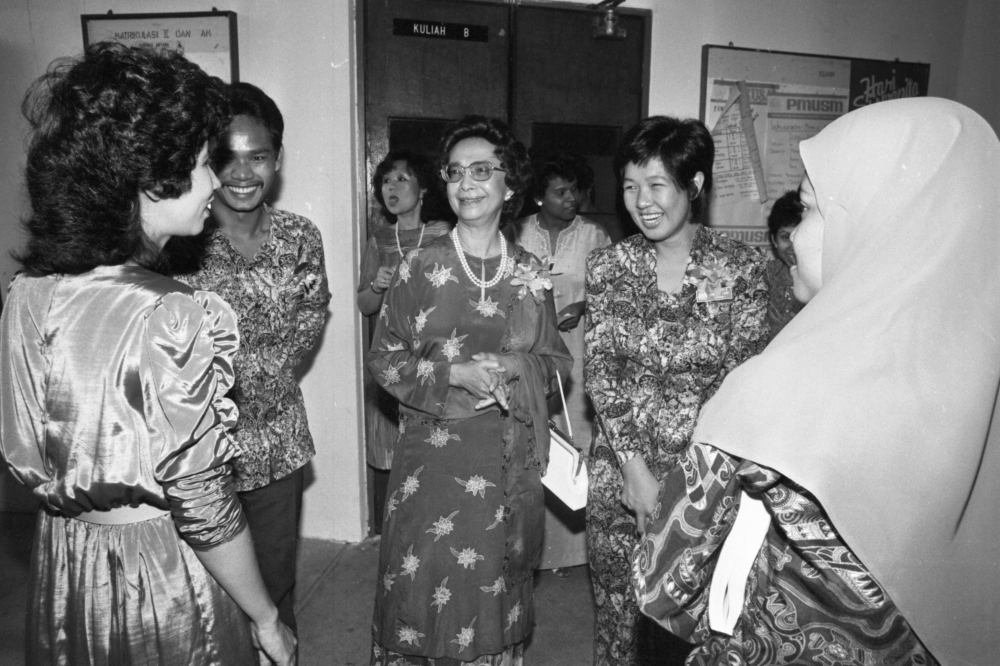
Tun Dr. Hasmah Mohamad Ali, wife of Malaysia's longest-serving prime minister, is celebrated not solely for her public role but for her significant personal achievements.
As the only Malay woman in her medical batch, she pioneered maternal and child health efforts in rural Kedah, contributing to a sharp decline in infant mortality rates.
Beyond her medical career, Dr. Hasmah's influence extended to founding a badminton team for ministers' wives, rekindling her passion for the violin in her 80s, and serving as the first chancellor of Multimedia University.
Her legacy is marked by not only her healthcare contributions but also her impact on students and colleagues, demonstrating a life of service beyond politics.
KUALA LUMPUR, Sept 28 — It is easy to remember Tun Dr Hasmah Mohamad Ali through the people and institutions around her: as the wife of Malaysia’s longest-serving prime minister, as a former First Lady, or as the woman who stood beside Tun Dr Mahathir Mohamad through decades of public life.
But those descriptions leave out much of the woman herself.
There was the teenager whose schooling was interrupted by the Japanese invasion, the young doctor who worked among rural communities in Kedah, and the woman who maintained interests and a public identity of her own outside politics.
There were also the less expected details: a RM10 payment she refused from a patient’s family, the trust she had to earn from rural villagers, a badminton team she helped establish with other ministers’ wives, and a violin she picked up again in her 80s.
As tributes pour in following her death at 100, here are 10 details that offer a glimpse of the Dr Hasmah that could have been missed by public eyes.
1. She was the only Malay woman in her medical batch
When Dr Hasmah enrolled at the King Edward VII College of Medicine in Singapore, she was the only Malay female student in her batch.
She graduated in 1955, beginning a medical career that would eventually take her from hospital wards in Kuala Lumpur to rural communities in Kedah.
Her time in Singapore was the beginning of a career that would see her become one of the country’s early Malay women doctors and, later, the first woman appointed as a medical officer in Kedah’s Maternal and Child Health Department.
2. She sat her final school exam as the Japanese invasion began
Dr Hasmah was just 15 when she sat her final Senior Cambridge examination at St Mary’s School in Kuala Lumpur in 1941.
She later recalled that on the day of her final paper, bombs were dropped on Singapore and Penang as Japanese forces invaded Malaya.
The invasion brought her schooling to an abrupt end. She did not return to school during the Japanese Occupation, instead remaining at home until the war ended.
She had initially wanted to become a journalist, but her mother’s illness during the occupation helped influence her eventual decision to pursue medicine.
The experience meant that one of the most consequential periods of Dr Hasmah’s life began not in a hospital or in public life, but as a teenager whose education was interrupted by war.
3. She worked with traditional midwives
One of the less remembered parts of her medical career was her work involving traditional birth attendants.
Dr Hasmah recalled working with Unicef to train traditional midwives in cleaner and safer practices.
Women were brought to a training school in Jitra, where they were taught clean midwifery. Those who completed the course received sterilised Unicef birth kits containing items such as scissors, cotton and thread, which they could replenish regularly.
She also recalled how rural clinics were developed to retrain midwives and create a system in which government midwives could be called in when complications arose.
The work reflected the realities of healthcare in rural Malaysia in the early years after independence, when modern medical facilities were still limited in many communities.
4. She once rejected a RM10 payment from a patient’s family
One of the most revealing stories about Dr Hasmah came from her early medical career.
In a 2016 interview, she recalled that a man offered her RM10 after his wife had given birth and required a blood transfusion.
The blood was supposed to be provided by the hospital without charge.
Dr Hasmah said she initially felt angry, but then sympathised with the man after realising he was poor and believed he needed to pay for the blood.
She returned the money and told him to spend it on food instead.
“I was so angry I cried,” she recalled, adding that the incident made her suspect that some hospital staff had been improperly charging patients for blood.
She described a second incident in which a man offered her RM50 for a medical certificate while she was serving at a station near the Kedah-Thailand border. She reported the incident and became involved in a sting operation.
The stories, she said, were not included in her autobiography because she had forgotten about them when writing it.
5. Her proudest achievement was being accepted by rural Kedah
For all the positions and honours she would later receive, Dr Hasmah once said her proudest achievement in public service was much simpler: being accepted by the people of rural Kedah.
When she first arrived, villagers were suspicious of her. She was from another state, did not understand the local dialect and needed an interpreter to communicate with some of the people she was there to serve.
Over time, that changed.
She recalled how penghulus and other traditional leaders eventually accepted her as one of their own. During durian season, villagers would even pick her up and take her to the estates for what she described as a “nice durian lunch”.
For Dr Hasmah, that acceptance mattered because it showed that the communities she had come to serve trusted her.
It was during this time the infant mortality rate fell dramatically.
She and her team travelled to rural villages to provide treatment, immunisation and health education, at a time when many communities had limited access to healthcare.
By the time she was serving as Kedah’s State Maternal and Child Health Officer, the state’s infant mortality rate had fallen from 75 deaths per 1,000 births to seven per 1,000, according to the Perdana Leadership Foundation.
The figure cannot be attributed to one person alone, but it illustrates the scale of the public-health changes taking place during the period in which Dr Hasmah was helping lead maternal and child health efforts in the state.
6. She helped establish a badminton team for ministers’ wives
Badminton was more than a pastime for Dr Hasmah.
In a 2016 interview, she recalled that a sports committee involving ministers’ wives helped establish a badminton team for ministers’ and deputy ministers’ wives in 1985.
The players trained and played competitively, travelling to other states and encouraging the wives of other dignitaries to form their own teams.
Her involvement in badminton continued for decades. She later became a patron of the Badminton Association of Malaysia, while national players from the 1992 Thomas Cup-winning team remembered her as a maternal figure who visited training sessions and encouraged them.
It was a sporting side of Dr Hasmah that rarely featured as prominently as her medical and public-health career.
7. She returned to the violin at 86
Dr Hasmah had played the violin when she was young but stopped at 16 to concentrate on her studies.
Decades later, she picked it up again at the age of 86.
In 2019, at 93, she performed at the Yayasan Universiti Multimedia Charity Hi-Tea, playing Secret Garden’s The Things You Are to Me, Gubahanku and Terkenang-kenang in a 15-minute performance.
A year earlier, she had performed at the Duo Lagenda concert at Istana Budaya, dedicating her violin performance to firefighter Muhammad Adib Mohd Kassim, who had died earlier that month.
The performances offered a glimpse of a side of Dr Hasmah that rarely appeared in official photographs: a musician returning to an old passion well into her later years.
8. She was the first chancellor of Multimedia University
Dr Hasmah spent 15 years as the first chancellor of Multimedia University, from 1997 to 2012.
She acknowledged that she knew little about information technology when she was first appointed to the position.
But she remained closely involved with the university and its students.
She later recalled meeting former MMU students during her travels overseas, saying there was almost always someone who would approach her and tell her they were from MMU.
She also helped establish a Knowledge Endowment Fund to support students and researchers, while MMU later described her as its “Ibu Universiti” — or university mother.
The role gave her another connection with a younger generation, this time outside the medical profession.
9. She was an Umno member — but never held a party position
Despite spending much of her adult life at the centre of Malaysian public life, Dr Hasmah did not hold an official position in Umno.
In a 2015 interview, she said: “I am a member of Umno, but never held any position in Umno.”
She described the prime minister’s wife as an unofficial intermediary between the public and the prime minister, while stressing that she should not make promises involving government decisions or contracts.
But she did occasionally speak publicly on political issues.
In 2015, she accompanied Dr Mahathir to the Bersih 4 rally and described the demonstration as “people’s power”.
In 2017, she also spoke at a women’s rally against what organisers called “toxic politics”, addressing concerns including violence against women and political conduct.
In 2022, she called for more highly qualified and knowledgeable women to enter local politics, arguing that women in politics needed to understand current affairs and what people needed.
10. She was also a teacher — and one of her students carried that work forward
Dr Hasmah’s legacy was not only in the patients she treated, but also in the healthcare workers she taught.
After retiring from government service in 1979, she joined the University of Malaya’s Dental Faculty as a part-time lecturer, continuing until 1981 when Dr Mahathir became prime minister.
She also taught nursing students.
One of them was Matron Fadzilah Abdul Hamid, who went on to spend decades working with women and children affected by HIV.
Fadzilah said Dr Hasmah was among her teachers in nursing school and one of her role models.
“She inspired us with her work, especially when she served the rural community and those in need,” Fadzilah told Malay Mail in 2018.
Fadzilah spent 30 years as a Health Ministry nurse, including in rural areas in Selangor, Johor, Pahang and Kuala Lumpur, before overseeing operations and training at Rumah Solehah, a shelter for women and children infected or affected by HIV, from its inception in 1998.
In 2018, she received the Tun Dr Siti Hasmah Award from the Malaysian AIDS Foundation for her contribution towards the HIV/AIDS cause.
That connection offers a different way of looking at Dr Hasmah’s legacy.
It was not only about the patients she treated or the causes she championed, but also the people she taught — some of whom carried that work into the next generation.
Hundreds gather at Seri Kembangan mosque to pay final respects to Dr Hasmah
Released earlier this year, Federal Court now orders two men back to jail for cannabis trafficking
JPJ cracks down on foreign drivers, 481,119 summonses issued from 2024 to Sept 2026
马来西亚任期最长的总理的妻子敦哈斯玛·穆罕默德·阿里博士不仅因其公共角色而备受赞誉,也因其显著的个人成就而广为人知。
作为她所在医学院班级中唯一的马来族女性,她在吉打州农村地区率先开展了妇幼保健工作,为婴儿死亡率的急剧下降做出了贡献。
除了行医之外,哈斯玛博士的影响力还延伸到为部长夫人组建羽毛球队、在 80 多岁时重燃对小提琴的热情,以及担任多媒体大学的第一任校长。
她的成就不仅体现在她对医疗保健的贡献上,还体现在她对学生和同事的影响上,这展现了她超越政治的奉献精神。
吉隆坡,9 月 28 日——人们很容易通过她身边的人和机构记住敦哈斯玛·穆罕默德·阿里:她是马来西亚任期最长的总理的妻子,曾任第一夫人,也是在敦马哈蒂尔·穆罕默德数十年的公共生活中一直陪伴在他身边的女性。
但这些描述忽略了这位女性本身的许多方面。
有因日本入侵而中断学业的青少年,有在吉打州农村社区工作的年轻医生,还有一位在政治之外保持个人兴趣和公众形象的女性。
还有一些意想不到的细节:她拒绝了一位病人家属支付的 10 令吉,她赢得了农村村民的信任,她与其他部长夫人一起帮助成立了一支羽毛球队,以及她在 80 多岁时重新拿起的小提琴。
在她以100岁高龄去世后,各界人士纷纷致以哀悼。以下10个细节展现了哈斯玛博士不为人知的一面,这些细节可能被公众所忽略。
1. 她是她那届医学院里唯一的马来族女性。
哈斯玛博士在新加坡爱德华七世国王医学院就读时,是她那一届唯一的马来族女学生。
她于 1955 年毕业,开始了她的医疗生涯,最终从吉隆坡的医院病房到吉打州的农村社区。
她在新加坡的经历开启了她的职业生涯,使她成为该国早期马来族女医生之一,后来又成为吉打州妇幼保健部门任命的第一位女医务官。
2. 她参加期末考试时,日本侵略开始了。
1941 年,哈斯玛博士年仅 15 岁,在吉隆坡圣玛丽学校参加了剑桥高级考试。
她后来回忆说,在她参加期末考试的那天,日本军队入侵马来亚,新加坡和槟城遭到炸弹袭击。
入侵使她的学业戛然而止。日占时期,她没有重返校园,而是一直待在家中,直到战争结束。
她最初想成为一名记者,但母亲在占领期间的疾病影响了她最终决定从事医学事业。
这段经历意味着哈斯玛博士一生中最重要的一段时期并非始于医院或公共生活,而是始于一个因战争而中断学业的青少年时期。
3. 她与传统助产士合作
在她行医生涯中,鲜为人知的一段经历是她与传统接生员的合作。
哈斯玛博士回忆起曾与联合国儿童基金会合作,培训传统助产士采用更清洁、更安全的方法。
妇女们被带到日得拉的一所培训学校,在那里接受清洁助产术的培训。完成课程的妇女们会收到联合国儿童基金会提供的消毒分娩包,里面装有剪刀、棉花和线等物品,她们可以定期补充这些物品。
她还回忆起,为了重新培训助产士,建立了农村诊所,并建立了一个系统,以便在出现并发症时可以召集政府助产士。
这部作品反映了马来西亚独立初期农村地区的医疗保健现状,当时许多社区的现代医疗设施仍然有限。
4. 她曾拒绝过一位病人家属支付的10令吉。
关于哈斯玛医生,最能揭示她生平的故事之一,来自她早期的行医生涯。
在 2016 年的一次采访中,她回忆说,一位男士在妻子分娩后需要输血,并给了她 10 令吉。
医院本应免费提供血液。
哈斯玛医生说,她起初感到愤怒,但后来意识到这名男子很穷,需要付费买血,于是对他还表示同情。
她把钱还给了他,让他把钱用来买吃的。
“我当时气得哭了,”她回忆道,并补充说,这件事让她怀疑一些医院工作人员不当收取了病人输血的费用。
她还描述了另一起事件:在她于吉打州与泰国边境附近的一个车站执勤时,一名男子向她索要50令吉,想让她出具体检证明。她举报了此事,并参与了一次卧底行动。
她说,这些故事没有被收录到她的自传中,是因为她在写自传的时候忘记了它们。
5. 她最引以为豪的成就是被吉打州农村地区所接纳。
尽管哈斯玛博士后来获得了许多职位和荣誉,但她曾说过,她在公共服务领域最引以为豪的成就其实很简单:那就是被吉打州农村人民所接受。
她刚到时,村民们对她抱有怀疑。她来自外州,不懂当地的方言,需要翻译才能与她所服务的一些人交流。
随着时间的推移,情况发生了改变。
她回忆说,村长和其他传统领袖最终接纳她成为他们的一员。榴莲季时,村民们甚至会开车送她去榴莲园,享用她所说的“美味的榴莲午餐”。
对哈斯玛博士来说,这种认可意义重大,因为它表明她所服务的社区信任她。
正是在这段时间里,婴儿死亡率急剧下降。
在她和她的团队前往农村地区提供治疗、免疫接种和健康教育的时候,许多社区的医疗保健资源还很有限。
据首相领导力基金会称,在她担任吉打州妇幼保健官员期间,该州的婴儿死亡率已从每千名新生儿中有 75 人死亡下降到每千名新生儿中有 7 人死亡。
这个数字不能仅仅归功于一个人,但它说明了在哈斯玛博士帮助领导该州妇幼保健工作的这段时间里,公共卫生领域发生的变革规模之大。
6. 她帮助组建了一支部长夫人羽毛球队。
对哈斯玛博士来说,羽毛球不仅仅是一项消遣。
在 2016 年的一次采访中,她回忆说,1985 年,一个由部长夫人组成的体育委员会帮助部长和副部长夫人成立了一支羽毛球队。
球员们进行训练和比赛,前往其他州参赛,并鼓励其他政要的妻子们组建自己的球队。
她参与羽毛球运动长达数十年。后来,她成为马来西亚羽毛球协会的赞助人,而1992年汤姆斯杯冠军队的成员们则记得她像母亲一样,经常到训练场探望他们并鼓励他们。
哈斯玛博士的体育才能很少像她的医学和公共卫生事业那样引人注目。
7. 她86岁时重拾小提琴。
哈斯玛博士年轻时曾拉过小提琴,但16岁时为了专心学习而停止了演奏。
几十年后,86岁的她又重新拾起了它。
2019 年,93 岁的她在 Yayasan Universiti Multimedia Charity Hi-Tea 上表演,演奏了 Secret Garden 的《The Things You Are to Me》、《Gubahanku》和《Terkenang-kenang》,表演时长 15 分钟。
一年前,她曾在文化宫举行的“二重奏传奇”音乐会上表演,并将她的小提琴演奏献给当月早些时候去世的消防员穆罕默德·阿迪布·穆罕默德·卡西姆。
这些演出展现了哈斯玛博士在官方照片中鲜少露面的一面:一位音乐家在晚年重拾旧爱。
8. 她是多媒体大学的首任校长。
哈斯玛博士于 1997 年至 2012 年担任多媒体大学首任校长,任期长达 15 年。
她承认,在她最初被任命为该职位时,她对信息技术知之甚少。
但她仍然与大学及其学生保持着密切联系。
她后来回忆起在海外旅行时遇到的MMU前学生,她说几乎总会有人走过来告诉她自己是MMU的学生。
她还帮助建立了知识捐赠基金,以支持学生和研究人员,而 MMU 后来称她为“Ibu Universiti”(大学之母)。
这个角色让她与年轻一代建立了另一种联系,这次是在医疗行业之外。
9. 她是巫统党员,但从未担任过党内职务。
尽管哈斯玛博士成年后的大部分时间都处于马来西亚公共生活的中心,但她在巫统中并没有担任任何正式职务。
她在 2015 年的一次采访中说:“我是巫统党员,但从未在巫统担任过任何职务。”
她将总理夫人描述为公众与总理之间的非官方中间人,同时强调她不应该就政府决策或合同做出承诺。
但她偶尔也会公开谈论政治问题。
2015年,她陪同马哈蒂尔医生参加了净选盟4集会,并将这次示威活动描述为“人民的力量”。
2017 年,她还在一次女性集会上发表讲话,反对组织者所称的“有毒政治”,并谈到了针对女性的暴力和政治行为等问题。
2022年,她呼吁更多高素质、有知识的女性进入地方政治,认为女性从政需要了解时事和人民的需求。
10. 她也是一名教师——她的一位学生继承了她的工作。
哈斯玛医生的贡献不仅体现在她治疗的病人身上,也体现在她培养的医护人员身上。
1979 年从政府部门退休后,她加入马来亚大学牙科系担任兼职讲师,一直任教到 1981 年马哈蒂尔博士成为总理为止。
她还教过护理专业的学生。
其中一位是护士长法齐拉·阿卜杜勒·哈米德,她后来花了数十年时间与受艾滋病毒影响的妇女和儿童一起工作。
法兹拉说,哈斯玛博士是她在护理学校的老师之一,也是她的榜样之一。
“她的工作激励了我们,尤其是在她服务农村社区和有需要的人时,”法兹拉在 2018 年接受《马来邮报》采访时说道。
Fadzilah 曾在卫生部担任护士 30 年,工作地点包括雪兰莪州、柔佛州、彭亨州和吉隆坡的农村地区。之后,她于 1998 年在 Rumah Solehah 负责运营和培训工作,Rumah Solehah 是一个为受 HIV 感染或影响的妇女和儿童提供的庇护所。
2018 年,她因对艾滋病防治事业的贡献,获得了马来西亚艾滋病基金会颁发的敦西蒂·哈斯玛奖。
这种联系为我们提供了一种看待哈斯玛博士遗产的不同视角。
这不仅关乎她治疗的病人或她所倡导的事业,也关乎她教导的人——其中一些人将这项工作传承给了下一代。
数百人聚集在史里肯邦安清真寺,向哈斯玛博士致以最后的敬意
今年早些时候获释的两名男子,因贩卖大麻罪被联邦法院下令重新收监。
陆路交通局严厉打击外国司机违规行为,2024年至2026年9月期间共发出481,119张传票。