Commentary: What happens after retrenchment may matter more than the headline number评论:裁员之后发生的事情可能比最终的数字更重要。
How quickly displaced workers find another job, and what happens to their earnings afterwards, may offer a fuller picture of Singapore’s labour market adjustment, says NTU’s Chua Yeow Hwee.
新闻视频
How quickly displaced workers find another job, and what happens to their earnings afterwards, may offer a fuller picture of Singapore’s labour market adjustment, says NTU’s Chua Yeow Hwee.
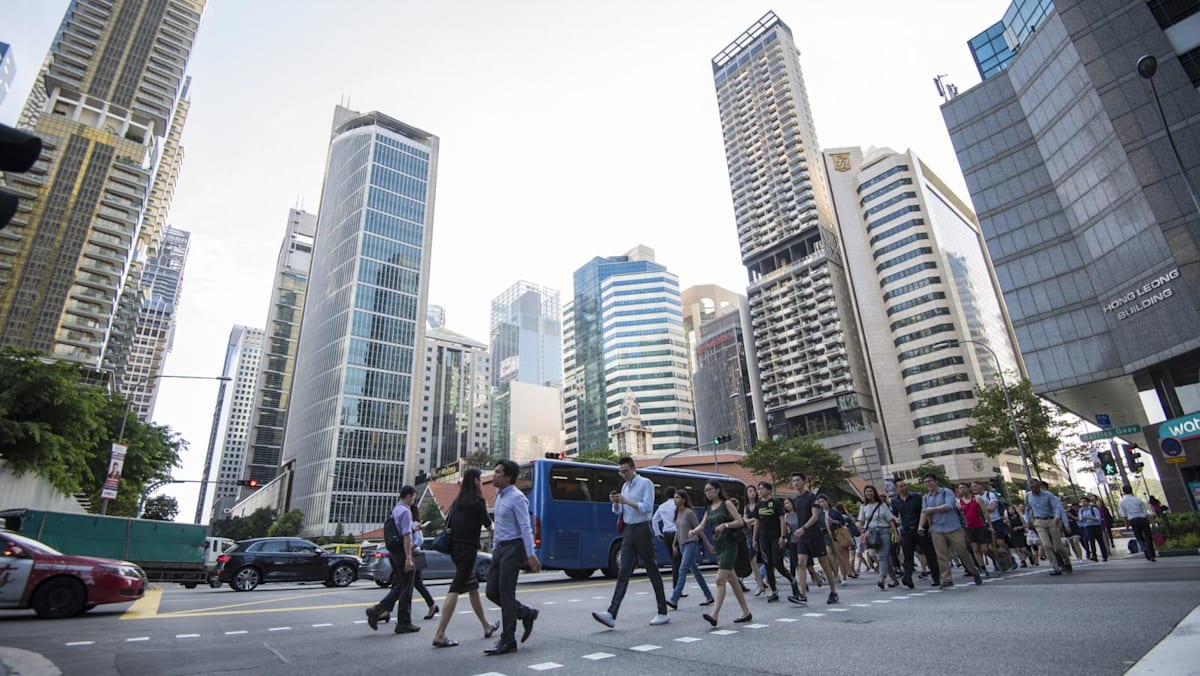
Office workers in the central business district of Singapore. (File photo: iStock)
This audio is generated by an AI tool.
SINGAPORE: 4,620 retrenchments. The number jumps out from Singapore's labour market figures for the second quarter of 2026, marking the highest quarterly total since the fourth quarter of 2020.
But the number of retrenchments is only one measure of how Singapore's labour market is performing.
Singapore’s labour market remains relatively healthy. Employment continued to grow, unemployment remained low, and there were still 1.48 job vacancies for every unemployed person.
What deserves closer attention is what happens after someone loses a job. How quickly do they return to work? What kind of job do they eventually find?
CNA Games Guess Word Crack the word, one row at a time Buzzword Create words using the given letters Mini Sudoku Tiny puzzle, mighty brain teaser Mini Crossword Small grid, big challenge Word Search Spot as many words as you can Show More Show Less
For this, we look at the rate of re-entry into employment. Among retrenched residents, the proportion who returned to employment within six months was 54.9 per cent in the second quarter, down from 60.7 per cent in the first quarter.
These figures should be interpreted carefully because they refer to different groups of workers. The latest figure covers residents retrenched in the fourth quarter of 2025, while the previous figure covers those retrenched in the third quarter of 2025.
Following the same group over a longer period offers another perspective. Among residents retrenched in the second quarter of 2025, 57.4 per cent had returned to employment within six months, rising to 69.8 per cent after a year.
The figures show that more displaced workers find employment over a longer period. But why might some workers take longer to secure a new job when Singapore continues to add jobs?
WHEN JOBS EXIST, BUT NOT NECESSARILY FOR THE SAME WORKERS
One possible explanation lies in uneven employment opportunities across sectors.
Though total employment grew by 11,400 in the second quarter, most of the increase came from non-residents, mainly Work Permit holders in construction and manufacturing. These jobs may offer limited opportunities for retrenched professionals with different skills and experience.
Resident employment grew by a modest 2,200, mostly in domestic-oriented sectors. Information and communications and financial services also added some resident workers.
However, hiring in these sectors occurred alongside retrenchments. Retrenchments were concentrated in manufacturing, information and communications, and financial services. Job vacancies also fell from 73,300 in March to 68,600 in June, driven mainly by fewer PMET openings in information and communications and financial services.
These patterns show that hiring and retrenchments can occur within the same sector, even as job vacancies decline. The opportunities available may differ from the types of jobs that retrenched workers previously held, making it harder for some to find suitable employment.
Finding a suitable match can thus take time, even when jobs are available. Some workers face a trade-off between returning to work quickly and holding out for a role closer to their previous responsibilities, seniority or pay.
WHAT HAPPENS AFTER RE-EMPLOYMENT?
The speed of re-employment captures only part of a worker’s transition. It leaves another part of the adjustment unseen: the kind of job that worker returns to.
For experienced workers, part of the difficulty may be carrying accumulated experience into a new setting.
A mid-career professional may have spent 15 years building knowledge, relationships and expertise. Some of that experience transfers readily across firms and industries. Other skills may command less value outside the worker’s previous occupation or sector.
Consider, for illustration, a professional earning S$8,400 a month, the 2025 median for full-time employed resident PMEs, excluding employer CPF contributions. Suppose the worker is retrenched and, six months later, finds a job paying S$6,000, roughly what a PME at the 25th percentile earns.
Employment statistics would record a successful re-entry. However, the worker has gone six months without a salary, potentially offset by retrenchment benefits or other financial support, and now faces substantially lower monthly earnings.
Re-employment, therefore, tells us whether someone found another job, but less about how much of the economic loss from retrenchment has been recovered.
BUILDING ON SINGAPORE’S TRANSITION SUPPORT
The support workers need depends on the challenges they face. Some may need help identifying suitable vacancies, while others require additional training to move into new roles or sectors.
Singapore already has a broad set of measures to support workers through career transitions, including career coaching, job matching, Career Conversion Programmes and reskilling support.
Career Conversion Programmes in particular can bridge training and job matching by training workers for actual roles that companies need, “instead of learning a new skill and then hoping to find a job that uses it,” as Acting Manpower Minister Jasmin Lau put it.
Employers can also contribute by recognising how skills and experience gained in one sector may apply in another.
WHAT SHOULD WE WATCH NEXT?
One quarter of weaker six-month re-entry is insufficient to establish a persistent deterioration in Singapore’s labour market.
Some degree of job turnover is a normal feature of a dynamic economy. Firms expand, contract and reorganise as economic conditions change.
The concern is how costly the transition becomes for affected workers, particularly when finding a new job involves a substantial loss of earnings.
The next few quarters will help establish whether the recent decline in six-month re-entry is temporary or whether some workers are taking longer to find employment.
Equally important is what happens to their earnings after they return to work. Both measures are needed to understand how successfully Singapore's labour market is adjusting.
Chua Yeow Hwee is an Assistant Professor in Economics at the Nanyang Technological University (NTU). He is also the Deputy Director of the Economic Growth Centre at NTU. The opinions expressed are those of the writer and do not represent the views and opinions of the institutions that he is in.
Our chief editor shares analysis and picks of the week's biggest news every Saturday.
Get our pick of top stories and thought-provoking articles in your inbox
Stay updated with notifications for breaking news and our best stories
Join our channel for the top reads for the day on your preferred chat app
南洋理工大学的蔡耀辉表示,失业工人找到另一份工作的速度以及他们之后的收入情况,或许能更全面地反映新加坡劳动力市场的调整情况。
新加坡中央商务区的上班族。(图片来源:iStock)
这段音频是由人工智能工具生成的。
新加坡:裁员4620人。这一数字在新加坡2026年第二季度的劳动力市场数据中大幅上升,创下自2020年第四季度以来的最高季度总数。
但裁员人数只是衡量新加坡劳动力市场表现的一个指标。
新加坡劳动力市场依然相对健康。就业人数持续增长,失业率保持低位,平均每位失业人员对应1.48个职位空缺。
更值得关注的是,人们失业后会发生什么。他们多久能重返工作岗位?他们最终能找到什么样的工作?
CNA游戏 猜词游戏 逐行破解单词 流行词游戏 用给定的字母组成单词 迷你数独 小小谜题,挑战你的大脑 迷你填字游戏 小方格,大挑战 单词搜索 尽可能多地找出单词 显示更多 显示更少
为此,我们考察了再就业率。在被裁员的居民中,第二季度六个月内重返工作岗位的比例为54.9%,低于第一季度的60.7%。
这些数据应谨慎解读,因为它们指的是不同的劳动群体。最新数据涵盖了2025年第四季度被裁员的居民,而前一个数据涵盖了2025年第三季度被裁员的居民。
对同一群体进行更长时间的跟踪研究可以提供另一种视角。在2025年第二季度被裁员的居民中,57.4%的人在六个月内重返工作岗位,一年后这一比例上升至69.8%。
数据显示,更多失业工人需要更长时间才能找到新工作。但为什么新加坡持续增加就业岗位的情况下,有些工人却需要更长时间才能找到新工作呢?
当工作机会存在时,但不一定需要同一批工人。
一种可能的解释是各行业就业机会不均衡。
尽管第二季度总就业人数增加了11400人,但新增就业岗位主要来自非居民,尤其是建筑业和制造业的持工作准证人员。这些工作岗位可能难以满足拥有不同技能和经验的下岗专业人士的需求。
居民就业人数略有增长,增加了2200人,主要集中在面向家庭服务的行业。信息通信技术和金融服务业也增加了一些居民就业岗位。
然而,这些行业的招聘与裁员同时发生。裁员主要集中在制造业、信息通信业和金融服务业。职位空缺也从3月份的73,300个下降到6月份的68,600个,这主要是由于信息通信业和金融服务业的专业人士、经理、执行人员和技术人员(PMET)职位空缺减少所致。
这些模式表明,即使职位空缺减少,同一行业内也可能出现招聘和裁员的情况。可供选择的就业机会可能与被裁员工之前从事的工作类型不同,这使得一些人更难找到合适的工作。
因此,即使有工作机会,找到合适的职位也需要时间。一些员工需要在尽快重返工作岗位和等待一份更接近他们之前职责、资历或薪酬的工作之间做出权衡。
重新就业后会发生什么?
再就业速度仅反映了劳动者转型过程的一部分,它忽略了调整过程的另一部分:劳动者重返工作岗位后从事的工作类型。
对于经验丰富的员工来说,部分困难可能在于如何将积累的经验运用到新的环境中。
一位职业生涯中期的专业人士可能已经花了15年时间积累知识、人脉和专业技能。其中一些经验可以轻松地在不同公司和行业之间转移。而另一些技能在员工之前的职业或行业之外可能价值不高。
举例来说,假设一位专业人士月收入为 8,400 新元,这是 2025 年全职受雇的本地专业人士、经理和执行人员(PME)的收入中位数(不包括雇主缴纳的公积金)。假设这位员工被裁员,六个月后找到一份月薪 6,000 新元的工作,这大致相当于收入处于第 25 百分位的 PME 的收入水平。
就业统计数据会显示该员工成功重返工作岗位。然而,该员工已经六个月没有收入,虽然可能获得了裁员补偿金或其他经济援助,但现在他每月的收入却大幅下降。
因此,再就业情况只能告诉我们某人是否找到了另一份工作,但并不能说明裁员造成的经济损失有多少已经得到弥补。
在新加坡过渡支持的基础上
员工所需的支持取决于他们面临的挑战。有些人可能需要帮助寻找合适的空缺职位,而另一些人则需要额外的培训才能进入新的岗位或行业。
新加坡已经出台了一系列广泛的措施来支持劳动者进行职业转型,包括职业指导、工作匹配、职业转换计划和技能再培训支持。
职业转换计划尤其能够弥合培训和工作匹配之间的差距,通过培训员工胜任公司实际需要的职位,“而不是学习一项新技能,然后希望找到一份能运用这项技能的工作”,正如代理人力部长刘嘉敏所说。
雇主也可以通过认识到在一个行业中获得的技能和经验如何应用于另一个行业来做出贡献。
接下来我们应该看什么?
仅凭四分之一的六个月重返工作岗位情况较弱,不足以证明新加坡劳动力市场持续恶化。
在充满活力的经济体中,一定程度的人员流动是正常现象。随着经济环境的变化,企业会扩张、收缩和重组。
令人担忧的是,这种转型对受影响的工人来说代价有多高,特别是当找到新工作意味着收入大幅下降时。
接下来的几个季度将有助于确定最近六个月重返工作岗位人数的下降是暂时的,还是有些工人需要更长时间才能找到工作。
同样重要的是,他们重返工作岗位后的收入情况如何。这两项指标对于了解新加坡劳动力市场调整的成效都至关重要。
蔡耀辉是南洋理工大学(NTU)经济学助理教授,同时也是南大经济增长中心副主任。文中观点仅代表作者个人立场,并不代表其所在机构的观点。
我们的主编每周六都会分享对本周重大新闻的分析和精选。
订阅我们的邮件,即可获取精选热点新闻和引人深思的文章。
订阅通知,第一时间获取突发新闻和精彩报道。
加入我们的频道,即可在您常用的聊天应用上获取当日热门文章。