Sold for S$5 per post: Inside the persistent scourge of fake positive reviews online每篇帖子售价5新元:揭秘网络虚假好评的顽疾
CNA found six businesses that have commissioned two suppliers to solicit fake reviews to improve their online presence, including a law firm, funeral home and a private investigator.
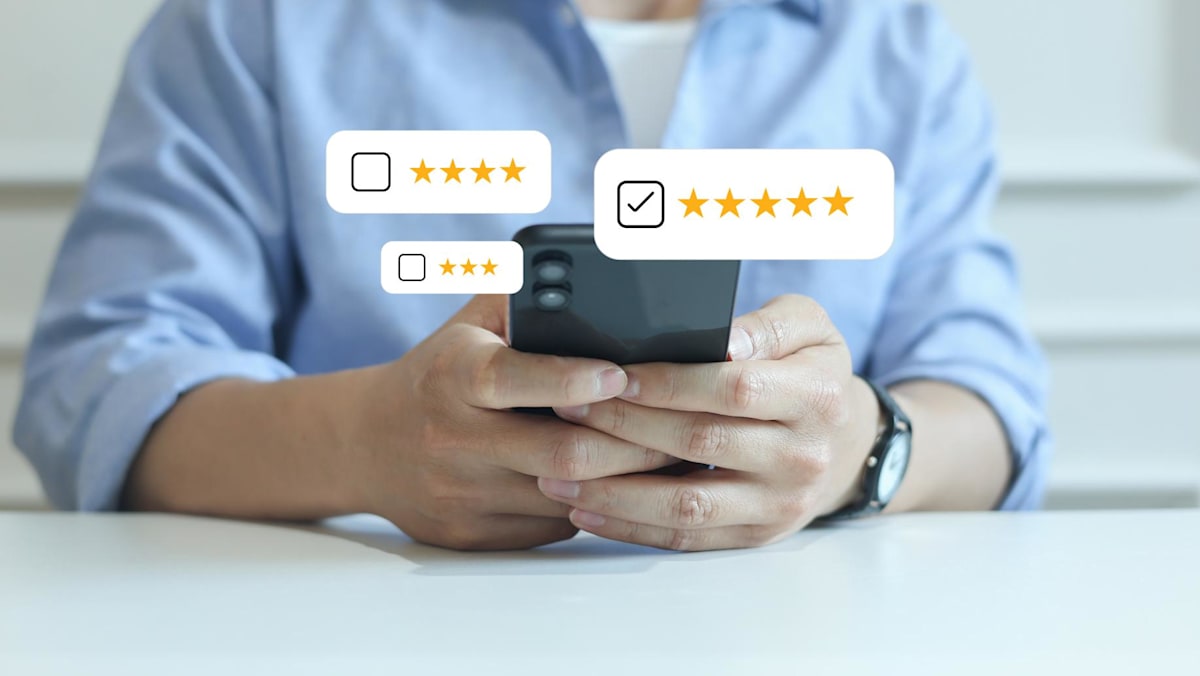
CNA found six businesses that have commissioned two suppliers to solicit fake reviews to improve their online presence, including a law firm, funeral home and a private investigator.
This audio is generated by an AI tool.
SINGAPORE: When choosing where to eat or which vendor to hire, opting for a business rated five stars on Google over a four-star competitor seems like an obvious choice.
But for anyone reading the actual reviews closely, some of the testimonials appear unrealistic and contrived – anonymous users raving about the professionalism of a divorce lawyer or gushing over the “seamless” experience arranged by a funeral parlour in the midst of deep personal grief.
The phenomenon – which CNA had reported about as far back as 2018 – points to a persistent scourge of deceptive online endorsements that authorities have warned about for years.
In late 2025, CNA spotted listings on Carousell offering money in exchange for posting reviews.
CNA Games Guess Word Crack the word, one row at a time Buzzword Create words using the given letters Mini Sudoku Tiny puzzle, mighty brain teaser Mini Crossword Small grid, big challenge Word Search Spot as many words as you can Show More Show Less After responding to the listings – offering S$1 to S$2 per review – posted by what appeared to be fake review suppliers, this reporter was tasked to give glowing but misleading testimonials for six businesses in Singapore.
After responding to the listings – offering S$1 to S$2 per review – posted by what appeared to be fake review suppliers, this reporter was tasked to give glowing but misleading testimonials for six businesses in Singapore.
A screenshot of a Carousell listing looking for people to post reviews online.
The businesses include a law firm, a funeral home, a private investigator, a logistics company, a hair salon and a maid agency.
This reporter did not receive any payment or commercial incentive for seven Google reviews that were posted and have since been removed.
When this reporter identified herself and sought comment from two fake review suppliers, one read the message but did not reply while the other deleted the entire conversation history.
Fake reviews persist despite the authorities taking action and review platforms such as Google instituting policies against inauthentic reviews and using technology to remove suspicious content.
In 2024, furniture retailer Loft Home became the first company in Singapore to be formally censured for publishing fake reviews.
Last year, a car detailing firm admitted to posting fake AI-generated five-star reviews on Sgcarmart.
In response to CNA’s queries, a spokesperson from the Competition and Consumer Commission of Singapore (CCS) said posting fake reviews is an unfair practice that can mislead consumers into thinking the product or service is more popular than it actually is.
While difficult to detect and investigate, CCS said if such practices are uncovered, it would take action against businesses that procure, post or facilitate the posting of fake reviews.
A screenshot of a conversation with a fake reviews supplier on messaging app Telegram.
These unfair trade practices contravene the Consumer Protection (Fair Trading) Act. Under the act, it is an unfair practice for businesses to post false reviews to deceive or mislead a consumer.
If a court finds that a supplier has engaged in an unfair practice, it can order restitution or award the consumer damages, among other consequences.
A Carousell spokesperson said that the company takes a serious view of the sale of prohibited content, including listings on buying and selling Google reviews.
“We are aware of such listings and are in the process of using relevant keywords to identify and remove them,” the spokesperson said, adding that moderation takes place after the listing is posted, so it may take time before its artificial intelligence system detects it.
Users can also report problematic listings, and reports are typically reviewed within 24 hours of submission, said Carousell.
Google did not respond to CNA's questions about fake reviews, but its user-generated content policy page said it has automated systems and trained operators monitoring Google Maps for suspicious behaviour.
“Contributions to Google Maps should reflect a genuine experience at a place or business, and a review or rating should reflect an actual experience with a business, and be genuine and unbiased,” the website said, adding that content is sometimes removed when policy violations are identified.
POSTING FAKE REVIEWS
But several fake reviews that this reporter posted remained on Google’s platform for some time before she took them down.
Listings on Carousell also appear to avoid detection for months. As of Sep 25, there are multiple listings seeking people to post reviews, requesting a review exchange, or advertising their services to businesses willing to pay for fake reviews.
“Account must be at least one year old, and at least local guide level five and above,” said one listing seeking to enlist reviewers by paying S$5 for each fake post. “Payment will be made 24 hours after review.”
Google’s local guide level increases based on the user’s activity, such as posting reviews, photos and captions. Posts by a user with a higher local guide level are usually seen as authentic.
Another Carousell user seeking to entice businesses to buy fake reviews claimed he has 10 Google accounts and can post “very good reviews for very cheap”, adding that those who buy more than five reviews can get a discounted rate.
After CNA made a Carousell offer to someone claiming to be a supplier of fake reviews, the conversation was moved to Telegram, where – within minutes – this reporter was told exactly what to post for the first assignment.
A screenshot of a review posted on a law firm's Google Maps listing.
Posing as someone named “Jackson”, this reporter was asked to put up a five-star review for a law firm that had engaged the supplier of falsified reviews. The review - posted word for word from the text provided by the supplier - praised a lawyer from the firm who kept Jackson updated on legal proceedings at every stage.
Using another account and posing as “Sam”, this reporter similarly left a five-star review for a funeral home, praising the seamless service provided to Sam and his fake wife using verbatim text from the supplier.
This reporter was also asked to join a Telegram channel, which assigned new tasks to participants to post fake reviews on platforms other than Google.
A screenshot of a five-star review posted on a funeral home's Google Maps page.
Over the next few days, when a new Singapore business purchased reviews, this reporter would be asked to post a review by the fake review suppliers.
Over the course of one month, CNA found six Singapore businesses that had paid for such reviews.
CNA has contacted these firms for comment and is withholding their identities pending their responses.
WHY DO SOME COMPANIES DO IT?
Businesses recognise that online reviews play an important role in shaping reputation and influencing decisions, said Associate Professor Alton Chua of Nanyang Technological University’s Wee Kim Wee School of Communication and Information.
“In highly competitive environments, some may see fake reviews as a quick and relatively inexpensive way to lure customers,” he said.
This can create a vicious cycle where competitors feel pressured to follow suit and engage in conduct that raises serious ethical concerns and may also carry legal consequences,” said Assoc Prof Chua, whose research interests involve user-generated content.
Mr Marcus Ho, founder of digital marketing agency Brew Interactive, said businesses seek to influence consumer trust and improve search rankings through buying fake reviews.
Increasingly, they may also do so to boost how their brand appears in artificial intelligence tools such as ChatGPT or Gemini, he added.
Several of the companies that CNA posted fake reviews for had numerous one-star reviews.
One user described her experience with the law firm as upsetting, while another review named a lawyer and said it was difficult to get updates from her.
For the funeral home, one user expressed extreme anger and disappointment over how her brother’s funeral was handled, while two others complained of hidden costs.
Another user said she did not get the empathetic service that other reviewers raved about, and described the funeral home staff as tactless.
A private investigation company had reviews alleging a lousy surveillance job and requests for more payment.
CNA was unable to verify if these negative reviews were genuine. All three companies responded to some of the negative reviews, with the private investigation company accusing users of leaving fake reviews.
Mr Ho said consumers can look for patterns in reviews to determine if they are genuine.
“Warning signs include sudden spikes in five-star reviews, generic language, repeated use of the full brand name in reviews, and reviewer profiles with little history,” he said.
Reading lower-rated reviews first and comparing feedback across platforms can also be helpful, he said.
Assoc Prof Chua said fake reviews used to be easier to spot because of exaggerated praise and obvious grammatical errors, but have now become more professional and authentic-looking.
“Generative AI has further amplified this trend by making it almost costless to generate large volumes of polished, convincing reviews that are almost indistinguishable from genuine customer feedback,” he said.
Alarm bells should ring if a large number of reviews appear within a very short period with similar wording, or if reviews are overwhelmingly positive but lack details about the experience, he added.
“But the reality is that there is rarely a definitive giveaway. Fake reviews are becoming increasingly sophisticated, so consumers should think in terms of probabilities rather than certainty and look for patterns of suspicious behaviour rather than individual red flags,” said Assoc Prof Chua.
In one example of suspicious reviewer behaviour, CNA observed three five-star reviews being posted on the law firm’s page within a 10-minute window by different accounts.
“While review manipulation may deliver short-term gains, the long-term costs of regulatory scrutiny, reputational damage and the loss of consumer trust can be far greater,” said Assoc Prof Chua.
Get our pick of top stories and thought-provoking articles in your inbox
Stay updated with notifications for breaking news and our best stories
Join our channel for the top reads for the day on your preferred chat app
CNA 发现有六家企业委托两家供应商索取虚假评论以改善其在线形象,其中包括一家律师事务所、一家殡仪馆和一家私人侦探事务所。
这段音频是由人工智能工具生成的。
新加坡:在选择去哪里吃饭或雇佣哪个供应商时,选择在谷歌上评分为五星的商家而不是四星的竞争对手似乎是一个显而易见的选择。
但对于仔细阅读实际评论的人来说,有些评价显得不切实际且矫揉造作——匿名用户对离婚律师的专业精神赞不绝口,或者对殡仪馆在深切的个人悲痛中安排的“无缝”体验大加赞赏。
早在 2018 年,CNA 就曾报道过这种现象,这表明虚假网络代言这种祸害依然存在,而当局多年来一直对此发出警告。
2025 年末,CNA 在 Carousell 上发现有广告提供金钱换取发布评论。
CNA游戏 猜词游戏 逐行破解单词 流行词游戏 用给定的字母组成单词 迷你数独 小小的谜题,强大的脑力挑战 迷你填字游戏 小方格,大挑战 单词搜索 尽可能多地找出单词 显示更多 显示更少 在回应了看似虚假评论供应商发布的列表(每条评论提供1至2新元的报酬)后,这位记者被要求为新加坡的六家企业提供溢美之词但具有误导性的证言。
在回应了看似虚假评论供应商发布的列表(每条评论提供 1 至 2 新元的报酬)后,这位记者被要求为新加坡的六家企业提供溢美之词但具有误导性的证言。
一张 Carousell 平台上的广告截图,该广告正在寻找用户在网上发布评论。
这些企业包括一家律师事务所、一家殡仪馆、一家私人侦探事务所、一家物流公司、一家美发沙龙和一家家政服务公司。
这位记者并未因发布(现已删除)七条谷歌评论而收到任何报酬或商业利益。
当这位记者表明身份并向两名虚假评论提供商征求意见时,其中一人已阅读消息但没有回复,而另一人则删除了整个对话记录。
尽管有关部门采取了行动,谷歌等评论平台也制定了打击虚假评论的政策,并利用技术手段删除可疑内容,但虚假评论仍然存在。
2024年,家具零售商Loft Home成为新加坡第一家因发布虚假评论而受到正式谴责的公司。
去年,一家汽车美容公司承认在 Sgcarmart 上发布了虚假的 AI 生成的五星好评。
针对亚洲新闻台(CNA)的询问,新加坡竞争与消费者委员会(CCS)发言人表示,发布虚假评论是一种不公平的做法,会误导消费者,让他们认为产品或服务比实际情况更受欢迎。
CCS表示,虽然此类行为难以发现和调查,但如果发现此类行为,将对购买、发布或协助发布虚假评论的企业采取行动。
这是在即时通讯软件 Telegram 上与虚假评论提供商的对话截图。
这些不公平交易行为违反了《消费者保护(公平交易)法》。根据该法,企业发布虚假评论以欺骗或误导消费者属于不公平交易行为。
如果法院认定供应商存在不公平竞争行为,除其他后果外,还可以责令供应商赔偿损失或向消费者支付赔偿金。
Carousell 的一位发言人表示,该公司对销售违禁内容(包括买卖 Google 评论的列表)持严肃态度。
发言人表示:“我们已经注意到此类信息,目前正在使用相关关键词来识别和删除它们。”他还补充说,审核是在信息发布后进行的,因此人工智能系统可能需要一段时间才能检测到它。
Carousell 表示,用户还可以举报有问题的房源信息,举报通常会在提交后 24 小时内得到审核。
谷歌没有回应 CNA 关于虚假评论的问题,但其用户生成内容政策页面表示,谷歌拥有自动化系统和训练有素的操作员来监控谷歌地图上的可疑行为。
“对谷歌地图的贡献应该反映在某个地点或商家的真实体验,评论或评分应该反映与商家的实际体验,并且要真实、公正,”该网站表示,并补充说,当发现违反政策的内容时,有时会将其删除。
发布虚假评论
但这位记者发布的几条虚假评论在被她删除之前,已经在谷歌平台上保留了一段时间。
在Carousell上,虚假评论似乎也能瞒天过海数月之久。截至9月25日,已有大量广告寻求他人发布评论、要求交换评论,或向愿意付费购买虚假评论的商家推销服务。
“账号必须至少注册一年,且本地向导等级至少达到五级或以上,”一则招聘虚假帖子的广告写道,每篇虚假帖子支付5新元报酬。“审核通过后24小时内付款。”
谷歌本地向导等级会根据用户的活跃程度而提升,例如发布评论、照片和说明文字。本地向导等级越高的用户发布的内容通常被认为越真实。
另一位在 Carousell 上招揽商家购买虚假评论的用户声称,他有 10 个 Google 帐户,可以发布“非常便宜的非常好的评论”,并补充说,购买超过 5 条评论的人可以享受折扣价。
在 CNA 通过 Carousell 向一位自称是虚假评论供应商的人发出报价后,对话转移到了 Telegram,几分钟之内,这位记者就被告知了第一个任务的具体内容。
这是律师事务所谷歌地图页面上发布的一条评论的截图。
记者假扮成名叫“杰克逊”的人,受雇于一家提供虚假评论的律师事务所,并为其撰写了一条五星好评。这条评论完全照搬了评论供应商提供的文本,赞扬了该事务所的一位律师,称其在诉讼的每个阶段都及时向杰克逊汇报进展。
这位记者使用另一个账号,冒充“Sam”,同样给一家殡仪馆留下了五星好评,称赞该殡仪馆为Sam和他的假妻子提供了完美的服务,评论内容直接引用了殡仪馆提供的短信。
这位记者还被要求加入一个 Telegram 频道,该频道会给参与者分配新的任务,让他们在 Google 以外的平台上发布虚假评论。
一张发布在殡仪馆谷歌地图页面上的五星好评截图。
接下来的几天里,每当有新加坡新企业购买评论时,这家虚假评论供应商就会要求这位记者发布评论。
在一个月的时间里,CNA 发现了六家新加坡企业付费购买此类评论。
CNA已联系这些公司征求意见,在收到回复之前暂不公布它们的身份。
为什么有些公司会这样做?
南洋理工大学黄金辉传播与信息学院副教授蔡奥顿表示,企业认识到在线评论在塑造声誉和影响决策方面发挥着重要作用。
他说:“在竞争激烈的环境中,有些人可能会把虚假评论视为一种快速且相对廉价的吸引顾客的方式。”
“这可能会造成恶性循环,竞争对手会感到压力而效仿,并从事引发严重道德问题且可能带来法律后果的行为,”蔡副教授说道,他的研究兴趣涉及用户生成的内容。
数字营销机构 Brew Interactive 的创始人 Marcus Ho 先生表示,企业试图通过购买虚假评论来影响消费者信任并提高搜索排名。
他还补充说,他们这样做也可能是为了提升其品牌在 ChatGPT 或 Gemini 等人工智能工具中的曝光度。
CNA发布虚假评论的几家公司都有很多一星差评。
一位用户形容她与该律师事务所的合作经历令人沮丧,而另一条评论则点名批评了一位律师,并表示很难从她那里获得最新消息。
对于殡仪馆,一位用户对她哥哥的葬礼处理方式表示极度愤怒和失望,另有两位用户抱怨存在隐性费用。
另一位用户表示,她没有得到其他评论者称赞的那种体贴周到的服务,并形容殡仪馆工作人员缺乏礼貌。
一家私家侦探公司收到评论,称其监视工作做得不好,并要求增加费用。
CNA无法核实这些差评是否真实。三家公司都对部分差评做出了回应,其中私家侦探公司指责用户发布虚假评论。
何先生表示,消费者可以通过查看评论中的模式来判断评论是否真实。
他说:“预警信号包括五星好评数量突然激增、使用通用语言、在评论中反复使用完整的品牌名称以及评论者个人资料历史记录很少。”
他还表示,先阅读评分较低的评论,并比较不同平台上的反馈也很有帮助。
蔡副教授表示,过去虚假评论更容易被识别,因为它们往往夸大其词,语法错误也很明显,但现在虚假评论变得更加专业和逼真。
他说:“生成式人工智能进一步加剧了这一趋势,使得生成大量精雕细琢、令人信服的评论几乎无需任何成本,这些评论与真实的客户反馈几乎无法区分。”
他补充说,如果在很短的时间内出现大量措辞相似的评论,或者评论绝大多数是正面的但缺乏关于体验的细节,那就应该敲响警钟。
“但现实情况是,很少有确凿的线索。虚假评论越来越复杂,因此消费者应该从概率的角度考虑问题,而不是追求确定性,应该寻找可疑行为的模式,而不是个别的危险信号,”蔡副教授说。
CNA 观察到,在 10 分钟内,一家律师事务所的页面上出现了三个五星好评,且发布者使用的账户各不相同,这便是可疑评论者行为的一个例子。
“虽然操纵评论可能会带来短期收益,但监管审查、声誉损害和消费者信任丧失等长期成本可能要大得多,”蔡副教授说。
订阅我们的邮件,即可获取精选热点新闻和引人深思的文章。
订阅通知,第一时间获取突发新闻和精彩报道。
加入我们的频道,即可在您常用的聊天应用上获取当日热门文章。