Commentary: Japan could redraw the global oil map评论:日本或将重塑全球石油格局
Tokyo isn’t waiting for the end of the war to reassess its supply sources, says Javier Blas for Bloomberg Opinion.
新闻视频
Tokyo isn’t waiting for the end of the war to reassess its supply sources, says Javier Blas for Bloomberg Opinion.
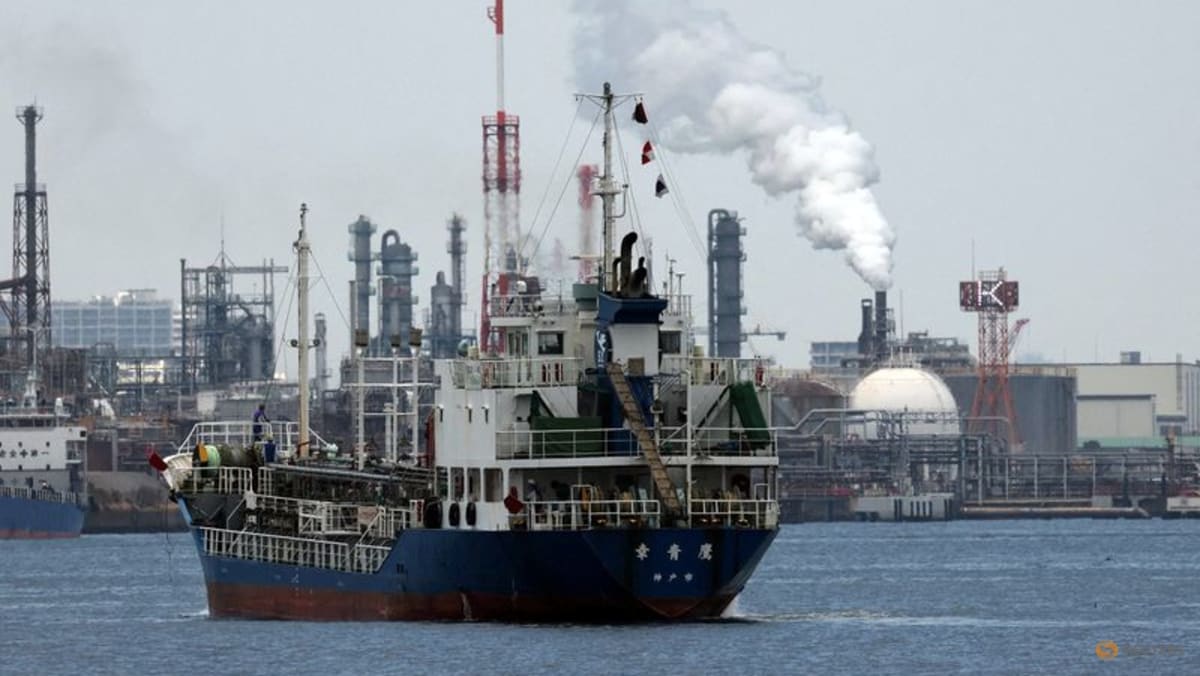
A small tanker sails near an oil refinery in the Keihin Industrial Zone in Kawasaki, south of Tokyo, Mar 17, 2026. REUTERS/Issei Kato/File Photo
LONDON: Among the world’s top fuel-consuming nations, Japan is the most energy insecure. Its import-dependency ratios are scary: It buys overseas 99.9 per cent of the oil it needs; 99.7 per cent of the coal; and 97.8 per cent of the natural gas.
So Tokyo springs into action after every major energy shock to reassess its supply sources, making it a bellwether of global trends. The direction it’s signalling this time? Run away from the Middle East.
Where Japan goes, others in Asia would too. Indeed, South Korea, another major energy importer, has already announced plans to reduce its reliance on the Middle East. India has been less vocal but was trying to diversify even before the war in Iran.
Beyond creating a major conundrum for Middle Eastern suppliers, the shift goes against geographic, economic and historic reasoning. The Middle East and East Asia are relatively close, so it makes commercial sense – particularly when the cost of shipping is high, as it is now – that oil flows from one region to the other. And so it has done for decades.
CNA Games Guess Word Crack the word, one row at a time Buzzword Create words using the given letters Mini Sudoku Tiny puzzle, mighty brain teaser Mini Crossword Small grid, big challenge Word Search Spot as many words as you can Show More Show Less Despite its deep sense of energy vulnerability after the 1973 to 1974 oil crisis, and again in 1979, Japan trusted the Middle East, buying more than 90 per cent of its crude from the region. With the benefit of hindsight, the policy was – to borrow a phrase from Nobuo Tanaka, a former senior energy official in Japan who later ran the International Energy Agency – a “mistake”.
Despite its deep sense of energy vulnerability after the 1973 to 1974 oil crisis, and again in 1979, Japan trusted the Middle East, buying more than 90 per cent of its crude from the region. With the benefit of hindsight, the policy was – to borrow a phrase from Nobuo Tanaka, a former senior energy official in Japan who later ran the International Energy Agency – a “mistake”.
READ BETWEEN THE LINES
The official message is, of course, more diplomatic. But read between the lines and it’s obvious that Japanese officials are trying to rectify what they see as a policy failure. The key is “diversifying procurement sources and transport routes”, according to a Cabinet document.
The goal, while unquantified, is clear: to “break free from a structural vulnerability where recurring energy supply instability and constraints act as a bottleneck for Japan's economic growth”.
To be sure, the documents also talk about supporting construction of new pipelines to bypass the Strait of Hormuz, which would allow it to keep buying crude from, say, the United Arab Emirates and Saudi Arabia without having to worry as much about instability in Iran. But Japan still looks to be headed for a major supply shift.
The Japanese government is discussing the plan, and a formal announcement including import targets and taxpayer money to support it may come before year-end. Seoul, meanwhile, has already set a quota and vows to reduce its oil supply from any region to 50 per cent of the total. Currently, the Middle East accounts for just over 75 per cent of South Korean oil imports.
Japan may not have the numbers sorted, but it isn’t waiting for the end of the war to make changes. In July, according to the latest monthly data available, the US was its main provider of oil, accounting for 37 per cent of total petroleum imports.
It’s worth repeating because it reflects the power of the US shale revolution along with the latest upheaval in the global oil market: Washington is today the biggest oil supplier to Tokyo. Mexico and Latin America provided another 3 per cent.
GET OIL OUT OF TRANSPORTATION
Turning those one-off statistics into sustained flows won’t be easy. But if history serves as any guide, Japan has demonstrated it can shift its oil consumption when it senses its national security is at stake.
Back in the late 1970s, the country consumed more than 5.5 million barrels a day, generating more than 60 per cent of its electricity burning crude and fuel-oil. Betting heavily on coal, nuclear and liquefied natural gas, it pushed oil out of its power industry almost entirely. By 2025, Japanese oil consumption had fallen to a 55-year low of less than 3 million barrels a day.
Reducing dependency on the Middle East would be easier if overall Japanese oil demand drops further. The fewer barrels it needs to buy, the easier it is to shift purchases. If the mantra in the 1970s and 1980s was “get oil out of electricity”, the next objective should be more radical: get oil out of transportation.
It was Japan that gave the world the first mass-produced hybrid car, Toyota’s Prius. Hybrids have made huge inroads since then, helping to reduce gasoline consumption by about half over the last two decades.
But Japan, the world’s fourth-largest car market by sales totals, lags in adoption of pure electric vehicles. Having developed hybrids first, its car manufacturers didn’t push nearly as hard as China’s into full electrification.
The result is that today only about 2 per cent of new cars sales in Japan are full EVs, well below the 28 per cent average in Europe, and even trailing the US and Canada. The International Energy Agency believes the high share of the population living in apartments with limited access to private parking, in combination with a limited charging network, are constraining EV sales in Japan.
That makes EVs an important lever for reducing oil imports, which would make diversification easier. So alongside its plans to finance pipelines to bypass the Strait of Hormuz, Tokyo should work harder to boost EV sales, with a focus on expanding its EV charging infrastructure.
It also should try to reduce oil usage in heating. Rural Japan relies on kerosene stoves, an oddity among industrialised nations.
If Tokyo manages to squeeze down its gasoline and kerosene demand, what would be left is diesel and other petrochemical feedstock. As the world’s fourth-largest chemicals producer, it imports huge amounts of refined petroleum products used in plastics and other materials.
The oil market’s algebra, however, is unyieldingly zero-sum. If Japan succeeds, it will have to elbow its way into markets others consider their own, like West Africa and the Americas, the traditional hunting grounds of European refiners. And producers in the Middle East would need to find new customers.
Trouble is, who would like to boost its reliance on Middle Eastern oil? I draw a blank. That wouldn’t be Tokyo’s problem to solve. But it’s another way in which Japan could change the global oil map for good.
Our chief editor shares analysis and picks of the week's biggest news every Saturday.
An automated curation of our top stories to start your day.
Get our pick of top stories and thought-provoking articles in your inbox
Stay updated with notifications for breaking news and our best stories
Join our channel for the top reads for the day on your preferred chat app
彭博社专栏作家哈维尔·布拉斯表示,东京并没有等到战争结束才重新评估其供应来源。
2026年3月17日,一艘小型油轮驶过位于东京以南川崎京滨工业区的一家炼油厂附近。路透社/加藤一成/资料照片
伦敦:在全球主要的燃料消耗国中,日本的能源安全状况最为堪忧。其进口依存度令人担忧:日本所需石油的99.9%依赖进口;煤炭的99.7%依赖进口;天然气的97.8%依赖进口。
因此,每当发生重大能源冲击后,东京都会迅速采取行动,重新评估其供应来源,使其成为全球趋势的风向标。这一次,它发出的信号是什么?远离中东。
日本的举动往往会影响亚洲其他国家。事实上,另一个能源进口大国韩国已经宣布了减少对中东依赖的计划。印度虽然没有公开表态,但早在两伊战争爆发之前就一直在努力实现能源多元化。
这种转变不仅给中东供应商带来了巨大的难题,也违背了地理、经济和历史规律。中东和东亚距离相对较近,因此,石油从一个地区流向另一个地区在商业上是合理的——尤其是在运输成本高昂的情况下,就像现在这样。几十年来,石油一直都是这样流动的。
CNA游戏 猜词游戏 逐行破解单词 流行词游戏 用给定的字母组成单词 迷你数独 小谜题,大挑战 迷你填字游戏 小方格,大挑战 单词搜索 尽可能多地找出单词 显示更多 显示更少 尽管在1973年至1974年石油危机之后,以及1979年,日本深感能源脆弱性,但它仍然信任中东,从该地区购买了超过90%的原油。事后看来,这项政策——借用日本前高级能源官员、后来担任国际能源署署长的田中信夫的话来说——是一个“错误”。
尽管在1973年至1974年石油危机之后,以及1979年,日本深感能源脆弱性,但它仍然信任中东,从该地区购买了超过90%的原油。事后看来,这项政策——借用日本前能源高级官员、后来担任国际能源署署长的田中信夫的话来说——是一个“错误”。
读懂字里行间的意思
官方的说法当然更加委婉。但字里行间不难看出,日本官员正试图纠正他们认为的政策失误。根据一份内阁文件,关键在于“采购来源和运输路线多元化”。
虽然目标尚未量化,但很明确:那就是“摆脱结构性脆弱性,即反复出现的能源供应不稳定和限制成为日本经济增长的瓶颈”。
诚然,这些文件也提到支持修建绕过霍尔木兹海峡的新管道,这将使日本能够继续从阿联酋和沙特阿拉伯等国购买原油,而无需过多担心伊朗的不稳定局势。但日本似乎仍将面临重大的供应转移。
日本政府正在讨论这项计划,正式公告可能会在年底前发布,其中可能包括进口目标和用于支持的纳税人资金。与此同时,首尔方面已经设定了配额,并承诺将其从任何地区的石油供应量减少到总量的50%。目前,中东地区占韩国石油进口总量的75%以上。
日本或许尚未完全掌握所有数据,但它并未等到战争结束才开始做出改变。根据最新公布的月度数据,7月份美国是日本主要的石油供应国,占其石油进口总量的37%。
值得重申的是,这反映了美国页岩油革命的强大力量以及全球石油市场的最新动荡:华盛顿如今是东京最大的石油供应国。墨西哥和拉丁美洲则提供了另外3%的石油。
让石油退出交通运输领域
将这些零星的统计数据转化为持续的流量并非易事。但如果历史可以借鉴,日本已经证明,当它感受到国家安全受到威胁时,它可以调整石油消费。
上世纪70年代末,日本石油日消耗量超过550万桶,超过60%的电力来自原油和燃油发电。随着对煤炭、核能和液化天然气的大力投入,日本几乎完全淘汰了石油在其电力行业中的应用。到2025年,日本石油日消耗量已降至55年来的最低水平,不足300万桶。
如果日本整体石油需求进一步下降,减少对中东的依赖就会更容易。日本需要购买的石油越少,就越容易调整采购策略。如果说上世纪七八十年代的口号是“让石油退出电力行业”,那么下一个目标应该更加激进:让石油退出交通运输行业。
日本率先向世界推出了首款量产混合动力汽车——丰田普锐斯。自此以后,混合动力汽车取得了巨大进展,在过去二十年中帮助减少了近一半的汽油消耗量。
但日本作为全球第四大汽车市场(按销量计),在纯电动汽车的普及方面却落后于其他国家。尽管日本率先开发了混合动力汽车,但其汽车制造商在全面电气化方面的投入远不及中国。
结果是,目前日本新车销量中只有约2%是纯电动汽车,远低于欧洲28%的平均水平,甚至落后于美国和加拿大。国际能源署认为,日本大量人口居住在私人停车位有限的公寓楼里,再加上充电网络覆盖不足,是制约日本电动汽车销售的主要因素。
这使得电动汽车成为减少石油进口的重要杠杆,从而更容易实现能源多元化。因此,除了计划为绕过霍尔木兹海峡的输油管道提供资金外,东京还应加大力度促进电动汽车销售,重点是扩大电动汽车充电基础设施。
此外,还应努力减少取暖用油量。日本农村地区仍然依赖煤油炉,这在工业化国家中实属罕见。
如果东京能够有效削减汽油和煤油需求,那么剩下的就只有柴油和其他石化原料了。作为世界第四大化学品生产国,东京大量进口用于塑料和其他材料的精炼石油产品。
然而,石油市场的运作机制是铁一般的零和博弈。如果日本成功,就必须挤进其他国家视为己有的市场,例如西非和美洲——这些地区历来是欧洲炼油商的“猎场”。而中东的生产商则需要寻找新的客户。
问题是,谁会愿意增加对中东石油的依赖?我想不出谁会愿意。这并非东京需要解决的问题。但这却是日本彻底改变全球石油格局的另一种途径。
我们的主编每周六都会分享对本周重大新闻的分析和精选。
每天清晨,我们都会自动为您推送最热门的新闻资讯,助您开启美好的一天。
订阅我们的邮件,即可获取精选热点新闻和引人深思的文章。
订阅通知,第一时间获取突发新闻和精彩报道。
加入我们的频道,即可在您常用的聊天应用上获取当日热门文章。