Japan approves mass production of 3D-printed interceptor drones日本批准大规模生产3D打印拦截无人机
Japan’s defense-procurement agency has signed a mass production procurement agreement for interceptor drones made using 3D printers.
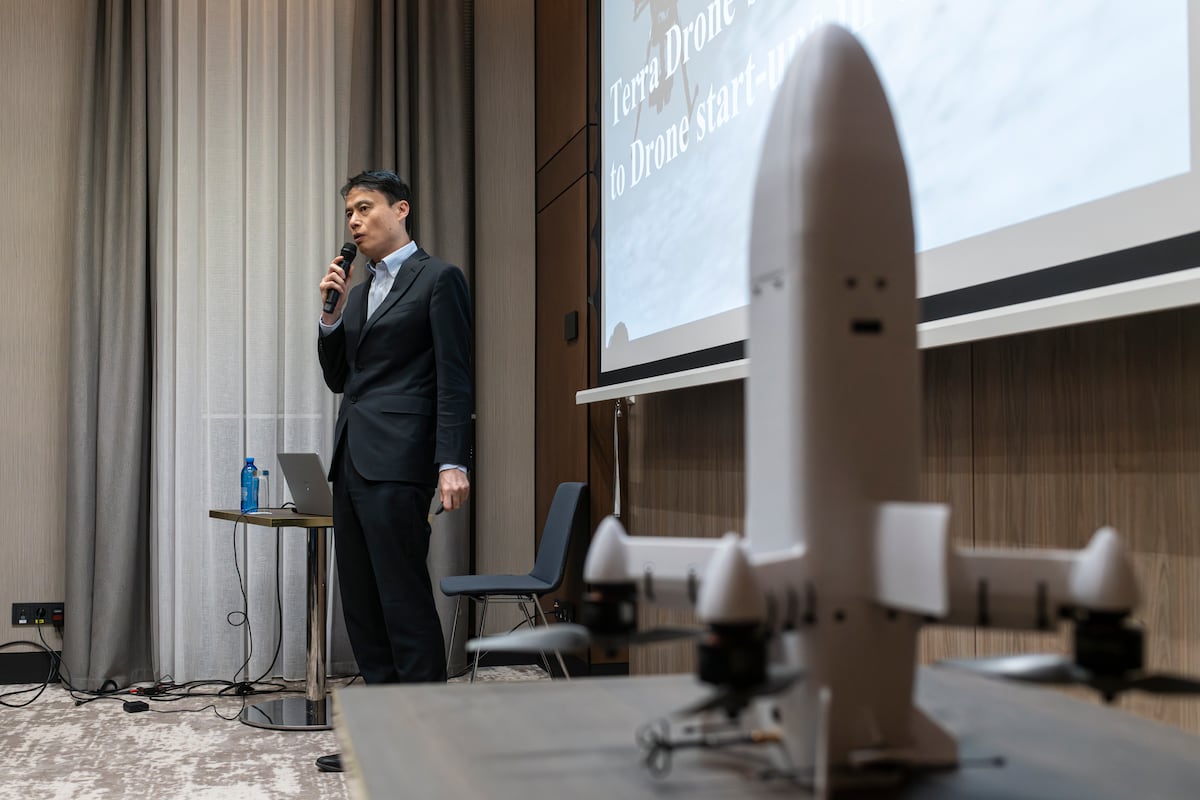
MANILA, Philippines — Japan’s defense-procurement agency has signed a mass production procurement agreement for interceptor drones made using 3D printers, the latest move to rapidly deploy a large unmanned fleet by 2027.
The Acquisition, Technology, and Logistics Agency selected Terra B1, a rocket-launched interceptor drone, after a demonstration with the Maritime Self-Defense Forces last month.
Terra B1 is developed by domestic industrial giant Terra Drone and serves as the Japan-made counterpart to Terra A1, which had been fielded on Ukraine’s battlefields earlier this year.
ATLA neither disclosed the number of units on order nor the contract price.
In late May, the defense ministry released a tender to rapidly acquire and deploy drones that can intercept one-way attack drones such as the Shahed and anti-radar loitering munitions such as the IAI Harpy.
The latest decision is the fastest to date, industry insiders say, as the tender took only three months compared to previous bids which took one to two years.
The decision also reflects the government’s growing efforts to increase 3D printing capabilities to support defense needs.
Using 3D printers will “simplify and shorten” the design and prototyping stage, CEO Toru Tokushige told Defense News. It will also allow Terra B1 to move into mass production as quickly as possible and meet contract requirements.
Aside from lowering costs and accelerating production, 3D printing will allow the company ample time to modify the interceptors to adapt to evolving threats and the fast-changing drone tech landscape without delaying the deployment schedule.
Terra Drone also plans to spread out production across multiple locations, and later expand to local printing farms, as a precautionary measure to ensure manufacturing can continue even if one facility comes under attack.
“Even if one production site were attacked by a system such as a Shahed-type drone, this distributed model could significantly reduce the risk of the entire supply chain being disrupted,” Tokushige said.
3D printing has been changing military and defense logistics since the U.S. Army and Navy deployed printers in the field in 2012. In Ukraine, printing farms have become a frontline
necessity: They produce drone parts and a range of tools to support brigades in the ongoing war.
The defense ministry’s decision to adopt the technology signals a massive shift in the defense industry, which experts warn may be unable to keep pace with the current administration’s export drive and increasing global demands.
“We believe 3D printing is not simply about reducing manufacturing costs. It has the potential to transform Japan’s defense manufacturing into a faster, more flexible and more resilient production model,” Tokushige said.
Leilani Chavez is an Asia correspondent for Defense News. Her reporting expertise is in East Asian politics, development projects, environmental issues and security.
菲律宾马尼拉——日本防卫采购机构签署了一项大规模生产采购协议,采购使用 3D 打印机制造的拦截无人机,这是日本为在 2027 年前快速部署一支庞大的无人机队而采取的最新举措。
上个月,在与海上自卫队进行演示后,采购、技术和后勤局选择了火箭发射拦截无人机 Terra B1。
Terra B1 由日本国内工业巨头 Terra Drone 公司开发,是 Terra A1 的日本国产版本,Terra A1 已于今年早些时候在乌克兰战场上投入使用。
ATLA既没有透露订单数量,也没有透露合同价格。
5 月下旬,国防部发布招标,旨在快速采购和部署能够拦截单向攻击无人机(如 Shahed)和反雷达巡飞弹(如 IAI Harpy)的无人机。
业内人士表示,此次决定是迄今为止最快的,因为招标仅用了三个月时间,而之前的投标则需要一到两年时间。
该决定也反映出政府为提高 3D 打印能力以满足国防需求而不断加大的努力。
Terra B1首席执行官德重彻告诉《防务新闻》,使用3D打印机将“简化并缩短”设计和原型制作阶段。这将使Terra B1能够尽快投入批量生产,并满足合同要求。
除了降低成本和加快生产速度外,3D 打印还能让公司有充足的时间对拦截器进行修改,以适应不断变化的威胁和快速变化的无人机技术格局,而不会延误部署计划。
Terra Drone 还计划将生产分散到多个地点,并最终扩展到当地的打印农场,作为一项预防措施,以确保即使一个工厂遭到攻击,生产也能继续进行。
“即使一个生产基地遭到 Shahed 型无人机等系统的攻击,这种分布式模式也能显著降低整个供应链中断的风险,”德重表示。
自2012年美国陆军和海军在战场部署3D打印机以来,3D打印技术一直在改变军事和国防后勤。在乌克兰,3D打印农场已成为前线。
必要性:他们生产无人机零件和各种工具,以支持正在进行的战争中的旅级部队。
国防部决定采用这项技术,标志着国防工业发生了巨大转变,但专家警告说,国防工业可能无法跟上本届政府的出口步伐和日益增长的全球需求。
“我们认为3D打印不仅仅是降低制造成本。它有潜力将日本的国防制造业转变为更快、更灵活、更具韧性的生产模式,”德重说道。
莱拉尼·查韦斯是《防务新闻》的亚洲记者。她的报道专长是东亚政治、发展项目、环境问题和安全。