Rolls-Royce, Safran vie for India’s next-generation fighter engine劳斯莱斯和赛峰集团竞标印度下一代战斗机发动机
New Delhi wants access to a critical fighter engine technology available to only a handful of countries.
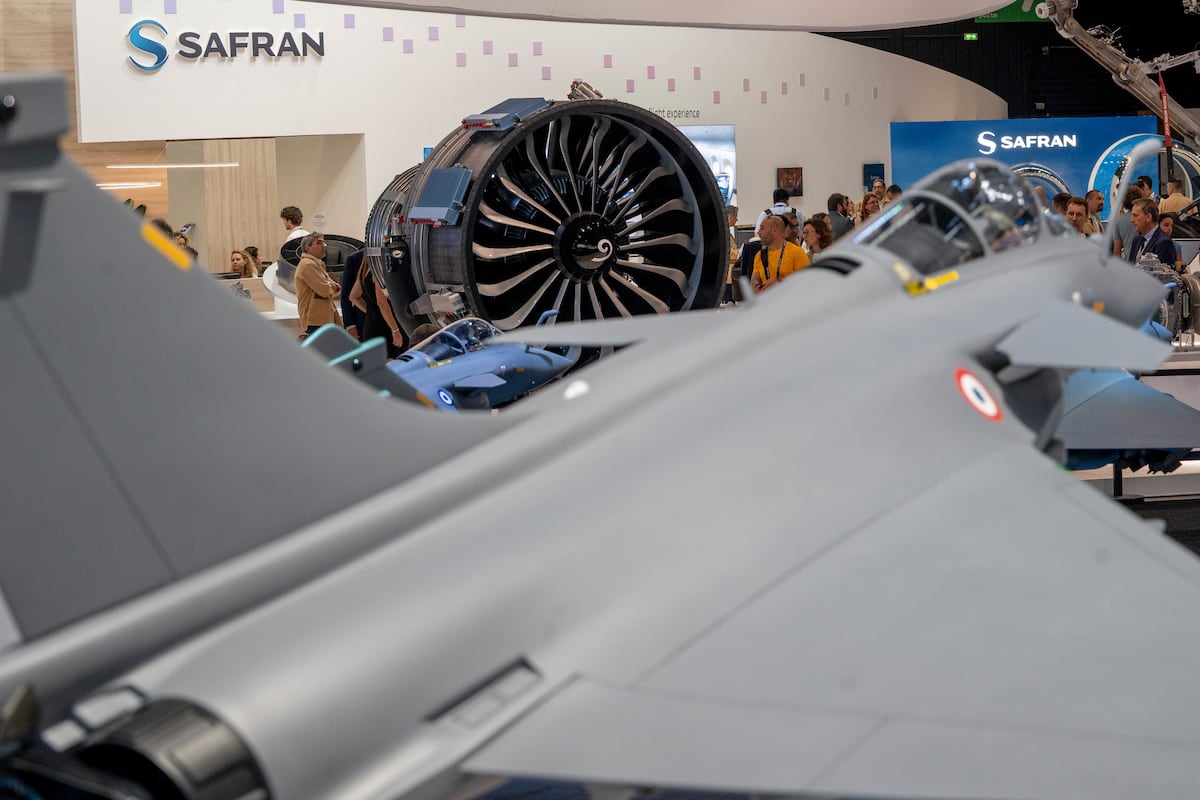
NEW DELHI — India’s ambitious plan to co-develop an engine with a foreign company for its fifth-generation fighter has set the stage for a contest between British and French aerospace companies seeking to participate in the program.
Rolls-Royce emerged as a serious contender after the British aero-engine maker and Reliance Industries, one of India’s biggest conglomerates, announced their “strategic intent” this month to jointly develop and manufacture an indigenous engine for the stealth fighter program.
The companies also said they will also explore forming a dedicated aerospace gas turbine complex in India.
France’s Safran has separately proposed developing a high-thrust engine with India’s state-run Gas Turbine Research Establishment for the jet known as the Advanced Medium Combat Aircraft (AMCA). The company’s offer is being evaluated by the Cabinet Committee on Security, India’s top government body for major defense approvals.
New Delhi’s goal is to end its long-standing dependence on foreign engines, one of the most challenging aspects of its fighter jet programs. Despite decades of efforts, India has not been able to build an engine capable of powering a frontline fighter. As a result, all such fighters built in India rely on foreign-origin engines.
The initial variants of its planned fifth generation fighter are also expected to use the American GE F414 engine.
But for later variants named AMCA Mk-2, India wants a foreign partner willing to co- develop and share the advanced technologies for a high-thrust 120 kN class turbofan engine. Both Rolls Royce and Safran are vying for that program.
Earlier this year, the British company proposed developing the engines in India with full technology transfer and Indian ownership of the intellectual property.
Now under the proposed partnership with Reliance Industries announced on Aug. 14 it is offering to go further by exploring the creation of an aerospace industrial base in India.
A joint statement by the two companies said the proposed gas turbine complex will build Indian capability from engine design to testing, production and support.
“Together, with our existing partnerships and capabilities in India, this marks a major milestone towards building a robust, self-reliant aerospace ecosystem in the country,” Rolls Royce Chief Executive Tufan Erginbilgic said.
Reliance executive director Anant Ambani said the aim was to combine Rolls-Royce’s propulsion expertise with Reliance’s manufacturing and execution capabilities to build the ecosystem. “India’s strategic autonomy requires sovereign capability in critical technologies,” he said.
Safran’s proposal, meanwhile, is already well advanced. The French company has committed to co-developing a new jet engine with India and sharing the technologies required to build and maintain it. Under the proposal, Indian engineers will work on skills considered essential for future propulsion programs.
“It’s a complete transfer of technologies. We along with the Defence Research and Development Organisation (DRDO) are basically going to develop a new engine together in India. This is unique because no one else has made that offer,” Safran’s chief executive, Olivier Andries, said in an interview to the Economic Times newspaper last November. He said this will include critical hot-section technology and turbine architecture.
With air power becoming increasingly central to modern warfare, the goal for New Delhi is to learn how to build a fighter jet engine and secure access to a critical technology available to only a handful of nations.
“India’s dependence on foreign suppliers represents perhaps the single most technological vulnerability in India’s aerospace ecosystem and developing an indigenous engine is a non-negotiable priority,” retired Air Marshal Anil Khosla, a former vice chief of the Indian Air Force, told Defense News. “As India considers these offers, the question is whether these companies will share the deepest layers of their process knowledge.”
新德里——印度雄心勃勃地计划与一家外国公司合作,为其第五代战斗机开发发动机,这为英国和法国航空航天公司之间争夺参与该项目的竞争奠定了基础。
本月,英国航空发动机制造商劳斯莱斯和印度最大的企业集团之一信实工业宣布了他们的“战略意图”,即共同开发和制造用于隐形战斗机项目的国产发动机。劳斯莱斯由此成为强有力的竞争者。
这些公司还表示,他们将探索在印度建立一个专门的航空航天燃气轮机综合体。
法国赛峰集团已另行提议与印度国营燃气轮机研究机构合作,为名为“先进中型战斗机”(AMCA)的喷气式飞机开发一款高推力发动机。该公司的提议正由印度最高国防审批机构——内阁安全委员会进行评估。
新德里的目标是结束其长期以来对外国发动机的依赖,这是其战斗机项目中最具挑战性的环节之一。尽管数十年来不懈努力,印度仍未能研制出能够为一线战斗机提供动力的发动机。因此,所有在印度制造的战斗机都依赖于外国发动机。
其计划中的第五代战斗机的初始型号预计也将使用美国通用电气F414发动机。
但对于后续名为AMCA Mk-2的改进型,印度希望找到一位愿意共同开发并共享高推力120千牛级涡扇发动机先进技术的外国合作伙伴。罗尔斯·罗伊斯和赛峰集团都在竞标该项目。
今年早些时候,这家英国公司提议在印度开发发动机,并进行全面的技术转让,知识产权归印度所有。
根据 8 月 14 日宣布的与 Reliance Industries 的拟议合作,该公司正寻求更进一步,探索在印度建立航空航天工业基地。
两家公司发表联合声明称,拟建的燃气轮机综合体将提升印度从发动机设计到测试、生产和支持的能力。
“结合我们在印度现有的合作伙伴关系和能力,这标志着我们在印度建立一个强大、自力更生的航空航天生态系统方面迈出了重要一步,”劳斯莱斯首席执行官图凡·埃尔金比尔吉奇表示。
信实集团执行董事安南特·安巴尼表示,此举旨在将劳斯莱斯在推进系统方面的专业技术与信实集团的制造和执行能力相结合,构建一个生态系统。他指出:“印度的战略自主需要关键技术领域的自主能力。”
与此同时,赛峰集团的方案已取得显著进展。这家法国公司承诺与印度合作开发新型喷气发动机,并共享制造和维护该发动机所需的技术。根据该方案,印度工程师将学习对未来推进系统项目至关重要的技能。
“这是一项全面的技术转让。我们将与印度国防研究与发展组织(DRDO)合作,在印度共同研发一款新型发动机。这是独一无二的,因为此前没有任何一家公司提出过这样的合作方案。”赛峰集团首席执行官奥利维尔·安德里斯去年11月在接受《经济时报》采访时表示。他指出,此次合作将涵盖关键的热端部件技术和涡轮机架构。
随着空中力量在现代战争中变得越来越重要,新德里的目标是学习如何制造战斗机发动机,并确保获得只有少数国家掌握的关键技术。
“印度对外国供应商的依赖或许是其航空航天生态系统中最大的技术弱点,而自主研发发动机是不容商榷的优先事项,”印度空军前副参谋长、退役空军元帅阿尼尔·科斯拉告诉《防务新闻》。“印度在考虑这些提议时,关键在于这些公司是否愿意分享其工艺流程中最核心的知识。”