With UK military secrets, Ukraine could now build SCALP missiles at home - but it will take time凭借英国的军事机密,乌克兰现在或许可以在国内制造SCALP导弹——但这需要时间。
Ukraine is now in possession of the intellectual property and permissions needed to build the high-tech European weapon domestically — in theory, that is.
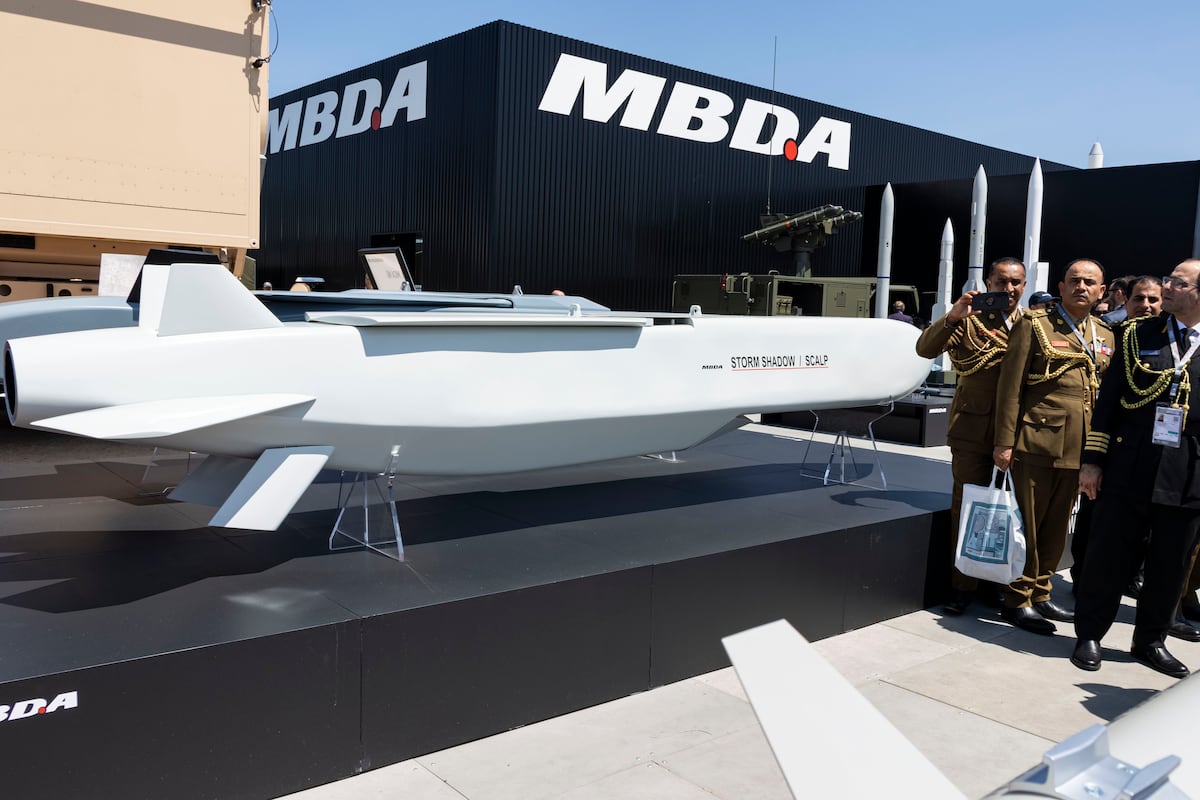
VIENNA — With the United Kingdom passing classified blueprints for British-made components of the SCALP cruise missile to Ukraine, the country is now in possession of the intellectual property and permissions needed to build the high-tech European weapon domestically.
France had already provided Ukraine with a production license for the Franco-British weapon, called Storm Shadow in its U.K. variant, back in July.
New U.K. Prime Minister Andy Burnham announced his decision to allow sharing the sensitive design details with Ukraine during his first visit to Kyiv on Monday. The two countries are bound by close military cooperation and strong British support for Ukraine’s defense, and signed a 100-year bilateral partnership agreement in 2025.
However, despite the highly symbolic and strategic nature of the SCALP move, it is unlikely that Ukraine will be able to produce large numbers of Storm Shadows in the near future, as it lacks specialized, high-precision manufacturing equipment at scale, complicated by the fact that the country is at war.
France and Ukraine are seeking to set up a joint SCALP production line in Ukraine, but the effort has so far stalled due to a lack of authorization for British-made components.
“The move follows the U.K. being the first to gift long-range strike weapons for defensive purposes to Ukraine in 2023 and will allow the French and Ukrainians to move forward with the Ukrainian assembly of the missile,” the British Prime Minister’s office said in a press statement ahead of Burnham’s public announcement.
The British government said the decision came alongside Project Brakestop, which aims to quickly develop effective and cheap long-range weapons for Ukraine’s use.
Moscow has not taken kindly to the announcement, with former Russian Deputy Foreign Minister and current Kremlin advisor Andrei Fedorov telling the BBC that the U.K. could see its factories involved in support for Ukraine face a “semi-military” response, “not by Russia, but from unknown sources.”
Long-range strike abilities for Ukraine have been a sore point for a long time in the Kremlin, and with the humiliating Ukrainian deep-strike campaign targeting oil refineries and warehouses making the war tangible to the Russian public just ahead of elections this September, it’s an especially touchy subject. In response, hybrid warfare across Europe carrying Russian signatures, such as mystery drone appearances and sabotage, have increased.
In May 2023, the U.K. became the first country to publicly supply long-range missiles to Ukraine in the form of Storm Shadow, although initially with a restriction against using them on Russian territory. Shortly after, France followed suit and provided SCALP to Kyiv. In the fall, the U.S. quietly began delivering ATACMS ballistic missiles, though again on the condition they won’t be used on Russian soil directly.
A turning point came in summer 2024, when the Biden administration authorized the use of HIMARS rocket launchers across the border into Russia to help defend Kharkiv. Similar case-specific uses of SCALP and Storm Shadow against Russia followed later that year.
Finally, in May 2025, new German Chancellor Friedrich Merz announced that Germany, the U.K., France, and the U.S. had lifted range restrictions, allowing Ukraine to strike deep across Russia with Western-supplied weapons.
In parallel, Ukraine has been developing domestic deep-strike capabilities, most famously in the form of the FP-5 “Flamingo” cruise missile built by the private but state-supported Fire Point enterprise. In recent months, the country has also field-tested various homegrown ballistic missiles, including an incident when the Russian military shot down a Ukrainian ballistic missile just 40 kilometers from Moscow.
Linus Höller is Defense News' Europe correspondent and OSINT investigator. He reports on the arms deals, sanctions, and geopolitics shaping Europe and the world. He holds master’s degrees in WMD nonproliferation, terrorism studies, and international relations, and works in four languages: English, German, Russian, and Spanish.
维也纳——随着英国将英国制造的SCALP巡航导弹部件的机密蓝图移交给乌克兰,该国现在拥有了在国内制造这种高科技欧洲武器所需的知识产权和许可。
早在 7 月份,法国就已经向乌克兰提供了这款法英联合研制的武器的生产许可证,该武器在英国的型号中被称为“风暴阴影”。
英国新任首相安迪·伯纳姆周一在首次访问基辅期间宣布,他决定允许与乌克兰分享敏感的设计细节。两国有着密切的军事合作,英国对乌克兰的国防给予了强有力的支持,并于2025年签署了一项为期100年的双边伙伴关系协议。
然而,尽管 SCALP 行动具有高度象征性和战略意义,但乌克兰不太可能在近期内生产出大量的“风暴阴影”无人机,因为它缺乏大规模的专业化、高精度制造设备,而且该国正处于战争状态,这使得情况更加复杂。
法国和乌克兰正寻求在乌克兰建立一条联合的SCALP生产线,但由于缺乏英国制造零部件的授权,这项工作迄今为止陷入停滞。
“继英国于 2023 年率先向乌克兰赠送用于防御目的的远程打击武器之后,此举将使法国和乌克兰能够推进乌克兰导弹的组装工作,”英国首相办公室在伯纳姆公开宣布之前发表的一份新闻声明中表示。
英国政府表示,这一决定与“刹车停止计划”同时出台,该计划旨在快速开发有效且廉价的远程武器供乌克兰使用。
莫斯科对这一声明并不买账。俄罗斯前副外长、现任克里姆林宫顾问安德烈·费多罗夫告诉英国广播公司,英国参与支持乌克兰的工厂可能会面临“半军事”回应,“不是来自俄罗斯,而是来自未知来源”。
乌克兰的远程打击能力一直是克里姆林宫长期以来的痛点,而乌克兰针对炼油厂和仓库发动的羞辱性纵深打击行动,更让俄罗斯民众在今年9月大选前夕真切感受到战争的残酷,这使得远程打击问题变得尤为敏感。作为回应,欧洲各地出现了更多带有俄罗斯特征的混合战争,例如神秘的无人机出现和破坏活动。
2023年5月,英国成为首个公开向乌克兰提供远程导弹的国家,交付的是“风暴阴影”(Storm Shadow)导弹,但最初附加了不得在俄罗斯领土上使用这些导弹的限制。不久之后,法国也效仿,向基辅提供了“风暴阴影”(SCALP)导弹。同年秋季,美国悄悄开始向乌克兰交付“反坦克导弹”(ATACMS)弹道导弹,但同样附加了不得直接在俄罗斯领土上使用这些导弹的条件。
2024年夏季,拜登政府授权使用HIMARS火箭发射器越境进入俄罗斯境内,以协助保卫哈尔科夫,这成为一个转折点。同年晚些时候,针对俄罗斯也出现了类似的SCALP和Storm Shadow导弹系统的特定用途。
最终,在 2025 年 5 月,新任德国总理弗里德里希·默茨宣布,德国、英国、法国和美国已取消射程限制,允许乌克兰使用西方提供的武器对俄罗斯纵深地区进行打击。
与此同时,乌克兰一直在发展本土纵深打击能力,其中最著名的当属由私营但受国家支持的“火点”(Fire Point)企业研制的FP-5“火烈鸟”巡航导弹。近几个月来,乌克兰还对多种国产弹道导弹进行了实地测试,其中包括俄罗斯军方在距离莫斯科仅40公里处击落一枚乌克兰弹道导弹的事件。
林努斯·霍勒是《防务新闻》的欧洲记者和开源情报调查员。他报道影响欧洲乃至全球的军火交易、制裁和地缘政治。他拥有大规模杀伤性武器不扩散、恐怖主义研究和国际关系三个硕士学位,并精通英语、德语、俄语和西班牙语四种语言。