MAS appoints five new asset managers, to inject $1.45b to boost Singapore equities新加坡金融管理局委任五家新的资产管理公司,注资14.5亿美元以提振新加坡股市。
MAS appoints five new asset managers to inject $1.45b, boosting Singapore equities and enhancing the asset management sector under the $6.5b Equity Market Development Programme. Read more at straitstimes.com.
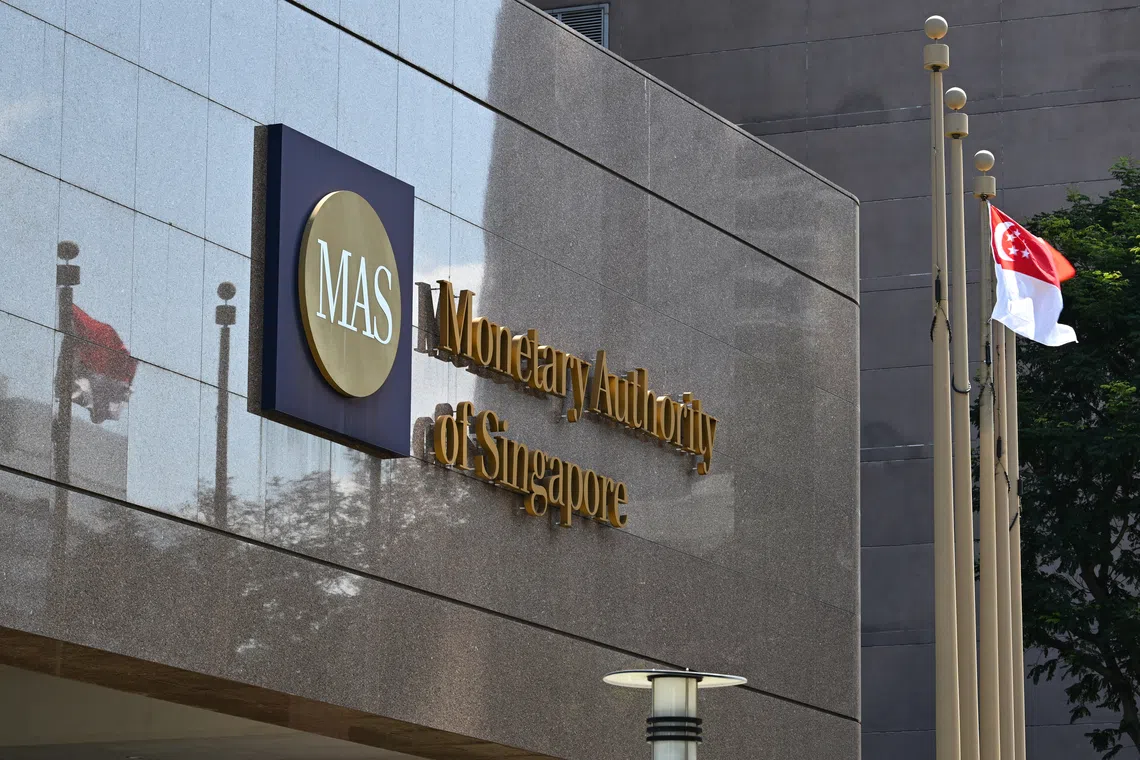
The asset managers are Amundi, Franklin Templeton, HSBC Asset Management, M&G Investments and Natixis Investment Managers.
Published Sep 29, 2026, 11:00 AM
Updated Sep 29, 2026, 02:07 PM
SINGAPORE – Five more asset managers have been announced to help boost the Singapore equities market, as part of earlier efforts to inject liquidity and vibrancy into the local scene.
They are the third batch of asset managers under the $6.5 billion Equity Market Development Programme, which was first announced in 2025 to revive the local market.
The Monetary Authority of Singapore (MAS) will place $1.45 billion with these newly appointed managers, taking the total allocation to $5.4 billion.
The announcements were made at the SuperReturn Asia Conference on Sept 29 by Minister for National Development Chee Hong Tat, who is also the deputy chairman of MAS.
Chee said the earlier two batches of asset managers have laid a strong foundation. MAS allocated $3.95 billion across nine appointed asset managers in the first two batches.
“These managers have begun deploying capital into Singapore equities and building investment capabilities here,” he said, noting that there has been strong industry interest in the programme.
“This third batch will further deepen investment capabilities and support the creation of quality jobs in Singapore,” he added.
“The managers have strong track records in regional markets and are committed to continue making significant allocations to Singapore as an integral part of their investment strategies.”
MAS is reviewing the proposals for a fourth batch of asset managers and will announce them in 2027. Chee said local and international fund managers that have not been appointed still have a chance to join the programme.
He also announced a $20 million market making sleeve under the Grant for Equity Market Singapore scheme , which helps to improve trading efficiency and increase the number of institutional-grade stocks.
“This can raise trading interest in SGX-listed stocks and support greater demand through improved execution efficiency,” he said.
This scheme will target new listings and the “middle segment” of small and mid-cap stocks that already have sufficient trading activity.
“The aim is to improve trading liquidity and narrow the execution costs of these stocks,” Chee said.
Around 80 stocks outside the Straits Times Index are expected to benefit from this scheme.
Chee added: “Together, these efforts will deepen institutional and retail participation in Singapore equities, making our public markets a more effective destination for listings, financing and exits within the broader capital ecosystem.”
Lim Pang Qi, chief executive of HSBC Asset Management Singapore, said the manager is “excited to contribute to the continued development and internationalisation of Singapore’s equity market”.
He added: “We look forward to leveraging these strengths to attract capital and broaden investor participation to further support the growth of a more vibrant and internationally connected equity market.”
Growing Singapore as an asset management hub
Chee noted that Singapore will continue building on its strengths to enhance its attractiveness as a leading asset management hub.
In August, a set of measures was announced, including tax exemption for profit-related returns from fund management services provided to qualifying funds. Further details will be shared during Budget 2027.
Chee said: “We have received strong interest from asset managers since the announcement in August. They have given us feedback that the measures are very welcome and will position Singapore strongly to grow the asset management sector.”
He added that fund managers establishing or expanding their activities in Singapore can also expect a clear and efficient licensing process. Over the past three years, MAS has received more than 500 applications for fund management licences.
In addition, to anchor asset management talent in the Republic, there will also be a new investment management track under the Overseas Networks & Expertise Pass (ONE Pass), to provide greater flexibility in how applicants can meet the qualifying salary.
Applicants will be allowed to meet the ONE Pass qualifying salary of $30,000 through a combination of a minimum fixed monthly salary of $15,000 and other variable components of compensation. This will kick in from late January 2027.
“The proposed changes provide greater flexibility to attract and anchor asset management talent in Singapore, while ensuring that the ONE Pass continues to target global leaders and senior investment professionals with the potential to contribute or are already contributing significantly to Singapore’s asset management industry,” Chee said.
At the same time, he added that efforts will continue to deepen the local talent pipeline in asset management and the broader financial sector in Singapore.
Strengthening the growth capital ecosystem
Chee said: “A strong asset management industry is only one part of what makes a leading financial centre. Equally important is a vibrant capital and financing ecosystem that supports capital formation, investment and growth.”
As part of this, Singapore needs to support companies through different stages of growth, he added. There must also be broadening exits and capital recycling options, alongside deeper capabilities across the financing chain.
The Growth Capital Workgroup was convened earlier in 2026 to examine the broader growth capital ecosystem, including how companies access capital as they scale, how investors realise investments and how capital can be recycled into new opportunities.
Chee said: “We will review our policy and regulatory frameworks to see where improvements can be made.
“The aim is for our regulatory frameworks to remain risk-proportionate, not zero-risk, so that we can facilitate investment, innovation and growth; while maintaining our reputation as a trusted financial hub with appropriate safeguards and high standards.”
Sue-Ann Tan is a business correspondent at The Straits Times, covering capital markets and sustainable finance.
Monetary Authority of Singapore
这些资产管理公司包括 Amundi、Franklin Templeton、汇丰资产管理、M&G Investments 和 Natixis Investment Managers。
发布于 2026 年 9 月 29 日上午 11:00
更新于2026年9月29日下午2:07
新加坡——为提振新加坡股市,政府宣布新增五家资产管理公司,这是此前为注入流动性和活力而采取的措施之一。
他们是 65 亿美元股票市场发展计划下的第三批资产管理公司,该计划于 2025 年首次宣布,旨在振兴本地市场。
新加坡金融管理局(MAS)将向这些新任命的管理人投资 14.5 亿美元,使总投资额达到 54 亿美元。
这些消息是新加坡国家发展部长兼新加坡金融管理局副主席徐芳达于9月29日在SuperReturn亚洲大会上宣布的。
Chee表示,前两批资产管理公司已经奠定了坚实的基础。新加坡金融管理局在前两批委任的九家资产管理公司共拨款39.5亿新元。
“这些基金经理已经开始将资金投入新加坡股市,并在这里建立投资能力,”他说道,并指出该计划引起了业界的浓厚兴趣。
“这第三批资金将进一步增强新加坡的投资能力,并支持在新加坡创造高质量就业机会,”他补充道。
“这些基金经理在区域市场拥有良好的业绩记录,并致力于继续将大量资金配置到新加坡,作为其投资策略的重要组成部分。”
新加坡金融管理局正在审核第四批资产管理公司的提名人选,并将于2027年公布结果。Chee表示,尚未被委任的本地和国际基金经理仍有机会加入该计划。
他还宣布根据新加坡股票市场资助计划拨款 2000 万美元设立做市商专项基金,以帮助提高交易效率并增加机构级股票的数量。
他表示:“这可以提高市场对新加坡交易所上市股票的交易兴趣,并通过提高执行效率来支持更大的需求。”
该计划将针对新上市的公司以及已经拥有足够交易活动的中小市值股票的“中间板块”。
Chee表示:“我们的目标是提高这些股票的交易流动性,并降低其执行成本。”
预计海峡时报指数以外的约 80 只股票将受益于该计划。
Chee补充道:“这些努力将共同加深机构和散户对新加坡股票的参与,使我们的公开市场成为更广泛的资本生态系统中上市、融资和退出的更有效场所。”
汇丰资产管理新加坡首席执行官林邦琪表示,该基金经理“很高兴能为新加坡股票市场的持续发展和国际化做出贡献”。
他补充道:“我们期待利用这些优势来吸引资本,扩大投资者参与,从而进一步支持一个更具活力、国际联系更紧密的股票市场的发展。”
将新加坡发展成为资产管理中心
Chee指出,新加坡将继续发挥自身优势,增强其作为领先资产管理中心的吸引力。
8月份公布了一系列措施,其中包括对向符合条件的基金提供的基金管理服务所产生的利润相关收益免征税款。更多详情将在2027年财政预算案中公布。
Chee表示:“自8月份宣布以来,我们收到了来自资产管理公司的浓厚兴趣。他们反馈说,这些措施非常受欢迎,将使新加坡在发展资产管理行业方面占据有利地位。”
他还补充说,在新加坡设立或拓展业务的基金经理也可以期待获得清晰高效的牌照审批流程。过去三年,新加坡金融管理局已收到超过500份基金管理牌照申请。
此外,为了在新加坡留住资产管理人才,海外人脉及专业技能准证(ONE Pass)下还将新增投资管理方向,为申请人提供更大的灵活性,使其能够达到合格薪资标准。
申请人可通过每月至少1.5万美元的固定工资和其他浮动薪酬组合,达到ONE Pass计划规定的3万美元合格薪资标准。该政策将于2027年1月下旬生效。
Chee表示:“这些拟议的改革将为吸引和留住新加坡的资产管理人才提供更大的灵活性,同时确保ONE Pass继续瞄准那些有潜力或已经为新加坡资产管理行业做出重大贡献的全球领导者和高级投资专业人士。”
与此同时,他还补充说,将继续努力深化新加坡资产管理和更广泛的金融领域的本地人才储备。
加强增长资本生态系统
Chee表示:“强大的资产管理行业只是构成领先金融中心的一个方面。同样重要的是充满活力的资本和融资生态系统,它能够支持资本形成、投资和增长。”
他补充说,为此,新加坡需要支持企业经历不同的发展阶段。此外,还必须拓宽退出渠道和资本循环利用选择,并增强整个融资链的能力。
2026 年初,增长资本工作组召开会议,旨在研究更广泛的增长资本生态系统,包括公司在发展壮大过程中如何获得资本、投资者如何实现投资以及如何将资本循环利用到新的机会中。
Chee表示:“我们将审查我们的政策和监管框架,看看哪些方面可以改进。”
“我们的目标是使监管框架与风险相匹配,而不是零风险,以便我们能够促进投资、创新和增长;同时保持我们作为值得信赖的金融中心的声誉,并拥有适当的保障措施和高标准。”
Sue-Ann Tan 是《海峡时报》的商业记者,负责报道资本市场和可持续金融。
新加坡金融管理局