How a Ukrainian commander sped through the ‘kill zone’ to save wounded troops一名乌克兰指挥官如何高速穿越“死亡地带”拯救受伤士兵
Vladyslav Polskyi, a former science teacher turned combat commander, saw two wounded soldiers stranded on the battlefield and knew he had to do something.
Seeing two wounded fighters stranded on the battlefield — one of them still strapped to a land drone immobilized by a Russian strike — Ukrainian commander Vladyslav Polskyi knew he had to do something.
The 29-year-old — a former science teacher who joined the army in 2023 — was watching the soldiers on a screen in his command post around 15 km (9 miles) away.
Between them stretched the “kill zone,” riddled with mines and swarmed by aerial drones ready to attack anything that moved.
Polskyi, whose military call-sign is “Teacher,” hopped into his grey pick-up truck and raced past scorched fields and the charred husks of other vehicles left on the battlefield of northern Ukraine. He had no helmet or body armour.
“If it had happened to me, I would’ve wanted them to come take me away, and not just leave me there,” the junior lieutenant told Reuters, recalling his Aug. 15 mission to save both men, who were members of another battalion.
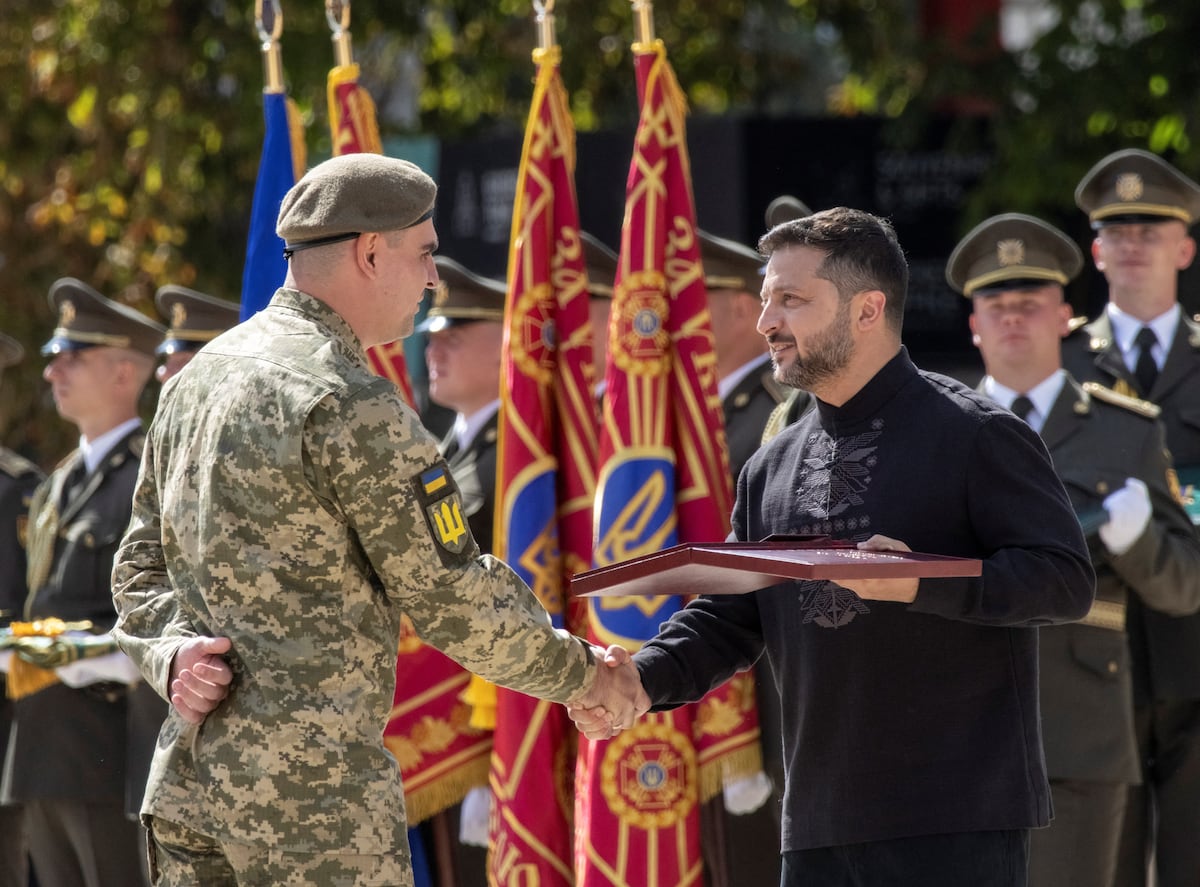
His feat captured the country’s attention and earned him its highest military honour, Hero of Ukraine, days later. President Volodymyr Zelenskiy presented him with the award at Independence Day celebrations in Kyiv on Monday.
“People must be taken care of. Thank you, Vladyslav!” Zelenskiy said, announcing the award.
STRANDED DRONE SHOWED LIMITS OF BATTLEFIELD TECH
Speaking to Reuters less than a week after the operation, Polskyi described speeding toward the men while planning how he would load them onto the flatbed of the truck.
The two Ukrainian soldiers had been wounded during a combat mission in the Kharkiv region and were being evacuated atop an unmanned ground vehicle when it was struck by one of Russia’s small, agile helicopter drones loaded with explosives.
Kyiv’s forces have been using remote-controlled unmanned vehicles to help limit human involvement in dangerous tasks like evacuations inside the “kill zone”, seeking an edge against Moscow’s bigger army.
Russia’s successful attack cast light on the limits of the relatively slow and rudimentary vehicles. The Russian drone knocked out the land drone’s Starlink terminal, severing the link with its pilot and leaving it immobilized.
One of the wounded soldiers had managed to crawl into a ditch off the road and hide in the vegetation; the other lay helpless on the four-wheeled vehicle under an open sky, his right foot dangling from the bone.
Ukraine has also made widespread use of attack drones on the battlefield, and says it is killing or wounding around 30,000 Russian soldiers a month — a figure Moscow dismisses as exaggerated.
Both sides frequently post videos of drones hunting down each other’s soldiers in the “kill zone.”
Surveillance drone footage, obtained exclusively by Reuters from Polskyi’s unit, the 475th Assault Regiment, shows his truck hurtling down a gravel road before turning and rapidly reversing toward the damaged drone.
Reuters was able to verify the exact location of the rescue using the full-length footage. However, the regiment asked not to disclose where it took place for security reasons.
At another nearby command post, drone-platoon leader “Malyi” watched as the rescue played out on screens in real time.
“Everyone in the command centre was shocked,” said the 22-year-old, who asked to be identified by his call-sign. Just a single Russian drone or land mine could have killed all three men, he added.
Polskyi — dressed in T-shirt and shorts — hoisted both men onto his truck and raced home, managing to evade the flying Russian drones that had been detected heading toward their new target.
Looking back, he remembered the fear in the men’s eyes. He was afraid too. “But you need to know how to control it,” he said.
看到两名受伤的战士被困在战场上——其中一人还被绑在一架被俄罗斯空袭炸毁的陆地无人机上——乌克兰指挥官弗拉迪斯拉夫·波尔斯基知道他必须做点什么。
这位 29 岁的男子曾是一名科学教师,于 2023 年加入军队。当时他正在大约 15 公里(9 英里)外的指挥所里通过屏幕观看士兵们的行动。
在它们之间是“杀伤区”,遍布地雷,到处都是准备攻击任何移动物体的无人机。
波尔斯基的军用呼号是“教师”,他跳上自己的灰色皮卡,飞驰而过被烧焦的田野和遗留在乌克兰北部战场上的其他车辆的残骸。他没有戴头盔,也没有穿防弹衣。
“如果这种事发生在我身上,我希望他们来把我带走,而不是把我留在那里,”这位少尉告诉路透社,回忆起他 8 月 15 日营救这两名士兵的任务,他们是另一个营的成员。
他的壮举震惊全国,几天后便荣获乌克兰最高军事荣誉——乌克兰英雄称号。周一,在基辅举行的独立日庆祝活动上,总统泽连斯基亲自为他颁发了这一荣誉。
“人民必须得到照顾。谢谢你,弗拉迪斯拉夫!”泽连斯基在宣布颁奖时说道。
搁浅无人机暴露了战场技术的局限性
行动结束后不到一周,波尔斯基在接受路透社采访时描述了他如何加速冲向这些人,同时计划着如何把他们装上卡车的平板车。
两名乌克兰士兵在哈尔科夫地区的一次战斗任务中受伤,当时他们正乘坐一辆无人地面车辆撤离,结果被一架装载着炸药的俄罗斯小型、灵活的直升机无人机击中。
基辅的部队一直在使用遥控无人驾驶车辆来帮助减少人类参与危险任务,例如在“杀伤区”内进行疏散,以寻求对抗莫斯科更强大的军队的优势。
俄罗斯的成功攻击暴露了这些速度相对较慢、结构较为简陋的无人机的局限性。俄罗斯无人机摧毁了陆地无人机的星链终端,切断了其与操控者的联系,使其无法动弹。
其中一名受伤的士兵设法爬进路边的沟渠,躲藏在植被中;另一名士兵无助地躺在露天的四轮车上,右脚几乎断成了两截。
乌克兰还在战场上广泛使用攻击型无人机,并称每月造成约 3 万名俄罗斯士兵伤亡——莫斯科方面驳斥这一数字夸大其词。
双方经常发布无人机在“杀伤区”猎杀对方士兵的视频。
路透社独家从波尔斯基所在的第 475 突击团获得的无人机监控录像显示,他的卡车沿着碎石路飞驰,然后转弯并迅速倒车,朝着受损的无人机驶去。
路透社利用完整视频证实了救援行动的确切地点。但出于安全考虑,该团要求不要透露救援地点。
在附近另一个指挥所,无人机排长“马利”通过屏幕实时观看救援行动。
“指挥中心的所有人都震惊了,”这位22岁的年轻人说道,他要求只透露自己的呼号。他还补充说,仅仅一架俄罗斯无人机或一枚地雷就可能夺走这三人的生命。
波尔斯基身穿 T 恤和短裤,将两人抬上卡车,飞速驶回家,成功躲过了被探测到正朝着新目标飞去的俄罗斯无人机。
回想起来,他记得那些男人眼中的恐惧。他自己也很害怕。“但你需要知道如何控制它,”他说。