Inside Singapore’s secret intelligence agency: Three former SID leaders on threats, sacrifice and service新加坡秘密情报机构内幕:三位前新加坡情报局领导人讲述威胁、牺牲与奉献
In candid interviews, former leaders of the Security and Intelligence Division pull back the curtain on a career in secrecy – busting myths about intelligence work and looking back on key moments in their jobs.
In candid interviews, former leaders of the Security and Intelligence Division pull back the curtain on a career in secrecy – busting myths about intelligence work and looking back on key moments in their jobs.
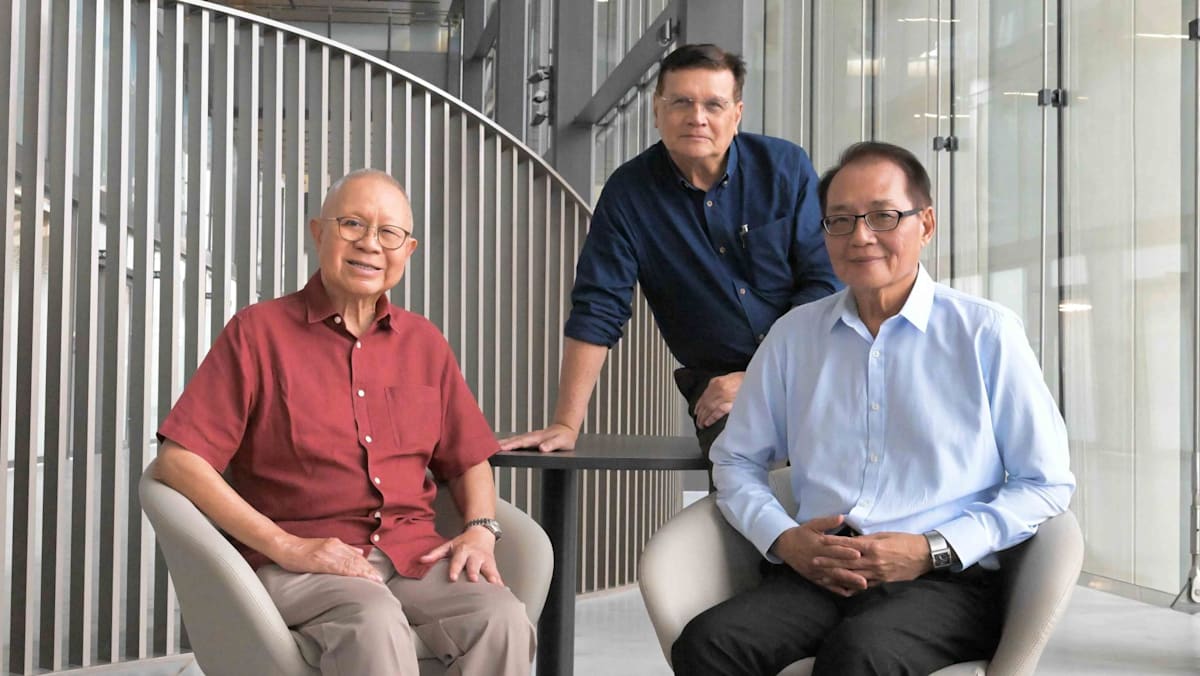
(From left) SID’s former director Eddie Teo, former chief of staff Kevin Santa Maria and former senior director of counterterrorism Ng Kah Meng on Aug 13, 2026. (Photo: CNA/Lim Li Ting)
This audio is generated by an AI tool.
SINGAPORE: Most military officers wear their medals on their chests.
But as a government official once told Mr Kevin Santa Maria, officers from the Security and Intelligence Division (SID) wear their medals inside their jackets – hidden from view, much like the work they do.
A former SID chief of staff, Mr Santa Maria spent over two decades at the top-secret agency under the Ministry of Defence. He said its officers took pride in doing important work in the shadows to keep Singapore safe.
They were satisfied knowing they were part of a team working towards something bigger than themselves.
CNA Games Guess Word Crack the word, one row at a time Buzzword Create words using the given letters Mini Sudoku Tiny puzzle, mighty brain teaser Mini Crossword Small grid, big challenge Word Search Spot as many words as you can Show More Show Less
President Tharman Shanmugaratnam with Mr Eddie Teo at the latter's swearing-in and reappointment as Chairman of the Council of Presidential Advisers on Sep 29, 2023. (Photo: Facebook/Tharman Shanmugaratnam)
Last month, former SID director Eddie Teo was conferred Singapore’s highest civilian honour , the Order of Temasek (With Distinction), Darjah Utama Temasek, at the National Day Awards.
He was recognised for his 56 years of public service, including 24 years at SID. He joined the agency in 1970 and went on to become its longest-serving director from 1979 to 1994.
During his tenure, officers were not handed their awards at such public events – something he regrets to this day.
"For a very long time, that was one mistake I made. I did not allow them to get National Day Awards because I thought there was a security risk," said Mr Teo, now 79.
"But wiser directors who came after me changed that policy, and I'm glad that now the good officers in SID can be given National Day Awards."
(From left) SID’s former senior director of counterterrorism Ng Kah Meng, former chief of staff Kevin Santa Maria and former director Eddie Teo on Aug 13, 2026. (Photo: CNA/Lim Li Ting)
Established in 1966, SID started out as a small team providing geopolitical analysis before growing into an intelligence agency.
Besides providing intelligence to the government, it supports discussions on key strategic issues and analyses global developments that could affect the country’s security and national interest.
Like the US' Central Intelligence Agency and the UK's Secret Intelligence Service, more commonly known as MI6, SID falls "within that same genre" in terms of collecting information, said Mr Santa Maria.
Since its inception, the agency has operated in the shadows, shrouded in secrecy, to keep Singapore safe from external threats. Little information is published online about the agency.
But in 2021, it took a rare step into the public eye, launching a website to recruit more mid-career professionals.
The agency marks its 60th anniversary this year. Mr Teo, Mr Santa Maria and former senior director for counterterrorism Ng Kah Meng spoke with reporters for the first time about the work they did behind the scenes.
SID celebrates 60th anniversary
SID marked its 60th anniversary with a closed-door event on Friday (Sep 4) to honour the contributions of both present and past officers.
Prime Minister Lawrence Wong attended the event and was joined by Senior Minister K Shanmugam, Defence Minister Chan Chun Sing and Senior Advisor in the Prime Minister’s Office Teo Chee Hean.
Speaking during the event, Mr Wong highlighted the value SID has provided to Singapore's leadership and the agency's unique contributions to the nation's security and success over the years.
"Over the past 60 years, SID has played important roles at critical junctures in Singapore’s history. There are many others which may never enter the public record, and will not be discussed, even in a closed-door setting like this," Mr Wong said during a speech.
"But through all of them, SID has helped successive generations of Singapore leaders see the world more clearly – identify threats early, understand the intentions of others, and make difficult decisions with greater confidence."
He also expressed appreciation to past and present SID officers, including pioneer leaders such as former SID directors Mr Tay Seow Huah, Mr S R Nathan and Mr Eddie Teo.
Looking ahead, he said the agency's work would become more demanding and more important in a changing external environment, with more things to watch for such as shifting relationships, new restrictions and future vulnerabilities.
The boundaries between security, economics and technology are also becoming less distinct, he said, adding that trade, investment, supply chains and access to technology are "increasingly being used as instruments of statecraft".
Mr Wong encouraged the agency to continue sharpening its edge to keep Singapore safe and ahead.
"We need to understand not just what countries are saying and doing politically, but also how they may use all sorts of different levers, economic and technological levers, to advance their interests.
"SID must therefore help us understand these shifts early, assess what they mean for Singapore, and give us the foresight to prepare and respond," said the prime minister.
He also said the agency must continue to attract and retain people with sharp minds, sound judgment, deep expertise and a strong sense of mission for the country.
"SID has truly come a long way over these past six decades. From a small group of pioneers working quietly after hours, you have grown into a professional and capable intelligence service," Mr Wong added.
"For a small country like Singapore, that ability to anticipate, understand and act early is a vital source of strategic advantage. And you help contribute to this strategic advantage."
First off, they are not spies, said Mr Santa Maria. Television shows and movies may have shaped how people view intelligence work, especially given SID's low profile.
"But actually, it's far from that. It is not as dramatic as what comes out; it's good for a movie and a TV show, but what we really do is actually quite different," he said.
The word “spy” has negative connotations, he added.
“We are an intelligence agency that provides information … The word 'spy' is too overdramatised, which I would not want to define (the) agency as,” said Mr Santa Maria.
SID’s former chief of staff Kevin Santa Maria on Aug 13, 2026. (Photo: CNA/Lim Li Ting)
Over the past 60 years, the threats the agency faces have evolved.
When Mr Teo joined the agency in 1970, one of the first issues he dealt with was the Communist Party of Malaya, which wanted to overthrow the government through violent revolution and establish a communist state in Malaya.
Riots in Kuala Lumpur were a pressing issue. "That seized us because racial politics became very important, and we were worried about spillover into Singapore," said Mr Teo.
He also anticipated that terrorism would grow and he formed a small group within SID to study the issue.
Eventually other agencies joined, including from the Ministry of Foreign Affairs and the Internal Security Department. Leading this larger group was Mr Ng.
After terrorists hijacked four commercial passenger planes on Sep 11, 2001, crashing two into the World Trade Center towers in New York, senior leaders in the Singapore government realised terrorism was "no longer a policeman's problem", said Mr Ng.
"It is a problem of strategic proportions. So in SID, we took it upon ourselves to issue a series of assessments, explaining to the Cabinet what this was about. Where did it come from? Why did it happen in this way?
"That was a start (to) ramping up furiously our counterterrorism coverage," said Mr Ng, adding that the coverage was a shared responsibility between several senior leaders in the agency.
The same year, Singapore had one of its closest shaves with transnational terrorism, when the Jemaah Islamiyah (JI) terrorist group targeted Singapore.
Authorities launched an operation that crippled the Singapore JI network, thwarting multiple terror plots against the country.
"When we were dealing with the JI threat, that came home to us in a very big way, because the threat was imminent," said Mr Santa Maria.
"We were facing something that could hit us anytime, anywhere. You can imagine that happening in Singapore – the implications (would be) catastrophic – and that really kept us awake."
SID's job was to assess where the threats were coming from externally and it worked closely with ISD, said the 66-year-old.
"I will always remember that because … it wasn't like two weeks; it was years of hard work to finally find them and bring them back, and a lot of professional coordination."
Since the early 2000s, the terrorism landscape has evolved with lone-wolf actors emerging as a growing threat alongside coordinated group terror plots. Self-radicalised individuals have become a big concern, including for Singapore.
In late July, ISD said it detained three self-radicalised teens, with two of them planning attacks on schools in Singapore. One came within weeks of carrying out his killings.
"Our vigilance towards these threats can never completely go away, even though prioritisation of resources and so on and attention may change over time in response to the changing conditions," he said.
"But so long as the world has zones of conflict and these zones of conflict become magnets to attract people to want to go and become trained, and then they become emboldened because they are now empowered with the ability to do things when they come back to the region. So that is something that we really have to keep being vigilant about."
SID’s former senior director of counterterrorism Ng Kah Meng on Aug 13, 2026. (Photo: CNA/Lim Li Ting)
All three men agreed that the fundamental mission of SID remained unchanged - to keep policymakers well-informed on threats to Singapore and provide intelligence assessments that are objective and accurate.
Mr Teo said: "Our intelligence assessments were based on facts as we knew them. We were very conscious that we must never twist or change our assessments to fit policy.
"SID is not a department that formulates policy. It feeds our policymakers objective intelligence assessments, and we will never allow intelligence to be politicised."
In 2021, when SID launched its website and stepped further into the public eye, the agency received a 50 per cent increase in applications from young graduates and mid-career professionals, said Mr Santa Maria.
After 2021, more mid-careerists started coming in, he added.
"It kind of shifted the DNA of SID,” he said, with people bringing different views from diverse fields such as law, media and communications.
"That gave us a very rich perspective of what's going on outside there, and I think that's where SID has basically enriched itself in its talent of being able to do better work."
Those who join the agency must truly be interested in the intelligence business, he added. "We go through a lot of stress. It's intense. It gets you down. It's tiring," he said.
Officers sometimes have 12- to 15-hour working days. Despite the demands, it is their sense of mission and purpose in serving Singapore at a "very special organisation" that keeps them going, Mr Santa Maria added.
The Security and Intelligence Division's website was launched in 2021.
WORKING WITH MR LEE KUAN YEW
When Mr Teo became SID director in 1979, Mr Lee Kuan Yew was prime minister. Mr Lee worked directly with the agency and would call Mr Teo.
"I can tell you very few public servants have that privilege … The experience of working under these legends is something that is difficult for me to explain to you, but you have to be there," he added.
Mr Lee's attention to detail stood out to Mr Ng, who recalled that the founding prime minister would start by asking them a few questions before drilling down on minute details.
"Part of that is yes, he wants to know the answers, but part of it is to satisfy himself that you are not winging it, that you are not bluffing him, then he can take you seriously," said Mr Ng.
"It was actually a joy to discuss with him because you know his perspectives are both very broad, but he immediately zooms down, then he zooms up again, and then he switches into decision-making mode based on the facts and the assessments that we give him."
Mr Teo also recalled receiving phone calls from Mr Lee at midnight or being told to launch operations on a Friday or Saturday.
“Your weekend is gone," the former SID director joked. "Despite all that, it was worth spending all my time in the public service.
"It was so interesting, inspiring, and the people I worked with showed me that Singapore was in a good place because they were doing all these things – not for the money, not for the power, but to enhance Singapore's well-being and to serve the people of Singapore.
"Because your bosses behave like that, you also behave like that."
Mr Teo took over as director from Mr S R Nathan, who went on to be elected Singapore’s president.
He had big shoes to fill when he took over, he said, adding that there were several officers more senior than him.
One quality he admired about Mr Nathan was his ability to make friends and sustain those friendships over the years.
"He's written cards every year to people that he's met 30, 40 years ago, and his ability to persuade and win over people – that's something that I really respect about him.
"I owe S R a lot, and I will always remember him for what he did for me," said Mr Teo, who later served as chairman of the Council of Presidential Advisers.
"I hope that the way I ran SID was worthy of his perception of how SID should go," he added.
Mr Eddie Teo (left) and Mr S R Nathan during an official trip to Milford Sound, New Zealand, 1972. (Photo: Eddie Teo)
SACRIFICES AND RETIREMENT
Given the high-stakes situations they were in, how did they find time to rest?
They said they got used to the job and eventually learnt to compartmentalise and separate work from everything else.
"You can't let it affect your life, where half the time, you're looking at behind you, who's watching you, or worrying about the world – that's not a way to live," said Mr Santa Maria.
Keeping work from spilling into their personal lives was not always easy. Mr Ng remembered walking out of wedding dinners on at least three occasions after receiving calls about potential threats.
"It wasn't, say, ‘I had to pull out of a dinner'. It was really, actually wanting to go and do something about it," he said.
Even when a call turns out to be a false alarm, any information about threats has to be taken seriously, he added.
For Mr Teo, the decades he spent as an officer and later a director came with sacrifices at home - something he is now trying to make up for in retirement.
"In a way, it's good to feel the sense of responsibility has been lifted from my shoulders. After 56 years, I am now free," he said.
His son marked his retirement with a tribute on Facebook, describing it as a new chapter.
"I was very touched by that, because I know I neglected him when he was young. I never spent the time I should have spent with him. But that's life. You choose what you do, and you can't go back and change things," he said.
"So I try to make up for it now by spending more time with family."
SID’s former director Eddie Teo on Aug 13, 2026. (Photo: CNA/Lim Li Ting)
For Mr Ng and Mr Santa Maria, retirement has opened the door to various pursuits.
Mr Ng, who retired 10 years ago, now spends his time pursuing his passion for art. While he occasionally painted during his years in service, he now has more time to devote himself to the craft and stocked up on art materials soon after his retirement.
"It was really very fulfilling because somehow, lucky accidents happened in my art journey," he said. His paintings have been displayed at gala dinners to raise charity for seniors.
He has also taken up tai chi.
Mr Santa Maria retired last November and has been providing leadership training, publishing a book on the subject. He also caught up on reading and ventured into uncharted territory - LinkedIn.
Unsurprisingly, his profile remains deliberately discreet, but he enjoys being on the platform. "It's an incredible world on LinkedIn. I didn't know, obviously, but just interacting with people of the same interests and things like that," he said.
Looking back, he said: "Do I miss SID? Yes and no. Yes, because nothing gives you that kind of adrenaline. But there must be a time that you need to stop.
"I kind of miss the work, and yet I don't, because now I am a lot freer to do the things I want to do and pursue things I want to do in the next phase of my life."
Get our pick of top stories and thought-provoking articles in your inbox
Stay updated with notifications for breaking news and our best stories
Join our channel for the top reads for the day on your preferred chat app
在坦诚的采访中,安全和情报部门的前领导人揭开了秘密职业生涯的神秘面纱——打破了有关情报工作的迷思,并回顾了他们工作中的关键时刻。
(从左至右)新加坡情报局前局长张德明、前参谋长圣玛丽亚和前反恐高级主管吴嘉明于2026年8月13日合影。(图片:CNA/林丽婷)
这段音频由人工智能工具生成。
新加坡:大多数军官将勋章佩戴在胸前。
但正如一位政府官员曾经告诉凯文·圣玛丽亚先生的那样,安全和情报部门 (SID) 的官员将勋章佩戴在夹克内——不为人所见,就像他们所做的工作一样。
圣塔·玛丽亚先生曾任新加坡情报局(SID)参谋长,在国防部下属的这个高度机密机构工作了二十多年。他说,情报局的官员们以在幕后从事重要工作、维护新加坡安全为荣。
他们感到满足,因为他们知道自己是团队的一份子,共同为比自身更伟大的目标而努力。
CNA游戏 猜词游戏 逐行破解单词 流行词游戏 用给定的字母组成单词 迷你数独 小小谜题,挑战你的大脑 迷你填字游戏 小方格,大挑战 单词搜索 尽可能多地找出单词 显示更多 显示更少
2023年9月29日,尚达曼总统与张志贤先生一同出席张志贤先生就任总统顾问委员会主席的宣誓就职及连任仪式。(图片来源:Facebook/尚达曼)
上个月,前新加坡信息技术发展局局长张永昌在国庆日颁奖典礼上被授予新加坡最高平民荣誉——淡马锡勋章(卓越勋章)。
他因56年的公共服务生涯而受到表彰,其中包括在SID工作的24年。他于1970年加入该机构,并于1979年至1994年担任该机构任职时间最长的董事。
在他任职期间,警官们并没有在这样的公开场合获得嘉奖——直到今天,他对此仍然感到遗憾。
“很长一段时间以来,这是我犯的一个错误。我没有让他们获得国庆奖,因为我认为这存在安全隐患,”现年79岁的张先生说道。
“但是,在我之后上任的更明智的董事们改变了这项政策,我很高兴现在新加坡情报局的优秀官员可以获得国庆奖。”
(从左至右)新加坡情报局前反恐高级主管吴嘉明、前参谋长凯文·圣玛丽亚和前局长张伟杰于2026年8月13日合影。(图片:CNA/林丽婷)
SID成立于1966年,最初是一个提供地缘政治分析的小团队,后来发展成为一个情报机构。
除了向政府提供情报外,它还支持对关键战略问题的讨论,并分析可能影响国家安全和国家利益的全球发展动态。
圣玛丽亚先生说,与美国的中央情报局和英国的秘密情报局(通常被称为军情六处)一样,SID 在收集信息方面也属于“同一类型”。
自成立以来,该机构一直秘密运作,以保护新加坡免受外部威胁。网上关于该机构的信息寥寥无几。
但在 2021 年,该公司罕见地走到了公众视野中,推出了一个网站来招募更多中年专业人士。
今年是该机构成立60周年。张先生、圣玛丽亚先生和前反恐高级主管吴家明首次接受记者采访,讲述了他们在幕后所做的工作。
SID庆祝成立60周年
SID于周五(9月4日)举行闭门活动,庆祝成立60周年,以表彰现任和前任官员的贡献。
总理黄循财出席了此次活动,与他一同出席的还有高级部长尚穆根、国防部长陈振声和总理公署高级顾问张志贤。
黄先生在活动中发言时强调了新加坡情报局为新加坡领导层提供的价值,以及该机构多年来为国家安全和成功做出的独特贡献。
黄先生在演讲中表示:“过去60年来,新加坡工业发展局在新加坡历史的关键时刻发挥了重要作用。还有许多其他事件可能永远不会进入公众视野,即使在像这样的闭门会议上也不会被讨论。”
“但通过所有这些努力,新加坡国际发展研究所帮助一代又一代的新加坡领导人更清晰地看待世界——及早发现威胁,了解他人的意图,并更有信心地做出艰难的决定。”
他还对SID过去和现在的官员表示感谢,包括前SID董事郑秀华先生、SR Nathan先生和Eddie Teo先生等先驱领导人。
展望未来,他表示,在不断变化的外部环境中,该机构的工作将变得更加具有挑战性和重要性,需要关注的事情也更多,例如不断变化的关系、新的限制和未来的脆弱性。
他还表示,安全、经济和技术之间的界限也变得越来越模糊,贸易、投资、供应链和技术获取“越来越多地被用作治国工具”。
黄先生鼓励该机构继续提升自身实力,以确保新加坡的安全和领先地位。
“我们不仅需要了解各国在政治上说了什么、做了什么,还需要了解它们如何利用各种不同的手段,包括经济手段和技术手段,来推进自身的利益。
“因此,新加坡发展情报局(SID)必须帮助我们及早了解这些变化,评估它们对新加坡的意义,并让我们有远见卓识来做好准备和应对,”总理说。
他还表示,该机构必须继续吸引和留住那些思维敏捷、判断力强、专业知识丰富且对国家有强烈使命感的人才。
黄先生补充道:“新加坡情报局在过去的六十年里取得了长足的进步。从最初一小群业余时间默默工作的先驱者,发展成为一个专业且高效的情报机构。”
“对于新加坡这样的小国来说,能够预见、理解并及早采取行动是至关重要的战略优势来源。而你们也为这种战略优势的形成做出了贡献。”
圣玛丽亚先生首先指出,他们不是间谍。电视节目和电影可能影响了人们对情报工作的看法,尤其考虑到秘密情报局(SID)一贯低调的作风。
“但实际上,情况远非如此。它不像外界看到的那么戏剧化;它适合拍成电影和电视剧,但我们实际做的事情其实截然不同,”他说。
他补充说,“间谍”一词带有负面含义。
“我们是一个提供信息的情报机构……‘间谍’这个词太过夸张了,我不想用这个词来定义(我们)这个机构,”圣玛丽亚先生说。
2026年8月13日,SID前幕僚长凯文·圣玛丽亚。(图片:CNA/林丽婷)
过去60年来,该机构面临的威胁发生了变化。
1970 年,张先生加入该机构时,他处理的第一个问题就是马来亚共产党,该党想要通过暴力革命推翻政府,并在马来亚建立一个共产主义国家。
吉隆坡的骚乱是一个紧迫的问题。“这引起了我们的重视,因为种族政治变得非常重要,我们担心事态会蔓延到新加坡,”张先生说。
他还预见到恐怖主义将会蔓延,因此在SID内部成立了一个小组来研究这个问题。
最终,包括外交部和内部安全局在内的其他机构也加入了进来。领导这个更大团队的是吴先生。
吴先生说,2001 年 9 月 11 日,恐怖分子劫持了四架商业客机,其中两架撞向纽约世界贸易中心双塔后,新加坡政府的高级领导人意识到恐怖主义“不再是警察的问题了”。
“这是一个具有战略意义的问题。因此,在战略情报局(SID),我们主动发布了一系列评估报告,向内阁解释了事情的来龙去脉。它从何而来?为什么会以这种方式发生?”
吴先生说:“这标志着我们开始大力加强反恐报道。”他还补充说,这项报道是该机构几位高级领导人的共同责任。
同年,新加坡遭遇了一次与跨国恐怖主义最接近的袭击,当时伊斯兰祈祷团(JI)恐怖组织以新加坡为目标。
当局展开行动,重创新加坡伊斯兰团伙网络,挫败了多起针对该国的恐怖袭击阴谋。
“当我们应对伊斯兰圣战组织的威胁时,我们对此有了非常深刻的体会,因为威胁迫在眉睫,”圣玛丽亚先生说。
“我们面临的情况是,任何时间、任何地点都可能发生灾难性事件。你可以想象一下,如果这种情况发生在新加坡——后果将是灾难性的——这真的让我们彻夜难眠。”
这位 66 岁的老人说,SID 的工作是评估外部威胁来自哪里,它与 ISD 密切合作。
“我永远都会记得这件事,因为……这不是两周的事;而是经过数年的努力才最终找到他们并把他们带回来,而且需要大量的专业协调。”
自2000年代初以来,恐怖主义格局发生了变化,独狼式袭击者与有组织的团伙恐怖袭击一样,构成了日益严重的威胁。自我激进化的个人已成为一个令人担忧的问题,新加坡也对此感到忧虑。
7月下旬,内部安全局表示拘留了三名自我激进化的青少年,其中两人计划袭击新加坡的学校。其中一人在几周后实施了袭击。
他说:“尽管资源分配的优先顺序和关注点可能会随着情况的变化而改变,但我们对这些威胁的警惕永远不会完全消失。”
“但是,只要世界上存在冲突地区,而这些冲突地区就会成为吸引人们前往接受训练的磁石,这些人一旦回到冲突地区,就会因为获得了能力而变得更加大胆。所以,我们必须对此保持高度警惕。”
SID 前反恐高级总监 Ng Kah Ming,摄于 2026 年 8 月 13 日。(照片:CNA/Lim Li Ting)
三人一致认为,新加坡情报局的根本使命依然不变——让决策者充分了解新加坡面临的威胁,并提供客观准确的情报评估。
张先生说:“我们的情报评估是基于我们掌握的事实。我们非常清楚,我们绝不能为了迎合政策而歪曲或改变我们的评估。”
“情报部门并非政策制定部门。它为决策者提供客观的情报评估,我们绝不允许情报政治化。”
圣玛丽亚先生表示,2021 年,SID 推出了网站并进一步进入公众视野,该机构收到的来自年轻毕业生和职业中期人士的申请增加了 50%。
他补充说,2021 年之后,更多中年职业人士开始加入。
“这在某种程度上改变了SID的DNA,”他说,因为人们带来了来自法律、媒体和传播等不同领域的不同观点。
“这让我们对外部世界正在发生的事情有了非常丰富的了解,我认为这正是SID能够更好地发挥自身才能的地方。”
他补充说,加入该机构的人必须对情报工作真正感兴趣。“我们承受着巨大的压力。工作强度很大,令人沮丧,也很疲惫。”他说。
圣玛丽亚先生补充说,尽管工作要求很高,但正是他们对在新加坡这个“非常特殊的机构”服务的使命感和目标感支撑着他们继续前进。
安全与情报部门的网站于 2021 年上线。
与李光耀先生共事
1979年张先生就任新加坡情报局局长时,李光耀先生是总理。李光耀先生直接与该机构合作,并会给张先生打电话。
“我可以告诉你,很少有公务员能有这样的殊荣……在这些传奇人物手下工作的经历很难用语言来形容,你必须亲身经历才能体会,”他补充道。
吴先生对细节的关注给他留下了深刻的印象。吴先生回忆说,这位开国总理会先问他们几个问题,然后再深入探讨细枝末节。
“一方面,他确实想知道答案;另一方面,他也想确认你不是在敷衍了事,不是在虚张声势,这样他才能认真对待你。”吴先生说道。
“和他讨论其实是一种乐趣,因为你知道,他的视野非常广阔,但他会立即缩小范围,然后再放大范围,然后根据我们提供的事实和评估进入决策模式。”
张先生还回忆说,他曾在午夜接到李先生的电话,或者被告知要在周五或周六开展行动。
“你的周末就这么没了,”这位前SID主任开玩笑说。“尽管如此,我觉得把所有时间都花在公共服务上是值得的。”
“这太有趣、太鼓舞人心了,和我一起工作的人让我明白,新加坡之所以发展得这么好,是因为他们所做的一切——不是为了金钱,不是为了权力,而是为了增进新加坡的福祉,为新加坡人民服务。”
“因为你的老板那样做,所以你也那样做。”
张先生接替纳丹先生担任董事,纳丹先生后来当选为新加坡总统。
他说,接任时他面临着巨大的挑战,并补充说,还有几位比他资历更深的官员。
他欣赏内森先生的一个品质是,他善于交朋友,并且能够多年维系这些友谊。
“他每年都会给30、40年前认识的人写贺卡,他能说服别人、赢得别人的好感——这是我非常敬佩他的一点。”
“我非常感激SR,我会永远铭记他为我所做的一切,”后来担任总统顾问委员会主席的张先生说道。
“我希望我管理 SID 的方式符合他对 SID 应有发展方向的设想,”他补充道。
1972年,埃迪·特奥先生(左)和S·R·内森先生在对新西兰米尔福德峡湾进行正式访问期间。(照片:埃迪·特奥)
牺牲与退休
鉴于他们所处的环境风险极高,他们是如何找到时间休息的?
他们说他们逐渐习惯了这份工作,最终学会了将工作与其他一切分开。
“你不能让它影响你的生活,让你时时刻刻都在回头看谁在看着你,或者担心这个世界——这不是一种生活方式,”圣玛丽亚先生说。
要避免工作影响个人生活并非易事。吴先生回忆说,他至少有三次在接到有关潜在威胁的电话后,愤然离开婚礼晚宴。
他说:“这并不是说,‘我不得不取消晚宴’。而是我真的想去为这件事做点什么。”
他还补充说,即使最终证实是虚惊一场,任何有关威胁的信息都必须认真对待。
对于张先生来说,他担任官员和后来的董事的几十年里,在家中做出了许多牺牲——他现在正努力在退休后弥补这些牺牲。
“从某种意义上说,感觉肩上的责任终于卸下了,这感觉很好。56年后,我终于自由了。”他说。
他的儿子在 Facebook 上发文悼念他,称他的退休标志着人生新篇章的开启。
“我深受感动,因为我知道在他年幼的时候我疏于照顾他。我从未花足够的时间陪伴他。但这就是人生。你选择了你的道路,你无法回到过去改变过去,”他说。
“所以我现在尽量多花时间陪伴家人来弥补。”
新加坡资讯通信发展局前局长张伟杰于2026年8月13日。(图片:CNA/林丽婷)
对于吴先生和圣玛丽亚先生来说,退休为他们开启了追求各种梦想的大门。
吴先生十年前退休,现在全身心投入到他热爱的艺术创作中。虽然他在公务员时期偶尔也会作画,但现在他有更多时间专注于此,退休后不久便购置了不少艺术材料。
“这真的很有成就感,因为我的艺术之路上总会发生一些幸运的意外,”他说。他的画作曾在慈善晚宴上展出,为老年人筹款。
他还开始练习太极拳。
圣塔·玛丽亚先生去年11月退休,之后一直从事领导力培训工作,并出版了一本相关书籍。他还抽出时间阅读,并涉足了LinkedIn这个他从未涉足的领域。
不出所料,他的个人资料一直刻意保持低调,但他很享受在这个平台上的时光。“LinkedIn 的世界太精彩了。我之前当然不知道,但能和志同道合的人交流互动,感觉真的很棒,”他说。
回首往事,他说:“我怀念SID吗?既怀念又不怀念。怀念是因为没有什么能给你带来那种肾上腺素飙升的感觉。但总有需要停下来的时候。”
“我有点想念以前的工作,但又不怀念,因为现在我有了更多的自由,可以去做我想做的事情,并在人生的下一个阶段追求我想做的事情。”
订阅我们的邮件,即可获取精选热点新闻和引人深思的文章。
订阅通知,第一时间获取突发新闻和精彩报道。
加入我们的频道,即可在您常用的聊天应用上获取当日热门文章。