Former top judge advocates collecting evidence for a Constitutional Court case to strike down the Senate前最高法院法官主张收集证据,向宪法法院提起诉讼,推翻参议院。
All 200 Senate seats could be at stake as former Constitutional Court judge Charun Pakdithanakul outlines a route to challenge the entire 2024 selection after… Read More ›
新闻视频
October 1, 2026 at 12:50 pm
in Living , Media , Politics , Thailand
Thailand’s 200-member Senate faces a potentially seismic constitutional challenge after former Constitutional Court judge Charun Pakdithanakul outlined a route to overturn the entire 2024 selection. His intervention follows razor-thin EC votes blocking additional DSI financial, telephone and photographic evidence before the probe narrowed from 229 people to 77. Only 26 serving senators now face proceedings, while no political officeholders were referred. However, Charun says Supreme Court hearings could expose wider evidence for an Ombudsman referral to the Constitutional Court. If the selection were ruled unconstitutional, he argues all 200 Senate seats could fall.
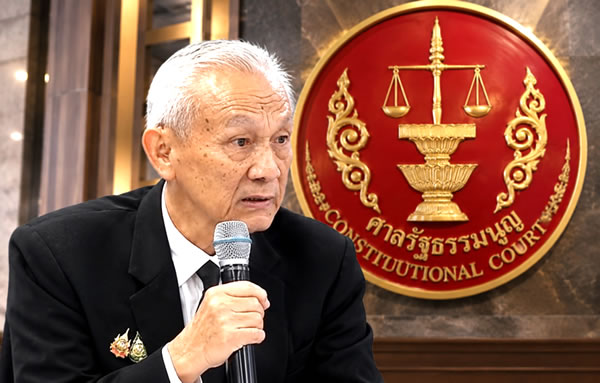
Former Constitutional Court judge Charun Pakdithanakul says a legal route could challenge Thailand’s entire 2024 Senate selection and put all 200 Senate seats at serious risk. ( Source: Thai Rath )
Former Constitutional Court judge Charun Pakdithanakul has outlined a route capable of challenging Thailand’s entire 2024 Senate selection. His proposal goes far beyond existing Election Commission action against 77 people.
Instead, it could place the constitutional validity of the full selection before the Constitutional Court. Ultimately, his legal analysis could put all 200 Senate seats at stake.
Professor Emeritus Charun outlined the route at a September 30 seminar on the Senate collusion case. Crucially, he argued that pursuing individuals alone cannot dismantle the system created by the 2024 selection. Even successful cases could simply remove senators and promote reserve candidates. The existing Senate structure would survive.
Charun proposes two-stage legal route that could place all 200 Senate seats before the Constitutional Court
The former Constitutional Court judge instead proposed a two-stage legal strategy. First, the Supreme Court could develop evidence through cases involving the existing 77 respondents. Subsequently, affected parties could take that evidence to the Ombudsman. The Ombudsman could then refer a wider constitutional question to the Constitutional Court.
At that point, the issue would no longer concern only individual wrongdoing. Rather, the court could examine whether the entire selection complied with constitutional requirements. Professor Emeritus Charun cited Sections 107, 215 and 224 of the Constitution. He particularly stressed honesty, fairness and the constitutional duties of independent organisations.
If constitutional violations were established, he also pointed to Section 5. Under his analysis, the selection could potentially become unenforceable. That could result in all 200 senators losing office. A completely new Senate selection could then follow.
However, no such case is presently before the Constitutional Court. The Ombudsman has not made the referral described by Professor Emeritus Charun. Accordingly, his proposal remains a potential legal route rather than an existing proceeding. The Constitutional Court has made no ruling supporting that eventual outcome.
EC narrowed original 229-person Senate investigation to 77 after two sharply divided commission votes
Still, his intervention sharply widens the legal questions surrounding the 2024 Senate selection. The existing proceedings concern named respondents. By contrast, Professor Emeritus Charun wants the selection process itself placed under constitutional examination.
The distinction is important because the original investigation was considerably larger. The inquiry initially covered 229 people. They comprised 138 senators and 91 political figures and other individuals. Yet the Election Commission ultimately proceeded against only 77 people.
Of those, 26 are serving senators. Another 36 are eligible candidates, while 15 are other individuals. Notably, no MPs or political officeholders were among the final 77 respondents. That outcome followed sharply divided votes inside the Election Commission.
One crucial vote concerned additional evidence from the Department of Special Investigation. Commissioners voted 4-3 against obtaining further DSI material involving eight accused people. That material reportedly included financial, telephone and photographic evidence.
Separately, commissioners voted 5-2 against proceedings involving 21 political figures. Election Commissioner Sitthichot Intrawises was in the minority during both decisions. His subsequent account exposed deep divisions over how far the investigation should extend.
Supreme Court could revisit rejected financial evidence and witnesses who later withdrew their statements
Against that background, Professor Emeritus Charun focused heavily on the rejected financial evidence. He questioned why the EC refused to obtain the additional financial trail. “If they don’t accept the evidence regarding the financial trail, it’s over,” he said.
In response, he proposed using the Supreme Court proceedings to obtain and test more evidence. The court could call financial transaction records rejected during the EC investigation. It could also examine telephone records and communications through applications. Photographic evidence could become part of the wider evidential picture.
In parallel, the court could revisit witnesses who withdrew earlier statements. Professor Emeritus Charun supported summoning those witnesses again. He also proposed lie-detector examinations before they testified. He described such testing as scientific evidence available for use during proceedings.
He nevertheless acknowledged uncertainty over its evidential weight. Even without lie-detector testing, however, earlier witness statements would remain available. Investigators could retain those statements in the case file. Prosecutors could then present them before the court.
Afterwards, judges could compare original statements with later retractions. They could then determine which testimony deserved greater weight. Thus, withdrawn statements would not necessarily disappear from the proceedings.
Charun says individual cases could remove senators while reserve candidates preserve the existing system
The broader objective is to establish facts extending beyond the existing 77 respondents. The Supreme Court could not disqualify people whom the EC had not brought before it. However, findings inside its eventual judgment could have wider significance. Those findings could later support an Ombudsman petition.
As part of this strategy, Professor Emeritus Charun wants the evidence used to establish whether collusion was systemic. He said any arrangement might not have originated from one central source. Instead, evidence could identify large, medium and smaller systems. Some arrangements could also have benefited family members.
That approach differs fundamentally from simply pursuing individual defendants. Professor Emeritus Charun illustrated the problem with a hypothetical outcome involving all 77 respondents. Suppose the Supreme Court ultimately ruled against every one of them. Serving senators among them could then lose office.
Their eligibility could also be revoked. Yet reserve candidates could move into the resulting vacancies. Consequently, the Senate created through the 2024 selection could continue operating. The underlying selection structure would therefore remain intact.
Time also weighs heavily in his proposal. Individual investigations could consume much of the Senate’s remaining five-year term. Professor Emeritus Charun estimated such proceedings might require three years. With faster handling, he said they could possibly finish within one year.
Lengthy criminal cases could outlast Senate term as Charun attacks weaknesses in self-selection system
Criminal proceedings would potentially run considerably longer. He estimated those cases could require at least five years. By then, another Senate selection could already have taken place. Hence, he argued that another legal route was needed before the current Senate completed its term.
On another front, Professor Emeritus Charun attacked weaknesses in the design of the current selection system. The Constitution created a complex self-selection process for senators. Candidates progressed through several voting stages before the final 200 were selected.
He said the current Election Commission had never previously handled such a system. In his assessment, the process required greater rigour and stricter supervision. He also argued that the underlying system needed changing.
Professor Emeritus Charun described the danger in stark terms. “Those who aren’t good at colluding get less, while those who are good at colluding get more,” he said.
Changing the system itself would require a constitutional amendment. Yet he was pessimistic about achieving that quickly. Amendments affecting independent organisations face several procedural restrictions. As a result, he suggested substantial constitutional changes might not happen within five years.
Ombudsman route in barcode case offers procedural model for wider constitutional challenge to Senate poll
That timetable prompted his alternative approach. Rather than waiting for constitutional amendments, he proposed using existing judicial mechanisms. Specifically, he identified the Ombudsman as the gateway to the Constitutional Court.
There is already a recent procedural example. Professor Emeritus Charun cited the ballot barcode and QR-code case. Earlier individual petitions concerning Senate-related disputes had encountered jurisdictional obstacles. The barcode dispute, however, reached the Constitutional Court through the Ombudsman.
In that case, the Ombudsman received petitions and evidence from 22 affected people. The Constitutional Court subsequently voted 6-3 to accept the matter. It delivered its ruling on September 28.
Professor Emeritus Charun agreed with the court’s conclusion on ballot secrecy. He said barcodes and QR codes did not themselves compromise secret voting. “No country has ever overturned a parliamentary election because of the use of any symbol, such as a QR code or barcode.”
More importantly for the Senate case, he focused on how the dispute reached the court. The Ombudsman provided the route after receiving petitions and supporting evidence. He suggested Senate complainants could eventually attempt something comparable.
Previous Senate petitions failed but Supreme Court findings could build a stronger case for the Ombudsman
There are obstacles. Professor Emeritus Charun referred to Section 213 of the Constitution. He also cited Sections 46-48 of the Constitutional Court Procedure Act. Those provisions restrict direct petitions where other legal remedies remain available.
Indeed, previous petitions concerning the Senate selection have already been dismissed. Professor Emeritus Charun therefore acknowledged uncertainty over whether the Ombudsman would accept another case. That is why the Supreme Court proceedings become central to his strategy.
Rather than returning immediately with substantially similar evidence, he wants a stronger factual record developed first. The Supreme Court could examine material never fully tested during the EC investigation. Its judgment could then contain findings extending beyond those directly facing proceedings.
Among the existing material are suspected voting lists and other documents linked to the selection. Documents were also reportedly discovered discarded inside restrooms. Moreover, the wider investigation has involved financial trails, telephone information and political connections across several provinces.
Sitthichot disclosures highlight rejected evidence as Charun seeks broader Supreme Court factual record
Mr Sitthichot’s disclosures add another layer to that evidential dispute. His account detailed the EC’s 4-3 rejection of additional DSI material. It also exposed the subsequent 5-2 vote concerning 21 political figures. In both instances, a majority chose the narrower course.
Professor Emeritus Charun now wants the Supreme Court process used to test evidence left outside that narrower EC case. Financial transactions are particularly important to his proposed route. Telephone and application communications could also establish connections among participants.
If that evidence linked more than 77 people, the Supreme Court would still face jurisdictional limits. It could rule only on respondents properly brought before it. Even so, its factual findings could subsequently become evidence elsewhere.
At the next stage, affected people could submit those findings to the Ombudsman. The petition could argue that the evidence demonstrated problems across the selection process. The Ombudsman would then decide whether a constitutional referral was justified.
If referred, the Constitutional Court would confront a substantially different question from the Supreme Court. It would not simply decide whether particular senators committed violations. Instead, it could examine whether the selection process itself complied with the Constitution.
Constitutional Court could examine full selection while Supreme Court remains limited to named respondents
Professor Emeritus Charun was explicit about the division between the courts. “Neither the Supreme Court, the Administrative Court, nor the Criminal Court has the power to overturn the Senate election system,” he said.
For that reason, he identified the Constitutional Court as the decisive forum for the wider issue. He argued it alone could examine whether the selection system conflicted with constitutional requirements. That examination would focus particularly on honesty and fairness.
Professor Emeritus Charun also distinguished the dispute from questions surrounding secret ballots. Senate candidates operated within a constitutionally designed self-selection system. They could introduce themselves and consult each other. That process differs significantly from elections for Members of Parliament.
Accordingly, he argued that ballot secrecy should not dominate the Senate investigation. Instead, the central issues should be honesty and fairness. Those standards, in his analysis, should determine whether the selection complied with constitutional requirements.
He was also sharply critical of the Election Commission’s methodology. Based on information he had received, he described its approach as at least gross negligence. He connected that criticism directly with integrity standards applying to independent organisations.
Charun says honesty and fairness, not ballot secrecy, should dominate scrutiny of Senate selection process
Under Sections 215 and 224, he stressed the importance of independence, impartiality and honesty. Independent bodies must be “not under anyone’s command, or influenced by anyone’s orders, or presuming to repay any favors.”
That argument feeds directly into his proposed constitutional challenge. The issue would not only concern conduct among Senate candidates. It could also encompass whether constitutional bodies properly discharged their responsibilities during the selection.
Should the Ombudsman eventually make a referral, Professor Emeritus Charun expects the Constitutional Court could move relatively quickly. Much of the evidence could already have been tested before the Supreme Court. Therefore, the constitutional case could arrive with a developed evidential record.
He estimated a ruling could be delivered within one year. Under a faster process, he suggested six months might be possible. “The country cannot delay in this matter,” he said.
Yet several legal steps must occur before that stage. The Supreme Court must first deal with proceedings arising from the EC’s 77 cases. Additional evidence would then need examination. Relevant findings would have to emerge from those proceedings.
Constitutional challenge could test independent bodies and potentially reach a ruling within one year
Next, affected parties would need to petition the Ombudsman. The Ombudsman would independently decide whether to proceed. Only then could the Constitutional Court consider accepting the constitutional question.
For now, therefore, the existing action against 77 people remains the live legal proceeding. Twenty-six serving senators are included in that group. The wider challenge outlined by Professor Emeritus Charun has not yet begun.
Even so, his proposal changes the scale of the legal argument surrounding the 2024 selection. The existing route can remove individual senators if courts rule against them. Reserve candidates could then take their places.
His proposed route targets something different. It seeks a judicial examination of whether the entire selection process can constitutionally stand. If it cannot, Professor Emeritus Charun pointed to Section 5 as potentially decisive.
Under his analysis, an unconstitutional selection could be declared unenforceable. That would go far beyond removing individual respondents. Instead, the consequences could extend to every one of the 200 Senate seats.
Ombudsman referral remains untested as existing case proceeds against 77 people including 26 senators
Finally, Professor Emeritus Charun argued that the dispute should remain within established legal procedures. He opposed attempts to resolve it through street demonstrations. “Don’t incite the masses to take to the streets because it won’t help anything. It actually harms the democratic system. Mobs aren’t democracy. Therefore, I apologise again, but I disagree with inciting the masses into mobs.”
The immediate legal battle nevertheless remains before the Supreme Court. Its handling of the 77 respondents could now assume significance beyond those individual cases. In particular, additional evidence could determine whether a much wider constitutional challenge later becomes possible.
The key dividing line is therefore clear. The present proceedings concern individuals selected or involved in the 2024 process. Professor Emeritus Charun’s proposed second route would put the process itself before the Constitutional Court.
If that route ever reaches adjudication, the question would extend far beyond 26 serving senators. It could place the constitutional validity of the entire 200-member Senate selection before Thailand’s highest constitutional tribunal.
Serving Election Commissioner again voicing his concerns about the probe into the 2024 Senate poll
Bombshell Supreme Court ruling links Bhumjaithai Party figure with orchestrated Senate poll collusion
Legal heavyweights plan seminar to review Election Commission’s move to let top politicians off the hook
An Election Commission member derails PM Anutin Charnvirakul’s efforts to put senate scandal in the past
Election Commission exposed based on Monday’s sweeping decisions and judgments warns opposition
Election Commission creates more questions than answers as it refers 77 people to the Supreme Court
Gauntlet thrown down to the Election Commission before it votes on explosive Senate collusion scandal cases
Ex Pheu Thai minister warns Commission members that soon they could be judged as crunch vote looms
Former Prime Minister and Democrat Party leader cites a lack of public trust in the Election Commission
Abhisit shifts to active support for opposition’s efforts to expose massive collusion in 2024 Senate election
Showdown on the Senate election collusion case in August as Election Commission set to finally decide
Joseph Anthony is an expat from Ireland who has lived in Thailand for the last decade. He has worked extensively in the media including editorial positions in Ireland and Thailand. He is focused on economic and business stories in Thailand as well as the expat lifestyle.
All posts by Joseph O' Connor
Tourism minister directs acute airport baggage crisis caused by workers who failed to turn up for shifts September 28, 2026 Tourism Minister Surasak rushes to Suvarnabhumi as the
Prime Minister Anutin wades into flood hit areas to be met with a mixed reaction including seething anger September 28, 2026 Bangkok flood victims confront Prime Minister Anutin
Nene Royal after conquering the showbiz world this week returns home to Phuket to her granny’s embrace September 27, 2026 Thailand’s Nene Royal returns to Phuket after
Bangkok airports open and flights running but there are delays and baggage issues at Suvarnabhumi September 27, 2026 Flood chaos hits Suvarnabhumi as passengers wait six
Bangkok flooding eases as front moves to Myanmar but Governor warns city needs 2-3 days to recover September 27, 2026 The Thai capital races to drain vast floodwater after
Figures for opening 8 months of 2026 show a gaping trade deficit as Thailand imports more from China September 27, 2026 Prime Minister Anutin Charnvirakul visited London
PM directs flash flooding crisis which has hit Bangkok making all 50 districts disaster zones from London September 26, 2026 Bangkok battles severe flooding after almost 300mm of
Prime Minister Anutin’s US visit this week yielded a closer ties pact between Bangkok and Wall Street September 26, 2026 Wall Street opens its doors to closer Thai links as
Horror in Phuket as policeman’s Glock gun misfires in slider action fatally wounding his 49 year old mother September 25, 2026 Phuket policeman faces a fatal shooting probe after
Bombshell Supreme Court ruling links Bhumjaithai Party figure with orchestrated Senate poll collusion September 25, 2026 Supreme Court exposes corrupt conduct in the 2024
Prime Minister and his team grilled by Wall Street on Thailand’s geopolitical stance and growth plans September 25, 2026 Hard-boiled Wall Street investors put PM Anutin and
Four sentenced to life for deadly 2022 insurgency bombing in Pattani. Death sentences commuted to life September 24, 2026 Death sentences for four men are reduced to life
Bhumjaithai political overlord in Prachin Buri to spend life in prison after death sentence is commuted by court September 24, 2026 Ex-minister Sunthorn Wilawan, 87, gets life after his
Prime Minister Anutin readies defences as Thamanat Prompow’s Kla Tham Party positions for government September 24, 2026 Capt Thamanat Prompow’s 58-MP Kla Tham moves towards
Canadian arrested for rape of a UK tourist in Chiang Mai just hours before he was due to leave Thailand September 24, 2026 Police swoop on Canadian Aldo Ochoa Saenz, 38, at his
Oil fund bleeds nearly 5 billion baht a week as the government struggles to cope with Middle East crisis September 23, 2026 Thailand’s Oil Fuel Fund bleeds ฿700 million daily
Interior Ministry probes Israeli network of Chabad in Thailand with reports of southern land purchases September 23, 2026 Polpeera widens Thailand’s Israeli-linked land probe
Royal Thai Army deployed to Suvarnabhumi Airport after baggage chaos gets the better of exhausted staff September 28, 2026
Love triangle horror in Chumphon sees all three dead after government officer goes on a killing rampage September 27, 2026
NIDA opinion poll shows rising apathy among the Thai public as Prime Minister Anutin’s base crashes September 27, 2026
Flooding tragedy in Samut Prakan near Bangkok. Two die from electrocution after family car is submerged September 27, 2026
Crucial ballot decision of Constitutional Court on Monday could upend government and Thai politics September 27, 2026
American arrested in Pattaya after a joint agency raid found an illicit narcotics factory in his suburban home September 26, 2026
Warning in Thailand over fake cough syrup bottles. Police smash counterfeit medicine empire in 4 raids September 26, 2026
Spanish chef (32) who murdered and dismembered a Colombian surgeon on Koh Phangan loses appeal September 26, 2026
Dizziness, headaches in a Pattaya locale after a cannabis farm fire at a residence on Friday morning guts the property September 25, 2026
33 year old sets fire to Honda Scooby in Udon Thani after mother refused to buy him a more powerful ride September 25, 2026
Ministers accused of neglecting Thai farmers. Crucial aid support has not yet reached the cabinet table September 25, 2026
Prime Minister Anutin Charnvirakul formally summoned by parliament over local government exam scandal September 24, 2026
Former Justice Minister hails major bankruptcy bill which could help reduce the household debt burden September 24, 2026
Nene Royal wins big for Thailand with blistering ‘Seven Nation Army’ final act. Nets $1 million prize September 24, 2026
Chinese men arrested on rape and extortion charges after Pattaya raid. Woman locked up and chained September 23, 2026
Digital Minister (36) and heir to powerful Chidchob dynasty has a fortune of hundreds of millions September 23, 2026
Latest cannabis bill agreed by cabinet on Tuesday to rein in the out of control weed industry in Thailand September 23, 2026
Legal heavyweights plan seminar to review Election Commission’s move to let top politicians off the hook September 22, 2026
Culture Minister’s press briefing rebuffs use of 120 year old photo of Thai women by Cambodian Ms Universe pageant September 22, 2026
Family of murdered 35 year old Thai woman in Taiwan seek return of her ashes and financial compensation September 22, 2026
Thai women ‘Freya Ice Queen’ sex trafficking ring smashed by London’s Metropolitan police after tip off September 21, 2026
Spider Man ‘peace’ protest and arrest the latest news from the ongoing Koh Samui animal park controversy September 21, 2026
© 2026 Thai Examiner. All rights reserved.
2026年10月1日下午12:50
在生活、媒体、政治、泰国
泰国200名参议员组成的参议院面临一场可能引发巨大争议的宪法挑战。此前,前宪法法院法官查伦·帕克迪塔纳库尔(Charun Pakdithanakul)提出了一条推翻2024年总统选举结果的途径。此前,选举委员会以微弱优势否决了提交更多特别调查局(DSI)的财务、电话和照片证据,导致调查范围从229人缩小至77人。目前,只有26名现任参议员面临调查,没有政治官员被移交。然而,查伦表示,最高法院的听证会可能会揭露更多证据,从而促使监察专员将案件移交宪法法院。他认为,如果选举结果被裁定违宪,所有200个参议院席位都可能被取消。
前宪法法院法官查伦·帕克迪塔纳库尔表示,通过法律途径可能会挑战泰国2024年参议院的全部选举结果,并使全部200个参议院席位面临严重风险。(来源:泰叻报)
前宪法法院法官查伦·帕克迪塔纳库尔提出了一条可能挑战泰国2024年参议院全部选举结果的途径。他的提议远远超出了选举委员会目前针对77人的行动。
相反,这可能会将整个选举过程的合宪性问题提交给宪法法院。最终,他的法律分析可能会使参议院全部200个席位都面临风险。
查伦教授在9月30日关于参议院串谋案的研讨会上概述了应对策略。他强调,仅仅追究个人责任无法瓦解2024年选举制度所建立的体系。即使案件胜诉,也只能罢免部分参议员,提拔候补候选人。现有的参议院结构依然会保留。
查伦提出了一条分两阶段进行的法律途径,这条途径可能会将参议院全部 200 个席位提交宪法法院审理。
这位前宪法法院法官提出了一项分两阶段进行的法律策略。首先,最高法院可以通过涉及现有77名被告的案件收集证据。随后,受影响各方可以将这些证据提交给监察专员。监察专员随后可以将更广泛的宪法问题提交给宪法法院。
届时,问题将不再仅仅关乎个人的不当行为。法院可以审查整个遴选过程是否符合宪法要求。查伦教授援引了宪法第107条、第215条和第224条。他特别强调了诚实、公平以及独立组织的宪法义务。
他还指出,如果宪法违宪的情况属实,则适用第五条。根据他的分析,此次选举结果可能无法执行,导致所有200名参议员全部落选,之后可能需要重新进行参议院选举。
然而,宪法法院并未受理此类案件。监察专员并未提出查伦教授所描述的移交请求。因此,他的提议目前仍是一种潜在的法律途径,而非一项已启动的诉讼程序。宪法法院尚未作出任何支持该最终结果的裁决。
欧盟委员会在两次投票结果严重失衡后,将最初由229名参议院成员组成的调查小组缩减至77人。
然而,他的介入极大地拓宽了围绕2024年参议院选举的法律问题。现有的程序涉及的是指定投票人。相比之下,查伦荣誉教授希望将选举过程本身置于宪法审查之下。
这一区别至关重要,因为最初的调查规模要大得多。最初的调查对象包括229人,其中包括138名参议员和91名政治人物及其他人士。然而,选举委员会最终只对其中77人提起诉讼。
其中,26人为现任参议员,36人为符合资格的候选人,15人为其他人士。值得注意的是,最终的77名受访者中没有国会议员或政治官员。这一结果源于选举委员会内部的激烈投票。
其中一项关键投票涉及从特别调查部门获取更多证据。委员们以4比3的投票结果否决了获取涉及八名被告的更多特别调查部门资料的请求。据报道,这些资料包括财务、电话和照片证据。
此外,委员会以5比2的投票结果否决了涉及21名政治人物的调查。选举委员西提乔特·因特拉维斯在这两项决定中都站在了少数派。他随后的表态揭示了委员会在调查范围问题上存在的严重分歧。
最高法院可能会重新审查被驳回的财务证据以及后来撤回证词的证人。
在此背景下,查伦名誉教授重点关注了被驳回的财务证据。他质疑欧盟委员会为何拒绝获取额外的财务追踪信息。“如果他们不接受有关财务追踪的证据,那就一切都结束了,”他说。
对此,他提议利用最高法院的诉讼程序来获取和检验更多证据。法院可以调取欧盟委员会调查期间被驳回的金融交易记录,还可以通过申请审查电话记录和通信记录。照片证据也可以成为更全面证据的一部分。
与此同时,法庭可以重新传唤那些撤回先前证词的证人。查伦教授支持再次传唤这些证人。他还提议在他们作证前进行测谎。他称这种测试是可在诉讼程序中使用的科学证据。
尽管如此,他承认其证据效力尚不确定。但即便没有测谎,之前的证人证词仍然可以保留。调查人员可以将这些证词存档。检察官随后可以将其提交法庭。
之后,法官可以将最初的证词与后来的撤回声明进行比较,从而判断哪份证词更有分量。因此,撤回的证词并不一定会从诉讼程序中消失。
查伦表示,个别案例可能会导致参议员被罢免,而候补候选人则可以维持现有制度。
更广泛的目标是查明超出现有77名答辩人范围的事实。最高法院无权取消选举委员会未提交其审理的人员的资格。然而,其最终判决中的调查结果可能具有更广泛的意义。这些调查结果日后可能为向监察专员提出的申诉提供支持。
作为这项策略的一部分,查伦荣誉教授希望利用证据来确定串谋是否具有系统性。他表示,任何串谋安排都可能并非源自单一中心。相反,证据可以识别出大型、中型和小型系统。某些安排也可能使家庭成员受益。
这种方法与仅仅追究个别被告的责任有着本质区别。查伦教授用一个涉及全部77名被告的假设案例来说明这个问题。假设最高法院最终判决他们全部败诉,那么其中的现任参议员就可能因此失去职位。
他们的资格也可能被取消。然而,候补候选人可以填补由此产生的空缺。因此,通过2024年选举产生的参议院可以继续运作。其基本的选举机制也将保持不变。
时间也是他提案中的一个重要考量因素。各项调查可能会耗费参议院剩余五年任期的大部分时间。查伦教授估计,此类程序可能需要三年时间。他表示,如果处理速度更快,或许一年内就能完成。
漫长的刑事案件可能会持续到参议院任期结束,因为查伦抨击了自选选举制度的缺陷。
刑事诉讼程序可能会耗时更长。他估计这些案件至少需要五年时间。到那时,参议院可能已经完成新一届的选举。因此,他认为,在本届参议院任期结束之前,需要另辟蹊径,寻求其他法律途径。
另一方面,查伦教授批评了现行选举制度的设计缺陷。宪法规定了一套复杂的参议员自选程序。候选人要经过多轮投票才能最终选出200名参议员。
他表示,现任选举委员会此前从未处理过此类系统。他认为,这一过程需要更加严谨的程序和更严格的监督。他还指出,其根本制度也需要改革。
查伦荣誉教授用直白的语言描述了这种危险。他说:“不擅长串通的人得到的较少,而擅长串通的人得到的较多。”
改变现有体制需要修改宪法。但他对短期内实现这一目标持悲观态度。影响独立组织的修正案面临诸多程序限制。因此,他认为五年内可能不会出现实质性的宪法变革。
条形码案件中的监察专员途径为更广泛的针对参议院选举的宪法挑战提供了程序模式。
这一时间表促使他采取了另一种方案。他不打算等待宪法修正案,而是提议利用现有的司法机制。具体而言,他认为监察专员是通往宪法法院的途径。
近期已有程序上的一个例证。查伦教授(荣誉退休教授)引用了选票条形码和二维码案例。此前,涉及参议院相关争议的个人请愿曾遭遇管辖权障碍。然而,条形码争议最终通过监察专员公署上诉至宪法法院。
在这种情况下,监察专员收到了22名受影响者的请愿书和证据。宪法法院随后以6比3的投票结果受理了此案,并于9月28日作出裁决。
查伦教授同意法院关于投票秘密性的结论。他表示,条形码和二维码本身并不会破坏秘密投票。“没有任何国家因为使用了任何符号,例如二维码或条形码,而推翻过议会选举的结果。”
更重要的是,就参议院的案件而言,他着重分析了争议如何最终诉诸法庭。监察专员在收到请愿书和佐证材料后,指明了诉讼途径。他建议参议院的投诉者最终也可以尝试类似的途径。
此前参议院提出的请愿均未成功,但最高法院的裁决可能会为设立监察专员提供更有力的理由。
存在一些障碍。查伦名誉教授提到了宪法第213条,并援引了宪法法院程序法第46至48条。这些限制性条款规定,在其他法律救济途径仍然可用的情况下,只能通过请愿的方式进行申诉。
事实上,此前有关参议院选举的请愿书均已被驳回。因此,查伦教授承认,他无法确定监察专员是否会受理另一起案件。正因如此,最高法院的诉讼程序成为他策略的核心。
他并不希望立即提交实质上类似的证据,而是希望先建立更强有力的事实记录。最高法院可以审查欧盟委员会调查期间未得到充分检验的材料。其判决结果可能包含超出诉讼程序直接审理范围的调查结论。
现有材料包括疑似投票名单和其他与选举相关的文档。据报道,还在洗手间内发现了被丢弃的文档。此外,更广泛的调查还涉及多个省份的资金流向、电话信息和政治关系。
Sitthichot披露的信息凸显了被驳回的证据,Charun寻求更广泛的最高法院事实记录。
西提乔特先生的披露为这场证据争议增添了新的层面。他的陈述详细描述了选举委员会以4比3的投票结果否决了补充的特别调查组材料。他还揭露了随后针对21位政治人物的5比2投票结果。在这两起事件中,多数人都选择了较为保守的做法。
查伦教授现在希望利用最高法院的审理程序来检验欧盟委员会案件范围之外的证据。金融交易对他提出的方案尤为重要。电话和申请函件的沟通也可能建立参与者之间的联系。
即使证据牵涉到超过77人,最高法院仍将面临管辖权限制。它只能对依法被传唤到庭的男性当事人作出裁决。即便如此,其事实认定随后仍可能成为其他地方的证据。
下一步,受影响的人员可以将调查结果提交给监察专员。请愿书可以论证证据表明整个遴选过程存在问题。监察专员随后将决定是否有必要启动宪法程序。
如果案件提交宪法法院审理,它将面临与最高法院截然不同的问题。它并非仅仅裁定特定参议员是否违反宪法,而是可以审查遴选过程本身是否符合宪法。
宪法法院可以审查完整的候选人遴选程序,而最高法院则只能审查已提名的候选人。
查伦荣誉教授明确指出各级法院之间的权力划分。他说:“最高法院、行政法院和刑事法院都无权推翻参议院选举制度。”
因此,他认为宪法法院是解决这一更广泛问题的决定性机构。他辩称,只有宪法法院才能审查遴选制度是否与宪法要求相冲突。这项审查将尤其关注诚实和公平性。
查伦教授还指出,这场争议与秘密投票问题截然不同。参议院候选人是在宪法规定的自我遴选制度下运作的。他们可以自我介绍并相互咨询。这一过程与国会议员选举有着显著区别。
因此,他认为,参议院的调查不应以投票保密性为主导,而应以诚实和公平为核心问题。在他看来,这些标准应当决定选举是否符合宪法要求。
他还对选举委员会的方法提出了严厉批评。根据他掌握的信息,他认为该委员会的做法至少是严重疏忽。他将这一批评直接与适用于独立组织的诚信标准联系起来。
查伦表示,参议院选举过程的审查重点应该放在诚实和公平上,而不是投票保密性。
根据第215条和第224条,他强调了独立性、公正性和诚实的重要性。独立机构必须“不受任何人指挥,不受任何人命令的影响,也不得觊觎任何人的恩惠”。
这一论点直接指向他提出的宪法挑战。该问题不仅涉及参议院候选人的行为,还可能包括宪法机构在选举过程中是否妥善履行了职责。
如果监察专员最终提出移交,查伦教授预计宪法法院可能会迅速采取行动。许多证据可能已经在最高法院经过检验。因此,宪法案件可能会带着较为完整的证据记录而来。
他估计一年内即可作出裁决。如果加快审理速度,他认为六个月或许就能完成。“国家在这件事上不能再拖延了,”他说。
然而,在此之前,必须完成几个法律步骤。最高法院首先必须处理欧盟委员会提出的77起案件引发的诉讼。之后,还需要审查其他证据。相关调查结果必须从这些诉讼中得出。
宪法挑战可能会考验独立机构,并有可能在一年内作出裁决。
接下来,受影响各方需要向监察专员提出申诉。监察专员将独立决定是否受理。只有在监察专员受理后,宪法法院才能考虑是否受理该宪法问题。
因此,目前针对77人的诉讼仍在进行中,其中包括26名现任参议员。查伦教授提出的更广泛的挑战尚未启动。
即便如此,他的提议改变了围绕2024年参议员选举的法律争论的规模。现行程序允许法院判决对某些参议员不利时将其除名,而候补候选人则可以取而代之。
他提出的方案着眼于不同的方面。该方案旨在通过司法审查来检验整个遴选过程是否符合宪法。如果不符合宪法,查伦教授指出,第五条可能成为决定性因素。
根据他的分析,违宪的选举结果可能被宣布无效。这远不止于罢免个别议员,其后果可能波及参议院全部200个席位。
监察专员转介机制尚未经过检验,目前针对包括26名参议员在内的77人的案件仍在进行中。
最后,查伦荣誉教授认为,这场争端应该在既定的法律程序内解决。他反对通过街头示威来解决问题。“不要煽动民众走上街头,因为这于事无补。实际上,这会损害民主制度。暴民不是民主。因此,我再次道歉,但我反对煽动民众走上街头。”
然而,眼前的法律战仍悬而未决,最高法院将对此作出裁决。最高法院对这77名候选人的处理结果,如今可能具有超越这些个案本身的意义。尤其值得注意的是,更多证据或许能够决定日后是否有可能发起范围更广的宪法挑战。
因此,关键的分界线很明确。目前的诉讼程序涉及的是参与2024年选举进程的人员。而查伦教授提出的第二条途径,则是将选举进程本身提交宪法法院审理。
如果这条途径最终诉诸法庭,那么问题将远远超出26名现任参议员的范畴。它可能将泰国最高宪法法庭审理的全部200名参议员的选举是否符合宪法。
现任选举专员再次对2024年参议院选举调查表示担忧
最高法院爆炸性裁决将泰自豪党成员与精心策划的参议院选举舞弊案联系起来
法律界重量级人物计划举办研讨会,审查选举委员会让高级政客逃脱惩罚的举措。
一名选举委员会成员阻挠了总理阿努廷·查恩维拉库尔试图将参议院丑闻抛诸脑后的努力。
根据周一一系列影响深远的决定和判决,选举委员会的真面目暴露无遗,这警告反对派
选举委员会将77人移交最高法院,此举反而引发了更多疑问而非解答。
在选举委员会就爆炸性的参议院勾结丑闻案件进行投票之前,有人向其发出了挑战。
前为泰党部长警告欧盟委员会成员,关键投票即将到来,他们可能很快就会受到评判。
前总理兼民主党领袖指出,公众对选举委员会缺乏信任。
阿披实转而积极支持反对派揭露2024年参议院选举中大规模勾结行为的努力。
参议院选举舞弊案将于8月迎来最终决战,选举委员会将做出最终决定。
约瑟夫·安东尼是一位来自爱尔兰的侨民,过去十年一直居住在泰国。他曾在爱尔兰和泰国的媒体行业担任过编辑职务,拥有丰富的媒体从业经验。他主要关注泰国的经济和商业新闻,以及侨民的生活方式。
约瑟夫·奥康纳的所有帖子
旅游部长指示处理因工人未按时上班而导致的机场行李危机 2026年9月28日 旅游部长素拉萨赶赴素万那普机场
2026年9月28日,阿努廷总理亲临洪灾地区,遭遇民众褒贬不一的反应,其中不乏愤怒之声。曼谷洪灾灾民与阿努廷总理对峙。
泰国女星妮妮·罗亚尔 (Nene Royal) 本周在演艺圈大获成功后,于2026年9月27日返回普吉岛,与祖母团聚。
曼谷机场已开放并恢复航班,但素万那普机场出现延误和行李问题(2026年9月27日)。洪水袭击素万那普机场,乘客等待六小时。
随着锋面移向缅甸,曼谷洪水有所缓解,但曼谷市长警告称,该市需要2-3天才能恢复正常。2026年9月27日,泰国首都曼谷正全力排水。
2026年前8个月的数据显示,由于泰国从中国的进口增加,贸易逆差巨大。2026年9月27日,泰国总理阿努廷·查恩维拉库尔访问伦敦。
总理指示应对袭击曼谷的突发性洪水危机,曼谷所有50个区均被列为灾区(2026年9月26日,伦敦报道)。曼谷在近300毫米降雨后正与严重洪灾作斗争。
阿努廷总理本周访美,促成了曼谷与华尔街之间更紧密联系的协议。2026年9月26日,华尔街向泰国敞开大门,寻求更紧密的联系。
2026年9月25日,普吉岛发生一起骇人听闻的事件:一名警察的格洛克手枪在滑套动作中走火,导致其49岁的母亲不幸身亡。事发后,这名普吉岛警察将面临致命枪击案的调查。
最高法院重磅裁决将泰自豪党成员与精心策划的参议院选举舞弊案联系起来 2026年9月25日 最高法院揭露2024年选举中的腐败行为
2026年9月25日,华尔街就泰国的地缘政治立场和增长计划对总理及其团队进行了质询。强硬的华尔街投资者对阿努廷总理及其团队提出了质疑。
四人因2022年北大年府致命叛乱爆炸案被判处终身监禁。2026年9月24日,四人的死刑被改判为终身监禁。
2026年9月24日,巴真府泰自豪党政治领袖桑通·维拉旺(Sunthorn Wilawan)的死刑被法院改判为终身监禁。这位87岁的前部长此前被判处死刑。
2026年9月24日,塔玛纳·普罗姆波领导的克拉塔姆党准备组建政府,总理阿努廷严阵以待。塔玛纳·普罗姆波领导的拥有58名议员的克拉塔姆党正朝着这一目标迈进。
2026年9月24日,一名加拿大男子在清迈被捕,他涉嫌强奸一名英国游客,当时距离他离开泰国仅几个小时。警方突袭了38岁的加拿大男子阿尔多·奥乔亚·萨恩斯(Aldo Ochoa Saenz)的住所。
泰国石油基金每周亏损近50亿泰铢,政府疲于应对中东危机 2026年9月23日 泰国石油基金每日亏损7亿泰铢
泰国内政部对以色列在泰国的哈巴德运动网络展开调查,此前有报道称该网络在泰国南部购买土地(2026年9月23日)。泰国内政部扩大了对与以色列有关联的土地的调查范围。
2026年9月28日,行李混乱导致疲惫不堪的机场工作人员不堪重负,泰国皇家陆军被派往素万那普机场。
2026年9月27日,春蓬府发生一起三角恋恐怖事件,一名政府官员突然发狂,三人全部遇害。
2026年9月27日,泰国国家发展研究所(NIDA)民意调查显示,随着总理阿努廷的基地坠毁,泰国公众的冷漠情绪日益加剧。
2026年9月27日,曼谷附近北榄府发生洪水悲剧,一辆汽车被淹,两人触电身亡。
宪法法院周一的关键投票裁决或将颠覆泰国政府和政治格局 2026年9月27日
2026年9月26日,一名美国公民在芭堤雅被捕,此前联合执法机构突袭了他的郊区住宅,在其住所内发现了一个非法制毒窝点。
泰国警方发出警告,警惕假冒止咳糖浆。2026年9月26日,警方在四次突击行动中捣毁了一个假药帝国。
2026年9月26日,在帕岸岛谋杀并肢解哥伦比亚外科医生的32岁西班牙厨师上诉被驳回。
2026年9月25日星期五上午,芭堤雅一处民宅发生大麻种植场火灾,房屋被烧毁,当地居民出现头晕、头痛等症状。
2026年9月25日,一名33岁男子因母亲拒绝给他买一辆动力更强的车,在乌隆他尼纵火焚烧了自己的本田史酷比汽车。
部长们被指责忽视泰国农民。关键援助资金尚未提交内阁审议(2026年9月25日)
2026年9月24日,总理阿努廷·查恩维拉库尔因地方政府考试丑闻被议会正式传唤。
前司法部长称赞一项重大破产法案,该法案有望减轻家庭债务负担 2026年9月24日
妮妮·罗亚尔凭借精彩绝伦的《七国军队》压轴表演为泰国赢得大奖,斩获100万美元奖金(2026年9月24日)。
芭堤雅突袭行动后,几名中国男子因涉嫌强奸和敲诈勒索被捕。一名女子于2026年9月23日被关押并戴上镣铐。
数字部长(36岁)兼强大的奇德乔布王朝继承人拥有数亿美元的财富 2026年9月23日
泰国内阁周二通过最新大麻法案,旨在遏制该国失控的大麻产业(2026年9月23日)
法律界重量级人物计划举办研讨会,审查选举委员会让高层政客免于追究责任的举措(2026年9月22日)
文化部长在新闻发布会上驳斥柬埔寨环球小姐选美大赛使用120年前泰国女性照片的做法 2026年9月22日
2026年9月22日,一名35岁泰国女子在台湾遇害,其家人要求归还骨灰并索要经济赔偿。
2026年9月21日,伦敦警察厅根据线报捣毁了以泰国女子“冰雪女王弗蕾雅”为名的性交易团伙。
蜘蛛侠“和平”抗议及逮捕事件:苏梅岛动物园争议最新进展(2026年9月21日)
© 2026 Thai Examiner。版权所有。