ICJ? Asean? Civil suits? What can Malaysia, others do about Indonesia’s choking haze?国际法院?东盟?民事诉讼?马来西亚和其他国家能为解决印尼严重的雾霾问题做些什么?
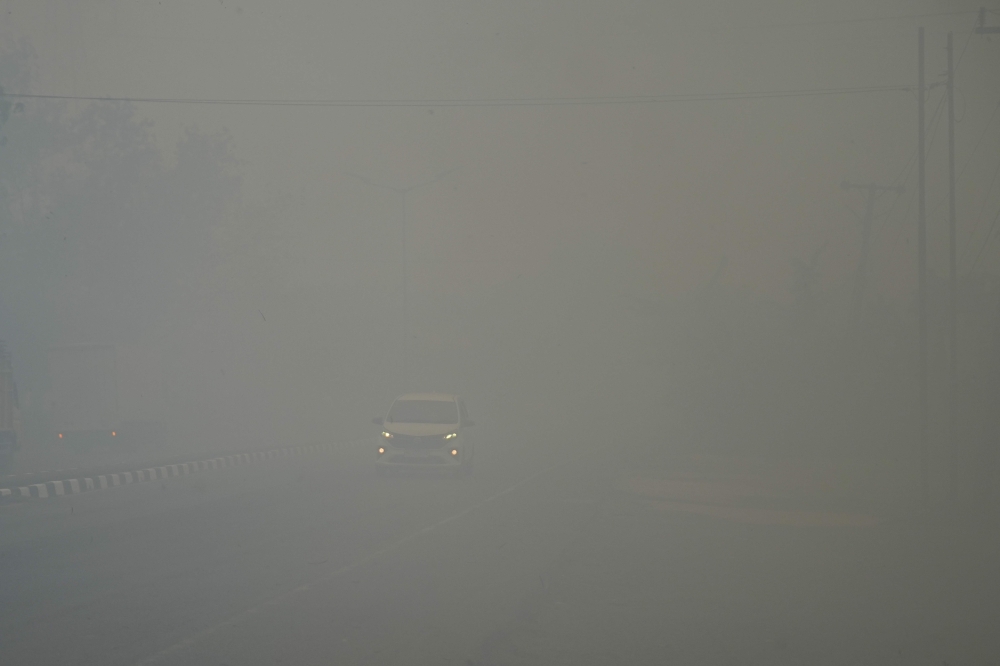
KUALA LUMPUR, Oct 1 — Haze from Indonesian wildfires has blanketed neighbouring Malaysia and Singapore for more than a month, closing schools and sending respiratory complaints...
The article discusses the persistent haze issue affecting Malaysia and Singapore due to Indonesian wildfires, highlighting challenges in pursuing legal recourse through the International Court of Justice (ICJ) and limitations of the ASEAN Agreement on Transboundary Haze Pollution.
Legal experts note the difficulties in establishing jurisdiction and responsibility, as well as the limitations of existing regional agreements which emphasize consensus and non-interference.
While Singapore attempted to tackle the issue with its own legislation, enforcement has been problematic, often relying on cooperation from Indonesian authorities.
Stronger ASEAN cooperation is suggested as a more practical solution to address and prevent transboundary haze problems.
KUALA LUMPUR, Oct 1 — Haze from Indonesian wildfires has blanketed neighbouring Malaysia and Singapore for more than a month, closing schools and sending respiratory complaints skyrocketing.
It is not the first time Indonesian haze has caused a regional pollution crisis, but neighbouring countries have few options for legal recourse, experts say:
Suggestions that Malaysia and Singapore take Indonesia to the UN’s highest judicial organ, the International Court of Justice in The Hague, face a basic obstacle:
“The main issue is jurisdiction, as the ICJ generally requires the consent of both states,” said Professor Mohd Hazmi Mohd Rusli of Universiti Sains Islam Malaysia.
The ICJ can only hear a dispute where states have accepted its jurisdiction, for example through a special agreement, compatible declarations recognising the court’s compulsory jurisdiction, or a treaty clause referring disputes to it.
Indonesia, Malaysia and Singapore are neither signatories nor parties to the 1979 Convention on Long-range Transboundary Air Pollution, a European-centred treaty framework intended to curb cross-border air pollution.
And experts agree Indonesia would be unlikely to willingly accept ICJ jurisdiction on the issue.
All three countries are parties to the Asean Agreement on Transboundary Haze Pollution, but the 2002 deal has no clause on litigation before the ICJ.
The Asean Agreement on Transboundary Haze Pollution is a legally binding regional treaty, intended to prevent and monitor cross-border haze from land and forest fires, and to mitigate its effects.
But its enforcement provisions are limited.
“It is legally binding, but it does not provide a mechanism for one member state to simply sue another,” said Hazmi.
Instead, it seeks to solve the problem through “national action and regional cooperation”.
Legal analysts say Asean’s emphasis on consensus, sovereignty and non-interference puts the brakes on how much diplomatic pressure can be applied to member states over domestic land management and fire enforcement.
“For now, I think the more practical approach is stronger Asean cooperation, including hotspot monitoring, information sharing, prevention and stronger enforcement against illegal burning,” Hazmi said.
One option could be for Malaysians or Singaporeans to try to sue companies linked to the fires in an Indonesian court, said Azam Hawari, a legal expert at the environmental law charity, ClientEarth.
However, “claimants would need to show a link between the company’s activities, the haze that reached them, and their losses,” Azam said, adding he was not aware of such a case having been brought successfully.
Added Hazmi: “Transboundary haze does not automatically mean Indonesia is internationally responsible.”
“There must still be sufficient evidence to establish the link between activities in Indonesia and the harm suffered in Malaysia or Singapore,” he said.
Singapore enacted its own Transboundary haze Pollution Act in 2014, after pollution levels spiked into hazardous territory the year before, followed by another episode in 2015.
The law aimed to punish companies whose activities outside Singapore caused or contributed to unhealthy levels of haze in Singapore.
Enforcement proved a major weakness because it relied heavily on cooperation from foreign authorities.
Establishing responsibility was also challenging because it required authorities to share maps pinpointing fire hotspots, and conflicting or overlapping land rights could further complicate matters.
Bringing a case against some companies with no presence in Singapore also made collecting fines or damages hard.
Singapore’s investigations into four Indonesian companies over their alleged role in the 2015 transboundary haze remain open and proved a source of diplomatic tensions with Jakarta at the time.
Singapore will now most likely “wait for Indonesia to finger certain companies first before we take action against these same companies under the Act”, said Professor Alan Tan, an environmental law expert at the National University of Singapore.
“Otherwise, any action that Singapore takes would appear to the Indonesians to be unilateral, and could be politically controversial.”
Tan said: “Regrettably, not much has changed by way of how the root causes of fires remain unaddressed in Indonesia.” — AFP
Negeri Sembilan DAP lodges police report over Facebook post linking party to ongoing crisis, royal institution
Kuala Pilah hostel death: Form Four student’s remand extended seven days until Oct 8
Bukit Aman JPJKK chief Noor Hisam Nordin heads list of Pahang state awards recipients
文章探讨了由于印度尼西亚野火而影响马来西亚和新加坡的持续性烟霾问题,重点介绍了通过国际法院(ICJ)寻求法律救济的挑战以及东盟跨境烟霾污染协定的局限性。
法律专家指出,确定管辖权和责任存在困难,而且现有的区域协议强调共识和不干涉原则,存在局限性。
虽然新加坡试图通过自己的立法来解决这个问题,但执法一直存在问题,往往需要依靠印尼当局的合作。
加强东盟合作被认为是解决和预防跨境雾霾问题的更切实可行的方案。
吉隆坡,10 月 1 日讯——印尼山火产生的烟霾已笼罩邻国马来西亚和新加坡一个多月,导致学校停课,呼吸系统疾病病例激增。
专家表示,这并非印尼雾霾首次引发区域污染危机,但邻国几乎没有法律途径可以寻求补救:
有人建议马来西亚和新加坡将印度尼西亚告上联合国最高司法机构——位于海牙的国际法院,但这一建议面临一个根本性的障碍:
“主要问题是管辖权,因为国际法院通常需要双方同意,”马来西亚伊斯兰科学大学的莫哈末·哈兹米·莫哈末·鲁斯利教授说。
国际法院只能审理各国接受其管辖权的争端,例如通过特别协议、承认法院强制管辖权的兼容声明,或将争端提交其审理的条约条款。
印度尼西亚、马来西亚和新加坡既不是 1979 年《远距离越境空气污染公约》的签署国,也不是该公约的缔约方。该公约是以欧洲为中心的条约框架,旨在遏制跨境空气污染。
专家们一致认为,印尼不太可能自愿接受国际法院对此问题的管辖权。
这三个国家都是东盟跨境烟霾污染协定的缔约方,但2002年的这项协议没有关于向国际法院提起诉讼的条款。
《东盟跨境烟霾污染协定》是一项具有法律约束力的区域条约,旨在防止和监测陆地和森林火灾造成的跨境烟霾,并减轻其影响。
但其执行条款有限。
哈兹米说:“它具有法律约束力,但它没有提供成员国之间直接起诉对方的机制。”
相反,它寻求通过“国家行动和区域合作”来解决这个问题。
法律分析人士表示,东盟强调共识、主权和不干涉内政,这限制了对成员国在国内土地管理和消防执法方面施加的外交压力。
哈兹米表示:“就目前而言,我认为更实际的做法是加强东盟合作,包括热点监测、信息共享、预防和加强对非法焚烧的执法力度。”
环境法律慈善机构 ClientEarth 的法律专家 Azam Hawari 表示,马来西亚人或新加坡人可以尝试在印度尼西亚法院起诉与火灾有关的公司。
然而,阿扎姆表示,“索赔人需要证明该公司的活动、影响到他们的雾霾以及他们的损失之间存在联系”,并补充说,他不知道有这样的案件成功提起过。
哈兹米补充道:“跨境烟霾并不一定意味着印度尼西亚要承担国际责任。”
他说:“必须有足够的证据来证明印度尼西亚的活动与马来西亚或新加坡遭受的伤害之间存在联系。”
新加坡在 2014 年颁布了自己的《跨境烟霾污染法》,此前一年污染水平飙升至危险级别,2015 年又发生了另一次污染事件。
该法律旨在惩罚那些在新加坡境外开展活动,导致或促成新加坡雾霾达到不健康水平的公司。
执法是一个重大弱点,因为它严重依赖外国当局的合作。
确定责任也颇具挑战性,因为这需要有关部门共享标明火灾热点的地图,而相互冲突或重叠的土地权利可能会使情况更加复杂。
对一些在新加坡没有业务的公司提起诉讼,也使得收取罚款或赔偿金变得困难。
新加坡对四家印尼公司涉嫌参与 2015 年跨境雾霾事件的调查仍在进行中,并成为当时与雅加达外交紧张局势的根源。
新加坡国立大学环境法专家陈艾伦教授表示,新加坡现在很可能会“等待印尼先指出某些公司,然后再根据该法案对这些公司采取行动”。
“否则,新加坡采取的任何行动在印尼人看来都将是单方面的,并可能引发政治争议。”
谭表示:“令人遗憾的是,印尼火灾的根本原因依然没有得到解决,情况并没有太大改善。”——法新社
森美兰州民主行动党就其脸书帖子将本党与当前危机和王室机构联系起来一事向警方报案。
瓜拉庇劳宿舍死亡事件:中四学生拘留期延长七天至10月8日
武吉阿曼 JPJKK 主席诺希山诺丁(Noor Hisam Nordin)位列彭亨州奖项获得者名单之首