US raises the stakes on industrial capacity and transshipments posing new trade barriers to Thai exports美国提高工业产能和转运方面的门槛,对泰国出口构成新的贸易壁垒
Bangkok’s US trade bargain faces a tariff squeeze as Jamieson Greer targets industrial overcapacity. Suphajee wants a 19% ceiling, but Section 301 cases, Thailand’s surging… Read More ›
新闻视频
October 3, 2026 at 2:14 pm
in Economy , Living , Media , Politics , Thailand
Thailand’s trade talks with Washington face a dangerous new twist as US Trade Representative Jamieson Greer prepares tougher action on industrial overcapacity. Commerce Minister Suphajee Suthumpun is racing to secure a deal and hold Thailand’s tariff burden near 19%. Yet Washington has guaranteed no ceiling. A 12.5% Section 301 tariff already applies over forced-labour controls, while another investigation targets Thai manufacturing. With its US trade surplus soaring and Chinese-linked supply chains under scrutiny, Thailand now risks additional tariffs despite offering billions in US purchases.
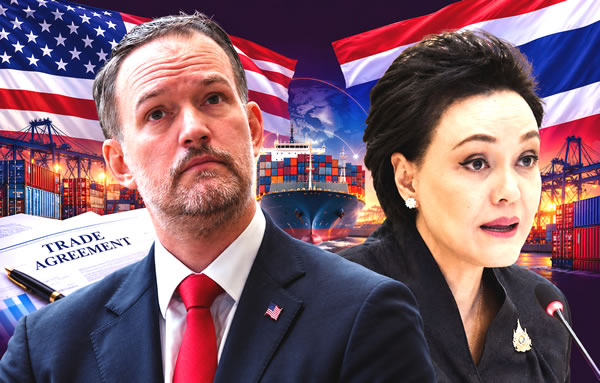
US trade chief Jamieson Greer raises pressure as Deputy Prime Minister and Commerce Minister Suphajee Suthumpun races for a deal, with Section 301 probes threatening higher Thai tariffs. ( Source: Matichon )
US Trade Representative Jamieson Greer has sharply raised the stakes for Thailand’s unfinished trade negotiations with Washington. His October 1 warning on global industrial overcapacity comes at a difficult moment for Commerce Minister Suphajee Suthumpun.
She is racing to secure a US trade agreement while seeking an effective ceiling on Thailand’s mounting tariff exposure. Crucially, Greer is simultaneously pushing Washington towards stronger trade action.
Speaking at the G20 trade ministers’ meeting in Milwaukee, Greer warned that structural excess production required action. Moreover, he argued that existing trade remedies were no longer adequate. “Nearly all countries agree that this is an issue that requires action,” Greer said. Yet the G20 failed to agree on collective measures against excess industrial capacity. Even so, Greer made clear that Washington would continue pursuing the issue beyond Milwaukee.
Thailand faces wider US tariff exposure as Suphajee seeks a firm ceiling through unfinished trade deal
His intervention matters directly to Bangkok because Thailand already faces a Section 301 investigation on precisely that issue. Thailand is among only 16 economies targeted over structural excess manufacturing capacity. In parallel, Suphajee is trying to complete an Agreement on Reciprocal Trade, or ART, with Washington. The US investigation could produce additional tariffs outside that agreement.
That distinction is now critical. Suphajee is no longer negotiating merely for one headline tariff rate. Instead, she must secure predictable market access while containing several American tariff pressures. Thailand wants its eventual burden kept within the previously negotiated 19% range. Equally important, Bangkok wants treatment comparable with neighbouring exporters. A substantially higher rate could quickly cost Thai manufacturers American orders and investment.
Washington has not guaranteed that ceiling. At the same time, its Section 301 machinery continues moving on separate fronts. Thailand already faces duties arising from Washington’s forced-labour investigation. Separately, the structural excess-capacity case is approaching a decision. Washington is also scrutinising Chinese-linked supply chains and possible illegal transshipment through third countries.
These are distinct trade issues. Taken together, however, they create the possibility of cumulative tariff exposure for Thai exporters. The ART rate may therefore not represent the final duty paid at America’s border. That problem has become central to Suphajee’s negotiations and explains the urgency surrounding the talks.
Suphajee seeks 19% tariff ceiling and regional parity as Washington prepares another trade decision
On September 30, Suphajee said the principal negotiating terms were essentially complete. Technical details and wording remained under discussion. As a result, Thai negotiators continue working with Washington while another US tariff decision approaches. Suphajee expects decisions before November, while Washington recently indicated an announcement could come during early October.
Thailand has two principal objectives. First, Bangkok wants the eventual tariff burden within the previous 19% range. Second, it wants treatment comparable with competing countries. The second objective carries enormous commercial importance because Thailand does not sell into America alone. Its factories compete directly with Vietnam, Malaysia, Indonesia and other Asian manufacturing centres.
A nominally acceptable tariff could still hurt Thailand if regional competitors receive substantially better treatment. For that reason, Suphajee is negotiating for both a ceiling and competitive parity. Yet the final outcome does not rest solely with USTR. Suphajee has stressed that President Donald Trump will also play a significant role. That adds another uncertainty as negotiations move towards their final stages.
Greer widens excess capacity pressure as US scrutiny reaches Thailand and other export-driven economies
Greer’s October 1 intervention has intensified those pressures. Washington argues that structural overproduction can overwhelm international markets. According to Greer, production encouraged beyond domestic demand eventually spills across borders. Surplus goods can then pressure manufacturers and workers elsewhere.
“When non-market policies and practices allow production to expand far beyond domestic demand, the consequences spill across borders,” Greer said. “Excess production flows into global markets, putting pressure on producers and workers elsewhere.”
China remains the principal target of that criticism. Nevertheless, Washington’s investigation extends far beyond China. Thailand, Vietnam, Malaysia, Indonesia, Singapore and Cambodia are included. Japan, India, South Korea, Taiwan and Bangladesh are also targeted. Elsewhere, the European Union, Switzerland, Norway and Mexico face investigation.
Washington is therefore examining a large section of the manufacturing system surrounding China. It is also scrutinising other heavily export-dependent economies. Notably, Greer has focused on Chinese electric vehicle production and intense domestic competition. Chinese businesses describe that competition as “neijuan”.
Washington broadens excess capacity test beyond idle factories to trade surpluses and state support
Greer sees the underlying problem differently. “They call the resulting effect ‘neijuan,’ but the root of the problem is excess production capacity.” He also said China became defensive when the issue surfaced during G20 discussions. Washington believes Beijing understands that it forms part of a much larger international problem. US countermeasures could emerge within weeks, leaving Suphajee little room for delay.
The threat becomes more serious because Washington defines excess capacity broadly. It does not simply mean factories standing half empty. USTR says large or persistent manufacturing trade surpluses can indicate structural excess production. Underused or unused manufacturing capacity provides another possible indicator.
Beyond that, Washington is examining policies which encourage production beyond domestic demand. These can include subsidies and subsidised lending. Wage suppression and weak labour protections can also enter the calculation. Other factors include inadequate social safety nets, market barriers and state-controlled commercial activity. Financial policies and other government interventions may also come under examination.
Washington is thus looking far beyond traditional dumping disputes. Instead, it is examining the economic structures supporting large export industries. That creates several vulnerabilities for Thailand, particularly its rapidly increasing trade surplus with America.
Thailand’s soaring US trade surplus adds pressure as Bangkok offers major concessions under trade deal
Thailand ranked 11th among countries running US trade surpluses during the second quarter of 2025. By the end of 2025, it had climbed to seventh place. During the first six months of 2026, Thailand moved to fifth. Inevitably, that rapid rise has become a major negotiating problem for Suphajee.
Washington wants to reduce its bilateral trade deficit. Therefore, Thailand’s growing surplus increases the pressure from America. Suphajee has acknowledged the difficulty directly. Thailand must demonstrate sincerity in managing and creating a more balanced trading relationship, she said. In response, Bangkok is seeking more American imports while protecting access for Thai exporters.
The ART was originally intended to provide a framework for doing precisely that. Thailand negotiated around a 19% reciprocal US tariff. In return, Bangkok offered extensive access to its domestic market. Thailand agreed to eliminate tariffs on approximately 99% of American goods. Those concessions covered extensive ranges of industrial, agricultural and food products.
As part of this, Bangkok offered major commercial purchases from America. Planned agricultural purchases were worth approximately $2.6 billion annually. Energy purchases were envisaged at approximately $5.4 billion each year. Thailand also proposed purchasing 80 American aircraft worth about $18.8 billion. Clearly, the agreement involved far more than adjustments to customs rates.
Section 301 complicates Thai trade bargain as forced-labour tariffs add another layer of US pressure
Bangkok also made commitments covering labour protections, environmental enforcement and economic security. In addition, Thailand agreed to cooperate against unfair third-country trade practices and duty evasion. Those were substantial commitments. Yet Washington’s expanding use of Section 301 has complicated the original bargain.
The ART does not extinguish America’s ability to investigate separate Thai trade practices. Washington instead retains Section 301 as an independent enforcement mechanism. Thailand can agree market-opening concessions under the ART, while America can investigate another practice separately. Following an adverse determination, that process can produce additional trade measures.
Thailand has already experienced that problem through the forced-labour case. Washington examined whether trading partners adequately prevented imports produced using forced labour. The United States subsequently imposed additional Section 301 tariffs. Some economies received a 10% rate, while others faced 12.5%.
Thailand received the 12.5% rate. Notably, more than 2,000 Thai products were exempted, significantly reducing the impact across overall exports. Bangkok nevertheless wants better treatment. Thailand is preparing legislation concerning imports involving forced labour. With that change, officials hope the tariff can eventually fall towards 10%.
Separate Section 301 cases raise cumulative tariff risk as Thailand seeks an effective US ceiling
Success on forced labour would not settle Thailand’s wider exposure. On another front, the structural excess-capacity case remains separate. Vice Commerce Minister Kirida Bhaopitchir has publicly explained how different Section 301 cases can accumulate. She described forced labour as one case and excess capacity as another.
“And then they can charge us with cases, they can be as many cases as they want,” Kirida said. She also provided a simple hypothetical example. If one case produced 12.5%, another case could add a further 6%. That possibility explains why Suphajee’s search for an effective ceiling has become so important.
Thailand is not merely negotiating whether Washington writes 19% into an agreement. Bangkok must consider the combined effect of the ART and applicable Section 301 duties. Product exemptions further complicate the calculation. Likewise, other US trade remedies can affect individual products differently.
There is therefore no single tariff which necessarily describes every Thai export entering America. Still, cumulative Section 301 duties create a broader problem for Bangkok. Thailand wants certainty over how high its overall exposure can climb. That certainty has yet to emerge from the negotiations.
The Department of Foreign Trade has estimated that combined tariffs should ideally remain around 19% to 20%. That estimate covers forced-labour and excess-capacity measures. Washington has not publicly guaranteed such a ceiling. The difference is fundamental: Bangkok has an objective, while Washington retains considerable discretion.
Suphajee seeks tariff certainty as Washington weighs action against three major Thai industrial sectors
Suphajee is consequently attempting something unusually difficult. Thailand is offering concessions through the ART while seeking limits on separate American tariff actions. There has been progress, and the principal terms are largely settled. However, the remaining questions increasingly concern what Thailand will actually pay after other US measures are considered.
Following earlier talks with Greer, Suphajee said the main ART terms had been agreed. Technical teams were instructed to complete the remaining details quickly. Importantly, Washington also offered assurances concerning the excess-capacity investigation. Suphajee said US officials promised resulting tariffs would be fair and competitive.
That assurance matters, but fair and competitive treatment is not necessarily a guaranteed ceiling. Greer’s October 1 comments make that distinction increasingly important. Washington now says conventional trade remedies cannot adequately address structural excess production. Accordingly, America is considering broader action against economies it believes contribute to the problem.
For Thailand, the investigation focuses particularly on three major industrial groups. Automobiles and automotive parts form one group, while machinery and components form another. Rubber and rubber products make up the third major group. Earlier Thai manufacturing figures showed capacity utilisation below 60%, causing concern in Washington.
Thailand challenges US capacity concerns with fresh factory data showing utilisation of 75% to 90%
Those figures suggested significant unused industrial capacity. They also raised questions about whether Thailand was producing considerably more than domestic demand required. Bangkok disputes the usefulness of those national figures for factories serving America. In response, the Commerce Ministry collected fresh data from major exporters.
Officials focused specifically on companies selling into the US market. The exercise covered automotive manufacturing, machinery and components, and rubber-related production. The work took between one and two months. Significantly, the resulting picture differed substantially from the earlier national statistics.
Thai officials say those factories operate at approximately 75% to 90% capacity. Bangkok argues that older national figures distorted actual industrial conditions. Some calculations included industries which had already stopped operating. Newer manufacturing businesses, by contrast, were missing.
Thailand is now revising its Manufacturing Production Index. Suphajee could not wait for that broader statistical overhaul. Instead, officials gathered targeted data and submitted it directly to Washington. Thailand wants those figures considered before America makes its excess-capacity decision.
Chinese investment and transshipment concerns add another challenge to Thailand’s US trade negotiations
Bangkok’s argument is straightforward. Major Thai factories serving America are operating at relatively high capacity. They are not simply vast platforms carrying unused production capability. Even so, utilisation rates are only one part of Washington’s case.
Thailand’s rapidly growing US trade surplus remains another concern. Meanwhile, Washington is increasingly focused on Chinese production moving through third countries. That creates another sensitive challenge for Suphajee because Chinese investment has expanded substantially across Thai manufacturing.
Automotive production has attracted particularly large investments. Electronics and other industrial sectors have also received Chinese capital. Meanwhile, American tariffs on China have altered supply chains throughout Asia. In turn, Washington is increasingly alert to Chinese goods entering America through third countries.
Chinese ownership does not automatically constitute illegal transshipment. A product can legitimately be manufactured in Thailand using Chinese capital, technology or components. The critical question concerns origin. Goods claiming Thai origin must satisfy the applicable requirements.
Washington nevertheless wants stronger enforcement. Thailand has intensified checks against false certificates of origin. Officials have also supplied Washington with information about inspections against illegal transshipment. Significantly, this issue reaches directly into the ART.
Thailand faces four separate US trade pressures as Suphajee seeks predictable access and tariff limits
The proposed agreement requires Thailand to cooperate against unfair third-country trade practices. It also includes commitments concerning duty evasion and economic security. Suphajee must therefore address several American concerns simultaneously.
First comes Thailand’s rapidly growing trade surplus. Second comes forced labour, where Washington has already imposed Section 301 duties. Third comes structural excess manufacturing capacity, now elevated by Greer’s October 1 warning. Finally, third-country trade remains under scrutiny, with Chinese-linked supply chains particularly sensitive.
These issues are legally and commercially distinct. Collectively, however, they increasingly shape Thailand’s attempt to secure predictable US market access. That makes the tariff ceiling central to the negotiations.
A trade agreement offers less certainty if separate measures can later raise tariffs across important product categories. Yet that does not make the ART commercially worthless. The agreement can still secure market access and product exemptions. It can also influence Washington’s treatment of Thailand under separate trade actions.
The forced-labour case already demonstrates that relationship. Economies meeting particular American requirements received lower Section 301 treatment. Suphajee therefore has strong reasons to complete the ART. Completion alone, however, does not provide a blanket shield against future Section 301 action.
Bangkok seeks a 19% tariff benchmark as Greer pushes Washington towards stronger trade enforcement
That is the unresolved weakness hanging over the negotiations. Thailand wants something approaching an effective overall ceiling. Washington has instead offered assurances about fairness and competitiveness. Those concepts are not necessarily identical.
For Bangkok, 19% remains the critical benchmark. Increasingly, it represents more than the original reciprocal tariff figure. It now represents Thailand’s attempt to contain its total US tariff exposure within a commercially manageable range.
Regional parity matters almost as much. If Vietnam receives materially better treatment, American importers could switch suppliers. The same danger applies with Malaysia, Indonesia and other manufacturing competitors. Suphajee therefore needs both a manageable ceiling and comparable regional treatment.
Greer, meanwhile, is pushing Washington towards stronger trade enforcement. He wants tougher responses to structural industrial overcapacity. More fundamentally, he says existing remedies have failed to solve the problem. The G20’s inability to agree has not softened that position.
On the contrary, Washington appears prepared to proceed independently. At Milwaukee, trade ministers also discussed forced labour. That issue has already produced direct consequences for Thailand.
Section 301 powers complicate Thai trade deal as forced-labour and excess-capacity cases accumulate
In July, Washington imposed additional tariffs of 10% or 12.5% on imports from 60 countries and territories. The US said those economies had taken insufficient action against forced labour. Thailand fell into the higher tariff category.
The parallel is important. Washington has already demonstrated its willingness to use Section 301 across one broad policy issue. It is now moving through another investigation concerning excess capacity.
For Suphajee, that raises a difficult longer-term question. Completing the ART settles negotiated commitments, but it does not end Washington’s Section 301 powers. The statute can address different practices through separate investigations. For Thai exporters, the commercial impact can still accumulate.
That makes the current negotiations substantially more complicated than their original design. Suphajee must secure the ART while protecting exemptions already obtained under the forced-labour case. Bangkok also wants the existing 12.5% tariff reduced towards 10%.
Then comes the excess-capacity decision. Thailand has supplied fresh factory data showing utilisation around 75% to 90%. Washington must decide whether that evidence answers its broader concerns. Separately, transshipment scrutiny remains active.
Suphajee battles several US trade fronts while Thailand seeks certainty over its final tariff burden
Suphajee is therefore negotiating across several fronts at once. She is trying to secure market access while containing Section 301 exposure. She must also preserve Thailand’s competitiveness against neighbouring exporters. Alongside that, Bangkok must demonstrate progress on forced labour and origin enforcement.
Above all, Suphajee needs greater certainty over the combined tariff burden. Without that certainty, the headline ART rate does not necessarily reveal what Thai exporters will ultimately pay. That is what makes Greer’s October 1 intervention particularly significant.
His comments were not merely another attack on Chinese industrial policy. Thailand is already formally inside Washington’s excess-capacity investigation. Greer’s warning therefore reaches directly into Suphajee’s negotiations.
The two developments are increasingly intertwined. Greer is seeking greater American freedom to respond to what Washington considers distorted production and trade. Suphajee is seeking greater certainty over how those responses affect Thailand. Their objectives collide inside the unfinished trade negotiations.
Bangkok has already offered extensive concessions. Thailand has proposed near-total tariff elimination for American goods. It has also proposed billions of dollars in agricultural and energy purchases. Furthermore, Thailand envisages buying 80 American aircraft.
Thailand’s concessions fail to secure a tariff ceiling as Washington expands its trade enforcement drive
Thailand has also offered commitments on labour protections, environmental enforcement and economic security. Despite those concessions, Bangkok still lacks a publicly guaranteed ceiling on its overall tariff exposure. That is now the central problem facing Suphajee.
The original trade framework envisaged a relatively straightforward bargain centred around a 19% tariff. Since then, the landscape has changed considerably. Thailand now faces an existing Section 301 tariff, while another Section 301 investigation approaches a decision.
Meanwhile, Chinese-linked supply chains remain under close American scrutiny. Washington is also developing a broader argument against export-heavy manufacturing economies. Suphajee is thus trying to complete one trade bargain while the American trade system around it changes.
The agreement remains important. However, the real prize is no longer simply securing Washington’s signature on the ART. Bangkok needs enough certainty to stop separate measures pushing Thai exporters beyond the competitive range originally envisaged.
Thailand’s 19% tariff target faces growing uncertainty as Greer pushes tougher US trade measures
That is why the 19% ceiling has become so important. It is no longer merely the headline tariff around which the original negotiations were constructed. Instead, it increasingly represents Bangkok’s attempt to contain overall US tariff exposure.
Greer’s October 1 warning suggests that task is becoming harder. Suphajee must finish the agreement while Washington prepares another potentially significant tariff decision. Simultaneously, she must defend Thailand’s trade surplus, manufacturing structure and Chinese-linked supply chains.
The proposed US-Thai trade agreement was intended to provide greater certainty. Instead, it approaches completion with several major US tariff risks unresolved. For Thailand, the final question is therefore much larger than the ART’s headline tariff.
The agreement may establish the bilateral bargain on paper. What Suphajee still needs is a ceiling on what Thai exporters actually pay.
Mixed messages from Thai government on a US Thai trade deal despite Commerce Minister’s optimism
Thailand moves carefully with AI regulation as US tech warns over key provisions hindering investment
TH AI plan runs into problems and bottlenecks. New AIS deal offering cheap 29 baht per month internet
Paying AI users in Thailand had a nightmare week online just as the government waded into the market
People’s Party firebrand attacks flagship TH AI project launched this week with corruption agency filing of claims
Thais take to government TH AI project on the first day with ChatGPT reporting outages later on Monday
TH AI Passport artificial intelligence to go live on August 28th with strong public demand says Minister
Democrat Party deputy leader renews attacks on the TH-AI passport project as the minister pushes ahead
Thai workers are now World leaders for AI use. More than double the global average. Firms must wise up
Democrat Party Deputy Leader reveals flaws in the TH-AI Passport plan and calls on Minister to abort it
Abhisit Vejjajiva calls for scrutiny of flagship AI project being pursued by Digital Economy ministry
Opposition and Prime Minister highlight corruption which is damaging the kingdom’s credibility abroad
Transport Minister orders report on bribery allegations in the US relating to junkets and Massage Parlours
Joseph Anthony is an expat from Ireland who has lived in Thailand for the last decade. He has worked extensively in the media including editorial positions in Ireland and Thailand. He is focused on economic and business stories in Thailand as well as the expat lifestyle.
All posts by Joseph O' Connor
Flooding crisis another black eye for Thai governance as Prime Minister Anutin faces rising criticism September 30, 2026 Flood fury closes in on PM Anutin as Bangkok battles
Mixed messages from Thai government on a US Thai trade deal despite Commerce Minister’s optimism September 29, 2026 Thailand’s US trade deal hits a hiatus as Suphajee
USS George HW Bush heading for Phuket for 6 days R&R. Docks October 5 with over five thousand sailors September 29, 2026 Phuket braces for 5,120 US personnel as USS George
Thai Airways CEO apologises for ongoing flooding crisis issues with defective carts and delayed flights September 29, 2026 Defective baggage equipment and staff shortages hammer
Foreign tourist arrivals already down 3.65% with fears the flooding crisis may impact the Chinese market September 29, 2026 Thailand’s tourism engine sputters into high season
Anutin rejects appeal against deportation made by French man Kevin Dimino despite wife’s submission September 28, 2026 French zoo owner Kevin Dimino faces deportation after
32 year old Ranger killed in one shot incident in Narathiwat on Sunday evening as he took up position September 28, 2026 One gunshot kills Ranger Sukran Lateh, 32, as his
Tourism minister directs acute airport baggage crisis caused by workers who failed to turn up for shifts September 28, 2026 Tourism Minister Surasak rushes to Suvarnabhumi as the
Prime Minister Anutin wades into flood hit areas to be met with a mixed reaction including seething anger September 28, 2026 Bangkok flood victims confront Prime Minister Anutin
Nene Royal after conquering the showbiz world this week returns home to Phuket to her granny’s embrace September 27, 2026 Thailand’s Nene Royal returns to Phuket after
Bangkok airports open and flights running but there are delays and baggage issues at Suvarnabhumi September 27, 2026 Flood chaos hits Suvarnabhumi as passengers wait six
Bangkok flooding eases as front moves to Myanmar but Governor warns city needs 2-3 days to recover September 27, 2026 The Thai capital races to drain vast floodwater after
Figures for opening 8 months of 2026 show a gaping trade deficit as Thailand imports more from China September 27, 2026 Prime Minister Anutin Charnvirakul visited London
PM directs flash flooding crisis which has hit Bangkok making all 50 districts disaster zones from London September 26, 2026 Bangkok battles severe flooding after almost 300mm of
Prime Minister Anutin’s US visit this week yielded a closer ties pact between Bangkok and Wall Street September 26, 2026 Wall Street opens its doors to closer Thai links as
Horror in Phuket as policeman’s Glock gun misfires in slider action fatally wounding his 49 year old mother September 25, 2026 Phuket policeman faces a fatal shooting probe after
Bombshell Supreme Court ruling links Bhumjaithai Party figure with orchestrated Senate poll collusion September 25, 2026 Supreme Court exposes corrupt conduct in the 2024
Thai Airways admits it got it wrong as Suvarnabhumi Airport public areas are swamped by a baggage flood September 30, 2026
Turkish arsonist arrested. His Thai girlfriend hired him to destroy evidence at her former workplace September 29, 2026
Race against time and water flows as PM Anutin works round the clock tackling flooding emergency September 29, 2026
Thailand moves carefully with AI regulation as US tech warns over key provisions hindering investment September 29, 2026
Military operations are expanded at Suvarnabhumi Airport as crisis is still not brought under control September 28, 2026
PM’s relief as Constitutional Court upholds February 8th General Election despite a barcode warning September 28, 2026
Royal Thai Army deployed to Suvarnabhumi Airport after baggage chaos gets the better of exhausted staff September 28, 2026
Love triangle horror in Chumphon sees all three dead after government officer goes on a killing rampage September 27, 2026
NIDA opinion poll shows rising apathy among the Thai public as Prime Minister Anutin’s base crashes September 27, 2026
Flooding tragedy in Samut Prakan near Bangkok. Two die from electrocution after family car is submerged September 27, 2026
Crucial ballot decision of Constitutional Court on Monday could upend government and Thai politics September 27, 2026
American arrested in Pattaya after a joint agency raid found an illicit narcotics factory in his suburban home September 26, 2026
Warning in Thailand over fake cough syrup bottles. Police smash counterfeit medicine empire in 4 raids September 26, 2026
Spanish chef (32) who murdered and dismembered a Colombian surgeon on Koh Phangan loses appeal September 26, 2026
Dizziness, headaches in a Pattaya locale after a cannabis farm fire at a residence on Friday morning guts the property September 25, 2026
33 year old sets fire to Honda Scooby in Udon Thani after mother refused to buy him a more powerful ride September 25, 2026
Ministers accused of neglecting Thai farmers. Crucial aid support has not yet reached the cabinet table September 25, 2026
Prime Minister Anutin Charnvirakul formally summoned by parliament over local government exam scandal September 24, 2026
Former Justice Minister hails major bankruptcy bill which could help reduce the household debt burden September 24, 2026
Nene Royal wins big for Thailand with blistering ‘Seven Nation Army’ final act. Nets $1 million prize September 24, 2026
Chinese men arrested on rape and extortion charges after Pattaya raid. Woman locked up and chained September 23, 2026
Digital Minister (36) and heir to powerful Chidchob dynasty has a fortune of hundreds of millions September 23, 2026
© 2026 Thai Examiner. All rights reserved.
2026年10月3日下午2:14
经济、生活、媒体、政治、泰国
随着美国贸易代表杰米森·格里尔准备对泰国工业产能过剩问题采取更强硬的措施,泰国与华盛顿的贸易谈判面临危险的新转折。泰国商务部长苏帕吉·苏图蓬正努力达成协议,力求将泰国的关税负担维持在19%左右。然而,华盛顿方面并未保证关税上限。目前,泰国已因强迫劳动问题被征收12.5%的301条款关税,同时另一项针对泰国制造业的调查也在进行中。鉴于泰国对美贸易顺差不断攀升,且与中国相关的供应链正受到密切关注,尽管泰国每年从美国采购数十亿美元,如今仍面临被征收额外关税的风险。
美国贸易专员杰米森·格里尔加大施压力度,泰国副总理兼商务部长素帕吉·素通蓬正努力促成协议,而301条款调查则威胁到泰国可能面临更高的关税。(来源:Matichon)
美国贸易代表杰米森·格里尔(Jamieson Greer)大幅提高了泰国与华盛顿之间尚未完成的贸易谈判的风险。他于10月1日就全球工业产能过剩发出的警告,对泰国商务部长苏帕吉·素通蓬(Suphajee Suthumpun)而言,正值一个艰难时刻。
她正争分夺秒地促成与美国的贸易协议,同时寻求有效限制泰国不断上涨的关税负担。至关重要的是,格里尔还在敦促华盛顿采取更有力的贸易行动。
格里尔在密尔沃基举行的二十国集团贸易部长会议上发表讲话时警告说,结构性产能过剩问题亟需采取行动。此外,他还指出,现有的贸易救济措施已不足以应对这一问题。格里尔表示:“几乎所有国家都认为这是一个需要采取行动的问题。”然而,二十国集团未能就应对产能过剩的集体措施达成一致。即便如此,格里尔明确表示,华盛顿将继续在密尔沃基会议之外继续推进这一问题。
由于苏帕吉寻求通过尚未完成的贸易协议设定明确的关税上限,泰国面临更大的美国关税风险。
他的介入对曼谷至关重要,因为泰国目前正因同样的问题面临美国《1985年贸易法》第301条的调查。泰国是仅有的16个因结构性产能过剩而被列入调查名单的经济体之一。与此同时,苏帕吉正努力与华盛顿达成互惠贸易协定(ART)。美国的调查可能会导致在协定之外加征额外关税。
如今,这一区别至关重要。苏帕吉不再仅仅就一个名义关税税率进行谈判。相反,她必须在应对美国多项关税压力的同时,确保可预测的市场准入。泰国希望最终的关税负担保持在之前谈判达成的19%的范围内。同样重要的是,曼谷希望获得与邻国出口商同等的待遇。大幅提高的税率可能会迅速导致泰国制造商失去美国订单和投资。
华盛顿并未保证关税上限。与此同时,其依据《贸易法》第301条开展的行动仍在其他方面推进。泰国已因华盛顿的强迫劳动调查而面临关税。此外,关于结构性产能过剩的案件也即将作出裁决。华盛顿还在审查与中国相关的供应链以及可能通过第三国进行的非法转运活动。
这些都是不同的贸易问题。然而,综合起来,它们可能导致泰国出口商面临累积关税风险。因此,ART税率可能并不代表最终在美国边境缴纳的关税。这个问题已成为苏帕吉谈判的核心,也解释了谈判的紧迫性。
苏帕吉寻求19%的关税上限和区域关税均等,而华盛顿方面正准备做出另一项贸易决定。
9月30日,苏帕吉表示,主要谈判条款已基本敲定,技术细节和措辞仍在商讨中。因此,泰国谈判代表将继续与华盛顿方面合作,同时美国方面也即将做出新的关税决定。苏帕吉预计11月前会做出决定,而华盛顿方面近期则表示,可能会在10月初宣布结果。
泰国有两个主要目标。首先,曼谷希望最终关税负担维持在之前的19%左右。其次,它希望获得与竞争国家同等的待遇。第二个目标具有巨大的商业意义,因为泰国的产品并非只销往美国。其工厂直接与越南、马来西亚、印度尼西亚和其他亚洲制造中心展开竞争。
即使名义上可以接受的关税,如果区域竞争对手获得远优于泰国的待遇,仍然可能对泰国造成损害。因此,苏帕吉正在争取设定关税上限并实现竞争平等。然而,最终结果并非完全取决于美国贸易代表办公室。苏帕吉强调,美国总统唐纳德·特朗普也将发挥重要作用。随着谈判进入最后阶段,这又增添了一层不确定性。
随着美国审查蔓延至泰国和其他出口导向型经济体,格里尔加剧了产能过剩压力。
格里尔10月1日的干预加剧了这些压力。华盛顿方面认为,结构性生产过剩会使国际市场不堪重负。格里尔指出,鼓励生产超出国内需求最终会导致生产外溢。过剩的商品随后会给其他地方的制造商和工人带来压力。
格里尔表示:“当非市场政策和做法允许生产规模远远超过国内需求时,其后果就会蔓延到其他国家。过剩的生产会流入全球市场,给其他地方的生产者和工人带来压力。”
中国仍然是此类批评的主要目标。然而,华盛顿的调查范围远不止中国。泰国、越南、马来西亚、印度尼西亚、新加坡和柬埔寨也包含在内。日本、印度、韩国、台湾和孟加拉国也是调查对象。此外,欧盟、瑞士、挪威和墨西哥也面临调查。
因此,华盛顿正在密切关注中国周边制造业体系的很大一部分,同时也在仔细审查其他高度依赖出口的经济体。值得注意的是,格里尔重点关注了中国的电动汽车生产及其激烈的国内竞争。中国企业将这种竞争称为“内战”。
华盛顿扩大产能过剩测试范围,从闲置工厂扩展到贸易盈余和州政府支持
格里尔对问题的根本原因有不同的看法。“他们把由此产生的后果称为‘内忧’,但问题的根源在于产能过剩。”他还表示,当这个问题在二十国集团(G20)讨论中被提及时,中国采取了防御姿态。华盛顿方面认为,北京明白这只是一个更大的国际问题的一部分。美国的应对措施可能在几周内出台,留给苏帕吉的拖延时间已经不多了。
由于华盛顿对产能过剩的定义非常宽泛,因此威胁变得更加严重。它并非仅仅指工厂半空置。美国贸易代表办公室表示,巨额或持续的制造业贸易顺差可能表明存在结构性生产过剩。未充分利用或闲置的制造业产能是另一个可能的指标。
除此之外,华盛顿还在研究鼓励生产超出国内需求的政策,例如补贴和贷款补贴。工资抑制和劳动保护薄弱也是需要考虑的因素。其他因素还包括社会保障体系不完善、市场壁垒以及国家对商业活动的管制。金融政策和其他政府干预措施也可能受到审查。
因此,华盛顿的目光远不止于传统的倾销争端。相反,它正在审视支撑大型出口产业的经济结构。这给泰国带来了诸多脆弱性,尤其是其对美贸易顺差迅速增长的现状。
泰国对美贸易顺差飙升,令曼谷方面面临更大压力,他们正努力在贸易协议中做出重大让步。
2025年第二季度,泰国在对美贸易顺差国家中排名第11位。到2025年底,排名上升至第7位。2026年上半年,泰国跃升至第5位。不可避免地,这种快速上升已成为苏帕吉谈判中的一个重大难题。
华盛顿希望减少双边贸易逆差。因此,泰国不断增长的贸易顺差加大了来自美国的压力。苏帕吉已直接承认了这一困难。她表示,泰国必须展现诚意,努力维系并建立更加平衡的贸易关系。作为回应,曼谷方面正寻求增加美国进口,同时保障泰国出口商的市场准入。
《贸易协定》最初旨在为此提供一个框架。泰国与美国就19%的对等关税进行了谈判。作为交换,曼谷向美国提供了广泛的国内市场准入。泰国同意取消约99%美国商品的关税。这些让步涵盖了广泛的工业、农业和食品产品。
作为协议的一部分,曼谷方面提出从美国进行大宗商业采购。计划中的农产品采购额约为每年26亿美元,能源采购额约为每年54亿美元。泰国还提议购买80架美国飞机,价值约188亿美元。显然,该协议涉及的内容远不止调整关税税率。
第301条款使泰泰贸易谈判更加复杂,因为强制劳动关税增加了美国的另一层压力。
曼谷方面也做出了涵盖劳工保护、环境执法和经济安全等方面的承诺。此外,泰国同意合作打击不公平的第三国贸易行为和逃税行为。这些都是实质性的承诺。然而,华盛顿不断扩大对《贸易法修正案第301条》的使用,使得最初的协议变得复杂化。
《反垄断法》并未剥夺美国调查泰国其他贸易行为的能力。华盛顿保留了《贸易法》第301条作为一项独立的执法机制。泰国可以根据《反垄断法》同意做出开放市场的让步,而美国则可以单独调查其他贸易行为。在做出不利裁决后,该程序可以导致采取额外的贸易措施。
泰国此前已通过强迫劳动案经历过类似问题。华盛顿方面审查了贸易伙伴是否有效阻止了使用强迫劳动生产的进口产品。随后,美国对部分国家加征了301条款关税。一些经济体被征收了10%的关税,而另一些经济体则面临12.5%的关税。
泰国被征收12.5%的关税。值得注意的是,超过2000种泰国产品获得豁免,显著降低了对整体出口的影响。尽管如此,曼谷方面仍希望获得更好的待遇。泰国正在制定一项关于涉及强迫劳动进口产品的立法。官员们希望,随着这项立法的出台,关税最终能够降至10%左右。
泰国寻求有效限制美国关税,而其他301条款案件则加剧了累积关税风险。
在打击强迫劳动方面取得成功并不能解决泰国面临的更广泛问题。另一方面,结构性产能过剩问题仍单独处理。商务部副部长基里达·鲍皮奇尔曾公开解释过,不同的第301条案件是如何累积的。她将强迫劳动描述为一个案例,将产能过剩描述为另一个案例。
“然后他们就可以对我们提起诉讼,想开多少案子就开多少案子,”基里达说道。她还举了一个简单的假设例子。如果一个案子导致12.5%的增加,那么另一个案子可能又会增加6%。正是这种可能性解释了为什么苏帕吉寻求有效的上限如此重要。
泰国谈判的重点并非仅仅是华盛顿是否在协议中写入19%的关税。曼谷必须考虑《反倾销条例》和适用的301条款关税的综合影响。产品豁免进一步加剧了计算的复杂性。同样,其他美国贸易救济措施对不同产品的影响也可能有所不同。
因此,并不存在一种单一关税能够涵盖所有进入美国的泰国出口商品。然而,累积的301条款关税给曼谷带来了更广泛的问题。泰国希望明确其整体关税风险上限。但谈判尚未达成共识。
对外贸易部估计,综合关税理想情况下应保持在19%至20%左右。这一估计涵盖了针对强迫劳动和产能过剩的措施。华盛顿方面并未公开保证这一上限。二者之间的区别至关重要:曼谷方面有明确的目标,而华盛顿方面则保留了相当大的自由裁量权。
苏帕吉寻求关税确定性,此时华盛顿正考虑对泰国三大工业部门采取行动。
因此,苏帕吉正在尝试一项异常艰巨的任务。泰国一方面通过《贸易协定》做出让步,另一方面又寻求限制美国采取的其他关税措施。目前已取得进展,主要条款也基本敲定。然而,剩余的问题日益凸显,那就是在考虑美国其他措施后,泰国最终究竟要付出多少代价。
苏帕吉表示,在与格里尔进行早前会谈后,双方已就ART的主要条款达成一致。技术团队已接到指示,尽快完成剩余细节工作。值得注意的是,华盛顿方面还就产能过剩调查作出了保证。苏帕吉称,美国官员承诺,最终征收的关税将公平且具有竞争力。
这一保证固然重要,但公平竞争的待遇并非必然意味着上限。格里尔10月1日的言论使这一区别显得愈发重要。华盛顿方面现在表示,传统的贸易救济措施无法充分解决结构性生产过剩问题。因此,美国正在考虑对那些它认为加剧这一问题的经济体采取更广泛的行动。
对泰国而言,调查主要集中在三大产业板块。汽车及汽车零部件构成第一大板块,机械及零部件构成第二大板块,橡胶及橡胶制品构成第三大板块。此前泰国制造业数据显示产能利用率低于60%,这引起了华盛顿的担忧。
泰国最新工厂数据显示产能利用率达到75%至90%,这让美国对泰国产能的担忧有所动摇。
这些数据表明存在大量闲置的工业产能。它们也引发了人们的质疑:泰国的产能是否远远超过国内需求?曼谷方面对这些国家层面的数据对于服务于美国的工厂的参考价值提出质疑。作为回应,商务部从主要出口商处收集了新的数据。
官员们重点关注了向美国市场销售产品的公司。调查范围涵盖汽车制造、机械及零部件以及橡胶相关产品生产。这项工作耗时一到两个月。值得注意的是,最终结果与之前的全国统计数据存在显著差异。
泰国官员表示,这些工厂的产能利用率约为75%至90%。曼谷方面则认为,以往的全国性数据扭曲了实际的工业状况。一些计算中包含了已经停产的行业,而新兴的制造业企业却被遗漏了。
泰国目前正在重新评估其制造业生产指数。苏帕吉等不及这项更广泛的统计改革。因此,官员们收集了有针对性的数据,并直接提交给了华盛顿。泰国希望美国在做出产能过剩决定之前,能够考虑这些数据。
中国的投资和转运问题给泰国与美国的贸易谈判增添了另一重挑战。
曼谷的论点很简单。为美国服务的泰国大型工厂产能利用率相对较高,并非只是产能闲置的庞大平台。即便如此,产能利用率也只是华盛顿方面论据的一部分。
泰国对美贸易顺差迅速增长,这仍然是另一个令人担忧的问题。与此同时,华盛顿越来越关注中国生产经由第三国转移的问题。这对苏帕吉来说又是一个棘手的挑战,因为中国在泰国制造业的投资已大幅增长。
汽车制造业尤其吸引了大量投资。电子和其他工业领域也获得了中国资本。与此同时,美国对中国商品加征的关税改变了整个亚洲的供应链。反过来,华盛顿也越来越警惕中国商品经由第三国流入美国。
中国所有权并不必然构成非法转运。产品可以在泰国合法生产,并使用中国的资金、技术或零部件。关键问题在于原产地。声称原产于泰国的商品必须符合相关规定。
尽管如此,华盛顿方面仍希望加强执法力度。泰国已加强对伪造原产地证书的检查。官员们还向华盛顿提供了有关打击非法转运的检查信息。值得注意的是,这个问题直接关系到反恐融资机制(ART)。
泰国面临来自美国的四项贸易压力,苏帕吉寻求可预测的市场准入和关税限制。
拟议协议要求泰国配合打击不公平的第三国贸易行为,并包含有关逃避关税和经济安全的承诺。因此,苏帕吉必须同时解决美国的多项关切。
首先是泰国迅速增长的贸易顺差。其次是强迫劳动问题,华盛顿已对泰国征收了301条款关税。第三是结构性制造业产能过剩,格里尔10月1日的警告加剧了这一问题。最后,第三国贸易仍然受到密切关注,其中与中国相关的供应链尤其敏感。
这些问题在法律和商业上各不相同。然而,它们共同作用,日益影响着泰国争取可预测的美国市场准入的努力。这使得关税上限成为谈判的核心。
如果后续的单独措施可以提高重要产品类别的关税,那么贸易协定的确定性就会降低。但这并不意味着《泰国贸易协定》毫无商业价值。该协定仍然可以确保市场准入和产品豁免。它还可以影响华盛顿在后续贸易行动中对泰国的待遇。
强迫劳动案已经证明了这种关联。符合美国特定要求的经济体受到的301条款待遇较低。因此,苏帕吉有充分的理由完成ART。然而,仅完成ART并不能完全避免未来根据301条款采取的行动。
曼谷方面寻求19%的关税基准,与此同时,格里尔敦促华盛顿加强贸易执法力度。
这就是谈判中悬而未决的症结所在。泰国希望达成一个接近有效的总体上限,而华盛顿则承诺保障公平和竞争力。这两个概念并非完全一致。
对曼谷而言,19%仍然是关键的基准线。如今,这一数字已远超最初的互惠关税标准,代表着泰国试图将其对美关税的总体影响控制在商业上可承受的范围内。
区域公平性几乎同样重要。如果越南获得明显优于美国的待遇,美国进口商可能会更换供应商。马来西亚、印尼和其他制造业竞争对手也面临同样的风险。因此,Suphajee既需要设定一个可控的上限,也需要获得区域公平待遇。
与此同时,格里尔正敦促华盛顿加强贸易执法力度。他希望对结构性产业产能过剩采取更强硬的应对措施。更根本的是,他认为现有的补救措施未能解决问题。二十国集团未能达成一致并未动摇他的立场。
相反,华盛顿似乎准备独立行事。在密尔沃基,贸易部长们还讨论了强迫劳动问题。这个问题已经对泰国产生了直接影响。
301条款赋予的权力使泰泰贸易协定变得复杂,因为强迫劳动和产能过剩案件不断增加。
7月,华盛顿对来自60个国家和地区的进口商品加征10%或12.5%的关税。美国称这些经济体在打击强迫劳动方面行动不足。泰国被列入加征高额关税的类别。
这种类比至关重要。华盛顿已经表明,它愿意在一项广泛的政策问题上动用《通信规范法》第301条。现在,它正在推进另一项关于产能过剩的调查。
对苏帕吉而言,这引出了一个棘手的长期问题。完成《反垄断法》虽然履行了谈判达成的承诺,但并未终止华盛顿依据《美国法典》第301条享有的权力。该法典可以通过单独的调查来处理不同的行为。对泰国出口商而言,商业影响仍可能不断累积。
这使得目前的谈判比最初的设想复杂得多。苏帕吉必须在确保获得反恐融资的同时,保护此前在强迫劳动案中获得的豁免。曼谷方面也希望将现行的12.5%关税降低至10%。
接下来是产能过剩问题的决策。泰国提供了最新的工厂数据,显示产能利用率在75%到90%左右。华盛顿必须决定这些证据是否能消除其更广泛的担忧。与此同时,对转运的审查仍在进行中。
泰国总理苏帕吉在多个贸易战线上与美国展开博弈,而泰国则寻求最终关税负担的确定性。
因此,苏帕吉正在多方面同时进行谈判。她既要努力确保市场准入,又要控制301条款带来的风险。她还必须维护泰国相对于邻国出口国的竞争力。与此同时,曼谷方面还必须在打击强迫劳动和原产地执法方面取得进展。
最重要的是,苏帕吉需要对综合关税负担有更大的确定性。如果没有这种确定性,名义上的ART税率未必能反映泰国出口商最终需要支付的金额。正因如此,格里尔10月1日的干预才显得尤为重要。
他的言论并非仅仅是对中国产业政策的又一次抨击。泰国已正式卷入华盛顿的产能过剩调查。因此,格里尔的警告直接影响到苏帕吉的谈判。
这两个事态发展日益交织。格里尔寻求美国拥有更大的自主权,以应对华盛顿认为扭曲的生产和贸易。苏帕吉则寻求对这些应对措施如何影响泰国有更大的确定性。他们的目标在尚未完成的贸易谈判中发生了冲突。
曼谷方面已经做出了诸多让步。泰国提议几乎完全取消美国商品的关税,并计划采购数十亿美元的农产品和能源产品。此外,泰国还计划购买80架美国飞机。
泰国的让步未能确保关税上限,华盛顿方面加大了贸易执法力度。
泰国也已就劳工保护、环境执法和经济安全做出承诺。尽管如此,曼谷仍缺乏对其整体关税敞口的公共担保上限。这正是苏帕吉目前面临的核心问题。
最初的贸易框架设想达成一项相对简单的协议,以19%的关税为核心。但此后,形势发生了显著变化。泰国目前面临着一项现行的301条款关税,而另一项301条款调查也即将作出决定。
与此同时,与中国相关的供应链仍然受到美国的密切关注。华盛顿也在酝酿针对出口导向型制造业经济体的更广泛的论调。因此,苏帕吉试图在围绕这一协议的美国贸易体系发生变化的同时,完成一项贸易协议。
该协议依然重要。然而,真正的意义已不再仅仅是确保华盛顿在《泰国出口贸易协定》(ART)上签字。曼谷需要足够的确定性,以阻止其他措施将泰国出口商推离最初设想的竞争范围。
随着格里尔推动美国采取更强硬的贸易措施,泰国19%的关税目标面临越来越大的不确定性。
正因如此,19%的关税上限才变得如此重要。它不再仅仅是最初谈判围绕的关税标称值,而是越来越代表曼谷试图控制其整体美国关税风险的举措。
格里尔10月1日的警告表明,这项任务正变得越来越困难。苏帕吉必须在华盛顿准备另一项可能影响深远的关税决定之际完成协议。与此同时,她还必须捍卫泰国的贸易顺差、制造业结构以及与中国相关的供应链。
拟议的美泰贸易协定旨在实现更大的利益平衡。然而,该协定即将完成之际,美国提出的几项重大关税风险仍未得到解决。因此,对泰国而言,最终的问题远比《泰美贸易协定》的核心关税问题更为重要。
该协议或许在纸面上确立了双边协议。但苏帕吉仍然需要的是对泰国出口商实际支付价格设定上限。
尽管泰国商务部长持乐观态度,但泰国政府对美泰贸易协议的态度却模棱两可。
泰国谨慎推进人工智能监管,此前美国科技公司警告称,关键条款可能阻碍投资。
TH AI计划遇到问题和瓶颈。新的AIS优惠提供每月29泰铢的低价互联网服务。
就在泰国政府介入人工智能市场之际,该国的付费人工智能用户经历了噩梦般的一周。
人民党激进派人士抨击本周启动的旗舰人工智能项目TH AI,并向反腐机构提出指控。
泰国民众在首日积极参与政府的TH AI项目,但ChatGPT在周一晚些时候报告出现故障。
泰国人工智能护照将于8月28日正式上线,部长表示,此举是应公众强烈要求。
民主党副党魁再次抨击泰国-人工智能护照项目,与此同时,部长正力推该项目。
泰国工人如今在人工智能应用方面处于世界领先地位,是全球平均水平的两倍多。企业必须提高警惕。
民主党副党魁揭露泰国-印度护照计划的缺陷,并呼吁部长终止该计划。
阿披实·维乍集瓦呼吁对数字经济部正在推进的旗舰人工智能项目进行审查
反对派和首相都强调了腐败问题,认为这正在损害王国在海外的信誉。
交通部长下令就美国有关旅游公款旅行和按摩院的贿赂指控提交报告
约瑟夫·安东尼是一位来自爱尔兰的侨民,过去十年一直居住在泰国。他曾在爱尔兰和泰国的媒体行业担任过编辑职务,拥有丰富的媒体从业经验。他主要关注泰国的经济和商业新闻,以及侨民的生活方式。
约瑟夫·奥康纳的所有帖子
洪灾危机再添泰国政府耻辱,总理阿努廷面临日益高涨的批评声浪 2026年9月30日 洪灾肆虐,曼谷遭受重创,总理阿努廷岌岌可危
尽管商务部长苏帕吉持乐观态度,但泰国政府就美泰贸易协议发出的信息仍然混乱。2026年9月29日,由于苏帕吉的言论,泰美贸易协议陷入停滞。
“乔治·H·W·布什”号航空母舰即将前往普吉岛进行为期6天的休整。该舰将于10月5日靠岸,届时将有超过5000名水兵抵达。2026年9月29日,普吉岛准备迎接5120名美国人员,届时“乔治·H·W·布什”号将抵达普吉岛。
泰国航空首席执行官就持续不断的行李搬运车故障和航班延误问题致歉(2026年9月29日) 行李搬运设备故障和人手短缺严重影响了泰国航空的运营。
外国游客到访量已下降3.65%,人们担心洪灾危机可能影响中国市场(2026年9月29日) 泰国旅游业在旺季来临之际步履蹒跚
尽管妻子提交了上诉,但阿努廷驳回了法国男子凯文·迪米诺针对其驱逐出境的上诉 2026年9月28日 法国动物园老板凯文·迪米诺面临被驱逐出境
2026年9月28日星期日晚,32岁的护林员苏克兰·拉特在纳拉提瓦府执勤时遭枪击身亡。
旅游部长指示处理因工人未按时上班而导致的机场行李严重危机 2026年9月28日 旅游部长素拉萨赶赴素万那普机场
2026年9月28日,阿努廷总理亲临洪灾地区,遭遇民众褒贬不一的反应,其中不乏愤怒之声。曼谷洪灾灾民与阿努廷总理对峙。
泰国女星妮妮·罗亚尔 (Nene Royal) 本周在演艺圈大获成功后,于2026年9月27日返回普吉岛,与祖母团聚。
曼谷机场已开放并恢复航班,但素万那普机场出现延误和行李问题(2026年9月27日)。洪水袭击素万那普机场,乘客等待六小时。
随着锋面移向缅甸,曼谷洪水有所缓解,但曼谷市长警告称,该市需要2-3天才能恢复正常。2026年9月27日,泰国首都曼谷正全力排水。
2026年前8个月的数据显示,由于泰国从中国的进口增加,贸易逆差巨大。2026年9月27日,泰国总理阿努廷·查恩维拉库尔访问伦敦。
总理指示应对袭击曼谷的突发性洪水危机,曼谷所有50个区均被列为灾区(2026年9月26日,伦敦报道)。曼谷在近300毫米降雨后正与严重洪灾作斗争。
阿努廷总理本周访美,促成了曼谷与华尔街之间更紧密联系的协议。2026年9月26日,华尔街向泰国敞开大门,寻求更紧密的联系。
2026年9月25日,普吉岛发生一起骇人听闻的事件:一名警察的格洛克手枪在滑套动作中走火,导致其49岁的母亲不幸身亡。事发后,这名普吉岛警察将面临致命枪击案的调查。
最高法院重磅裁决将泰自豪党成员与精心策划的参议院选举舞弊案联系起来 2026年9月25日 最高法院揭露2024年选举中的腐败行为
泰国航空公司承认失误,素万那普机场公共区域被行李淹没 2026年9月30日
土耳其纵火犯被捕。他的泰国女友雇佣他销毁其前工作场所的证据。2026年9月29日
与时间赛跑,与洪水赛跑,阿努廷总理夜以继日地应对洪灾紧急情况 2026年9月29日
泰国谨慎推进人工智能监管,美国科技公司警告称关键条款可能阻碍投资 2026年9月29日
2026年9月28日,由于危机仍未得到控制,素万那普机场的军事行动范围扩大。
尽管有条形码警告,宪法法院仍维持2月8日大选的合法性,总理松了一口气 2026年9月28日
2026年9月28日,行李混乱导致疲惫不堪的机场工作人员不堪重负,泰国皇家陆军被派往素万那普机场。
2026年9月27日,春蓬府发生一起三角恋恐怖事件,一名政府官员突然发狂,三人全部遇害。
2026年9月27日,泰国国家发展研究所(NIDA)民意调查显示,随着总理阿努廷的基地坠毁,泰国公众的冷漠情绪日益加剧。
2026年9月27日,曼谷附近北榄府发生洪水悲剧,一辆汽车被淹,两人触电身亡。
宪法法院周一的关键投票裁决或将颠覆泰国政府和政治格局 2026年9月27日
2026年9月26日,一名美国公民在芭堤雅被捕,此前联合执法机构突袭了他的郊区住宅,在其住所内发现了一个非法毒品工厂。
泰国警方发出警告,警惕假冒止咳糖浆。2026年9月26日,警方在四次突击行动中捣毁了一个假药帝国。
2026年9月26日,在帕岸岛谋杀并肢解哥伦比亚外科医生的32岁西班牙厨师上诉被驳回。
2026年9月25日星期五上午,芭堤雅一处民宅发生大麻种植场火灾,房屋被烧毁,当地居民出现头晕、头痛等症状。
2026年9月25日,一名33岁男子因母亲拒绝给他买一辆动力更强的车,在乌隆他尼纵火焚烧了自己的本田史酷比汽车。
部长们被指责忽视泰国农民。关键援助资金尚未提交内阁审议(2026年9月25日)
2026年9月24日,总理阿努廷·查恩维拉库尔因地方政府考试丑闻被议会正式传唤。
前司法部长称赞一项重大破产法案,该法案有望减轻家庭债务负担 2026年9月24日
妮妮·罗亚尔凭借精彩绝伦的《七国军队》压轴表演为泰国赢得大奖,斩获100万美元奖金(2026年9月24日)。
芭堤雅突袭行动后,几名中国男子因涉嫌强奸和敲诈勒索被捕。一名女子于2026年9月23日被关押并戴上镣铐。
数字部长(36岁)兼强大的奇德乔布王朝继承人拥有数亿美元的财富 2026年9月23日
© 2026 Thai Examiner。版权所有。