A U.S. Navy Nuclear Submarine Once Submerged In A River To Ride Out A Hurricane美国海军一艘核潜艇曾潜入河中躲避飓风
During Hurricane Hugo, one Skipper of a wayward nuclear submarine came up with a novel idea—dive!
新闻视频
Updated Aug 29, 2017 6:38 PM EDT
In September of 1989, Hurricane Hugo came roaring towards America’s southeastern seaboard. People rushed to prepare for the storm’s arrival, including the U.S. Navy. At Charleston Naval Base in South Carolina, submarines scrambled out to sea, but a handful which were undergoing or awaiting heavy maintenance had no way of escaping Hugo’s onslaught. One of these vessels was the Navy’s 100th nuclear submarine, the USS Narwhal (SSN-671).
Hugo made landfall in South Carolina on the 22nd September as a class four hurricane. 20 foot storm surges and ten inches of rain were experienced in some areas along the coast. Narwhal’s crew were onboard the submarine, which had its nuclear reactor offline as it was awaiting its turn in dry dock for a complex refueling and overhaul, as the center of the storm approached the base.
Narwhal’s mooring lines were fortified in preparation for the storm’s arrival. Two three inch lines and nine double wires were supposed to keep the 314 foot sub in place but as the first half of the storm hit, all but one line had snapped and the submarine began to drift out into the Cooper River.
As the eye of the storm passed over, brave tugboat crews—read about their crazy ordeal here — and the Narwhal’s crew tried to keep the nuclear fast attack sub from being pulled away, but the winds and currents were too strong. With the second half of the storm fast approaching, the Narwhal’s commanding officer had to make a very tough call. He could either let the nuclear submarine drift away with the wind and current or he could do the unthinkable, dive the boat in the middle of the river.
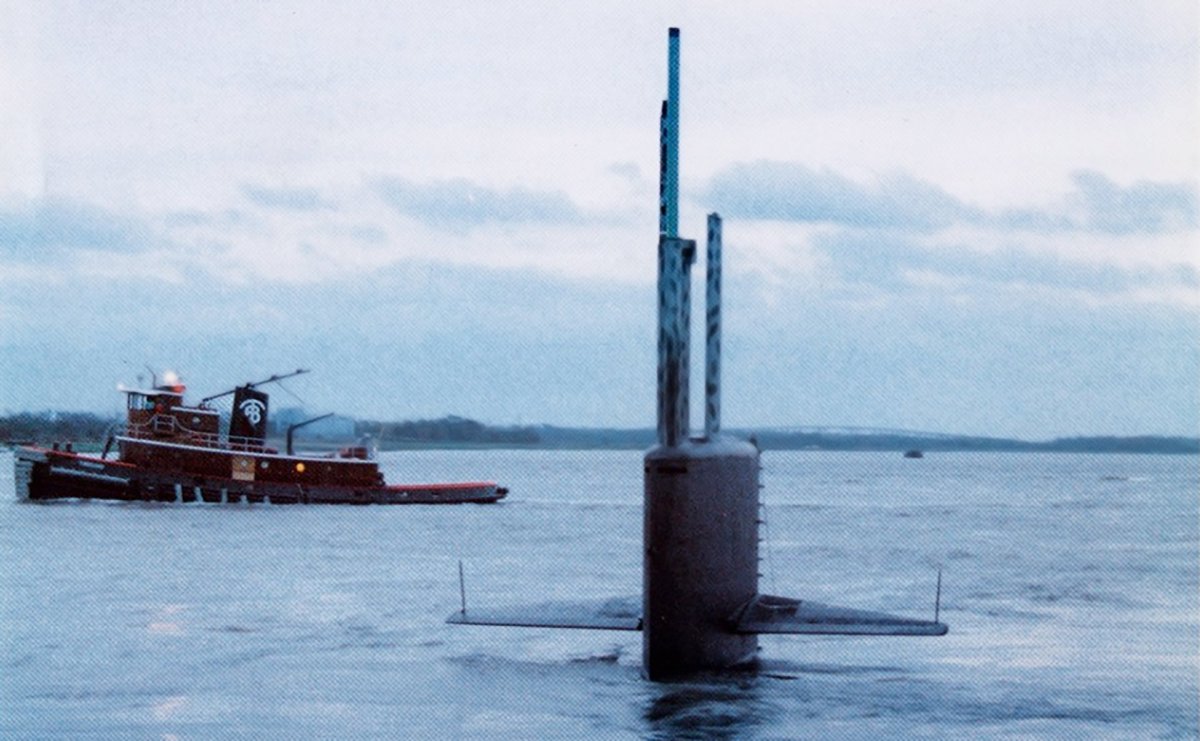
With no diesel fuel onboard and the reactor cold, running only on battery power, the dive alarm was sounded and Narwhal’s crew executed their orders, dropped anchor, flooded the sub’s ballast tanks and submerging to the river bed. Just the submarine’s sail and masts were left sticking up out of the water (pictured at the top of this article). The crew sat in the submarine with everything off but emergency lighting to wait out the storm, watching the hurricane’s 150mph winds rage around them through the narrow field of view of submarine’s periscope.
The captain’s bold plan worked, it took some time the next morning to break the boat free from the silt it lay in, but Narwhal and her crew came out unscathed. The submarine went on to get its refueling and refit and served another decade as part of her 30 year long career.
The captain’s call could have lost him his command or even his entire career, but according to reports, instead his quick thinking resulted in an early promotion.
Hat tip to our own @Ancientsubhuntr for prompting this story.
Contact the author: Tyler@thedrive.com
Comments couldn’t be loaded. Please refresh the page.
更新于美国东部时间2017年8月29日下午6:38
1989年9月,飓风“雨果”呼啸着逼近美国东南部沿海地区。人们纷纷忙着准备应对风暴,美国海军也不例外。在南卡罗来纳州查尔斯顿海军基地,潜艇紧急出海,但少数几艘正在进行或等待大修的潜艇却无力躲过“雨果”的袭击。其中就包括海军的第100艘核潜艇——“独角鲸”号(SSN-671)。
9月22日,飓风“雨果”以四级飓风的强度在南卡罗来纳州登陆。沿海部分地区遭遇了20英尺高的风暴潮和10英寸的降雨。“独角鲸”号潜艇上的船员当时正在潜艇上,由于核反应堆处于离线状态,该潜艇正在等待进坞进行复杂的燃料更换和大修,风暴中心逼近基地时,潜艇上的核反应堆已经停止运行。
为了应对风暴的到来,独角鲸号的系泊缆绳进行了加固。两条三英寸的缆绳和九根双股钢丝绳原本应该将这艘314英尺长的潜艇固定在原地,但风暴初期,除了最后一条缆绳外,其余全部断裂,潜艇开始漂向库珀河。
当风暴眼掠过时,勇敢的拖船船员(点击此处阅读他们惊险的遭遇)和“独角鲸”号的船员竭力阻止这艘核动力快速攻击潜艇被卷走,但风力和水流实在太强。随着风暴后半段的迅速逼近,“独角鲸”号的指挥官不得不做出一个艰难的决定。他要么任由核潜艇随风随流漂走,要么做出一个令人难以置信的举动——将潜艇潜入河中央。
由于船上没有柴油燃料,反应堆也处于冷却状态,仅靠电池供电,潜水警报响起,“独角鲸”号的船员立即执行命令,抛锚,向压载舱注水,潜入河床。只有潜艇的指挥塔和桅杆露出水面(本文顶部图片所示)。船员们待在潜艇里,除了应急照明外,所有设备都已关闭,他们透过潜艇潜望镜狭窄的视野,看着飓风以每小时150英里的速度在周围肆虐。
舰长的大胆计划奏效了。第二天早上,费了一番功夫才将潜艇从淤泥中解救出来,但“独角鲸”号及其船员安然无恙。随后,这艘潜艇进行了燃料补给和改装,并在其长达30年的服役生涯中又服役了10年。
据报道,舰长的这一决定本可能让他失去指挥权甚至断送整个职业生涯,但相反,他的机智却让他提前获得了晋升。
感谢我们自己的 @Ancientsubhuntr 提供线索,促成了这个故事。
联系作者:Tyler@thedrive.com
评论加载失败,请刷新页面。