Fabricated aviation emergencies betray a global trust — Shahrul Mizan Ismail人为制造的航空紧急事件背叛了全球信任——沙鲁尔·米赞·伊斯梅尔
OCTOBER 4 — In aviation, a lie can become an operational hazard. False information can alter a pilot's decisions, mobilise rescue services and trigger security responses with...
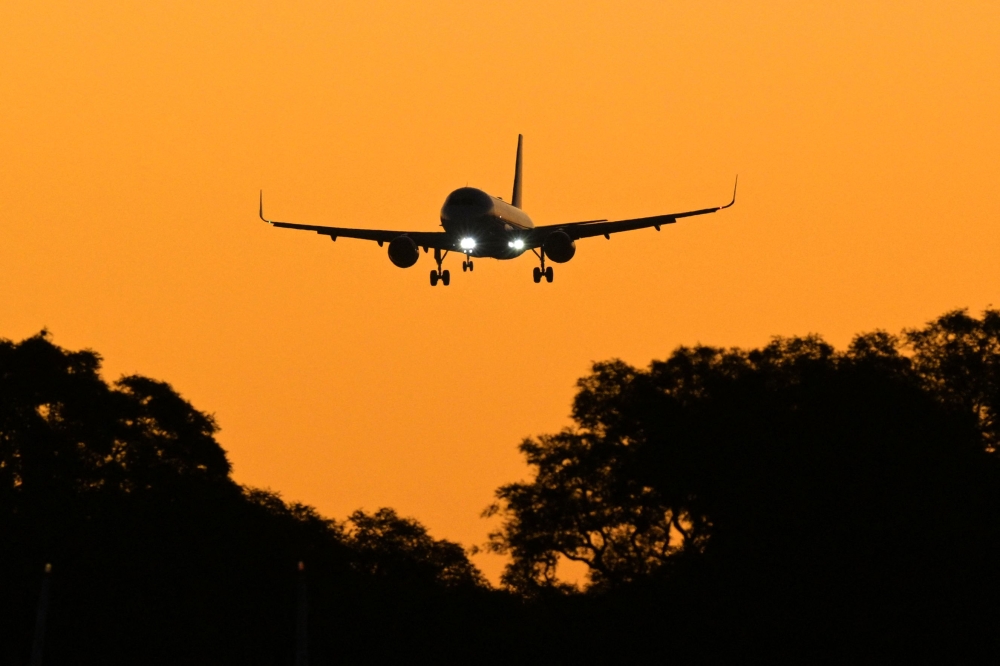
False information in aviation can become an operational hazard, impacting pilot decisions and potentially endangering human lives, leading to serious legal consequences.
International laws like the Montreal Convention address these issues by criminalizing the intentional communication of false information that endangers aircraft, with state participation in fabrication being particularly severe.
Investigating fabricated aviation incidents requires thorough evidence collection and appropriate legal frameworks, as exploitation of trust in emergency information necessitates accountability.
OCTOBER 4 — In aviation, a lie can become an operational hazard. False information can alter a pilot's decisions, mobilise rescue services and trigger security responses with consequences for human life. Fabricating a crash or staging a hijacking therefore raises a question more serious than whether a stunt is offensive: has deception crossed the threshold into unlawful endangerment?
International law provides important answers, but precision matters. A false social-media announcement is not legally identical to a fabricated threat communicated to a flight crew. An authorised emergency exercise is different from deceiving aviation authorities. The absence of deaths does not establish innocence, just as public outrage does not establish every element of an offence.
Article 1(1)(e) of the 1971 Montreal Convention directly addresses someone who unlawfully and intentionally communicates information they know to be false, thereby endangering an aircraft in flight. A crash is not required. Knowledge of falsity and the resulting danger to the aircraft are central. [1]
The distinction matters. A fabricated bomb warning can have legal consequences even when the aircraft lands safely. Conversely, an honestly reported concern that proves unfounded is not automatically a deliberate falsehood. Passenger distress alone cannot substitute for evidence of the danger required by this provision.
Hijacking requires a separate analysis. Under the 1970 Hague Convention, the core offence involves someone aboard an aircraft in flight unlawfully seizing or exercising control through force, threats of force or intimidation. An imaginary bomb can therefore support a real hijacking if the threat achieves the unlawful seizure of control. [2]
But a performance during which the pilot retains lawful control does not automatically establish that offence merely because passengers were deceived. Other offences may still arise. The 2010 Beijing Protocol broadens the framework, including technological means and specified threats made in circumstances indicating credibility. Treaty participation and the date of the conduct determine which framework applies. [3]
False distress communications also deserve attention. Article 47 of the International Telecommunication Union Constitution requires member states to take steps to prevent false or deceptive distress, urgency, safety or identification signals. Radio Regulations provision 15.1 prohibits false or misleading transmissions. A fabricated crash report accompanied by a false distress signal may therefore engage obligations beyond the hijacking conventions. [4]
State involvement makes the stakes greater. Article 4 of the Chicago Convention commits contracting states not to use civil aviation for purposes inconsistent with the convention's aims. Sovereignty over airspace carries responsibilities; it cannot itself legitimise manufacturing a threat for political advantage. [5]
The diversion of Ryanair Flight FR4978 to Minsk on 23 May 2021 supplies a documented institutional example. ICAO Assembly Resolution A41-1 records the Council's determination that senior Belarusian government officials knowingly participated in, or were involved in, supplying information about a false bomb threat that led to the diversion. [6]
The Assembly endorsed the determination that the government's actions deliberately endangered the aircraft and those aboard, amounting to a flagrant and serious violation of Article 4. This demonstrates the international consequences of a fabricated threat without a crash. It must, however, be distinguished from a criminal conviction of any particular individual.
State responsibility and individual criminal liability are separate questions. The International Law Commission's articles on state responsibility provide a framework for asking whether conduct is attributable to a state and breaches its international obligations. State organs, delegated governmental authority, instructions and control can be relevant. Political benefit alone does not prove attribution. [7]
If an aviation incident is fabricated to blame another country and justify military action, the United Nations Charter's prohibition on the use of force also becomes relevant. Applying its principles, a state cannot manufacture a right of self-defence from an attack it knows never occurred. A false narrative cannot supply the missing factual basis. [8]
During armed conflict, international humanitarian law distinguishes permissible ruses from perfidy. Article 37 of Additional Protocol I prohibits killing, injuring or capturing an adversary through betrayal of confidence in protection afforded by that law. Not every deception meets those requirements. Calling conduct a war crime requires proof of the relevant context and elements. [9]
The practical response should combine institutional resolve with fair process. Investigators need preserved communications, crew testimony, flight data and a reconstruction of operational decisions. Alleged state involvement requires careful examination of instructions and institutional links. Authorities must establish jurisdiction and the applicable domestic implementing law, rather than assume that every treaty permits every country to prosecute every incident.
The same evidential discipline must govern accusations that a disaster was staged. Incomplete footage, early inconsistencies or unanswered questions do not themselves establish a conspiracy. Demanding a credible explanation is legitimate. Converting uncertainty into an unsupported allegation damages the very public trust that accountability is supposed to protect.
Aviation depends on people treating emergency information as a responsibility. Deliberately exploiting that trust warrants consequences where the legal elements are proved. International law earns its authority by protecting life firmly and assessing accusations fairly. The trust that allows humanity to cross the skies must never become a prop in somebody else's performance.
*This is the personal opinion of the writer or publication and does not necessarily represent the views of Malay Mail.
Negeri Sembilan joins Johor on unhealthy air list as haze lingers
Another woman files report against motivational speaker as Perlis police probe alleged sexual harassment
F1 roars back at Sepang as Sultan Ibrahim, Bahrain and Brunei royals watch on
Motorcycle skids towards drain near Taiping, killing 76-year-old rider
航空领域的虚假信息可能成为操作隐患,影响飞行员的决策,并可能危及人身安全,导致严重的法律后果。
《蒙特利尔公约》等国际法通过对故意传播危及航空器的虚假信息的行为进行刑事定罪来解决这些问题,其中国家参与捏造虚假信息尤其严重。
调查捏造的航空事故需要彻底的证据收集和适当的法律框架,因为利用人们对紧急信息的信任需要追究责任。
10月4日——在航空领域,谎言可能构成操作隐患。虚假信息会改变飞行员的决策,调动救援力量,并引发安全响应,危及人身安全。因此,捏造坠机事故或策划劫机事件引发的问题,比单纯的噱头是否具有冒犯性更为严重:欺骗行为是否已构成非法危害?
国际法提供了重要的答案,但精确性至关重要。虚假的社交媒体公告在法律上与向机组人员散布的捏造威胁并不相同。经授权的应急演习与欺骗航空当局也截然不同。没有人员伤亡并不能证明无罪,正如公众的强烈愤慨也不能证明犯罪的所有构成要件。
1971 年《蒙特利尔公约》第 1 条第 1 款 (e) 项直接针对非法且故意传播其明知为虚假信息,从而危及飞行中航空器安全的人。无需发生坠机事故。明知信息虚假以及由此对航空器造成的危险是关键所在。[1]
区分至关重要。捏造的炸弹警报即使飞机安全着陆也可能产生法律后果。反之,乘客出于善意提出的担忧,即使最终证明是无根据的,也不必然构成故意捏造。乘客的恐慌情绪本身并不能替代本条款所要求的危险证据。
劫机需要单独分析。根据1970年《海牙公约》,核心罪行是指飞行中的飞机上的某人以武力、武力威胁或恐吓手段非法夺取或控制飞机。因此,如果威胁能够实现非法夺取控制权,那么假想的炸弹也可以构成真正的劫机。[2]
但是,即使飞行员在飞行过程中保持了合法控制权,仅仅因为乘客受到欺骗,也不能自动认定构成犯罪。其他犯罪行为仍可能发生。2010 年《北京议定书》扩大了适用范围,将技术手段和在表明可信的情况下作出的特定威胁纳入其中。条约参与情况和行为发生日期决定了适用哪个框架。[3]
虚假遇险通信也值得关注。《国际电信联盟章程》第47条要求成员国采取措施防止发出虚假或欺骗性的遇险、紧急、安全或识别信号。《无线电规则》第15.1条禁止虚假或误导性传输。因此,捏造的坠机报告伴随虚假遇险信号可能引发超出劫机公约规定的义务。[4]
国家的介入使风险更大。《芝加哥公约》第四条规定缔约国不得将民用航空用于与公约宗旨不符的目的。领空主权伴随着责任;它本身不能成为为获取政治利益而制造威胁的合法理由。[5]
2021年5月23日,瑞安航空FR4978航班改道飞往明斯克,这提供了一个有据可查的制度性案例。国际民航组织大会A41-1号决议记录了理事会的认定,即白俄罗斯高级政府官员明知故犯地参与或参与了提供有关虚假炸弹威胁的信息,而正是这种虚假威胁导致了航班改道。[6]
大会认可了政府的行为蓄意危及飞机及机上人员安全,构成对《公约》第四条的公然严重违反的认定。这表明,捏造威胁而未造成坠机事故会产生国际后果。然而,这必须与对任何特定个人的刑事定罪区分开来。
国家责任和个人刑事责任是两个不同的问题。国际法委员会关于国家责任的条款为判断某种行为是否应归咎于国家并违反其国际义务提供了一个框架。国家机关、政府授权、指令和控制都可能与此相关。仅凭政治利益不足以证明归咎于国家。[7]
如果捏造航空事故以嫁祸他国并为军事行动辩护,那么《联合国宪章》中关于禁止使用武力的规定就具有现实意义。根据该宪章的原则,一个国家不能捏造其明知从未发生的攻击而享有自卫权。虚假的叙述无法弥补事实的缺失。[8]
在武装冲突中,国际人道主义法区分了允许的计谋和背信弃义的行为。《第一附加议定书》第37条禁止通过背叛对该法所赋予保护的信任而杀害、伤害或俘虏敌方人员。并非所有欺骗行为都符合这些要求。将某种行为定性为战争罪需要证明相关的背景和要素。[9]
切实可行的应对措施应将机构决心与公平程序相结合。调查人员需要保存的通信记录、机组人员证词、飞行数据以及对操作决策的重构。对于涉嫌国家介入的情况,需要仔细审查相关指令和机构联系。当局必须确定管辖权和适用的国内实施法律,而不是想当然地认为每项条约都允许每个国家对每起事件提起诉讼。
同样的证据纪律也适用于对人为制造灾难的指控。不完整的影像资料、早期的矛盾之处或未解答的问题本身并不能构成阴谋。要求提供可信的解释是合理的。将不确定性转化为毫无根据的指控,会损害公众的信任,而问责制本应保护这种信任。
航空业依赖于人们对紧急信息履行责任。蓄意滥用这种信任,一旦法律证据确凿,必将受到惩罚。国际法通过坚定保护生命和公正评估指控来赢得其权威。维系人类翱翔蓝天的信任绝不能沦为他人作恶的工具。
*本文仅代表作者或刊物个人观点,并不一定代表《马来邮报》的立场。
雾霾挥之不去,森美兰州与柔佛州一起被列入不健康空气名单
又一名女子报案指控励志演讲者性骚扰,玻璃市警方展开调查
F1赛事重返雪邦赛道,苏丹易卜拉欣、巴林和文莱王室成员观战。
太平附近一辆摩托车滑入排水沟,导致一名76岁骑手死亡。