Robots in Punggol to get help to cross the road when they deliver food and go on patrol榜鹅的机器人会在送餐和巡逻时寻求帮助过马路。
The Land Transport Authority plans to install sensors in Punggol to help food delivery and patrol robots cross roads safely during ongoing trials. Read more at straitstimes.com.
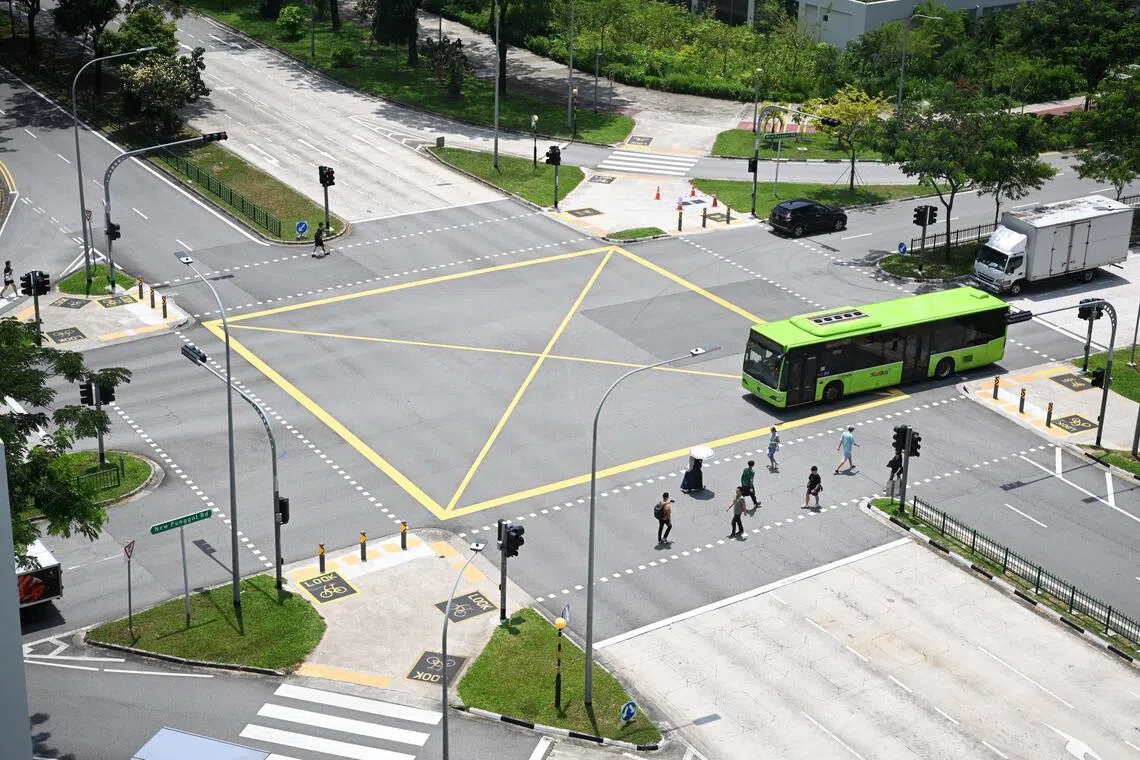
The authorities are looking to add sensors to traffic lights at pedestrian crossings at the junction of Punggol Way and New Punggol Road.
ST PHOTO: CHONG JUN LIANG
Published Oct 05, 2026, 05:05 AM
Updated Oct 05, 2026, 05:05 AM
The Land Transport Authority plans to install radio frequency identification antennas at a Punggol crossing to help delivery and patrol robots safely cross roads by activating pedestrian signals wirelessly.
Eight firms, including Grab and DHL, are collaborating on large-scale trials of autonomous robots for cleaning, patrolling, and food delivery in Punggol Digital District, starting by the end of 2026.
Robots must pass safety assessments, operate at low speeds, be monitored by authorised personnel, and travel only on approved routes; expansion depends on trial outcomes and operational needs.
SINGAPORE – Robots could soon be delivering food and going on patrols in Punggol under a trial project but, first, plans are under way to help them cross the road safely.
That is why the authorities are looking to add sensors to traffic lights at pedestrian crossings at the junction of Punggol Way and New Punggol Road.
On Sept 21, the Land Transport Authority (LTA) called for vendors to submit quotes to install four long-range ultra-high frequency radio frequency identification antennas at the junction, according to documents issued on government procurement portal GeBiz, and seen by The Straits Times.
The antennas will be able to help self-driving mobile robots activate pedestrian push buttons at the junction. This is because the robots may not have robotic arms to physically press the pedestrian push buttons on traffic light poles, the documents said.
The antennas will be installed on traffic lights at four locations: a slip road close to Block 433A Northshore Drive, a slip road near Block 446A of Punggol Point Cove, and one each in both directions of Punggol Way.
In response to queries from The Straits Times, LTA on Oct 2 said the radio frequency identification card installed on the robots will wirelessly activate the pedestrian crossing signal to enable them to cross the road safely.
This is similar to how pedestrians push a button at traffic light crossings and wait for the green man to come on.
LTA added that people can continue to use the crossing button as they normally would.
The traffic light sensors are part of an ongoing trial in the Punggol Digital District to assess the use of autonomous mobile robots in a real-world operating environment.
Any expansion plans will be subject to operational needs and the trial’s outcome, said LTA.
In May, the Government said eight firms will work together with the authorities to deploy robots to automate cleaning, patrolling and food delivery in Punggol Digital District, which is Singapore’s largest smart robotics test bed.
The firms are tech firm Grab, logistics firm DHL, security and services provider Certis, home-grown start-up QuikBot, software firms FieldAI and Thoughtworks, along with robot-makers Slamtec and Unitree.
The large-scale trials are expected to start by the end of 2026. DHL and Grab did not provide further details on the project when asked.
Touching on safety measures to protect other road and public path users, LTA said the robots must undergo safety tests before starting operations. They must also operate at low speeds and remain highly visible by emitting light signals.
They will be monitored by authorised personnel, who can intervene or take control if needed, it added.
The robots can travel only on approved routes, and operators must maintain insurance coverage for potential injury or damage to property, LTA said.
The contractor must set up the four specific sensors in Punggol Digital District within one month of submitting the letter of acceptance for the contract.
When asked about plans to install sensors in other parts of the island, LTA said this will depend on whether other approved autonomous mobile robot use cases would require such infrastructure, their operational needs and the suitability of the local environment.
The Infocomm Media Development Authority, urban planner and developer JTC and Singapore Institute of Technology said more updates on the test bed will be announced later in the year.
The three partners are working with other organisations to roll out trials to deploy robotics systems in real-world environments to collect data and operational insights over time.
Esther Loi is a journalist at The Straits Times, where she covers transport issues.
AI/artificial intelligence
当局正考虑在榜鹅路和新榜鹅路交叉口的人行横道交通信号灯上加装传感器。
《海峡时报》照片:梁崇俊
发布于 2026 年 10 月 5 日上午 5:05
更新于2026年10月5日 上午5:05
陆路交通管理局计划在榜鹅的一个十字路口安装射频识别天线,通过无线激活行人信号,帮助送货机器人和巡逻机器人安全过马路。
包括 Grab 和 DHL 在内的八家公司正在合作,计划于 2026 年底前在榜鹅数码区开展大规模的自主机器人清洁、巡逻和送餐试验。
机器人必须通过安全评估,以低速运行,由授权人员监控,并且只能在批准的路线上行驶;扩展取决于试验结果和运营需求。
新加坡——一项试点项目可能很快就会让机器人在榜鹅送餐和巡逻,但首先,相关部门正在制定计划,帮助它们安全过马路。
因此,有关部门正考虑在榜鹅路和新榜鹅路交叉口的人行横道交通信号灯上加装传感器。
据《海峡时报》看到的政府采购门户网站 GeBiz 上发布的文件显示,陆路交通管理局 (LTA) 于 9 月 21 日要求供应商提交报价,在该路口安装四个远程超高频射频识别天线。
文件指出,这些天线将能够帮助自动驾驶移动机器人激活路口的行人按钮。这是因为这些机器人可能没有机械臂来手动按下交通信号灯杆上的行人按钮。
天线将安装在四个地点的交通信号灯上:靠近 Northshore Drive 433A 座的匝道、靠近 Punggol Point Cove 446A 座的匝道,以及 Punggol Way 两个方向各一个。
针对《海峡时报》的询问,陆路交通管理局于 10 月 2 日表示,安装在机器人上的射频识别卡将无线激活行人过街信号,使行人能够安全过马路。
这类似于行人在交通信号灯前按下按钮,等待绿灯亮起。
陆路交通管理局补充说,人们可以像往常一样继续使用过街按钮。
这些交通信号灯传感器是榜鹅数码区正在进行的一项试验的一部分,旨在评估在真实运行环境中使用自主移动机器人的效果。
陆路交通管理局表示,任何扩建计划都将取决于运营需求和试验结果。
5 月,政府表示,八家公司将与当局合作,在榜鹅数码区部署机器人,以实现清洁、巡逻和送餐的自动化。榜鹅数码区是新加坡最大的智能机器人试验场。
这些公司包括科技公司 Grab、物流公司 DHL、安全和服务提供商 Certis、本土初创公司 QuikBot、软件公司 FieldAI 和 Thoughtworks,以及机器人制造商 Slamtec 和 Unitree。
大规模试验预计将于2026年底开始。当被问及该项目的更多细节时,DHL和Grab均未提供相关信息。
陆路交通管理局(LTA)在谈到保护其他道路和公共路径使用者的安全措施时表示,这些机器人必须经过安全测试才能投入运营。它们还必须低速运行,并通过发出灯光信号保持高度可见性。
声明还补充说,他们将受到授权人员的监控,必要时授权人员可以进行干预或接管控制权。
陆路交通管理局表示,这些机器人只能在批准的路线上行驶,运营商必须为可能发生的伤害或财产损失购买保险。
承包商必须在提交合同中标函后一个月内,在榜鹅数码区安装四个指定的传感器。
当被问及是否有计划在岛上其他地区安装传感器时,陆路交通管理局表示,这将取决于其他已批准的自主移动机器人使用案例是否需要此类基础设施、它们的运行需求以及当地环境的适用性。
新加坡资讯通信媒体发展局、城市规划和开发商裕廊集团以及新加坡理工大学表示,有关该试验平台的更多最新消息将于今年晚些时候公布。
这三家合作伙伴正与其他组织合作,开展试验,在真实环境中部署机器人系统,以便随着时间的推移收集数据和运营见解。
埃丝特·罗伊是《海峡时报》的记者,主要报道交通运输问题。
人工智能