Suhakam doesn’t need prosecutorial powers — but govt must answer its findings, says chairman人权委员会主席表示,人权委员会不需要起诉权,但政府必须对其调查结果作出回应。
KUALA LUMPUR, Oct 5 — The Human Rights Commission of Malaysia (Suhakam) does not need prosecutorial powers to be effective, but authorities should be required to respond to its...
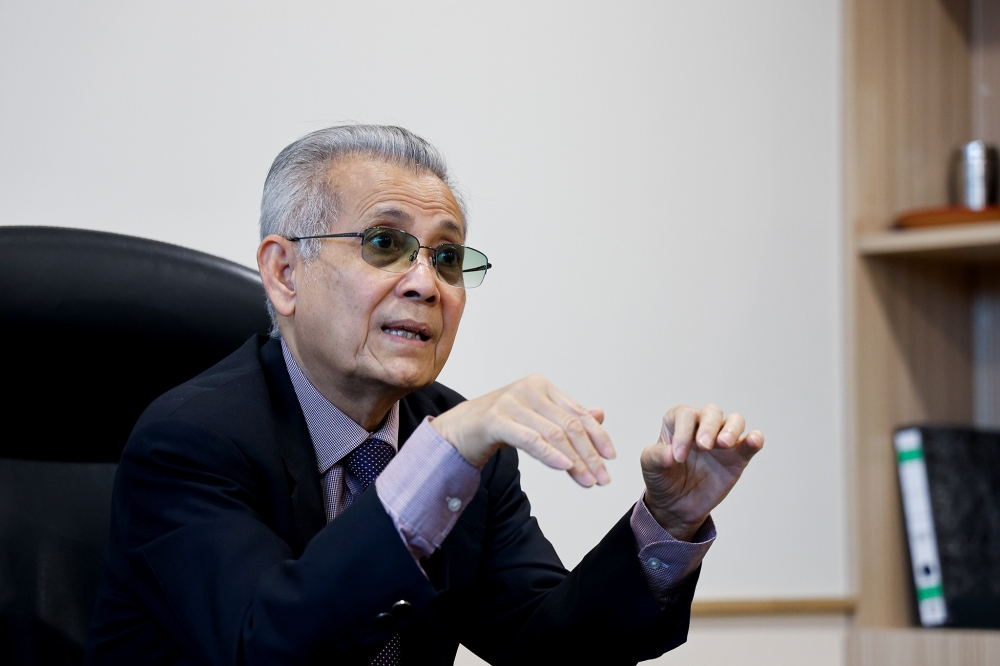
Datuk Seri Mohd Hishamudin Md Yunus, the chairman of the Human Rights Commission of Malaysia (Suhakam), asserts that the commission does not need prosecutorial powers to remain effective, but stresses the need for authorities to respond to its findings and recommendations comprehensively.
He highlights that the commission's role is primarily investigative and recommendatory, distinct from judicial and enforcement bodies.
Hishamudin advocates for a "respond and explain" mechanism to ensure authorities address Suhakam's recommendations with justified and timely responses.
Suhakam, re-accredited as an "A-status" institution, highlights its standing as a credible entity, underscoring the necessity for Malaysian confidence in its independent and impartial operations.
KUALA LUMPUR, Oct 5 — The Human Rights Commission of Malaysia (Suhakam) does not need prosecutorial powers to be effective, but authorities should be required to respond to its findings and recommendations, its chairman Datuk Seri Mohd Hishamudin Md Yunus said.
While the 77-year-old former judge acknowledged criticism of Suhakam’s limitations, he stressed that the national human rights body was far from being a “toothless” organisation.
Instead, he urged critics to recognise that Suhakam has a distinct role from the courts, enforcement agencies and other statutory bodies.
“Suhakam’s present mandate is primarily investigative, advisory, educational and recommendatory.
“We are not a court, and we do not have prosecutorial powers,” Mohd Hishamudin told Malay Mail in an exclusive interview recently.
“Suhakam already has important investigative powers under Act 597 (the Suhakam Act). We can initiate inquiries, summon witnesses, obtain evidence and make recommendations.
“The 2024 amendments also strengthened our mandate to visit places of detention, institutions and other relevant places,” he added, referring to the latest amendments to the Suhakam Act, which took effect in July 2024.
Mohd Hishamudin said the broader powers enabled the commission to conduct a thorough and independent public inquiry into the Taiping prison riot that occurred in January 2025.
The riot, involving about 100 inmates, resulted in the death of a High Court detainee.
Suhakam’s inquiry later found that a large number of prison officers had used excessive physical violence against the detainees and abused weapons and security equipment, including batons and pepper spray.
It also flagged serious overcrowding at Taiping Prison and recommended that the 146-year-old building be turned into a museum as it was no longer fit to serve as a prison.
A prison officer had already been charged under Section 304(b) of the Penal Code in December 2025, while another five Taiping Prison wardens were charged in July 2026 over injuries allegedly inflicted on inmates.
The real gap comes after investigations
At present, Suhakam can publish findings from a public inquiry and make recommendations to the relevant authorities.
While the amended law requires relevant authorities to inform Suhakam of any action taken after a human rights infringement is referred to them, it does not oblige them to accept or implement the commission’s recommendations.
Mohd Hishamudin said a stronger “respond and explain” mechanism was needed from the government to close that gap and strengthen reforms.
“Suhakam is not proposing that every recommendation automatically becomes legally binding,” he said.
Instead, he said authorities should be required to provide a written response within a reasonable period stating whether they accept, partially accept or reject a recommendation made by Suhakam.
For accepted recommendations, authorities should also provide a progress report setting out follow-up measures and a timeline for implementation, while rejected recommendations should be accompanied by reasons, he added.
Mohd Hishamudin said Malaysia could consider emulating Australia, where Section 46 of the Australian Human Rights Commission Act 1986 requires specified commission reports to be tabled in each House of Parliament within 15 sitting days of being received by the minister.
Still an ‘A-status’ rights body
Suhakam was also re-accredited as an “A-status” national human rights institution last June — recognition that Mohd Hishamudin said reflected its standing as an independent, credible and effective institution internationally.
Suhakam undergoes re-accreditation every five years by the Global Alliance of National Human Rights Institutions (GANHRI) Sub-Committee on Accreditation (SCA).
The “A-status” allows Suhakam to participate fully in international and regional human rights mechanisms, including the United Nations Human Rights Council and treaty body processes.
Nevertheless, Mohd Hishamudin stressed that credibility begins at home.
“Malaysians must have confidence that when they approach Suhakam, raise concerns or lodge complaints, they are engaging with an institution that is independent, impartial and able to carry out its mandate without undue interference,” he said.
Established through an Act of Parliament on September 9, 1999, Suhakam marked its 27th anniversary this year.
“After 27 years, the question is no longer simply whether Suhakam can investigate and make recommendations.
“The next stage of institutional reform should ensure that those recommendations receive a timely, reasoned and transparent response from the authorities concerned,” Mohd Hishamudin said.
Sabah gives more than 500 adults second chance to learn reading, writing, counting
Anwar: F1 excitement at Sepang also brings opportunities for local traders
Zahid urges UiTM to establish Quantum Department, says Malaysia must not lag
马来西亚人权委员会(Suhakam)主席拿督斯里莫哈末·希沙姆丁·莫哈末·尤努斯断言,该委员会不需要检控权就能保持有效,但他强调当局需要全面回应该委员会的调查结果和建议。
他强调,该委员会的作用主要是调查和建议,与司法和执法机构截然不同。
希沙姆丁主张建立“回应和解释”机制,以确保当局对人权委员会的建议作出合理及时的回应。
马来西亚人权委员会(Suhakam)重新获得“A级”机构认证,凸显了其作为可信赖机构的地位,强调了马来西亚人民对其独立公正运作的信心的必要性。
吉隆坡,10月5日讯——马来西亚人权委员会(Suhakam)主席拿督斯里莫哈末·希沙姆丁·莫哈末·尤努斯表示,该委员会无需拥有检控权也能有效运作,但当局应被要求对委员会的调查结果和建议作出回应。
这位 77 岁的前法官虽然承认有人批评 Suhakam 的局限性,但他强调,这个国家人权机构远非一个“软弱无力”的组织。
相反,他敦促批评者认识到,人权委员会与法院、执法机构和其他法定机构有着不同的角色。
“Suhakam 目前的任务主要是调查、咨询、教育和建议。
“我们不是法院,也没有检控权,”莫哈末·希沙姆丁最近在接受《马来邮报》独家采访时表示。
“根据第597号法令(《人权法》),人权委员会已经拥有重要的调查权。我们可以发起调查、传唤证人、获取证据并提出建议。”
“2024 年的修正案也加强了我们探访拘留场所、机构和其他相关场所的授权,”他补充道,指的是于 2024 年 7 月生效的《人权法》最新修正案。
莫哈末·希沙姆丁表示,扩大权力使委员会能够对2025年1月发生的太平监狱暴动进行彻底、独立的公开调查。
这场骚乱涉及约 100 名囚犯,导致一名高等法院拘留人员死亡。
人权委员会后来的调查发现,大量狱警对被拘留者过度使用暴力,滥用武器和安保设备,包括警棍和胡椒喷雾。
报告还指出太平监狱严重人满为患,并建议将这座已有 146 年历史的建筑改建成博物馆,因为它已不再适合用作监狱。
2025 年 12 月,一名狱警已被控违反《刑法》第 304(b) 条;2026 年 7 月,又有五名太平监狱狱警因涉嫌对囚犯造成伤害而被控。
真正的差距出现在调查之后。
目前,马来西亚人权委员会可以公布公开调查的结果,并向有关当局提出建议。
虽然修订后的法律要求有关当局在收到侵犯人权事件报告后,必须将采取的任何行动告知人权委员会,但该法律并未强制要求他们接受或执行委员会的建议。
莫哈末·希沙姆丁表示,政府需要建立更强有力的“回应和解释”机制,以弥合差距并加强改革。
“人权委员会并非提议每一项建议都自动具有法律约束力,”他说。
他表示,当局应该被要求在合理的时间内提供书面答复,说明他们是否接受、部分接受或拒绝人权委员会提出的建议。
他补充说,对于被采纳的建议,有关部门还应提供进度报告,列明后续措施和实施时间表;而对于被拒绝的建议,则应说明理由。
莫哈末·希沙姆丁表示,马来西亚可以考虑效仿澳大利亚,澳大利亚1986年《人权委员会法》第46条规定,指定的委员会报告必须在部长收到报告后的15个议会工作日内提交给议会两院。
仍然是“A级”人权机构
去年六月,马来西亚人权委员会(Suhakam)再次被认证为“A级”国家人权机构——莫哈末·希沙姆丁表示,这一认可反映了该机构在国际上作为独立、可信和有效机构的地位。
Suhakam 每五年接受一次全球国家人权机构联盟 (GANHRI) 认证小组委员会 (SCA) 的重新认证。
“A级地位”使泰国人权委员会能够全面参与国际和区域人权机制,包括联合国人权理事会和条约机构的进程。
然而,莫哈末·希沙姆丁强调,信誉始于家庭。
他说:“马来西亚人必须相信,当他们向人权委员会提出关切或投诉时,他们是在与一个独立、公正且能够在不受不当干预的情况下履行其职责的机构打交道。”
泰国人权委员会(Suhakam)于 1999 年 9 月 9 日通过国会法案成立,今年迎来了成立 27 周年。
“27 年过去了,现在的问题不再仅仅是马来西亚人权委员会能否进行调查并提出建议。
“下一阶段的体制改革应确保有关当局能够及时、合理、透明地回应这些建议,”莫哈末·希沙姆丁说。
沙巴州为500多名成年人提供了第二次学习阅读、写作和计数的机会。
安华:雪邦F1赛事的精彩也为当地商家带来了商机
阿末扎希促马来西亚科技大学成立量子系 马来西亚不可落后