From steppe to sea, a Ukrainian drone unit hunts Russian ships从草原到海洋,乌克兰无人机部队搜寻俄罗斯船只。
Drone units operating far behind the front line on Ukraine’s sweeping steppe have hit more than 180 vessels and other sea-borne targets in recent weeks.
In a field in southern Ukraine , soldiers scrawled sardonic messages on a sleek grey attack drone that would soon be hunting Russian ships on the Black Sea — part of a widening Ukrainian campaign to isolate Crimea and weaken Moscow’s war effort.
Operating far behind the front line on Ukraine’s sweeping steppe, such units have hit more than 180 vessels and other sea-borne targets around the peninsula over the past three weeks, opening a new front in the war.
The attacks, first in the Sea of Azov and now expanding into the Black Sea that it opens into, are designed to raise the cost for Russia of occupying Crimea and to swing the initiative towards Kyiv in the fifth year of full-scale war in Ukraine.
“We work day and night, every day, without time off,” said battalion commander “Ray” of Magyar’s Birds, a brigade that is an important part of the effort. In line with Ukrainian military practice, he identified himself only by his call sign.
During a recent visit by Reuters, his team launched drones every couple of minutes. The unit said it struck a cargo vessel and floating crane in the Black Sea and a power substation in south Crimea. Reuters could not independently verify this.
The attacks are part of the growing duel in strategic waters in recent weeks, during which Russia has stepped up strikes on Ukrainian ports and international cargo ships.
Kyiv’s agriculture minister said on Thursday that shipowners had temporarily suspended vessel arrivals at Ukraine’s Black Sea ports for agricultural exports following the surge in attacks.
Crimea, which serves as a transit and military hub for Moscow’s troops, has become a new focus for Ukraine’s drone forces as they scale up their strike capabilities.
In recent months, they have targeted road and rail links in a swath of occupied southern Ukraine that connects the peninsula to Russia — which seized and annexed it in 2014, long before Moscow’s full-scale invasion of Ukraine in 2022.
That has led to fuel shortages and a state of emergency in Crimea, with power and gas facilities also systematically hit.
Now, attacks on oil tankers, dry cargo ships and other vessels mark a widening of Kyiv’s effort to pressure Russian forces by starving them of resources.
Since the new phase of their campaign began in July, drone forces under commander Robert “Magyar” Brovdi have reported hitting about six vessels per day, detailed by Brovdi in mocking, emoji-riddled reports.
Members of the "Magyar's Birds" write messages to Russians on an FP-1 deep-strike drone before it launches for a combat mission. (Valentyn Ogirenko/Reuters)
The attacks have choked Russian shipping through the Sea of Azov, which receives ships from Russia’s main southern grain-producing region via the Don River.
Brovdi’s forces said the Kerch ferry crossing between eastern Crimea and Russia’s Krasnodar region had lost around 75% of its capacity. Reuters could not verify this.
The commander told Reuters the attacks were aimed at “ruining the myth” of Russian domination and establishing total control over Ukraine’s territorial waters.
The new campaign is dubbed “Molochko”: a portmanteau that sounds like the word “milk” but denotes the phrase “Moscow will collapse because of Crimea.”
Sidharth Kaushal, a senior fellow at the Royal United Services Institute think tank in London, said Ukrainian attacks on Russian overland logistics had led to an increase in shipping through the Sea of Azov, thus providing more sea-borne targets.
The attacks, he said, are “a logical continuation” of Ukraine’s Crimea campaign.
Ukraine’s strikes have been mirrored by intensifying Russian attacks on southern Ukraine, particularly the city of Odesa and ports that send much of the country’s grain through a maritime corridor to international markets.
On Sunday, 10 sailors were killed after Russian forces struck a Guinea-Bissau-flagged vessel carrying corn from the port of Odesa, Ukrainian officials said.
Last week, at least three people were killed in attacks on Odesa and Mykolaiv, another port city.
In the first two weeks of July alone, Russia struck Ukrainian ports 23 times and civilian vessels 17 times, Kyiv’s seaports authority said last Thursday, leaving traders struggling with logistics headaches.
Agricultural exports such as grains and vegetable oils remain Ukraine’s biggest source of foreign currency earnings, with more than 90% shipped from ports in the Odesa region through a maritime corridor.
Russia has said its attacks are aimed at infrastructure storing military cargo and fuel.
The Ukrainian-made FP-1 and FP-2 drones used by battalion commander Ray’s team are a staple of Kyiv’s growing arsenal. They fly automatically to the operational zone, then pilots — often based far away — take over to land the final blow.
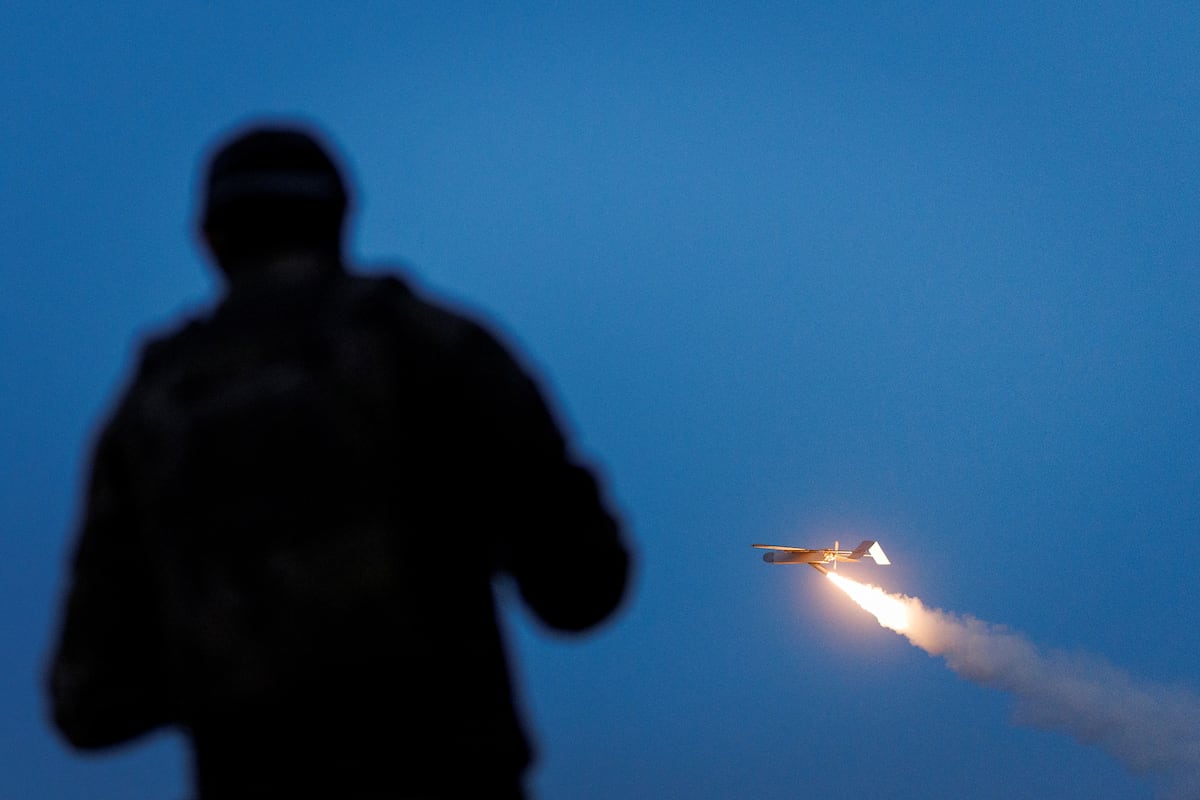
Minutes after catapulting their last propeller-powered drone using a small jet booster, the launch team packed up and prepared to move. No site is re-used and teams are often sent to new locations at a few hours’ notice.
Although technological advancements have allowed them to launch from over 100 km, or 62 miles, behind front lines, they are still a prized target for enemy drone teams.
“This is a constant war — a continuous struggle of measures and countermeasures,” said Ray, who commands his brigade’s ninth battalion, called Kairos.
Panama, a squadron commander, said he and fellow troops were motivated by the “tangible results” of their operations.
Beyond complicating Russian logistics, the campaign is boosting Ukrainian morale.
“It’s great that our tempo is so high,” he said, “but we still need to sustain it.”
在乌克兰南部的一片田野里,士兵们在一架流线型的灰色攻击无人机上潦草地写下讽刺的信息,这架无人机很快将在黑海上追捕俄罗斯船只——这是乌克兰为孤立克里米亚、削弱莫斯科的战争力量而扩大的行动的一部分。
这些部队在乌克兰广袤的草原上远离前线作战,在过去三周内袭击了半岛周围 180 多艘船只和其他海上目标,开辟了战争的新战线。
这些袭击先是在亚速海,现在又扩展到亚速海与黑海之间的海域,其目的是提高俄罗斯占领克里米亚的代价,并在乌克兰全面战争的第五年将主动权转向基辅。
“我们日夜不停地工作,没有休息时间,”匈牙利“鸟”旅营长“雷”说道。该旅是此次行动的重要组成部分。按照乌克兰军队的惯例,他只用呼号表明自己的身份。
路透社记者近日到访期间,他的团队每隔几分钟就放飞一次无人机。该部队声称在黑海击中了一艘货船和一台浮式起重机,并在克里米亚南部击中了一座变电站。路透社无法独立核实这一说法。
这些袭击是近几周来在战略水域日益激烈的对抗的一部分,在此期间,俄罗斯加大了对乌克兰港口和国际货船的袭击力度。
基辅农业部长周四表示,由于袭击事件激增,船东已暂时停止船只抵达乌克兰黑海港口进行农产品出口。
克里米亚是莫斯科军队的过境和军事枢纽,随着乌克兰无人机部队不断提升打击能力,克里米亚已成为乌克兰无人机部队的新关注焦点。
近几个月来,他们袭击了被占领的乌克兰南部大片地区的公路和铁路连接线,这些连接线将乌克兰半岛与俄罗斯连接起来——俄罗斯在 2014 年占领并吞并了该地区,远早于莫斯科在 2022 年对乌克兰的全面入侵。
这导致克里米亚燃料短缺,进入紧急状态,电力和天然气设施也遭到系统性破坏。
现在,对油轮、干货船和其他船只的袭击标志着基辅方面加大了通过剥夺俄罗斯军队的资源来向其施压的力度。
自 7 月份新一轮行动开始以来,在指挥官罗伯特·“马扎尔”·布罗夫迪 (Robert “Magyar” Brovdi) 的指挥下,无人机部队报告称每天击中约 6 艘船只,布罗夫迪在充满嘲讽和表情符号的报告中详细描述了这些情况。
“马扎尔之鸟”特战队的成员在FP-1型纵深打击无人机起飞执行作战任务前,用无人机向俄罗斯方面发送信息。(瓦伦丁·奥吉连科/路透社)
这些袭击导致俄罗斯船只无法通过亚速海,而俄罗斯南部主要粮食产区的船只正是通过顿河从亚速海驶入该海域。
布罗夫迪的部队称,连接克里米亚东部和俄罗斯克拉斯诺达尔边疆区的刻赤渡轮运力已损失约75%。路透社无法核实这一说法。
指挥官告诉路透社,这些袭击旨在“打破”俄罗斯统治的神话,并完全控制乌克兰的领海。
这项新运动被命名为“Molochko”,这是一个合成词,听起来像“milk”(牛奶),但实际上指的是“莫斯科将因克里米亚而崩溃”。
伦敦皇家联合军种研究所高级研究员西达尔特·考沙尔表示,乌克兰对俄罗斯陆路后勤的袭击导致亚速海航运量增加,从而提供了更多海上目标。
他说,这些袭击是乌克兰克里米亚行动的“合乎逻辑的延续”。
乌克兰的空袭也伴随着俄罗斯对乌克兰南部,特别是敖德萨市和港口的日益猛烈的袭击。这些港口通过海上通道将该国大部分粮食运往国际市场。
乌克兰官员称,周日,俄罗斯军队袭击了一艘悬挂几内亚比绍国旗、从敖德萨港运送玉米的船只,造成10名水手丧生。
上周,敖德萨和另一个港口城市尼古拉耶夫遭到袭击,造成至少三人死亡。
基辅海港管理局上周四表示,仅在7月的前两周,俄罗斯就袭击了乌克兰港口23次,袭击了民用船只17次,导致贸易商面临物流难题。
粮食和植物油等农产品出口仍然是乌克兰最大的外汇收入来源,其中 90% 以上的农产品通过海上走廊从敖德萨地区的港口运出。
俄罗斯方面表示,其袭击目标是储存军用物资和燃料的基础设施。
营长雷伊的队伍使用的乌克兰制造的FP-1和FP-2无人机是基辅日益壮大的武器库中的主力装备。它们自动飞往作战区域,然后由飞行员——通常驻扎在很远的地方——接管,给予敌人最后一击。
在用小型喷气助推器弹射出最后一架螺旋桨动力无人机几分钟后,发射团队便收拾行装,准备转移。发射场地不会重复使用,团队经常在接到通知后几个小时内被派往新的地点。
尽管技术进步使得无人机能够从前线后方 100 公里(62 英里)以外的地方发射,但它们仍然是敌方无人机队的重点目标。
“这是一场持续不断的战争——一场措施与反措施的持续斗争,”雷说道,他指挥着他所在旅的第九营,名为凯罗斯营。
中队长巴拿马表示,他和战友们受到行动“切实成果”的激励。
除了给俄罗斯的后勤保障带来困难之外,这场战役也提振了乌克兰的士气。
“我们目前的节奏很快,这很好,”他说,“但我们仍然需要保持这种节奏。”