UNIVERSITIES ARE NOT ONLY PATH TO YOUTH SUCCESS - ZAMBRY ABD KADIR大学并非青年成功的唯一途径——赞布里·阿卜杜勒·卡迪尔
KUALA LUMPUR, Oct 5 — The public need to change the perception that universities are the only avenue for developing talent and determining the success of young people, said...
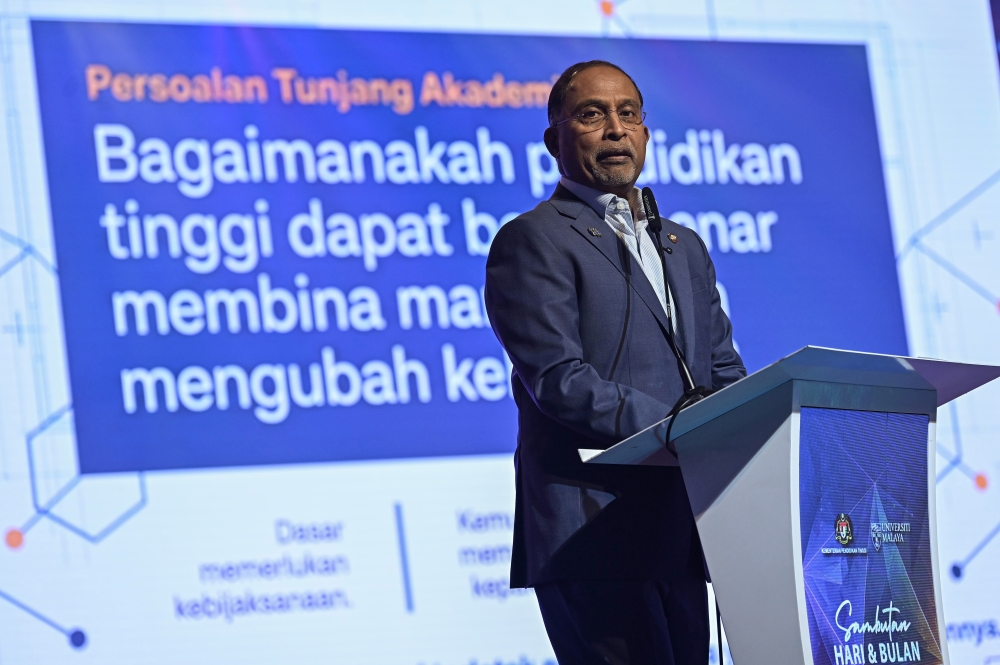
Higher Education Minister Zambry urges changing the perception that universities are the only path for youth success, highlighting technical fields offering ample career opportunities.
The government aims to produce 60,000 engineers, with strengthened teaching approaches at skills institutions and polytechnics training students in engineering diplomas.
Deputy Minister Khairul Firdaus stresses the need to address skills mismatches, supporting a new national policy focusing on employment, career development, income, and balanced infrastructure development.
KUALA LUMPUR, Oct 5 — The public need to change the perception that universities are the only avenue for developing talent and determining the success of young people, said Higher Education Minister Datuk Seri Dr Zambry Abd Kadir.
He said knowledge and skills in technical fields also opened up career opportunities for young people, including those who were less academically inclined.
"Over the past two years, we have often told the people that universities are not the only place for them to pursue their studies, but we also have other skills institutions such as polytechnics and community colleges that offer skills certificates in Technical and Vocational Education and Training (TVET).
"For years, society has viewed polytechnics as a second choice for those who cannot get into university, but now applications to enter polytechnics have reached 132 per cent compared with 60 to 70 per cent previously,” he said.
He said this during the "Technology Driving Change: Is Malaysian Talent Ready?” dialogue session held in conjunction with the launch of the Future Skills Framework for the Communications Sector and the Strategic Talent Development Initiative at Angkasapuri today.
Zambry said teaching approaches at skills institutions were also being strengthened to meet the country’s demand for technical workers, including the government’s effort to produce 60,000 engineers.
He said technical and engineering fields did not necessarily depend solely on degree qualifications, but also required skilled workers who had undergone engineering-related training at skills institutions.
Students from the arts stream with an interest and potential in the field were also being given opportunities to pursue it through suitable intervention programmes, he said, adding that polytechnics had so far trained 447 students through engineering diploma programmes.
Meanwhile, Deputy Human Resources Minister Datuk Khairul Firdaus Akbar Khan said the skills mismatch issue needed attention, with nearly 37 per cent of skilled workers recorded as not working in the second quarter of this year, while the country’s workforce stood at 16.8 million.
He said the situation was attributed, among other factors, to a lack of job opportunities, skills mismatches and less attractive salary offers in certain fields, making it necessary to strengthen the "future-proof talent” approach to ensure workers’ skills were aligned earlier with future job requirements.
In efforts to strengthen workforce development, he said the Ministry of Human Resources had introduced the National Human Resources Policy 2026-2035, focusing on four aspects - more productive employment, career development, more meaningful incomes and appropriate protection.
However, Khairul Firdaus said the effectiveness of the policy needed to be supported by more balanced infrastructure development between states to ensure job opportunities and talent development were not concentrated only in the Klang Valley. — Bernama
Defence minister: LCS missile compensation claim expected to take time
IGP: Don’t hide school safety issues to protect reputations
Johor MB: State government ready to help schools review security measures following student’s death
高等教育部长赞布里敦促人们改变认为大学是青年成功的唯一途径的看法,并强调技术领域提供了充足的就业机会。
政府的目标是培养 6 万名工程师,通过加强技能院校和理工学院的教学方法,为学生提供工程文凭培训。
副部长凯鲁尔·菲尔道斯强调需要解决技能错配问题,支持一项以就业、职业发展、收入和均衡的基础设施发展为重点的新国家政策。
吉隆坡,10月5日讯——高等教育部长拿督斯里赞布里·阿卜杜勒·卡迪尔博士表示,公众需要改变对大学的看法,认为大学是培养人才和决定年轻人成功的唯一途径。
他表示,技术领域的知识和技能也为年轻人开辟了职业机会,包括那些不太喜欢学习的年轻人。
“过去两年,我们经常告诉人们,大学并不是他们继续深造的唯一场所,我们还有其他技能培训机构,如理工学院和社区学院,提供技术和职业教育与培训 (TVET) 方面的技能证书。
他说:“多年来,社会一直把理工学院视为那些考不上大学的人的第二选择,但现在理工学院的申请人数已经达到之前的 60% 到 70%,” 。
他今天在Angkasapuri举行的“科技驱动变革:马来西亚人才准备好了吗?”对话会上发表了上述讲话。此次对话会与通信行业未来技能框架和战略人才发展计划的启动仪式同时举行。
Zambry表示,技能培训机构的教学方法也在加强,以满足该国对技术工人的需求,包括政府培养6万名工程师的努力。
他表示,技术和工程领域并不一定完全取决于学位资格,还需要在技能培训机构接受过工程相关培训的熟练工人。
他还表示,对艺术类专业有兴趣和潜力的学生也有机会通过合适的干预计划来追求这一领域,并补充说,理工学院迄今为止已通过工程文凭课程培训了 447 名学生。
与此同时,人力资源部副部长拿督凯鲁·菲尔道斯·阿克巴·汗表示,技能错配问题需要引起重视,今年第二季度,近37%的熟练工人处于失业状态,而该国的劳动力人口为1680万。
他表示,造成这种情况的原因有很多,包括就业机会不足、技能错配以及某些领域的薪资待遇不够优厚,因此有必要加强“面向未来的人才培养”方法,以确保劳动者的技能能够更早地与未来的工作要求相匹配。
他表示,为加强劳动力发展,人力资源部推出了《2026-2035年国家人力资源政策》,重点关注四个方面——提高就业生产力、职业发展、增加收入和提供适当的保障。
然而,凯鲁·菲尔道斯表示,这项政策的有效性需要各州之间更加均衡的基础设施发展来支撑,以确保就业机会和人才培养不会仅仅集中在巴生谷地区。——马新社
国防部长:LCS导弹赔偿申请预计需要一段时间。
IGP:不要为了维护声誉而隐瞒校园安全问题
柔佛州务大臣:学生死亡事件后,州政府准备协助学校审查安保措施