Can Golden Dome truly succeed without logistics and sustainment in space?如果没有太空后勤保障,金穹顶真的能成功吗?
Former MDA Director Lt. Gen. (ret.) Trey Obering says on-orbit servicing could enhance orbital resilience.
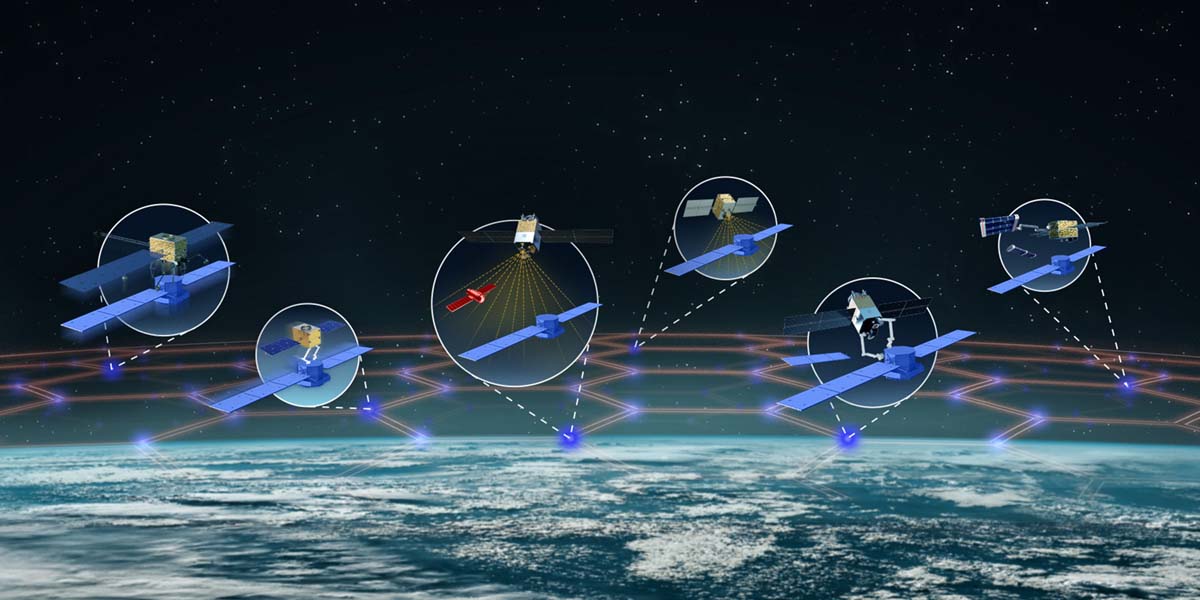
Building the infrastructure needed for Golden Dome will require the ability to perform on-orbit servicing. (Image courtesy of Astroscale U.S.)
The missile defense challenge facing the United States has changed dramatically since Lt. Gen. (ret.) Henry “Trey” Obering III led the Missile Defense Agency (MDA). Ballistic missiles remain a central threat, but today’s architecture must also contend with hypersonic weapons, maneuvering warheads and potential fractional orbital bombardment systems.
Breaking Defense spoke with Obering, now a senior executive adviser with Booz Allen and a board director and proxy holder at Astroscale U.S. , about the architectural challenges of missile defense in space and where on-orbit logistics fits.
Breaking Defense: At MDA you focused on protecting the homeland against ballistic missiles. Looking at Golden Dome today, what has fundamentally changed?
Lt. Gen. (Ret.) Henry “Trey” Obering III, board director and proxy holder, Astroscale U.S.
Obering: There are so many things that have changed, but there are three that I’d like to highlight. The first and foremost is that the threat has changed. When I ran the Missile Defense Agency, the threat we were focused on was the emerging ballistic missile threats out of North Korea and Iran, and being able to protect the homeland from those.
What we’ve seen recently is a move primarily by Russia and some indications from China away from the mutually assured destructive, all-out attack deterrent of the Cold War era toward something called ‘escalate to deescalate.’ This strategy involves launching a much smaller attack at the United States to shock us into not interfering with a takeover of Taiwan or Russian aggression. That becomes much more dangerous and more destabilizing than what we’ve had in the past.
Another thing that’s changed is the threat diversity. Today, ballistic missiles still remain the vast majority of the inventory of these threat countries. But now they’ve added hypersonic missiles, maneuvering warheads and fractional orbital bombardment, where they could put a warhead in orbit and then deorbit it without warning anywhere on the Earth within that orbital plane. More recently, we’ve seen the proliferation and sophistication of drone attacks in the Middle East, as well as in the Russia-Ukraine war.
The third thing that’s changed is the technology itself. Advances in sensors and processing power, algorithms, mesh communication networks and certainly artificial intelligence, machine learning, manufacturing techniques — all of that combined, most importantly with the dramatically reduced space launch cost, have put an architecture that has a space-based element very much back in play.
Golden Dome is a layered architecture connecting many different systems. Where do you see the greatest architectural risk?
In my mind, command and control, battle management and fire control are going to be the most important and the cornerstone pieces of the entire architecture.
When I was the director, we were simply trying to tie an Aegis SPY radar into the fire control system of the Ground-Based Midcourse Defense system in Alaska and California. That took us time, but we figured that out. Now you’re talking about integrating multiple sensors and interceptors, not only terrestrial-based but space-based, as well.
Another risk to the architecture would be the space-based interceptors. They offer so much in terms of capability with much earlier intercept of threat missiles and global tailored coverage. To be able to scale and afford those is a challenge that I believe we will meet.
Why does on-orbit logistics become important as Golden Dome adds more space-based capabilities?
As I stated earlier, space basing of missile defense sensors, communications elements and interceptors offers so much more capability. In the past, space launch costs were so high, we would need to build exquisite systems to be able to survive a long period in space without servicing.
On-orbit logistics was not economically viable to do that, to be able to extend their life. Well, that’s changed. The technology has gotten to the point now where we can afford the space launch cost. Now, on-orbit logistics, which includes refueling, servicing, repositioning, resupply and deorbit, can have a major impact on the viability of a constellation.
It’s not every service for every single satellite, and the trades need to be done for the prime candidates. For example, it certainly comes into play where you have satellites that typically are at higher altitudes and you want to extend their life, because it’s cheaper to go up and do multiple refuelings of a constellation than it is to launch whole new satellites to be able to perform the mission.
A Falcon 9 rocket carrying the O3b mPOWER-F mission successfully launches from Space Launch Complex 40 at Cape Canaveral Space Force Station, Florida, on Sept. 13, 2026. Following liftoff, the Falcon 9 carried O3b mPOWER satellites 11, 12 and 13 toward medium Earth orbit, while the first stage booster successfully landed on the A Shortfall of Gravitas droneship in the Atlantic Ocean. (U.S. Space Force photo by Senior Airman Tyler Moody)
What has to be designed into a spacecraft from the beginning — such as interfaces — to make refueling and servicing possible?
Let me bring in an analogy to make it easier to visualize. I started my Air Force career as a fighter pilot, and I would go up and meet with a tanker aircraft that would provide fuel so that I could extend my flight time or range.
The bombers, the cargo aircraft, the fighters: even though they were extremely different aircraft, they had receptacles for refueling that were compatible with the tanker.
Being able to develop and decide upon standardized receptacles for refueling, for example, or other potential line-replaceable units where you may have something you want to change out on the spacecraft is what we’re talking about, and it includes mechanical, electrical, data, refueling interfaces and then serviceable locations.
A good example of space-based logistics is actually the International Space Station. Think about it; we go up and can interface and connect with the space station. Russia’s done the same thing. That, again, gets to the fact that we standardized the interfaces that we needed. We made the hatch accessible to the station by incoming spacecraft.
Does the government need to establish those requirements, or should industry develop them?
I think the government needs to send the demand signal and then let industry decide what that is. That seems to be the best way to solve a lot of these problems.
We’re seeing more and more of that in the Golden Dome program, where Golden Dome is initiating a demand signal and then they’re allowing the industry to interface and to build together what that’s going to look like.
Where is the dividing line between satellites that should be serviced on-orbit and those that should simply be replaced?
It is a matter of determining if their life extension would make economic sense as opposed to replacing the spacecraft. Typically that depends on the mission and the constellation, altitude, orientation and the pace of the technology developments available for that particular mission.
But again, different services make sense for different orbits and applications. In proliferated LEO, for example, where you have much smaller satellites that basically would be easier to just replenish with a launch, you could do inspection, maneuver or deorbit rather than life extension or refueling.
How do space-based interceptors and on-orbit logistics address the magazine-depth problem facing missile defense?
Space-based interceptors actually improve the magazine depth of an integrated, layered missile defense architecture as a whole. They could be the first layer engaging threat missiles from shortly after launch and in their midcourse phase as well. This thinning effect, when integrated with the terrestrially based interceptors such as the SM-3s, THAADs, Arrows, Patriots, etc., provides the defense the ability to handle larger raid sizes.
Tell us about Astroscale U.S.’s Provisioner ® refueling spacecraft upcoming launch?
Astroscale U.S.’s goal is to provide the Provisioner ® spacecraft for refueling in the 2026 timeframe. It’s important because it actually moves refueling from a concept to an actual demonstration of operational capability supporting the Space Force.
What’s even more significant than that is once they’ve demonstrated that it can safely refuel in orbit, then it becomes a question of how fast we can incorporate that capability into future architectures.
As the operators, the combatant commanders and others begin to understand what you can do in terms of on-orbit logistics and how that plays into the fight, you’ll see that begin to proliferate in some of the government demands and in these exercises and war games.
Historically, logistics have been foundational for the success of any military operation. Sustainment is one of the Pentagon’s joint functions and it applies to every domain — land, sea, air — and now it’s time for space.
Golden Dome represents more than just a new missile defense system. It represents a true warfighting capability in which we have the opportunity to build resilient, integrated architecture that’s designed to operate through conflict.
As we’ve talked about, resilience is more than just proliferation. It means that proliferation, rapid launch, reconstitution, maneuvering, on-orbit logistics, they should all work together. Overall, the bottom line is we should view logistics as a true warfighting enabler, not just a commercial servicing capability.
Just like we view the tankers that we use in the air or the replenishment ships we use at sea, we can view this in the same way for space.
建造金穹顶所需的基础设施需要具备在轨维修能力。(图片由美国Astroscale公司提供)
自亨利·“特雷”·奥伯林三世中将(退役)领导导弹防御局(MDA)以来,美国面临的导弹防御挑战发生了巨大变化。弹道导弹仍然是主要威胁,但如今的防御体系还必须应对高超音速武器、机动弹头和潜在的部分轨道轰炸系统。
Breaking Defense 采访了 Obering,他现在是 Booz Allen 的高级执行顾问,也是 Astroscale US 的董事和代理持有人,讨论了太空导弹防御的架构挑战以及在轨后勤的作用。
防务突破:在导弹防御局工作期间,您专注于保护国土免受弹道导弹攻击。如今,展望金顶国家防御系统,有哪些根本性的变化?
亨利·“特雷”·奥伯林三世中将(退役),Astroscale US公司董事及代理人
奥伯林:变化的事情太多了,但我只想重点强调三点。首先也是最重要的是,威胁发生了变化。我担任导弹防御局局长时,我们关注的重点是朝鲜和伊朗新兴的弹道导弹威胁,以及如何保护国土免受这些威胁。
我们最近看到的是,主要是俄罗斯,以及一些来自中国的迹象表明,他们正在摒弃冷战时期相互确保摧毁、全面攻击的威慑策略,转而采取一种名为“升级以降级”的策略。这种策略是指对美国发动规模小得多的攻击,以震慑美国,使其不干预俄罗斯对台湾的侵略或对台湾的入侵。这比我们过去经历的任何情况都更加危险,也更具破坏性。
另一个变化是威胁的多样性。如今,弹道导弹仍然是这些威胁国家武器库中的绝大部分。但现在,他们又增加了高超音速导弹、机动弹头和部分轨道轰炸能力,即能够将弹头送入轨道,然后在轨道平面内的任何位置进行无预警脱轨。最近,我们在中东以及俄乌战争中也看到了无人机袭击的扩散和复杂性的提升。
第三件发生变化的是技术本身。传感器和处理能力、算法、网状通信网络以及人工智能、机器学习、制造技术的进步——所有这些,尤其是太空发射成本的大幅降低——使得具有天基元素的架构重新焕发活力。
金穹顶是一个多层架构,连接着许多不同的系统。您认为最大的架构风险在哪里?
在我看来,指挥控制、作战管理和火力控制将是整个架构中最重要、最核心的部分。
我担任主管时,我们只是想把宙斯盾SPY雷达接入阿拉斯加和加利福尼亚陆基中段防御系统的火控系统。这花了我们不少时间,但我们最终还是解决了。现在你们说的是要整合多种传感器和拦截器,不仅包括陆基的,还包括天基的。
该架构面临的另一个风险是天基拦截器。它们在能力方面优势显著,能够更早地拦截威胁导弹,并提供全球定制化的覆盖范围。如何扩大规模并承担相应的成本是一个挑战,但我相信我们能够克服。
随着金穹顶航天中心增加更多天基能力,为什么在轨物流变得重要?
正如我之前所说,将导弹防御传感器、通信设备和拦截器部署在太空,能够提供更强大的能力。过去,太空发射成本极高,我们需要建造极其精密的系统,才能使其能够在太空长期运行而无需维护。
过去,在轨后勤保障在经济上不可行,无法延长卫星星座的寿命。但现在情况不同了。技术发展到如今,我们能够承担太空发射的成本。如今,包括燃料补给、维护、重新定位、物资补给和脱离轨道在内的在轨后勤保障,可以对卫星星座的生存能力产生重大影响。
并非所有服务都适用于每颗卫星,而且必须针对主要候选卫星进行权衡。例如,对于那些通常运行在高空的卫星,如果想要延长其寿命,这一点就显得尤为重要,因为多次为卫星星座进行燃料补给比发射全新的卫星来执行任务要经济得多。
2026年9月13日,一枚搭载O3b mPOWER-F任务的猎鹰9号火箭从佛罗里达州卡纳维拉尔角太空军基地的40号航天发射场成功发射升空。发射后,猎鹰9号将O3b mPOWER卫星11、12和13送入中地球轨道,而一级助推器则成功降落在大西洋的“重力不足”号无人船上。(美国太空军高级空军士兵泰勒·穆迪摄)
为了使航天器能够进行燃料补给和维修,从一开始,航天器设计中就必须包含哪些内容(例如接口)?
我举个例子来说明一下。我的空军生涯是从战斗机飞行员开始的,我会飞到高空与加油机对接,加油机为我提供燃料,这样我就可以延长飞行时间或航程。
轰炸机、运输机、战斗机:尽管它们是截然不同的飞机,但它们的加油口都与加油机兼容。
例如,我们讨论的是能够开发和确定标准化的加油接口,或者其他潜在的可更换部件,以便更换航天器上的某些部件,这包括机械、电气、数据、加油接口以及可维修的位置。
国际空间站就是一个典型的太空物流案例。想想看,我们升空后就能与空间站对接。俄罗斯也做到了这一点。这再次说明,我们已经实现了所需接口的标准化。我们让进站的航天器能够轻松打开通往空间站的舱门。
这些要求是政府需要制定,还是应该由行业来制定?
我认为政府需要发出需求信号,然后让行业来决定需求是什么。这似乎是解决很多这类问题的最佳途径。
我们在金穹顶计划中看到了越来越多的这样的例子,金穹顶计划发出需求信号,然后允许行业进行互动,共同构建未来的样子。
卫星在轨维修和直接更换之间的界限在哪里?
关键在于判断延长航天器的寿命是否比更换航天器更具经济效益。这通常取决于任务、星座、高度、姿态以及适用于该特定任务的技术发展速度。
但同样,不同的服务适用于不同的轨道和应用场景。例如,在近地轨道(LEO)上,卫星体积小得多,基本上只需发射补给即可,因此可以进行巡检、机动或脱轨操作,而无需进行延寿或燃料补给。
天基拦截器和在轨后勤保障如何解决导弹防御面临的弹药库纵深问题?
天基拦截器实际上提升了整体一体化多层导弹防御体系的防御深度。它们可以作为第一层防御力量,在导弹发射后不久以及中段阶段就对其进行拦截。这种“减薄”效应,与陆基拦截器(例如SM-3、THAAD、箭式导弹、爱国者导弹等)相结合,使防御系统能够应对更大规模的袭击。
请介绍一下Astroscale US公司的Provisioner®加油航天器即将发射的情况?
Astroscale US的目标是在2026年左右交付用于太空燃料补给的Provisioner®航天器。这意义重大,因为它将太空燃料补给从概念阶段推进到实际的作战能力演示阶段,从而为太空部队提供支持。
更重要的是,一旦他们证明它可以在轨道上安全加油,那么问题就变成了我们能以多快的速度将这种能力融入到未来的架构中。
随着操作人员、作战指挥官和其他人员开始了解在轨后勤保障能做什么以及这如何融入战斗,你会发现这开始在一些政府要求以及这些演习和战争游戏中得到推广。
从历史上看,后勤保障一直是任何军事行动成功的基础。后勤保障是五角大楼的联合职能之一,它适用于所有领域——陆地、海洋、空中——现在,它又扩展到了太空领域。
“金穹顶”不仅仅代表着一套新的导弹防御系统,它更代表着一种真正的作战能力,让我们有机会构建一个具有韧性的一体化架构,能够在冲突中有效运作。
正如我们之前讨论过的,韧性不仅仅是扩散。它意味着扩散、快速发射、重组、机动、在轨后勤保障等等,所有这些能力都应该协同运作。总而言之,关键在于我们应该将后勤保障视为真正的作战赋能手段,而不仅仅是商业服务能力。
就像我们看待空中使用的油轮或海上使用的补给舰一样,我们可以用同样的方式看待太空。