Sabah introduces outcome-based integrity approach to strengthen governance, curb corruption沙巴州引入以结果为导向的廉政方法,以加强治理,遏制腐败。
KOTA KINABALU, Oct 6 — The Sabah government has introduced a new Outcome-Based Integrity (OBI) approach as a formula to build a resilient and corruption-resistant administrative...
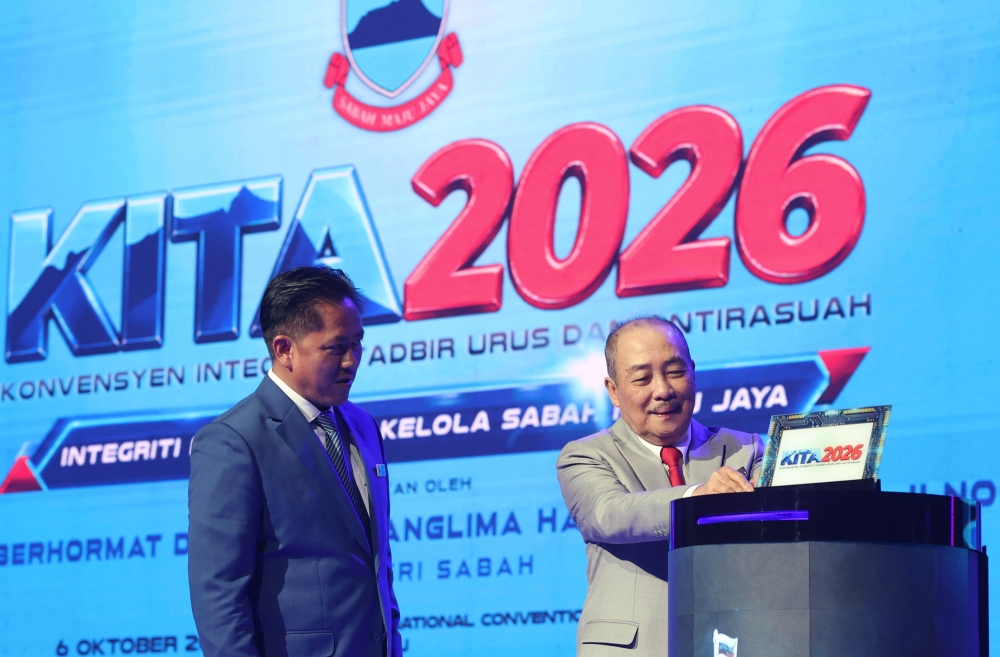
The Sabah Government has launched an Outcome-Based Integrity approach to enhance governance and reduce corruption risks, improving efficiency and transparency in public services.
The approach includes annual KPIs for department heads, focusing on reducing leakages, increasing service efficiency, and boosting public confidence.
More than 2,500 participants are attending the KITA 2026 convention, emphasising a commitment to governance and integrity, alongside new technologies and training for integrity officers.
KOTA KINABALU, Oct 6 — The Sabah government has introduced a new Outcome-Based Integrity (OBI) approach as a formula to build a resilient and corruption-resistant administrative ecosystem.
Chief Minister Datuk Seri Hajiji Noor said OBI would focus on three key areas: significantly reducing the risk of leakages and fundamental misconduct, improving the efficiency and transparency of public service delivery, and increasing public and investor confidence.
He said every governance, integrity and anti-corruption instrument under OBI must deliver tangible results, stressing that integrity was not merely rhetoric but a key pillar underpinning the success of the Sabah Maju Jaya (SMJ) Development Plan.
“OBI outcome measures will form part of the annual Key Performance Indicators (KPIs) for all heads of departments and leaders of state-owned companies, while administrative performance will be measured by the reduction in leakage risks and service efficiency.”
Hajiji said this when opening the 2026 Integrity, Governance and Anti-Corruption Convention (KITA), themed “Integrity Driving Sabah Maju Jaya Governance”, at the Sabah International Convention Centre (SICC) today.
The chief minister said every ringgit of public funds spent must deliver maximum value for money and directly benefit the people without being lost through leakages.
He said poorly managed bureaucracy created fertile ground for corruption and wastage.
“Governance will no longer be reactive but based on the 3P formula - Proactive, Predictive and Preventive — by preventing problems before they occur based on actual risk assessments,” he noted.
He said the state government would also strengthen digitalisation, data analytics and behavioural insights, while institutionalising OBI in agency performance assessments, while at the same time expanding the role of Certified Integrity Officers (CeIOs) and strengthening Integrity Units to develop a new generation of leaders grounded in integrity.
“Integrity is the driving force that ensures every public fund and government policy delivers optimum returns and tangible benefits to the people without leakage or misconduct,” he said.
Hajiji said more than 2,500 participants from across Sabah were attending the two-day KITA 2026, reflecting a collective commitment to strengthening governance, integrity and anti-corruption practices.
Since KITA was introduced in 2023, he said 10 CeIOs have been appointed to head Integrity Units in state ministries, while the i-Adu mobile application, i-DIMSS and i-STANS systems have been developed.
Another 17 Sabah state agency officers have obtained the Certification in Professional Integrity Assurance and Management (CPIAM) from Universiti Sains Malaysia.
Hajiji said the Sabah Integrity and Governance Division (BIGoNS) under the State Secretary’s Office had also received the UNGGUL recognition under the Integrity and Governance Management System (SPINE) certification by the Malaysian Institute of Integrity (IIM). — Bernama
Bersatu acted in ‘bad faith’ to cripple Perikatan before Melaka polls, Takiyuddin claims in court filing
Health Ministry: 76pc of psychiatric patients return to work after rehabilitation
World Bank: Malaysia’s inflation among region’s lowest, but upstream cost pressures rising
沙巴州政府推出了一项以结果为导向的廉政方法,旨在加强治理、降低腐败风险,提高公共服务的效率和透明度。
该方法包括为部门负责人制定年度关键绩效指标,重点是减少漏洞、提高服务效率和增强公众信心。
超过 2500 名参与者参加了 KITA 2026 大会,大会强调了对治理和诚信的承诺,以及对诚信官员的新技术和培训。
哥打基纳巴卢,10 月 6 日讯——沙巴州政府推出了一项新的基于结果的廉洁(OBI)方法,旨在建立一个具有韧性和抗腐败能力的行政生态系统。
首席部长拿督斯里哈吉吉诺表示,OBI将重点关注三个关键领域:大幅降低漏洞和根本性不当行为的风险,提高公共服务交付的效率和透明度,以及增强公众和投资者的信心。
他表示,OBI 下的每一项治理、廉政和反腐败措施都必须取得切实成果,并强调廉政不仅仅是空谈,而是支撑沙巴进步再也 (SMJ) 发展计划成功的关键支柱。
“OBI 的成果指标将构成所有部门负责人和国有企业领导的年度关键绩效指标 (KPI) 的一部分,而行政绩效将通过减少泄漏风险和服务效率来衡量。”
哈吉吉今天在沙巴国际会议中心 (SICC) 为以“诚信驱动沙巴迈向更美好的治理”为主题的 2026 年诚信、治理和反腐败大会 (KITA) 开幕时发表了上述讲话。
首席部长表示,每一令吉的公共资金都必须物尽其用,直接造福人民,不能因资金流失而损失。
他表示,管理不善的官僚机构为腐败和浪费提供了滋生的温床。
他指出:“治理将不再是被动的,而是基于 3P 原则——主动、预测和预防——通过实际的风险评估,在问题发生之前就加以预防。”
他表示,州政府还将加强数字化、数据分析和行为洞察,同时将OBI制度化纳入机构绩效评估,并扩大认证诚信官员(CeIO)的作用,加强诚信部门,以培养新一代以诚信为本的领导人。
他说:“诚信是确保每一项公共资金和政府政策都能为人民带来最佳回报和切实利益,且不出现资金流失或不当行为的驱动力。”
哈吉吉表示,来自沙巴各地的 2500 多名参与者参加了为期两天的 KITA 2026 会议,这体现了各方共同致力于加强治理、诚信和反腐败实践的承诺。
他表示,自 2023 年 KITA 推出以来,已任命 10 位首席信息官 (CeIO) 领导各州部委的诚信部门,同时还开发了 i-Adu 移动应用程序、i-DIMSS 和 i-STANS 系统。
另有 17 名沙巴州政府机构官员获得了马来西亚理科大学颁发的专业诚信保证与管理认证 (CPIAM)。
哈吉吉表示,沙巴州秘书长办公室下属的沙巴诚信与治理司(BIGoNS)也已获得马来西亚诚信研究院(IIM)颁发的诚信与治理管理体系(SPINE)认证,并被联合国全球治理联合会(UNGGUL)认可。——马新社
达基尤丁在法庭文件中声称,土团党在马六甲投票前“恶意”削弱国盟
卫生部:76%的精神病患者康复后重返工作岗位
世界银行:马来西亚通胀率位居区域最低之列,但上游成本压力上升