ACS(I) student's death on ropes course: Outdoor adventure firm's GM on trial over alleged safety failures一名ACS(I)学生在绳索课程中丧生:户外探险公司总经理因涉嫌安全失职受审
The prosecution argued that there were "systemic failures", including a harness that should not have been in service and gaps in rescue training.
The prosecution argued that there were "systemic failures", including a harness that should not have been in service and gaps in rescue training.
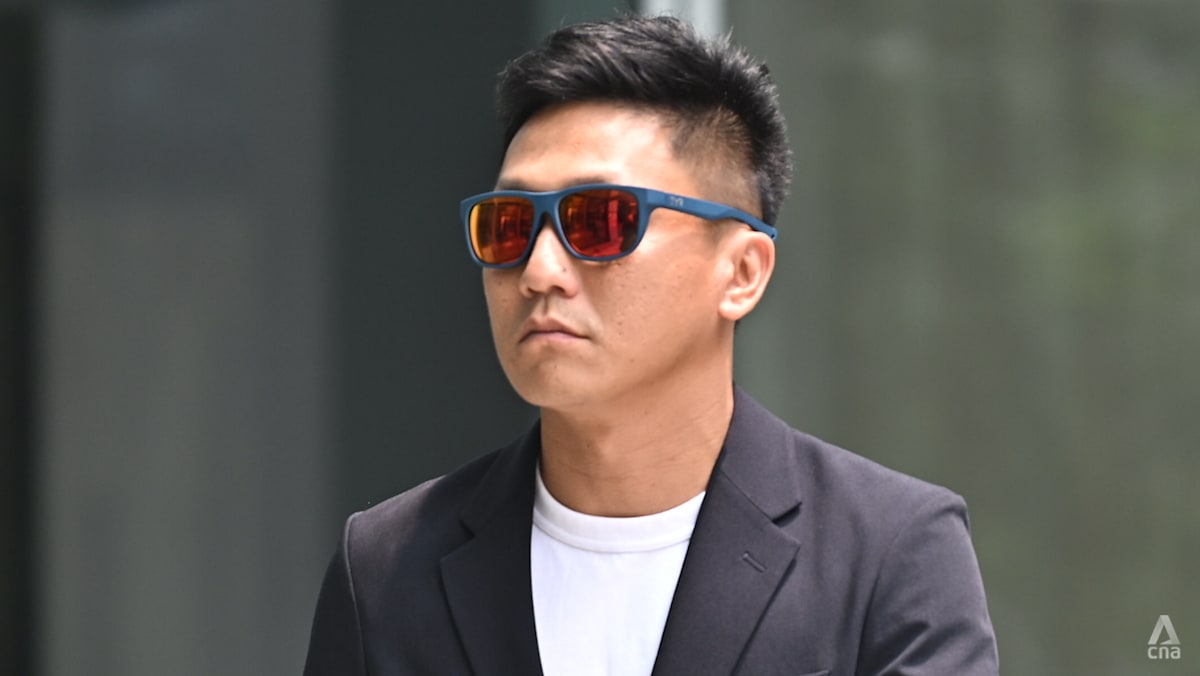
Liew Foo Loong arriving at the State Courts on Oct 7, 2026. (Photo: CNA/Raydza Rahman)
This audio is generated by an AI tool.
SINGAPORE: The general manager of an outdoor adventure learning company went on trial on Wednesday (Oct 7) for allegedly failing to take safety measures at an elevated ropes course. A 15-year-old Anglo-Chinese School (Independent) student died after taking part in the activity in 2021.
Liew Foo Loong, a 37-year-old Singaporean, was in charge of the day-to-day operations, including ensuring that safety measures were in place at the SAFRA Adventure Sports Centre in Yishun.
Liew and the company Camelot are on trial after both were charged with failing to take measures to ensure the safety and health of people who might be affected by an activity it carried out, causing the death of Jethro Puah Xin Yang.
Jethro was on a high-element course when he fell. He was left suspended in his harness for about half an hour before he was rescued, by which time he had lost consciousness, was not breathing and had a faint pulse.
He died the next day from multi-organ failure caused by suffocation.
A Ministry of Manpower prosecutor Delvinder Singh told the court that Liew, as the general manager of Camelot, was in charge of business development and conducting training for instructors.
On Feb 3, 2021, Jethro was taking part in a high-element rope course at an activity centre managed and operated by Camelot.
At about 12.45pm, instructors conducted a safety briefing for 28 participants from ACS(I), including Jethro.
The briefing included checks on whether the participants were well, a showcase of the rope course's features and a demonstration of how to put on the safety harness and helmet.
Participants would take turns to go through the course. When they returned after completing it, they would remove their helmets and safety harnesses, and hand them to other participants.
An instructor was placed at the start of the high-element course. He was expected to physically ensure that participants' harnesses were in place before sending them onto the course. He also had to assist participants who had finished the course.
Muhammad Nurul Hakim Mohamed Din, 23, the instructor, was jailed for six months for failing to do a physical check on Jethro's harness .
Mr Singh said that Jethro got onto the course at around 1.25pm and cleared the first obstacle.
While he was attempting the second obstacle about 15m above the ground, he fell off the walking cable and was suspended midair by the harness.
An instructor tried to guide the teenager to lift himself back onto the course, but Jethro was unable to do so.
Several instructors then tried to rescue him, and he lost consciousness midway.
It took the instructors more than half an hour to lower the student to safety. By then, he had stopped breathing and had a faint pulse.
Mr Singh said that the instructor who was able to lower Jethro to safety had to use a manoeuvre that he had learnt on his own, and which Camelot had not taught its instructors.
The instructors conducted cardiopulmonary resuscitation before paramedics from the Singapore Civil Defence Force arrived and took over. Jethro was then taken to Khoo Teck Puat Hospital.
At 4.41am on Feb 4, 2021, he died from multi-organ failure caused by suffocation.
PLANS TO HAND OVER BUSINESS
In the prosecution's opening statement, Mr Singh described the incident as a result of "systemic failures", adding that there was a lack of ownership of safety rules within Camelot.
He said that, among other things, the harness Jethro had worn was not supposed to be in service, given its unknown manufacturing date and faded serial number.
"Liew was not on the ground. However, his fingerprints are on every failure described," Mr Singh told the court, adding that Liew had approved the risk assessment on the canopy walk and was responsible for the alleged failures.
The prosecution called its first witness, Mr Yap Hock Chye, the owner and founder of Camelot.
Mr Yap told the court that he had stepped back from the business and now acts as an adviser.
He said that he had hired Liew in 2010 and had been preparing for him to take over Camelot's operations because he found Liew "capable".
He also testified that as general manager, Liew oversaw the operations, safety and business teams. Liew also managed the company's day-to-day operations.
The trial will continue on Oct 8.
If found guilty, Liew faces a fine of up to S$200,000, jail for up to two years, or both.
The company also faces a fine of up to S$500,000 if found guilty.
Get our pick of top stories and thought-provoking articles in your inbox
Stay updated with notifications for breaking news and our best stories
Join our channel for the top reads for the day on your preferred chat app
检方认为存在“系统性缺陷”,包括不应该投入使用的安全带以及救援训练方面的不足。
刘福龙于2026年10月7日抵达国家法院。(图片:CNA/Raydza Rahman)
这段音频由人工智能工具生成。
新加坡:一家户外探险学习公司的总经理于周三(10月7日)出庭受审,他被指控在高空绳索挑战项目中未能采取安全措施。一名15岁的英华中学(自主)学生在2021年参加该项目活动后不幸身亡。
37岁的新加坡人刘福龙负责日常运营,包括确保义顺SAFRA探险运动中心的安全措施到位。
刘某及其公司 Camelot 因未能采取措施确保可能受到其所开展活动影响的人员的安全和健康,导致 Jethro Puah Xin Yang 死亡而受审。
杰斯罗在进行高空绳索挑战课程时坠落。他被安全带吊在空中约半小时后才获救,那时他已经失去意识,停止呼吸,脉搏微弱。
第二天,他因窒息导致的多器官衰竭而死亡。
人力部检察官德尔文德·辛格告诉法庭,刘某作为卡米洛特公司的总经理,负责业务发展和对教练进行培训。
2021 年 2 月 3 日,杰斯罗在卡米洛特公司管理运营的活动中心参加了高空绳索课程。
下午 12 点 45 分左右,教员为来自 ACS(I) 的 28 名学员(包括 Jethro)进行了安全简报。
简报内容包括检查参与者的身体状况、展示绳索课程的特点以及如何穿戴安全带和头盔的演示。
参与者轮流完成赛道。完成赛道后,他们会摘下头盔和安全带,交给其他参与者。
高空挑战课程的起点安排了一名指导员。他的职责是亲自检查学员的安全带是否穿戴妥当,确保他们安全无虞后才能开始课程。此外,他还需协助已完成课程的学员。
23岁的教练穆罕默德·努鲁尔·哈基姆·穆罕默德·丁因未能对杰斯罗的安全带进行物理检查而被判入狱六个月。
辛格先生说,杰斯罗大约在下午 1 点 25 分开始比赛,并克服了第一个障碍。
当他尝试挑战距离地面约 15 米的第二个障碍时,他从行走钢索上摔了下来,被安全带悬挂在半空中。
一名教练试图引导这名少年重新回到赛道上,但杰斯罗却做不到。
随后几名教练试图营救他,但他中途失去了意识。
教官们花了半个多小时才将这名学生安全地放下来。那时,他已经停止了呼吸,脉搏也微弱了。
辛格先生说,能够将杰斯罗安全放下的教练不得不使用他自己学到的一种技巧,而卡米洛特公司并没有教给教练这种技巧。
在新加坡民防部队的医护人员赶到接手之前,教官们对杰斯罗进行了心肺复苏。随后,杰斯罗被送往邱德拔医院。
2021年2月4日凌晨4点41分,他因窒息导致多器官衰竭而死亡。
业务移交计划
在检方的开庭陈述中,辛格先生将这起事件描述为“系统性故障”的结果,并补充说,卡米洛特公司内部缺乏对安全规则的责任感。
他说,杰斯罗穿戴的那套安全带,由于生产日期不明且序列号褪色,本不应该还在使用。
“刘某当时不在现场。然而,他参与了所有被描述的事故,”辛格先生告诉法庭,并补充说,刘某批准了树冠走道的风险评估,并应对这些被指控的事故负责。
控方传唤了第一位证人,即 Camelot 的所有者兼创始人叶福财先生。
叶先生告诉法庭,他已经退出公司业务,现在担任顾问。
他说,他于 2010 年聘用了 Liew,并一直在为 Liew 接管 Camelot 的运营做准备,因为他认为 Liew“有能力”。
他还作证说,作为总经理,刘负责监督运营、安全和业务团队。刘还管理公司的日常运营。
审判将于10月8日继续进行。
如果罪名成立,刘某将面临最高 20 万新元的罚款、最高两年的监禁,或两者并罚。
如果罪名成立,该公司还将面临最高 50 万新元的罚款。
订阅我们的邮件,即可获取精选热点新闻和引人深思的文章。
订阅通知,第一时间获取突发新闻和精彩报道。
加入我们的频道,即可在您常用的聊天应用上获取当日热门文章。