Zambry: MOHE targets 30,000 AI graduates by 2030 to meet future workforce needsZambry:高等教育部计划到2030年培养3万名人工智能毕业生,以满足未来劳动力需求。
KUALA LUMPUR, Oct 8 — The Ministry of Higher Education (MOHE) aims to produce 30,000 graduates skilled in artificial intelligence (AI) between 2025 and 2030 to address the...
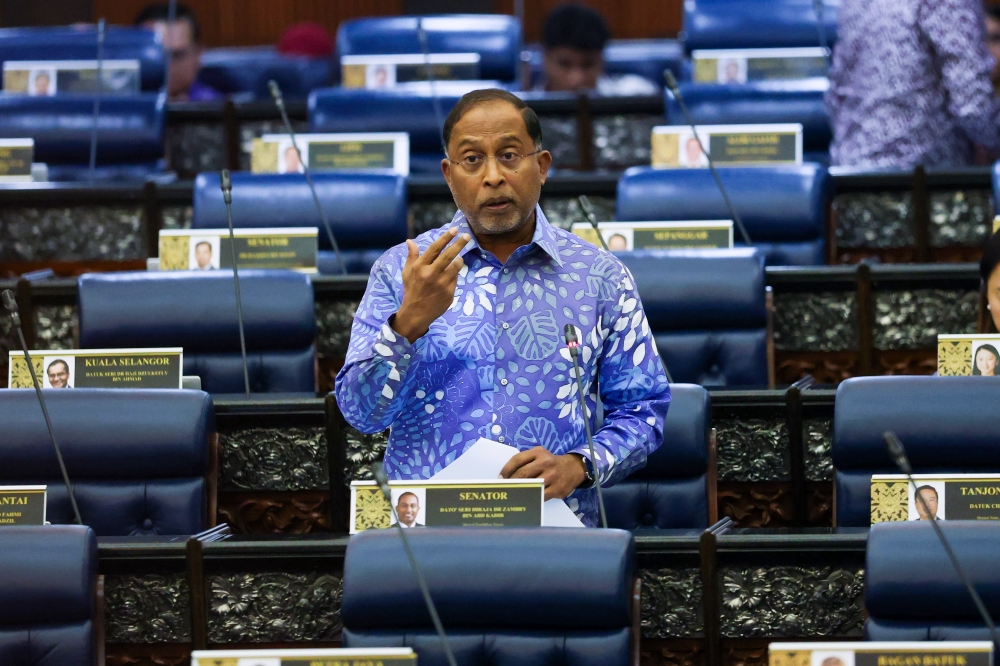
The Ministry of Higher Education aims to produce 30,000 AI-skilled graduates between 2025 and 2030 to address automation challenges.
MOHE plans to integrate AI elements into 80% of bachelor's degree courses and strengthen AI faculties at several universities.
The focus is on balancing AI use as a learning aid while promoting critical thinking to ensure graduates remain employable.
KUALA LUMPUR, Oct 8 — The Ministry of Higher Education (MOHE) aims to produce 30,000 graduates skilled in artificial intelligence (AI) between 2025 and 2030 to address the challenges of automation and meet future workforce needs.
Its Minister Datuk Seri Zambry Abdul Kadir said the target would be achieved through 30 specialised programmes at bachelor’s, master’s and doctoral (PhD) levels currently offered at 11 public universities.
He said to ensure that academic programmes remained relevant to technological advancements, 455 programmes across various levels had undergone a review as of Sept 30.
“For specialised AI programmes, development and accreditation have also been strengthened through the Programme Standards: Artificial Intelligence (PS:AI) developed by the Malaysian Qualifications Agency (MQA), to ensure that they are developed systematically and meet the stipulated quality standards,” he said during the question-and-answer session in the Dewan Rakyat today.
He said this in reply to a question from Datuk Seri Dr Shahidan Kassim (PN-Arau) on measures taken by MOHE to ensure graduates possess AI skills to cope with changes in the job market, following expectations that many jobs could be at risk of being replaced by automation.
Elaborating, Zambry said the talent development ecosystem was also being strengthened through the establishment of the Faculty of Artificial Intelligence at Universiti Teknologi Malaysia (UTM), the Faculty of Artificial Intelligence and Cybersecurity at Universiti Teknikal Malaysia Melaka (UTeM), and the Faculty of Intelligent Computing at Universiti Malaysia Perlis (UniMAP).
To ensure that graduates remained competitive and their employability was maintained, he said MOHE planned to integrate AI elements into 80 per cent of bachelor’s degree courses at public universities.
“We are also implementing upskilling programmes, work-based learning and stackable programmes to ensure that AI skills can be developed at every level of study, enabling our graduates to remain employable when they graduate from university,” he said.
Responding to a supplementary question from Datuk Shahelmey Yahya (BN-Putatan) on students’ critical thinking skills, which he said were increasingly being eroded by the ‘ask ChatGPT’ mentality, Zambry said the biggest challenge facing universities today was to strike a balance in using AI as a learning aid rather than as an agent that completely takes over human thinking.
“Agentic AI is the latest development in our world. It has become humanoid (human-like), meaning it can think for us, solve problems for us, and can even understand feelings.
“This is very dangerous. That is why the measures being taken are aimed at striking a balance so that our higher education system can produce well-rounded, comprehensive, and holistic individuals,” he said. — Bernama
Malaysia strengthens space disaster SOPs, prepares for risk of falling space objects, says Chang Lih Kang
King grants audience to IPCC chairman at Istana Negara
Myanmar president departs Malaysia after two-day visit focused on repatriation, bilateral ties
高等教育部计划在 2025 年至 2030 年间培养 3 万名具备人工智能技能的毕业生,以应对自动化挑战。
教育部计划将人工智能元素融入80%的本科课程,并加强多所大学的人工智能系建设。
重点在于平衡人工智能作为学习辅助手段的应用与培养批判性思维,以确保毕业生保持就业竞争力。
吉隆坡,10 月 8 日讯——高等教育部 (MOHE) 计划在 2025 年至 2030 年间培养 3 万名具备人工智能 (AI) 技能的毕业生,以应对自动化带来的挑战并满足未来劳动力需求。
其部长拿督斯里赞布里·阿卜杜勒·卡迪尔表示,这一目标将通过目前在11所公立大学开设的30个学士、硕士和博士(PhD)级别的专业课程来实现。
他表示,为确保学术课程与技术进步保持相关性,截至9月30日,各级455个课程已进行了审查。
“对于专门的人工智能课程,马来西亚资格认证机构(MQA)制定的《人工智能课程标准》(PS:AI)也加强了课程的开发和认证,以确保课程得到系统开发并符合规定的质量标准,”他在今天国会下议院的问答环节中说道。
他在回答拿督斯里沙希丹·卡西姆博士(国盟-亚娄)提出的问题时说了这番话。该问题涉及高等教育部为确保毕业生具备人工智能技能以应对就业市场的变化而采取的措施,因为预计许多工作可能会被自动化取代。
Zambry详细解释说,通过马来西亚科技大学(UTM)人工智能学院、马来西亚马六甲科技大学人工智能和网络安全学院(UTeM)以及马来西亚玻璃市大学智能计算学院(UniMAP)的成立,人才发展生态系统也得到了加强。
他表示,为确保毕业生保持竞争力并维持其就业能力,高等教育部计划将人工智能元素融入公立大学 80% 的学士学位课程中。
“我们还在实施技能提升计划、在职学习和可叠加课程,以确保人工智能技能可以在每个学习阶段得到发展,使我们的毕业生在大学毕业后仍然具有就业竞争力,”他说。
针对拿督沙赫尔米·亚亚(国阵-布达丹)提出的关于学生批判性思维能力的补充问题,扎姆布里表示,这种能力正日益受到“向 ChatGPT 提问”心态的侵蚀,大学目前面临的最大挑战是如何在将人工智能用作学习辅助工具和完全取代人类思维的代理之间取得平衡。
“智能体人工智能是我们世界的最新发展。它已经变得类人(像人类一样),这意味着它可以替我们思考,替我们解决问题,甚至可以理解情感。”
“这非常危险。因此,我们采取的措施旨在寻求平衡,使我们的高等教育体系能够培养出全面发展、综合素质高、思维健全的人才。”他说道。——马新社
张立康表示,马来西亚加强了太空灾难标准作业程序,为应对太空物体坠落风险做好准备。
金在国家皇宫接见政府间气候变化专门委员会主席
缅甸总统结束为期两天的马来西亚之行,此次访问的重点是遣返人员和双边关系。