Could Germany join GCAP? UK ‘seeks to progress’ the potential switch德国会加入全球能力评估框架(GCAP)吗?英国“寻求推进”这一潜在转变。
Berlin has been exploring next-gen fighter options since the collapse of the FCAS program this summer.
新闻视频
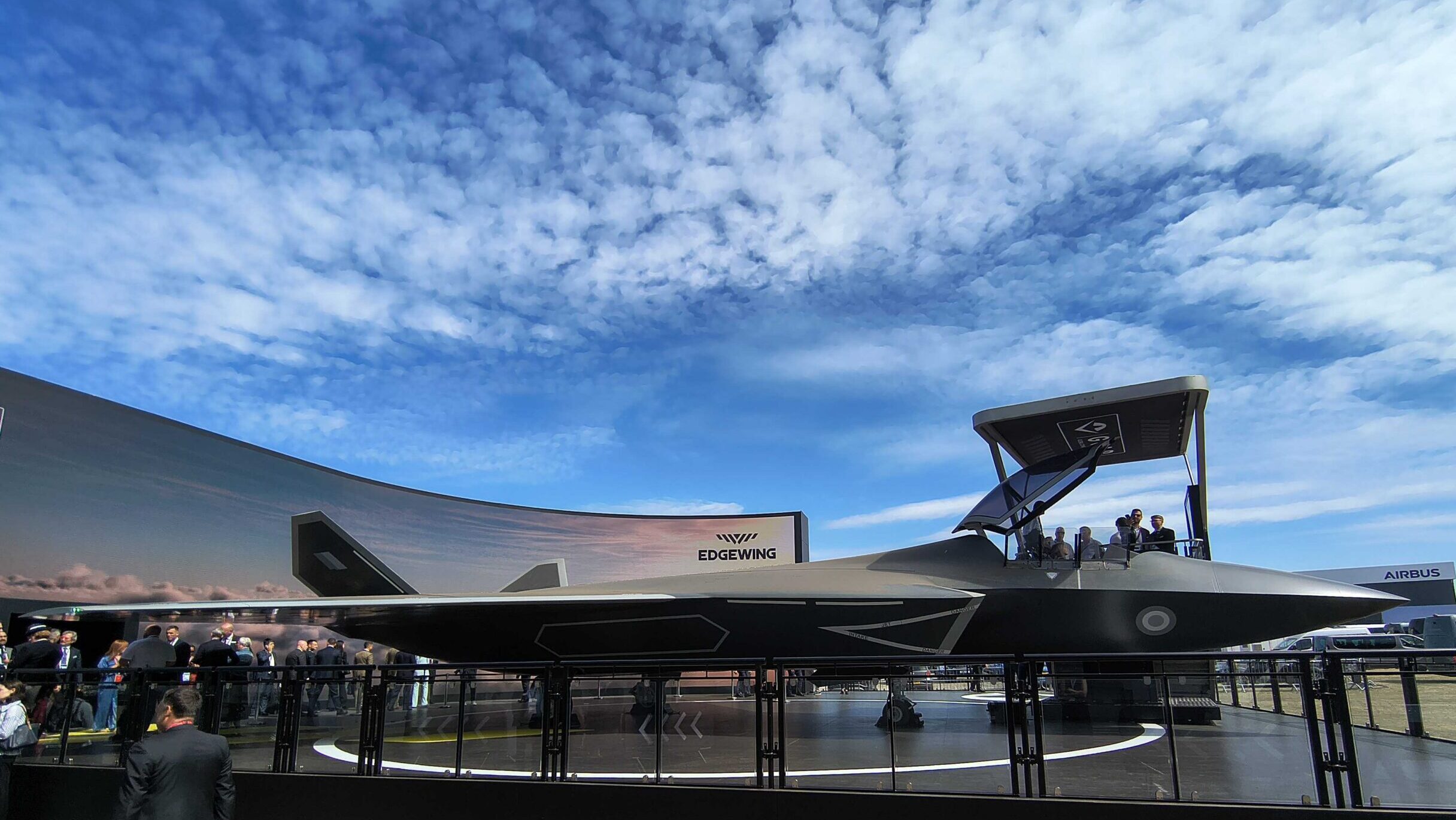
BELFAST — The UK and Germany are working “to progress” the potential for Germany to join the UK-Italian-Japanese Global Combat Air Programme (GCAP), Prime Minister Andy Burnham said today, in what would be a major shake-up for the next-generation fighter effort.
Speaking at a joint press conference in Berlin with German Chancellor Friedrich Merz to ratify a bilateral security and defense treaty, Burnham said he and Merz talked about the UK’s “openness” to Berlin joining GCAP.
“That is something that we seek to progress in in the coming period, working with our other partners, Italy and Japan, in relation to that as well,” he said.
Germany had joined with France and Spain on the Future Combat Air System (FCAS), a rival next-gen fighter program, but the effort collapsed this summer amid industrial disputes. At the time, German officials said they were weighing different paths forward, including a brand new project led by FCAS developer Airbus or joining GCAP.
At a political level, the latest interest in adding Germany to GCAP comes after Canada joined the program as an observer nation in July, allowing it to gain a working understanding of the high-profile effort. Observer status could also lead to Ottawa becoming a fully-fledged partner and contributing at an industrial level in the future.
European-made Black Hawk gets an armed upgrade
New kits turn Black Hawks into attack Hawks in just three hours.
Germany’s potential participation as a new partner has previously been welcomed, with some hesitation, by at least one GCAP industry partner.
Leonardo CEO Lorenzo Mariani said in July that he could see the benefit of Berlin joining but warned any major change risks “disruption.”
As Breaking Defense previously reported, he noted that Germany would make a “strong industrial partner,” but “another nation joining, another group of industries joining the program would risk [producing] some delays, while at the moment, on the contrary, we are fully committed to the 2035 [service entry] date.”
The future fighter is slated to replace British and Italian Eurofighter Typhoons, as well as Japanese F-2 combat aircraft. It is also envisioned to fly alongside loyal wingmen drones, with support from a combat cloud communications network.
Breaking Defense Video
Unpacking Boeing’s F/A-XX win, plus a report from wartime Ukraine
How Hegseth envisions a new Autonomous Warfare Command
What Europe’s military air fleets will look like in 30 years
Riyadh gets closer to F-35s, Damascus presses sovereignty and an expert take on Iran
Drone-hunting on the border, plus turmoil at an Air Force think tank
The future of European airpower might be unmanned
The big news out of AFA, plus a guided tour of the show floor
Why the ‘right to repair’ matters to the Pentagon
What the Pentagon is testing along the US-Mexico border
Chairman Caine talks cislunar ops, plus a window into next-gen airlift
贝尔法斯特——英国首相安迪·伯纳姆今天表示,英国和德国正在努力“推进”德国加入英国-意大利-日本全球作战航空计划(GCAP)的可能性,这将对下一代战斗机研发工作带来重大变革。
伯纳姆在柏林与德国总理弗里德里希·默茨共同举行的新闻发布会上表示,他和默茨讨论了英国对柏林加入全球防务合作计划(GCAP)的“开放”态度,此次新闻发布会旨在批准一项双边安全与防务条约。
他说:“这是我们希望在未来一段时间内与我们的其他合作伙伴意大利和日本共同努力取得进展的领域。”
德国曾与法国和西班牙合作开发未来作战空中系统(FCAS),这是一个与美孚竞争的下一代战斗机项目,但由于劳资纠纷,该项目于今年夏天宣告失败。当时,德国官员表示,他们正在权衡不同的发展路径,包括由FCAS开发商空客公司牵头开展一个全新的项目,或者加入全球先进作战能力计划(GCAP)。
在政治层面,德国最近对加入全球能力建设联盟(GCAP)表现出兴趣,此前加拿大已于7月以观察员国身份加入该计划,使其得以深入了解这项备受瞩目的努力。观察员身份也可能促使渥太华在未来成为正式合作伙伴,并在产业层面做出贡献。
欧洲制造的黑鹰直升机获得武装升级
全新装备让黑鹰直升机在短短三小时内变身攻击型黑鹰直升机。
德国作为新合作伙伴的潜在参与此前已受到至少一家 GCAP 行业合作伙伴的欢迎,尽管他们对此有所犹豫。
莱昂纳多首席执行官洛伦佐·马里亚尼在7月份表示,他看到了柏林加入的好处,但警告说,任何重大变化都可能带来“混乱”。
正如 Breaking Defense 此前报道的那样,他指出德国将是一个“强大的工业合作伙伴”,但是“另一个国家或另一批工业加入该计划可能会造成一些延误,而目前,恰恰相反,我们完全致力于 2035 年的服役日期。”
这款未来战斗机计划取代英国和意大利的“台风”战斗机以及日本的F-2战斗机。它还设想与僚机无人机协同飞行,并由作战云通信网络提供支持。
突破性防御视频
深入剖析波音F/A-XX的中标,以及来自战时乌克兰的报道
赫格塞斯设想的新型自主作战指挥部
30年后欧洲军用空军机队会是什么样子
利雅得距离F-35战机更近一步,大马士革强调主权,以及专家对伊朗的看法
边境无人机猎杀行动,以及空军智库的动荡
欧洲空军的未来或许在于无人化。
AFA展会最新动态,以及展会现场导览。
为什么“维修权”对五角大楼如此重要
五角大楼正在美墨边境测试什么?
凯恩主席谈近地月空间作业,以及下一代空运技术展望