U.S. Makes F-35 Push As Portugal Weighs F-16 Replacement美国力推F-35战机,葡萄牙考虑F-16战机的替代方案
The U.S. bid faces European rivals as Lisbon weighs the cost, capability, and strategic implications of its next fighter. Washington is pushing the F-35 as Portugal weighs replacing its aging F-16 fleet amid a growing European fighter competition.
Published Oct 8, 2026 4:14 PM EDT
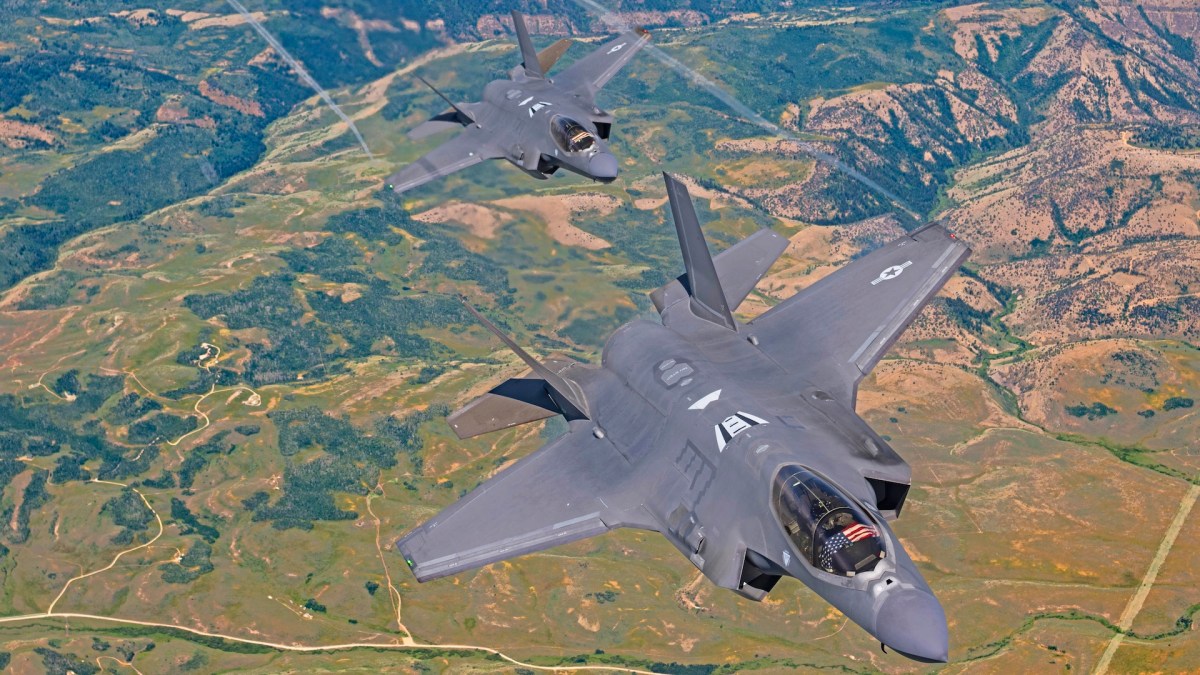
U.S. Air Force photo by Staff Sgt. Zachary Rufus
The United States is stepping up its campaign to sell Portugal the F-35 . Speaking in Lisbon today, Secretary of State Marco Rubio said the United States would make Portugal a “very competitive” offer to replace its F-16 fleet. The development adds a high-level political push to an increasingly intense competition over the Portuguese Air Force’s next fighter.
Portuguese Foreign Minister Paulo Rangel said after meeting Rubio that Lisbon is seriously considering the American proposal, while emphasizing that other options remain under consideration.
U.S. Secretary of State Marco Rubio disembarks from a plane upon arrival at Lisbon Airport during a three-country European tour, in Lisbon on October 8, 2026. Photo by Mark Schiefelbein / POOL / AFP
“The Portuguese state will always decide in accordance with the national interest,” Rangel said at a news conference after the meeting. “There is one point that is also clear: we are seriously considering the F-35 proposal, just as we are considering others.”
Portugal currently operates 25 modernized F-16AM/BMs, including 21 single-seat F-16AMs and four two-seat F-16BMs, from Monte Real Air Base, or BA5. The Portuguese Air Force, known as the Força Aérea Portuguesa (FAP), has not yet formally launched a replacement competition, but the aging fleet is increasingly becoming the focus of attention in Lisbon.
A Portuguese Air Force F-16 participating in NATO Exercise Ramstein Flag 24 flies over the west coast of Greece in 2024. U.S. Air Force photo by Tech. Sgt. Emili Koonce
Portugal acquired a total of 45 F-16A/B Block 15 aircraft through the Peace Atlantis I and II programs.
The first 20 aircraft were delivered beginning in 1994. These were new-build F-16A/B Block 15OCU aircraft, comprising 17 single-seat F-16As and three two-seat F-16Bs, and were used to equip Esquadra 201 “Falcões.”
A second batch followed in 1999, when Portugal received 25 former U.S. Air Force Block 15OCU aircraft. Twenty-one were F-16As and four were F-16Bs, with several intended as attrition replacements or spares. These aircraft had accumulated roughly 3,000 flight hours and underwent an extensive modernization program to bring them to the F-16AM/BM configuration. This means the aircraft are broadly comparable to the U.S. Air Force’s F-16C/D Block 50/52 fleet .
Esquadra 301 “Jaguares” finally became operational with its upgraded aircraft in 2005, while Esquadra 201 did not receive its upgraded F-16s until 2011.
A Portuguese F-16 in special markings associated with the Esquadra 301 “Jaguares.” U.S. Air Force photo by Staff Sgt. Jason Allred
Since then, the Portuguese Vipers have continued to receive incremental improvements. Their configuration has progressed through several mission-software standards, while the aircraft have been equipped with night-vision goggles, Joint Helmet-Mounted Cueing Systems (JHMCS), and advanced targeting and weapons capabilities.
Among the more important additions are Northrop Grumman Litening II targeting pods, and the ability to employ weapons including GBU-12 Paveway II laser-guided bombs, GBU-31 Joint Direct Attack Munitions (JDAM), and GBU-49 Enhanced Paveway II dual-mode weapons.
Portuguese Air Force F-16s line up for takeoff. Portuguese Air Force
Twelve former Portuguese F-16s were transferred to Romania under a deal signed in 2013, with deliveries taking place in 2016 and 2017. Romania subsequently ordered five additional aircraft in 2019.
Structurally, the Portuguese F-16s could potentially remain in service into the mid-2040s. But maintaining their relevance against increasingly sophisticated air forces would require continued investment in avionics, sensors, communications, and self-protection systems.
The F-16AM/BM fleet continues to rely on the old AN/APG-66(V)2 pulse-Doppler radar. Replacing it with an active electronically scanned array (AESA) radar such as Northrop Grumman’s APG-83 would substantially improve detection and tracking performance, but would come at considerable cost.
A U.S. Air Force F-16C receives radar modification upgrades in conjuction with the U.S. Air Force Service Life Extension Program, which includes the APG-83 Scalable Agile Beam Radar. U.S. Air Force photo by Airman 1st Class Erin Stanley
Portugal faces a choice between continuing to invest in increasingly tired fourth-generation airframes or moving directly into the fifth generation.
Since the end of the Cold War, Portugal has become much more engaged in out-of-area operations and missions in support of NATO.
In the process, the Portuguese F-16 fleet has accumulated an impressive operational record.
The fighters have repeatedly deployed on NATO air-policing missions, including rotations to the Baltic States, Iceland, Romania, and Poland.
Armed with live missiles, Portuguese Air Force F-16s participate in the NATO Baltic Air Policing Mission in Lithuanian airspace near Siauliai, on May 23, 2023. Photo by PETRAS MALUKAS/AFP via Getty Images
The F-35A would give Portugal a fifth-generation fighter built around low observability, sensor fusion, advanced electronic warfare, and networked operations.
The aircraft would also fit naturally into a NATO environment in which an increasing number of European air forces are adopting the F-35.
More than 900 F-35s are already in service or on order across Europe, according to previous comments by U.S. Ambassador to Portugal John Arrigo. Washington has repeatedly argued that joining that community would provide Portugal with a substantial interoperability advantage.
A U.S. Air Force F-35A assigned to the 493rd Fighter Squadron taxis on the runway after arriving for the Beja International Airshow in Portugal, in May 2024. U.S. Air Force photo by Senior Airman Renee Nicole S.N. Finona
However, European competition includes the Eurofighter Typhoon , Dassault Rafale , and Saab Gripen E , with Airbus preparing an especially aggressive campaign for the Typhoon.
Airbus has said it intends to submit an unsolicited Eurofighter proposal to Portugal in late October or early November. That package is expected to encompass not just the aircraft, but financing, industrial participation and broader military cooperation.
Selecting the American stealth fighter deepen Lisbon’s military relationship with Washington at a time when European governments are wrestling with fundamental questions about their dependence on U.S. military capabilities.
Across the continent, uncertainty over Washington’s stance on NATO is encouraging European allies to examine ways of reducing their reliance on American military technology, even as those same countries continue to increase defense spending and purchase U.S. equipment.
Procurement of the UH-60 Black Hawk underscores the reliance of the Portuguese Air Force on U.S.-made hardware for many of its needs. Portuguese Air Force
If Washington can combine the F-35’s capability advantages with an attractive acquisition and sustainment package, Portugal could find itself facing a difficult choice between the strategic benefits of joining Europe’s growing F-35 fleet and the industrial and political advantages of selecting a European fighter.
The final decision on the replacement of the F-16 will also determine what combat jet spearheads the Portuguese Air Force for the next several decades.
Contact the author: thomas@thewarzone.com
Comments couldn’t be loaded. Please refresh the page.
发布于美国东部时间2026年10月8日下午4:14
美国空军照片,由参谋军士扎卡里·鲁弗斯拍摄
美国正加紧向葡萄牙推销F-35战斗机。美国国务卿马可·卢比奥今天在里斯本表示,美国将向葡萄牙提供一份“极具竞争力”的方案,以替换其现有的F-16机队。这一进展为这场日益激烈的葡萄牙空军下一代战斗机争夺战增添了高层政治推动的色彩。
葡萄牙外交部长保罗·兰格尔在与卢比奥会面后表示,里斯本正在认真考虑美国的提议,同时强调其他选项仍在考虑之中。
2026年10月8日,美国国务卿马可·卢比奥抵达里斯本机场,开始其为期三国的欧洲之行。照片由马克·谢费尔贝因/POOL/法新社提供。
兰格尔在会后的新闻发布会上表示:“葡萄牙政府始终会根据国家利益做出决定。还有一点很明确:我们正在认真考虑F-35的提案,就像我们正在考虑其他提案一样。”
葡萄牙目前拥有25架现代化F-16AM/BM战斗机,其中包括21架单座F-16AM和4架双座F-16BM,部署在蒙特雷亚尔空军基地(BA5)。葡萄牙空军(Força Aérea Portuguesa,简称FAP)尚未正式启动替换竞标,但其老化的机队正日益成为里斯本关注的焦点。
2024年,一架参加北约“拉姆施泰因旗帜24”演习的葡萄牙空军F-16战斗机飞越希腊西海岸。美国空军技术军士埃米利·昆斯摄
葡萄牙通过“和平亚特兰蒂斯 I”和“和平亚特兰蒂斯 II”计划共获得了 45 架 F-16A/B Block 15 型飞机。
首批 20 架飞机于 1994 年开始交付。这些是新制造的 F-16A/B Block 15OCU 飞机,包括 17 架单座 F-16A 和 3 架双座 F-16B,并用于装备第 201“猎鹰”中队。
1999年,葡萄牙接收了第二批25架原美国空军Block 15OCU型F-16战斗机。其中21架为F-16A,4架为F-16B,部分飞机用作损耗替换或备用机。这些飞机累计飞行时间约3000小时,并经过大规模现代化改造,升级至F-16AM/BM配置。这意味着这些飞机与美国空军的F-16C/D Block 50/52机队大致相当。
第 301“美洲虎”中队于 2005 年终于装备升级后的飞机投入使用,而第 201 中队直到 2011 年才接收升级后的 F-16 战斗机。
一架涂有葡萄牙空军第301“美洲虎”中队特殊标志的F-16战斗机。美国空军照片,由参谋军士杰森·奥尔雷德拍摄。
此后,葡萄牙蝰蛇战机不断进行改进。其配置经历了多次任务软件标准的升级,同时飞机也配备了夜视镜、联合头盔瞄准系统(JHMCS)以及先进的瞄准和武器系统。
其中更重要的新增功能包括诺斯罗普·格鲁曼公司的 Litening II 瞄准吊舱,以及使用 GBU-12 Paveway II 激光制导炸弹、GBU-31 联合直接攻击弹药 (JDAM) 和 GBU-49 增强型 Paveway II 双模武器的能力。
葡萄牙空军的F-16战斗机列队准备起飞。葡萄牙空军
根据 2013 年签署的协议,12 架原葡萄牙 F-16 战斗机移交给罗马尼亚,交付工作于 2016 年和 2017 年完成。罗马尼亚随后于 2019 年又订购了 5 架飞机。
从结构上看,葡萄牙的F-16战机有可能服役到2040年代中期。但要保持其对抗日益先进的空军的能力,就需要持续投资于航空电子设备、传感器、通信和自卫系统。
F-16AM/BM 机队目前仍依赖老旧的 AN/APG-66(V)2 脉冲多普勒雷达。虽然用诺斯罗普·格鲁曼公司的 APG-83 等有源相控阵雷达 (AESA) 取代它能显著提升探测和跟踪性能,但成本也相当高昂。
美国空军一架F-16C战斗机正在进行雷达升级改造,这是美国空军服役寿命延长计划的一部分,其中包括APG-83可扩展敏捷波束雷达。美国空军一等兵艾琳·斯坦利摄
葡萄牙面临着两种选择:要么继续投资日益老旧的第四代飞机,要么直接迈向第五代飞机。
自冷战结束以来,葡萄牙更多地参与了支持北约的境外行动和任务。
在此过程中,葡萄牙的 F-16 机队积累了令人瞩目的作战记录。
这些战斗机曾多次部署到北约空中警戒任务中,包括轮换部署到波罗的海国家、冰岛、罗马尼亚和波兰。
2023年5月23日,葡萄牙空军的F-16战斗机携带实弹导弹,参与在立陶宛希奥利艾附近空域执行的北约波罗的海空中警戒任务。图片来源:PETRAS MALUKAS/AFP via Getty Images
F-35A 将为葡萄牙带来一款第五代战斗机,该战斗机以低可探测性、传感器融合、先进电子战和网络化作战为核心设计理念。
该飞机也自然而然地融入了北约环境,越来越多的欧洲空军正在采用 F-35 战斗机。
据美国驻葡萄牙大使约翰·阿里戈此前透露,欧洲已有超过900架F-35战机服役或已订购。华盛顿方面一再强调,加入F-35阵营将为葡萄牙带来显著的互操作性优势。
2024年5月,一架隶属于美国空军第493战斗机中队的F-35A战斗机抵达葡萄牙贝雅国际航展后,在跑道上滑行。美国空军高级飞行员蕾妮·妮可·菲诺娜摄
然而,欧洲的竞争者包括欧洲战斗机“台风”、达索“阵风”和萨博“鹰狮”E,其中空客正准备对“台风”发起一场特别积极的攻势。
空客公司表示,计划于10月下旬或11月初向葡萄牙提交一份主动提出的“台风”战斗机项目方案。该方案预计不仅包含飞机本身,还将涵盖融资、工业合作以及更广泛的军事合作。
在欧洲各国政府正努力应对对美国军事能力的依赖这一根本性问题之际,选择美国隐形战斗机加深了里斯本与华盛顿的军事关系。
在整个欧洲大陆,华盛顿对北约立场的不确定性促使欧洲盟国考虑如何减少对美国军事技术的依赖,尽管这些国家仍在继续增加国防开支并购买美国装备。
葡萄牙空军采购UH-60黑鹰直升机凸显了其在许多方面对美国制造的硬件的依赖。
如果华盛顿能够将 F-35 的性能优势与有吸引力的采购和维护方案结合起来,葡萄牙可能会发现自己面临着一个艰难的选择:一方面是加入欧洲不断壮大的 F-35 机队的战略利益,另一方面是选择欧洲战斗机的工业和政治优势。
最终决定用哪种战斗机替换 F-16,也将决定未来几十年葡萄牙空军将使用哪种战斗机。
联系作者:thomas@thewarzone.com
评论加载失败,请刷新页面。