How the US bombarded Iranian nuclear sites while avoiding detection美国如何在不被发现的情况下轰炸伊朗核设施
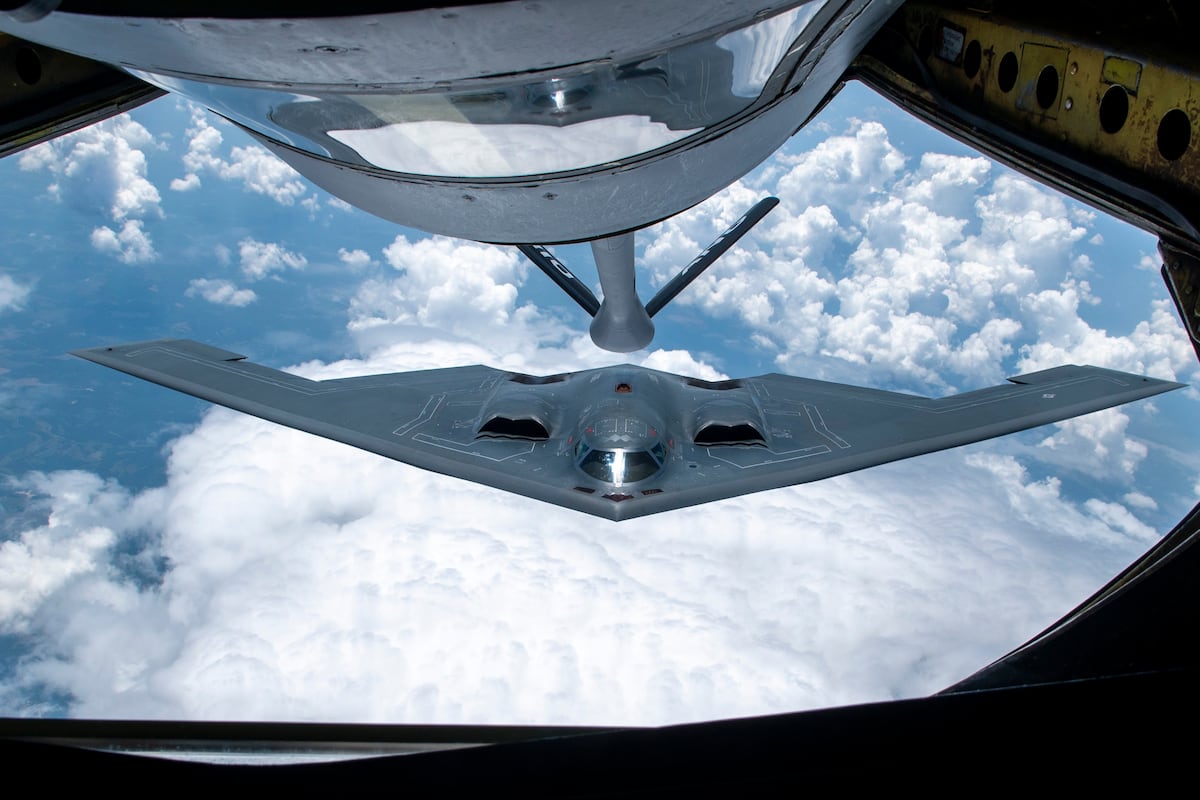
Taking off from the U.S. heartland, B-2 stealth bombers, aided by refueling tankers and fighter jets, delivered a total of 420,000 pounds of explosives.
It was an unprecedented attack years in the making, with some last-minute misdirection meant to give the operation a powerful element of surprise.
U.S. pilots dropped 30,000-pound bombs early Sunday on two key underground uranium enrichment plants in Iran, delivering what American military leaders believe is a knockout blow to a nuclear program that Israel views as an existential threat and has been pummeling for more than a week .
American sailors bolstered the surprise mission by firing dozens of cruise missiles from a submarine toward at least one other site.
Dubbed Operation Midnight Hammer, U.S. officials say the plan was characterized by a “precision strike” that “devastated the Iranian nuclear program,” even as they acknowledged an assessment was ongoing.
For its part, Iran denied that any significant damage had been done, and the Islamic Republic pledged to retaliate.
Taking off from the U.S. heartland, B-2 stealth bombers delivered a total of 420,000 pounds of explosives, aided by an armada of refueling tankers and fighter jets — some of which launched their own weapons.
U.S. officials said Iran neither detected the inbound fusillade, nor mustered a shot at the stealthy American jets.
The operation relied on a series of deceptive tactics and decoys to maintain secrecy, U.S. officials said hours after the attack, which was preceded by nine days of Israeli attacks that debilitated Iran’s military leadership and air defenses.
A 509th Maintenance Group airman prepares a B-2 Spirit stealth bomber for takeoff from Whiteman Air Force Base, Missouri, 2021. (A1C Whitney Erhart/Air National Guard)
Even before the planes took off, elements of misdirection were already in play. After setting parts of the plan in motion, Trump publicly announced Thursday that he’d make a decision within two weeks on whether to strike Iran — ostensibly to allow additional time for negotiations, but in actuality masking the impending attack.
One group of B-2 stealth bombers traveled west from Missouri on Saturday as decoys, drawing the attention of amateur plane spotters, government officials and some media as they headed toward a U.S. air base in the Pacific.
At the same time, seven other B-2s carrying two “bunker buster” bombs apiece flew eastward, keeping communications to a minimum so as not to draw any attention.
Air Force Gen. Dan Caine, the chairman of the Joint Chiefs of Staff, said at Sunday’s briefing that it was all “part of a plan to maintain tactical surprise” and that only “an extremely small number of planners and key leaders” knew about it in Washington and Florida, where U.S. Central Command is based.
After 18 hours of furtive flying that required aerial refueling, the armed B-2 Spirit bombers, each with two crew members, arrived on time and without detection in the Eastern Mediterranean, from where they launched their attack runs. Before crossing into Iran, the B-2s were escorted by stealthy U.S. fighter jets and reconnaissance aircraft.
Petnagon officials released this graphic timeline on June 22, 2025, regarding the military operation against Iranian nuclear sites hours earlier. (Defense Department)
A graphic released by the Pentagon showed the flight route as passing over Lebanon, Syria and Iraq. It was unclear whether those countries were notified of the U.S. overflight in advance.
Most U.S. lawmakers were also kept in the dark, with some Republicans saying they were provided a brief heads-up by the White House before the strike.
“Our B-2s went in and out and back without the world knowing at all,” Secretary of Defense Pete Hegseth told reporters Sunday.
About an hour before the B-2s entered Iran, Caine said that a U.S. submarine in the region launched more than two dozen Tomahawk cruise missiles against key targets, including a site in Isfahan where uranium is prepared for enrichment.
As the U.S. bombers approached their targets, they watched out for Iranian fighter jets and surface-to-air missiles, but encountered none.
At 6:40 p.m. in Washington and 2:10 a.m. in Tehran, the first B-2 bomber dropped its pair of GBU-57 massive ordnance penetrators on the deeply buried Fordo uranium enrichment plant.
It was the first time these so-called “bunker busters” had ever been used in combat. Each 30,000-pound bomb is designed to burrow into the ground before detonating a massive warhead.
Airmen look at a GBU-57, or the Massive Ordnance Penetrator bomb, at Whiteman Air Base in Missouri, 2023. (U.S. Air Force via AP)
The Fordo site received the bulk of the bombardment, though a couple of the enormous bombs were also dropped on a uranium enrichment site at Natanz.
The U.S. bombs fell for about half an hour, with cruise missiles fired from submarines being the last American weapons to hit their targets, which included a third nuclear site at Isfahan, Caine said.
Both Iran and the U.N. nuclear watchdog said there were no immediate signs of radioactive contamination around the sites.
The mission included:
75 precision-guided weapons: these included 14 GBU-57 “bunker buster” bombs deployed by the seven B-2 Spirit stealth bombers, and more than two-dozen Tomahawk cruise missiles launched from a U.S. submarine.
125 aircraft, including the B-2 bombers, fighter jets and refueling planes.
Hegseth said Sunday that “our boys in those bombers are on their way home right now,” but a U.S. official said one woman was among those piloting the B-2 bombers. The official spoke on the condition of anonymity because they were not authorized to speak about the mission publicly.
Caine said the use of the bunker-buster bombs made the mission historic, as did other elements.
“This was the largest B-2 operational strike in U.S. history, and the second longest B-2 mission ever flown, exceeded only by those in the days following 9/11,” he told reporters Sunday.
这是一次史无前例的袭击,筹划多年,并在最后一刻采取了一些误导措施,旨在给行动带来强大的出其不意的效果。
周日清晨,美国飞行员向伊朗两座重要的地下铀浓缩工厂投掷了 30,000 磅炸弹,美国军方领导人认为这是对伊朗核计划的致命一击。以色列将伊朗的核计划视为生存威胁,并已对其进行了超过一周的打击。
美国水兵从潜艇上向至少一个其他目标发射了数十枚巡航导弹,加强了这次突袭行动。
美国官员称,这项名为“午夜铁锤行动”的计划以“精确打击”为特点,“摧毁了伊朗核计划”,但他们也承认评估工作仍在进行中。
伊朗方面否认造成了任何重大损失,并誓言要进行报复。
从美国中部起飞的 B-2 隐形轰炸机共投放了 42 万磅炸药,并得到了加油机和战斗机组成的庞大机队协助——其中一些战斗机还发射了自己的武器。
美国官员表示,伊朗既没有察觉到来袭的炮火,也没有向美国隐形战机开火。
美国官员在袭击发生数小时后表示,此次行动依靠一系列欺骗性策略和诱饵来保持秘密。此前,以色列进行了长达九天的袭击,削弱了伊朗的军事领导层和防空能力。
2021年,一名隶属于第509维护大队的空军士兵正在密苏里州怀特曼空军基地为一架B-2“幽灵”隐形轰炸机起飞做准备。(空军一等兵惠特尼·埃尔哈特/空军国民警卫队)
甚至在飞机起飞之前,误导的策略就已经开始实施。在启动部分计划后,特朗普周四公开宣布,他将在两周内决定是否打击伊朗——表面上是为了给谈判争取更多时间,但实际上是为了掩盖即将到来的袭击。
周六,一群 B-2 隐形轰炸机从密苏里州向西飞行,充当诱饵,吸引了业余飞机观察员、政府官员和一些媒体的注意,因为它们正朝着太平洋上的一个美国空军基地飞去。
与此同时,另有七架 B-2 轰炸机每架携带两枚“掩体破坏者”炸弹向东飞行,尽量减少通讯,以免引起注意。
参谋长联席会议主席、空军上将丹·凯恩在周日的简报会上表示,这一切都是“保持战术突袭计划的一部分”,而且只有“极少数策划人员和关键领导人”知道此事,他们身处华盛顿和佛罗里达州,美国中央司令部就设在那里。
经过18个小时的秘密飞行(期间需要空中加油),这些武装的B-2“幽灵”隐形轰炸机,每架配备两名机组人员,准时且未被察觉地抵达东地中海,并从那里发起攻击。在飞越伊朗领空之前,这些B-2轰炸机由美国隐形战斗机和侦察机护航。
美国国防部官员于2025年6月22日发布了这张图表时间线,内容涉及数小时前针对伊朗核设施的军事行动。(美国国防部)
五角大楼公布的一张图表显示,飞行路线将经过黎巴嫩、叙利亚和伊拉克。目前尚不清楚这些国家是否事先被告知美国将进行飞越。
大多数美国议员也被蒙在鼓里,一些共和党人表示,白宫在罢工前只给了他们一个简短的通知。
“我们的 B-2 轰炸机在全世界完全不知情的情况下往返穿梭,”国防部长皮特·赫格塞斯周日告诉记者。
在 B-2 轰炸机进入伊朗前大约一个小时,凯恩说,该地区的一艘美国潜艇向关键目标发射了二十多枚战斧巡航导弹,其中包括伊斯法罕的一个铀浓缩准备地点。
当美国轰炸机接近目标时,他们警惕地观察着伊朗战斗机和地对空导弹,但没有遇到任何敌机。
华盛顿时间下午 6 点 40 分,德黑兰时间凌晨 2 点 10 分,第一架 B-2 轰炸机向深埋地下的福尔多铀浓缩厂投下了两枚 GBU-57 大型穿透弹。
这是这些所谓的“掩体炸弹”首次在实战中使用。每枚重达3万磅的炸弹都设计成先钻入地下,然后再引爆威力巨大的弹头。
2023年,在密苏里州怀特曼空军基地,空军人员正在查看GBU-57型巨型穿透炸弹。(美国空军供图,美联社发布)
福尔多基地遭受了大部分轰炸,不过也有几枚巨大的炸弹落在了纳坦兹的铀浓缩基地。
凯恩说,美军的炸弹持续落下约半小时,最后由潜艇发射的巡航导弹击中了目标,其中包括伊斯法罕的第三个核设施。
伊朗和联合国核监督机构均表示,这些地点周围没有立即出现放射性污染迹象。
任务内容包括:
75 件精确制导武器:其中包括 7 架 B-2“幽灵”隐形轰炸机投放的 14 枚 GBU-57“掩体破坏者”炸弹,以及从美国潜艇发射的 24 枚“战斧”巡航导弹。
125架飞机,包括B-2轰炸机、战斗机和加油机。
赫格塞斯周日表示,“我们驾驶轰炸机的飞行员们现在正在回家的路上”,但一位美国官员称,驾驶B-2轰炸机的飞行员中有一名女性。这位官员要求匿名,因为他/她未被授权公开谈论此次任务。
凯恩表示,使用掩体炸弹使这次任务具有历史意义,其他因素也是如此。
“这是美国历史上规模最大的 B-2 作战打击行动,也是 B-2 执行过的第二长任务,仅次于 9/11 事件后几天的那些任务,”他周日告诉记者。