South Korea’s new leaders seek continuity on key defense issues韩国新领导人寻求在关键国防问题上保持政策的连续性。
Washington is reportedly reassessing defense cost-sharing agreements with South Korea, and Trump may want significant increases to Seoul’s contributions.
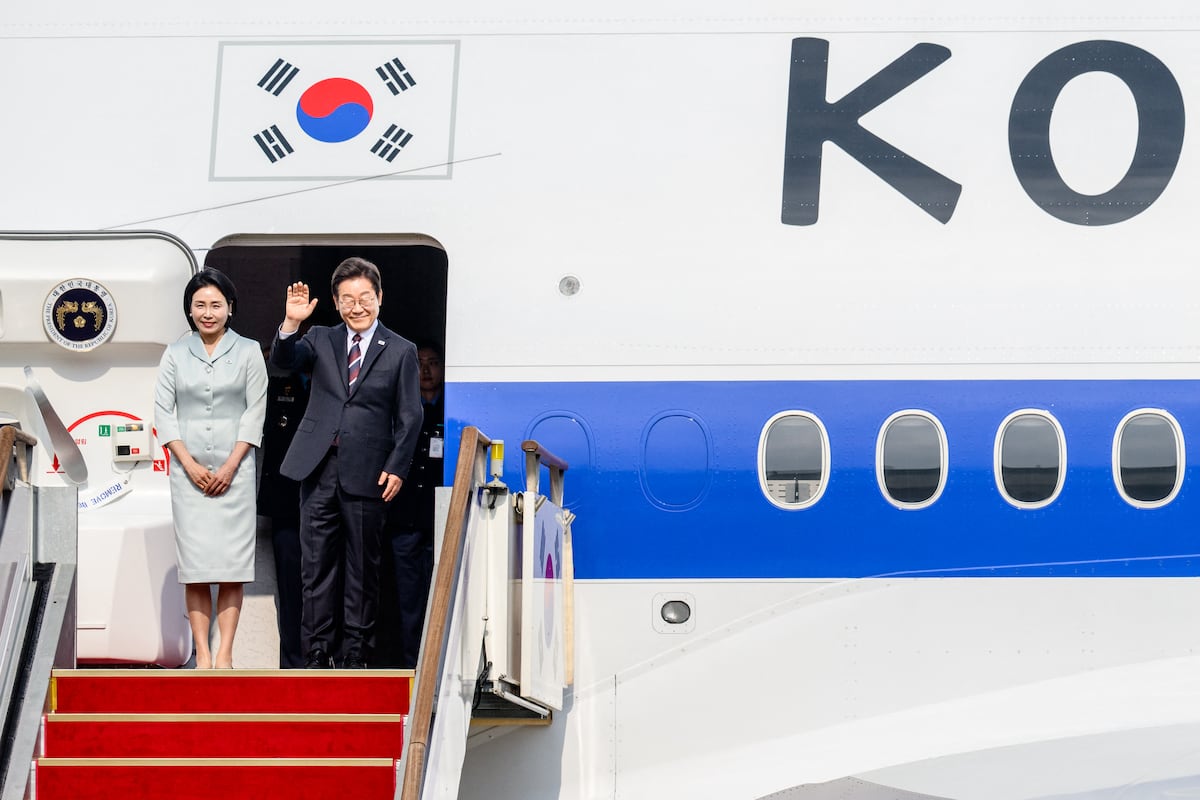
MANILA, Philippines — After winning this month’s snap elections, South Korea’s President Lee Jae-myung appointed lawmaker Ahn Gyu-back as defense minister in a role historically held by retired military generals.
Ahn has been a lawmaker since 2008 and leads the parliamentary special committee that investigates former President Yoon Suk Yeol, whose brief December declaration of martial law led to his arrest and subsequent impeachment.
Ahn’s appointment also marks a significant shift in the civilian-military balance in the South, analyst Kim Ju Hyung, President of Seoul-based Security Management Institute, told Defense News. Kim specializes in U.S.-Korea relations and SMI is a think tank affiliated with the National Assembly.
Ahn has “deep legislative and defense oversight experience,” says Kim, and being chosen to lead the ministry of defense means pushing reforms and transparency. It also signals “continuity and reliability” to Washington since Ahn is “not anti-alliance.”
“Rather, he’s a reform-minded moderate who may emphasize technological upgrades and alliance coordination without being overly deferential,” Kim said.
Lee’s recent victory raised uncertainties over the continuity of South Korea’s security and defense policies. Former President Yoon has taken a hardline stance against the North while Lee’s Democratic Party pushed for peaceful unification talks.
As a lawmaker, Lee lamented the breakdown of negotiations with North Korea, openly criticized security ties with the U.S. and Japan, and panned increases in cost-sharing agreements that sustained the U.S. Forces Korea footprint on the peninsula.
Despite these, Lee will keep existing defense and security mechanisms, including the landmark Camp David trilateral summit talks and the nuclear-sharing pact with the U.S., Kim said.
“Initially, Lee will very likely pursue a status quo strategy since he needs to reassure South Korean conservatives,” Kim said. North Korea remains “antagonistic” even with Lee in office, he added.
This month, North Korea relaunched a 5,000-ton destroyer named Kang Kon, the first in a series of warships Pyongyang plans to build and deploy in the Pacific. The North also fired 10 rounds of rockets into the Yellow Sea last week after South Korea held air drills with the U.S. and Japan.
“Any major departures from Yoon-era security policy would be politically risky at this stage, especially without clear shifts in North Korea’s behavior,” Kim said.
This means Lee will keep the three-axis defense system, a comprehensive chain of counteroffensive military operations against a North Korean first strike.
He is also expected to maintain real-time data sharing and missile defense coordination with the U.S. and Japan despite Seoul’s plans to renew economic ties with Beijing and revive peaceful unification talks, Kim said.
While Lee will not attend the NATO Summit this week, he is expected to meet with President Donald Trump to discuss tariffs, a negotiation that may also include defense spending and the cost of keeping 28,000 American troops in the Korean peninsula.
Washington has pushed allies to double defense spending to address threats from China, Russia and North Korea. South Korea already spends 2.7% of its GDP on defense — and the increase will be a fiscal burden, Kim said.
“Domestically, a leap to 5% would be politically contentious and fiscally difficult,” Kim said.
“The Lee administration may rhetorically align with the broader rationale — especially given the dual contingency threat from China and North Korea — but actual movement will be cautious.”
Washington is also reportedly reassessing defense cost-sharing agreements with South Korea, and Trump wants significant increases to Seoul’s contributions under the Special Measures Agreement.
In 2024, Seoul and Washington sealed the deal for a new five-year term with payment on the first year amounting to $1.41 billion (1.51 trillion won) beginning in 2026.
Lee’s Democratic Party has voiced concerns over the South’s overdependence on the United States, including the presence of American troops there. Lee will likely follow this playbook and approach the negotiations with caution, Kim said.
The two countries could also open renegotiations, Kim said, but Seoul should handle it with deft, quiet diplomacy since it will likely negotiate to reduce costs or restructure payment terms.
“Although they haven’t publicly called for a formal revision of the most recent SMA, a change in administration could open the door to soft renegotiation — such as seeking more flexibility in implementation, redirecting funds toward mutually beneficial projects like joint AI or space-based capabilities, or slowing the pace of ROK [Republic of Korea]’s financial increases,” Kim said.
Seoul, however, should also reframe the agreement as a “joint strategic investment” rather than burden-sharing, and include defense exports, overseas deployments, and tech and infrastructure contributions in the negotiations, Kim said.
“The Lee administration should adopt a dual-track strategy: proactively demonstrate Seoul’s value as a high-capability security partner in the Indo-Pacific, while quietly negotiating terms that avoid abrupt shifts or public confrontation,” he said.
Leilani Chavez is an Asia correspondent for Defense News. Her reporting expertise is in East Asian politics, development projects, environmental issues and security.
菲律宾马尼拉——韩国总统李在明在本月提前举行的大选中获胜后,任命国会议员安圭培为国防部长,这一职位历史上一直由退役将领担任。
安自 2008 年起担任国会议员,并领导国会特别委员会调查前总统尹锡烈。尹锡烈于 12 月短暂宣布戒严令,导致他被捕并随后被弹劾。
首尔安全管理研究所所长金柱亨(Kim Ju Hyung)告诉《防务新闻》,安的任命也标志着韩国军民力量平衡的重大转变。金柱亨专攻美韩关系,安全管理研究所是隶属于韩国国会的智库。
金表示,安拥有“深厚的立法和国防监督经验”,被选为国防部长意味着推动改革和提高透明度。由于安“不反对同盟”,这也向华盛顿传递了“连续性和可靠性”的信号。
“相反,他是一位思想温和、具有改革意识的领导人,可能会强调技术升级和联盟协调,但不会过分谦让,”金说。
李在镕近期胜选,引发了人们对韩国安全和国防政策延续性的担忧。前总统尹锡悦对朝鲜采取强硬立场,而李在镕所在的共同民主党则力主和平统一谈判。
作为一名国会议员,李对与朝鲜的谈判破裂表示遗憾,公开批评与美国和日本的安全关系,并抨击增加成本分摊协议,从而维持了驻韩美军在朝鲜半岛的存在。
金表示,尽管如此,李明博仍将保留现有的国防和安全机制,包括具有里程碑意义的戴维营三方峰会和与美国签署的核共享协议。
金表示:“李在镕初期很可能会采取维持现状的策略,因为他需要安抚韩国保守派人士。”他还补充说,即使李在镕执政,朝鲜仍然保持“敌对”态度。
本月,朝鲜重新下水了一艘名为“康坤”号的5000吨级驱逐舰,这是平壤计划在太平洋建造和部署的一系列军舰中的第一艘。上周,在韩国与美国和日本举行联合空中演习后,朝鲜还向黄海发射了10枚火箭弹。
金说:“在现阶段,任何对尹锡悦时代安全政策的重大偏离都将在政治上带来风险,尤其是在朝鲜行为没有明显转变的情况下。”
这意味着李将保留三轴防御体系,这是一套针对朝鲜先发制人打击的全面反击军事行动体系。
金正恩表示,尽管首尔计划恢复与北京的经济联系并重启和平统一谈判,但他仍将与美国和日本保持实时数据共享和导弹防御协调。
虽然李将不会出席本周的北约峰会,但他预计将与唐纳德·特朗普总统会面,讨论关税问题。此次谈判可能还会涉及国防开支以及在朝鲜半岛维持 28,000 名美军的成本。
为了应对来自中国、俄罗斯和朝鲜的威胁,华盛顿一直敦促盟友将国防开支增加一倍。金正恩表示,韩国目前的国防开支已占其国内生产总值的2.7%,增加国防开支将加重其财政负担。
金说:“在国内,将税率提高到5%在政治上会引发争议,在财政上也会很困难。”
“李政府在言辞上或许会与更广泛的理由保持一致——尤其是在面临来自中国和朝鲜的双重威胁的情况下——但实际行动将会谨慎。”
据报道,华盛顿方面也在重新评估与韩国的防务费用分摊协议,特朗普希望大幅增加首尔根据《特别措施协定》所作的贡献。
2024 年,首尔和华盛顿敲定了一项新的五年期协议,从 2026 年开始,第一年的付款额为 14.1 亿美元(1.51 万亿韩元)。
金表示,李明博所属的民主党曾对韩国过度依赖美国表示担忧,包括美军驻扎在韩国的问题。李明博很可能会沿用这一策略,谨慎地进行谈判。
金表示,两国也可能重新展开谈判,但首尔方面应该以巧妙、低调的外交手段处理此事,因为首尔方面可能会就降低成本或重组付款条件进行谈判。
金表示:“虽然他们没有公开呼吁正式修订最新的《南海军协定》,但政府换届可能会为软性重新谈判打开大门——例如寻求在执行方面更大的灵活性,将资金重新用于互惠互利的项目,如联合人工智能或天基能力,或放缓韩国财政增长的速度。”
金表示,首尔方面还应该将该协议重新定义为“联合战略投资”,而不是负担分担,并将国防出口、海外部署以及技术和基础设施贡献纳入谈判范围。
他说:“李政府应该采取双轨战略:一方面积极展现首尔作为印太地区高能力安全伙伴的价值,另一方面悄悄谈判达成避免突然转变或公开对抗的条款。”
莱拉尼·查韦斯是《防务新闻》的亚洲记者。她的报道专长是东亚政治、发展项目、环境问题和安全。