First Look At Hypersonic Boost-Glide Vehicle Just Tested By South Korea韩国测试高超音速助推滑翔飞行器首曝实物图
There is something of a budding, but murky hypersonic arms race emerging on the Korean Peninsula,
By Joseph Trevithick
Published Oct 9, 2026 2:12 PM EDT
The South Korean government has released images from its first successful test of a domestically developed hypersonic boost-glide vehicle. This includes shots of the vehicle impacting in the water at the end of its flight. A weapon of this kind would give South Korea a significant new way to hold targets in North Korea at risk amid an ever-deepening arms race on the Peninsula .
South Korea’s Presidential Office , more commonly referred to as the Cheong Wa Dae or the Blue House, announced the test in a Korean-language press release yesterday . The Blue House initially released a video of President Lee Jae Myung and others observing the test from a conference room at the Anheung Proving Ground, which is located in South Chungcheong Province on the country’s western coast. South Korea’s Agency for Defense Development (ADD) manages testing at Anheung. A series of still images from the test itself was subsequently posted on the Blue House’s website.
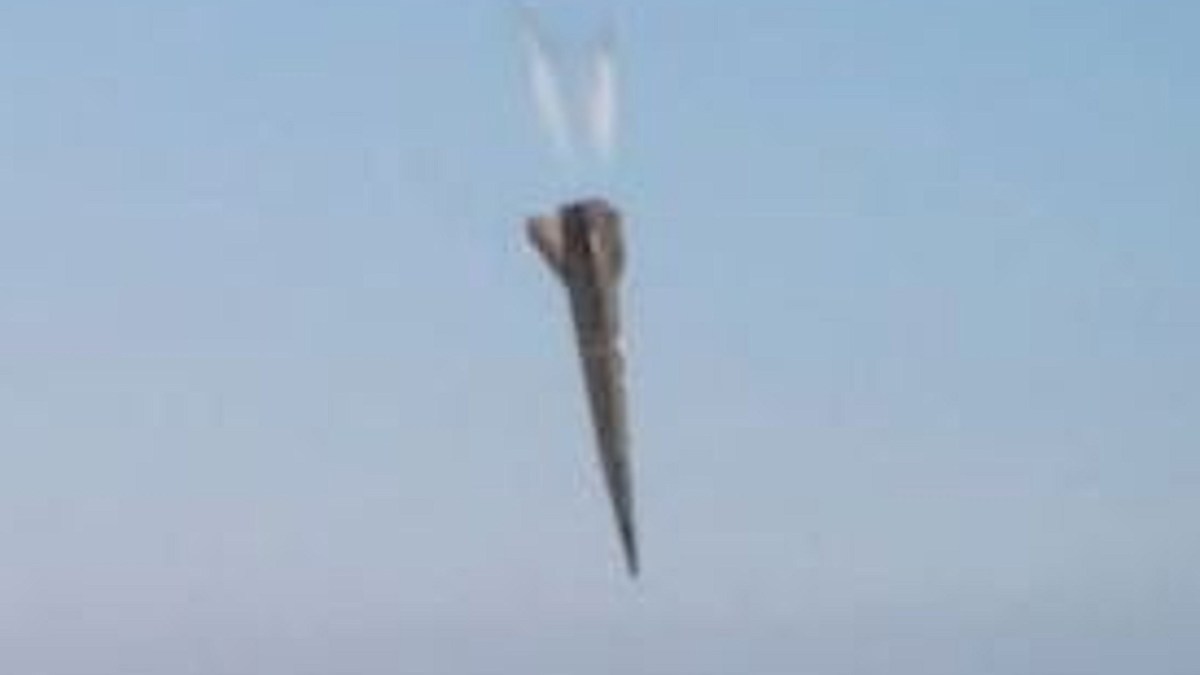
A trio of pictures showing South Korea’s new hypersonic boost-glide vehicle impacting the water during the test yesterday. The Blue House
Another view of the impact at the end of yesterday’s South Korea hypersonic test as seen through what looks to be an electro-optical video camera on an aircraft. The Blue House
Included in the still image gallery are shots showing the launch of the missile, a formal name for which has not yet been disclosed, from a wheeled transport-erector-launcher on a platform sitting just off the coast. The low resolution of the pictures makes it hard to tell whether the missile and/or the TEL are of an existing South Korean design or are based on one. We will come back to this later on.
A picture showing the launch of the hypersonic weapon from the platform off the coast. The Blue House
Another picture from the test showing the missile after launch. The Blue House
As mentioned, there are also pictures of the hypersonic boost-glide vehicle hitting the water. At first glance, the vehicle looks to have a broadly conical design with stabilizing fins at the base. However, at least one of the fins looks to be truncated. Closer inspection of the available images shows further indicators that might point to it actually having a more wedge-shaped design with a distinct top and bottom, though it is still not definitely clear given the low resolution. Conical boost-glide vehicles are generally understood to be easier to design, relatively speaking , than wedge-shaped ones. Historically, hypersonic boost-glide vehicles of any kind have proven to be technically complex and challenging to turn into viable operational weapons, even by countries with extensive past experience with their development .
Another close-up look at the hypersonic boost-glide vehicle test yesterday, showing what looks to be a truncated fin on one side. The Blue House
“This test launch was conducted to verify, for the first time, the vehicle’s core technologies in a hypersonic flight environment: the performance of ultra-high-temperature heat-resistant materials, guidance and control capabilities, and the ability to perform irregular flight maneuvers at low altitudes,” the Blue House said in its release yesterday, per a machine translation of the Korean text. “The HGV [hypersonic boost-glide vehicle] successfully separated after ascending to the target altitude and executed its planned flight path within the hypersonic environment without any issues.”
With all this in mind, the fact that the vehicle just remained intact through to impact is noteworthy. At the time of writing, South Korean authorities do not appear to have disclosed more specific details about the test, including how far the boost-glide vehicle traveled before hitting the water or what peak speed it reached. Important questions also remain about how the vehicle is guided during the mid-course and terminal phases of flight, challenges that do not appear to have been addressed by this particular test.
In general, unpowered hypersonic boost-glide vehicles need to be brought first to an optimal altitude and speed. This is typically achieved using a sufficiently sized rocket booster, with existing ballistic missile designs often serving as a starting point.
Once released from the booster, a boost-glide vehicle flies along a relatively shallow flight path within the Earth’s atmosphere. The vehicle is able to maneuver along the way, sometimes erratically, while traveling at hypersonic speeds, generally defined as anything about Mach 5.
A graphic showing, in a very rudimentary way, the differences in trajectories between a traditional ballistic missile, a hypersonic boost-glide vehicle, an aero or quasi-ballistic missile, and an air-breathing hypersonic cruise missile. GAO
All of this sets hypersonic weapons of this kind apart from traditional ballistic missiles, even ones with advanced maneuverability capabilities , which all follow a broadly arcing trajectory to their targets. The combination of speed, flight trajectory, and maneuverability offered by hypersonic boost-glide vehicles creates distinct challenges for opponents. They are hard to spot and track, let alone attempt to intercept, and there is less time for defenders to react overall. This ability to penetrate enemy air defenses and cover ground rapidly makes these weapons particularly attractive for strikes on very high-value and time-sensitive targets.
“The HGV [hypersonic boost-glide vehicle] is a ‘key strategic asset capable of changing the game on the battlefield,’ as its unpredictable flight trajectory and overwhelming speed allow it to launch surprise strikes against key strategic targets during contingencies,” the Blue House’s release explicitly noted, again according to a machine translation.
With all this in mind, South Korea does have an entire family of domestically-produced ground-launched ballistic missiles that could be suitable starting places for launching an unpowered hypersonic boost-glide vehicle. President Lee was notably shown a TEL for the country’s newest Hyunmoo-5 ballistic missile at Anheung yesterday, though no explicit connection has been drawn between that weapon and the hypersonic test. The Hyunmoo-5 is itself still a relatively new development, having only entered service around the end of last year.
President Lee Jae Myung and others inspect a Hyunmoo-5 TEL on October 8, 2026. The Blue House
When it comes to new South Korean arms developments, the Hyunmoo-5, which entered service around the end of last year , has been and continues to be a major point of discussion by itself. It is officially categorized as a short-range design, despite how big it is (35 tons gross weight), which is said to be due largely to the equally substantial size of its warhead (17,000 pounds). Past reports have raised the possibility that it could be capable of flying out to intermediate ranges if the warhead weight were reduced. Short-range ballistic missiles are defined as ones with ranges between 190 and 620 miles (300 and 1,000 kilometers), while intermediate-range ballistic missiles can hit targets out to between 1,864 and 3,418 miles (3,000 to 5,500 kilometers). Medium-range ballistic missiles (MRBM) fall in between these two categories.
A Hyunmoo-5 transporter-erector-launcher seen during a parade in 2024. Kim Jae-Hwan/SOPA Images/LightRocket via Getty Images
With its massive unitary warhead, the Hyunmoo-5 already gives South Korea an important new way to hold deeply buried and otherwise hardened targets in North Korea at risk. This fits in directly with the country’s broader Korea Massive Punishment and Retaliation (KMPR) policy, as TWZ has previously written :
“ While the Hyunmoo-5 has been widely reported as a future pillar of the KMPR, its specific ability to penetrate deeply buried bunkers, such as those used by the North Korean leadership, the same functions mean that it can also fulfill elements of the ‘kill chain.’ In this way, it could be used as part of a pre-emptive strike, to try and knock out North Korea’s launch capability by targeting its hardened command-and-control facilities and missile storage areas. “
By virtue of the very high speeds they reach in the terminal phase of flight, hypersonic boost-glide vehicles also offer bunker-busting benefits on top of the other aforementioned advantages they bring to the table.
In addition, the hypersonic boost-glide vehicle test reflects a broader arms race that has been expanding in scale and scope for years now. South Korea is also developing an air-breathing hypersonic cruise missile , seen in the composite image below, as well as new air- and sea-launched ballistic missiles , the latter of which will be loaded on new surface warships and submarines.
Though there are always questions about the actual maturity and viability of the designs, North Korea continues to churn out its own new missile developments. This includes two separate test launches of purported new hypersonic designs just in recent weeks . Tit-for-tat missile launches are not entirely uncommon on the peninsula, but there are limits to how quickly a test like the one South Korea conducted yesterday involving an emerging technology can reasonably be staged.
A picture of one of two new purported hypersonic missiles North Korea says it has tested in the past few weeks. North Korean State Media
Friction between the North and South has been at a particular high point, in general, following an incident on September 21, in which three South Korean troops were injured along the Demilitarized Zone (DMZ). South Korea’s Joint Chiefs of Staff (JCS), as well as the United Nations Command (UNC) on the Peninsula, have said a North Korean landmine placed in violation of the Armistice Agreement was to blame. South Korean authorities have demanded an apology and raised the prospect of some form of action in response, though President Lee has more recently sought to downplay the situation . The government in North Korea has denied the accusations and threatened an “immediate and powerful counteraction” should South Korea seek to retaliate.
An operational hypersonic boost-glide vehicle capability would also expand South Korea’s capacity to challenge opponents regionally beyond North Korea. Though the regime in Pyongyang represents the most proximate national security threat to the country, China and Russia have also been growing points of concern for South Korean authorities in recent years.
“We must secure our national security through our own strength,” President Lee said after yesterday’s hypersonic test, per the Blue House’s release. “The government must not rest on today’s success but must further advance the technology so that the hypersonic glide vehicle can establish itself as a robust strategic asset safeguarding our future security.”
South Korea’s President Lee Jae Myung, at center, and others applaud after yesterday’s test. The Blue House
South Korea’s very public test of its new hypersonic boost-glide vehicle underscores the country’s still-expanding efforts to broaden its options for striking even the best-defended targets in North Korea, as well as projecting power elsewhere regionally. At the same time, it remains to be seen when the South Korean may field a real operational capability in this regard.
Contact the author: joe@twz.com
Comments couldn’t be loaded. Please refresh the page.
作者:约瑟夫·特雷维西克
发布于美国东部时间2026年10月9日下午2:12
韩国政府公布了其首次成功试射国产高超音速助推滑翔飞行器的图片,其中包括飞行器飞行结束后落入水中的画面。在朝鲜半岛军备竞赛日益加剧的背景下,这种武器将为韩国提供一种重要的全新手段,以威胁朝鲜境内的目标。
韩国总统府(通常被称为青瓦台或蓝宫)昨日以韩语新闻稿宣布了此次核试验。青瓦台最初发布了一段视频,视频中李在明总统及其他官员在位于韩国西海岸忠清南道安兴试验场的会议室观摩了此次试验。韩国国防发展局(ADD)负责管理安兴试验场的核试验。随后,青瓦台网站发布了一系列试验现场照片。
昨天,韩国新型高超音速助推滑翔飞行器在测试中入水,以下三张照片展示了这一幕。(图片来源:青瓦台)
这是昨天韩国高超音速试验结束时,通过疑似飞机上的光电摄像机拍摄到的另一幅撞击画面。(青瓦台)
静态图片库中包含一些导弹发射的照片,该导弹的正式名称尚未公布。导弹从停放在近海平台上的轮式运输起竖发射车上发射升空。由于图片分辨率较低,难以判断导弹和/或运输起竖发射车是韩国现有的设计,还是基于现有设计改进而来。我们稍后会对此进行探讨。
一张照片显示了从近海平台发射高超音速武器的场景。(青瓦台)
另一张测试照片,显示了导弹发射后的状态。(青瓦台)
如前所述,还有高超音速助推滑翔飞行器入水的照片。乍一看,该飞行器似乎呈圆锥形,底部带有稳定翼。然而,至少有一个稳定翼看起来被截断了。仔细观察现有图像,可以发现更多迹象表明它实际上可能呈楔形,具有明显的顶部和底部,但由于分辨率较低,这一点仍然无法完全确定。一般来说,圆锥形助推滑翔飞行器的设计相对比楔形飞行器更容易。历史上,任何类型的高超音速助推滑翔飞行器都被证明在技术上都非常复杂,即使是那些拥有丰富研发经验的国家,也很难将其转化为可行的作战武器。
昨天拍摄的高超音速助推滑翔飞行器试验的另一张近照显示,飞行器一侧似乎有一个截断的尾翼。(青瓦台)
“此次试射旨在首次验证该飞行器在超音速飞行环境下的核心技术:超高温耐热材料的性能、制导与控制能力以及低空不规则飞行机动能力,”青瓦台昨日发布的新闻稿(韩文为机器翻译)称。“高超音速助推滑翔飞行器在上升到目标高度后成功分离,并在超音速环境下按计划飞行,未出现任何问题。”
考虑到所有这些因素,该飞行器在撞击前保持完整这一事实令人瞩目。截至发稿时,韩国当局似乎尚未披露有关此次测试的更多具体细节,包括助推滑翔飞行器在落水前飞行了多远,以及其达到的最高速度。此外,关于飞行器在飞行中段和末段的制导方式也存在一些重要疑问,而这些挑战似乎并未在此次测试中得到解决。
一般来说,无动力高超音速助推滑翔飞行器需要先达到最佳高度和速度。这通常通过足够大的火箭助推器来实现,而现有的弹道导弹设计往往可以作为参考。
从助推器脱离后,助推滑翔飞行器会沿着地球大气层内相对较浅的飞行路径飞行。飞行器能够在飞行过程中进行机动,有时会出现不规则的机动,同时以超音速飞行,超音速通常定义为接近5马赫的速度。
一张简略的图表,展示了传统弹道导弹、高超音速助推滑翔飞行器、气动或准弹道导弹以及吸气式高超音速巡航导弹的飞行轨迹差异。(美国政府问责局)
所有这些都使这类高超音速武器与传统弹道导弹(即使是那些拥有先进机动能力的弹道导弹)截然不同,后者通常沿弧形轨迹飞行至目标。高超音速助推滑翔飞行器兼具速度、飞行轨迹和机动性,给对手带来了独特的挑战。它们难以被发现和追踪,更遑论拦截,防御方的反应时间也更短。这种突破敌方防空系统并快速覆盖大片区域的能力,使得这类武器在打击高价值且时间紧迫的目标时极具吸引力。
根据机器翻译,青瓦台发布的声明明确指出:“高超音速滑翔飞行器(HGV)是‘能够改变战场局势的关键战略资产’,因为其不可预测的飞行轨迹和压倒性的速度使其能够在突发事件中对关键战略目标发动突袭。”
考虑到以上种种因素,韩国确实拥有一系列国产陆基弹道导弹,这些导弹可以作为发射无动力高超音速助推滑翔飞行器的合适起点。值得注意的是,李明博总统昨天在安兴参观了韩国最新型玄武-5弹道导弹的发射车,尽管目前尚未明确将该武器与此次高超音速试验联系起来。玄武-5本身也是一款相对较新的导弹,于去年年底才正式服役。
2026年10月8日,李在明总统等人视察玄武-5型远程发射车。(青瓦台)
谈到韩国新型武器研发,去年底服役的玄武-5导弹一直是人们热议的焦点。尽管其体型庞大(总重35吨),官方仍将其归类为短程导弹,这主要是因为其弹头也相当巨大(重达17000磅)。此前的报道指出,如果减轻弹头重量,玄武-5或许能够达到中程射程。短程弹道导弹的射程通常介于300至1000公里(190至620英里)之间,而中程弹道导弹的射程则介于3000至5500公里(1864至3418英里)之间。中程弹道导弹(MRBM)的射程则介于两者之间。
2024年阅兵式上出现的玄武-5型运输-起竖-发射车。图片来源:Kim Jae-Hwan/SOPA Images/LightRocket via Getty Images
凭借其威力巨大的单体弹头,玄武-5导弹已经为韩国提供了一种重要的全新手段,可以对朝鲜境内深埋地下或坚固的目标构成威胁。正如TWZ此前所写,这与韩国更广泛的“朝鲜大规模惩罚与报复”(KMPR)政策直接契合:
“尽管玄武-5导弹已被广泛报道为朝鲜导弹防御系统(KMPR)未来的支柱,但其能够穿透深埋地下的掩体(例如朝鲜领导层使用的掩体)的特殊能力,意味着它也能执行‘杀伤链’中的某些环节。这样一来,它就可以作为先发制人打击的一部分,通过打击朝鲜加固的指挥控制设施和导弹储存区,来试图摧毁朝鲜的发射能力。”
由于高超音速助推滑翔飞行器在飞行末期能够达到极高的速度,因此除了上述其他优势外,它们还具有摧毁掩体的优势。
此外,高超音速助推滑翔飞行器试验也反映出近年来规模和范围不断扩大的更广泛的军备竞赛。韩国还在研发吸气式高超音速巡航导弹(如下图所示),以及新型空射和海射弹道导弹,后者将装备于新型水面舰艇和潜艇上。
尽管人们对这些设计的实际成熟度和可行性始终存有疑问,但朝鲜仍在不断研发新型导弹。仅在最近几周,朝鲜就进行了两次据称是新型高超音速导弹的试射。在朝鲜半岛,以牙还牙的导弹试射并非罕见,但像韩国昨天进行的那种涉及新兴技术的试验,其合理实施的速度是有限的。
这是朝鲜声称在过去几周内测试的两枚新型高超音速导弹之一的图片。(朝鲜官方媒体)
自9月21日发生三名韩国士兵在非军事区受伤的事件以来,朝韩之间的摩擦总体上处于高度紧张状态。韩国联合参谋本部和联合国军司令部均表示,朝鲜违反停战协定埋设的地雷是造成此次事件的原因。韩国当局要求朝鲜道歉,并暗示可能采取某种形式的报复行动,但李明博总统近期试图淡化局势。朝鲜政府否认了这些指控,并威胁称,如果韩国试图进行报复,朝鲜将采取“立即而强有力的反制措施”。
具备高超音速助推滑翔飞行器作战能力,也将提升韩国在朝鲜以外的地区挑战对手的能力。尽管平壤政权是韩国面临的最直接的国家安全威胁,但近年来,中国和俄罗斯也日益成为韩国当局关注的焦点。
据青瓦台发布的消息,李显龙总统在昨日的高超音速试验后表示:“我们必须依靠自身实力来保障国家安全。政府不能止步于今天的成功,而必须进一步推进这项技术,使高超音速滑翔飞行器成为维护未来安全的强大战略资产。”
韩国总统李在明(图中)等人对昨日的试验鼓掌。青瓦台
韩国高超音速助推滑翔飞行器公开试射,凸显了该国仍在不断扩大打击朝鲜境内防御最严密目标的手段,以及向其他地区投射力量的努力。与此同时,韩国何时才能真正具备这方面的作战能力,仍有待观察。
联系作者:joe@twz.com
评论加载失败,请刷新页面。