Germany spends $1.3 billion on missile-based short-range air defenses德国每年花费13亿美元用于导弹基短程防空系统。
Berlin's forces will get a multi-level shield against drones, missiles and low-flying aircraft, starting with the development of an IRIS-T derivative.
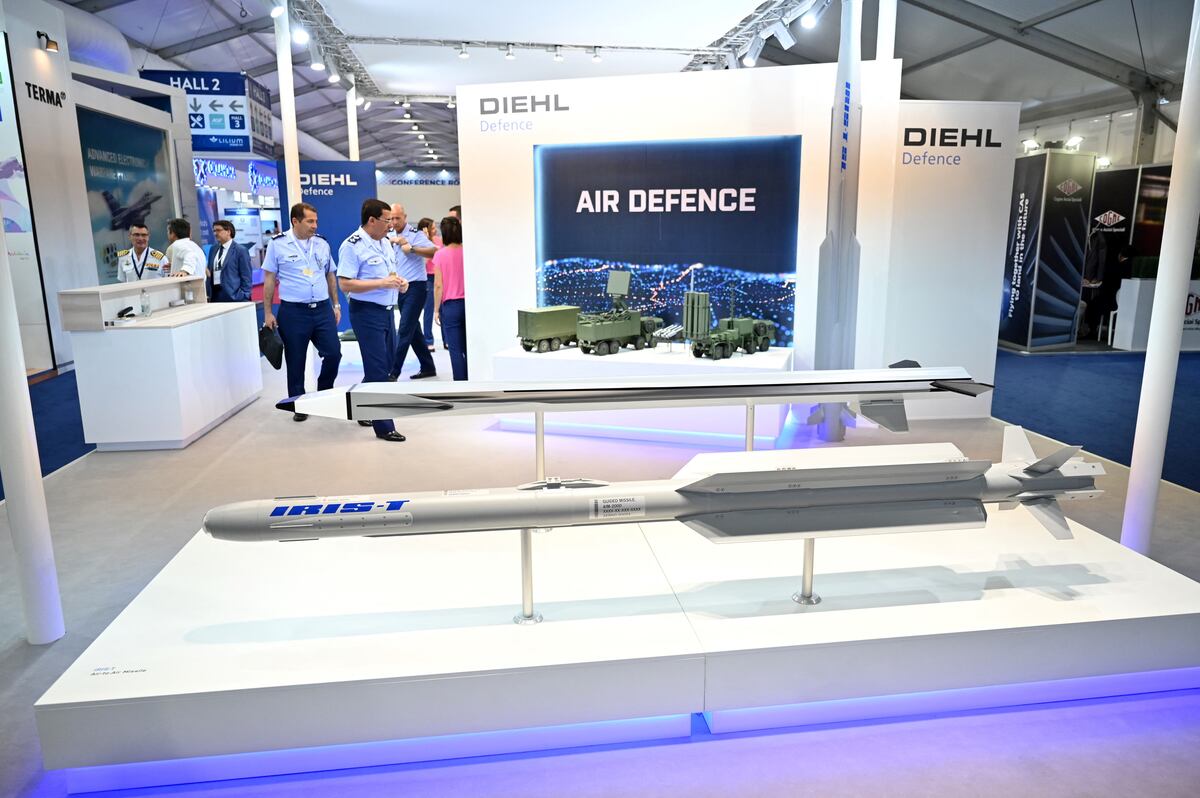
COLOGNE, Germany — German lawmakers approved a government request this week to spend €1.2 billion ($1.3 billion) on a new short-range air defense capability based on a ground-launched variant of the Diehl Defence-made IRIS-T missile .
The money will pay for the integration of short- and medium-range interceptors on the Boxer vehicle, made by Rheinmetall and Krauss-Maffei Wegmann, as well as radar and command-and-control equipment by Hensoldt. The companies announced their partnership for the program in spring 2021.
Defense officials have long lamented a capability gap in the protection of deployed forces against drones, missiles and aircraft since the retirement of key air-defense platforms like the Roland missile tank and the Gepard cannon tank in 2005 and 2010, respectively.
A prototype of the new, interceptor-based capability is set to be finished by 2028, the German ministry of defense said in a Jan. 19 statement.
Later this year, the government also plans to buy a cannon-based weapon for shooting drones and other low-flying threats out of the sky. But unlike the Boxer/IRIS-T combination, that system will come without government development costs. Rheinmetall’s 30mm-caliber Skyranger is deemed the prospective system choice, with plans for a production line pending until a contract is signed.
Also in the works, under German navy auspices, is an interception technology by way of high-powered laser beams.
In clearing the funds on Jan. 17, lawmakers on the parliamentary budget committee requested an independent cost examination. The caveat follows a report by “Der Spiegel” in December that said the cost for the entire short-range defensive package had increased from €240 million to €1.3 billion.
A defense ministry spokesman told Defense News the reported cost increase amounted to “comparing apples to oranges.” That’s because the program, with its initial financial projections, was conceived in 2018, under a drastically different geopolitical and defense-industrial picture compared with today, the ministry spokesman said.
Since that year, the 2020 conflict in Nagorno-Karabakh spooked defense officials in Berlin because of the effective use of attack drones by Azerbaijan, leading to fears Germany’s arsenal would be ill-suited for similar threats. Russia’s war in Ukraine, which began in 2022, has further highlighted how drones, employed by the thousands, have become battle deciders in modern warfare, increasing the need for sophisticated defensive systems .
As a result, there is now a higher demand for counter-drone capabilities on the global arms market, leading to manufacturers charging higher prices, the spokesman said.
Sebastian Sprenger is associate editor for Europe at Defense News, reporting on the state of the defense market in the region, and on U.S.-Europe cooperation and multi-national investments in defense and global security. Previously he served as managing editor for Defense News. He is based in Cologne, Germany.
德国科隆——本周,德国议员批准了一项政府请求,拨款 12 亿欧元(13 亿美元)用于研发一种新的短程防空能力,该能力基于迪尔防务公司生产的 IRIS-T 导弹的陆基发射版本。
这笔资金将用于在“拳击手”(Boxer)导弹防御系统上集成由莱茵金属公司和克劳斯-玛菲·韦格曼公司制造的短程和中程拦截导弹,以及由亨索尔特公司制造的雷达和指挥控制设备。这些公司于2021年春季宣布了双方在该项目上的合作关系。
自 2005 年罗兰导弹坦克和 2010 年猎豹炮坦克等关键防空平台退役以来,国防官员长期以来一直抱怨部署部队在抵御无人机、导弹和飞机攻击方面存在能力差距。
德国国防部在1月19日的一份声明中表示,基于新型拦截器的作战能力的原型机将于2028年完成。
今年晚些时候,政府还计划采购一种火炮武器,用于击落无人机和其他低空威胁目标。但与“拳击手”/IRIS-T组合不同,该系统无需政府承担研发费用。莱茵金属公司的30毫米口径“天行者”被认为是潜在的系统选择,生产线计划将在合同签署后启动。
此外,在德国海军的支持下,一项利用高功率激光束进行拦截的技术也在研发中。
1月17日,议会预算委员会的议员们在批准拨款时,要求进行独立的成本审查。此前,《明镜周刊》去年12月报道称,整个短程防御系统的成本已从2.4亿欧元增至13亿欧元。
国防部发言人告诉《防务新闻》,报道中的成本增加无异于“拿苹果和橘子比较”。该发言人表示,这是因为该项目及其最初的财务预测是在2018年制定的,当时的地缘政治和国防工业形势与今天截然不同。
自那一年起,2020年纳戈尔诺-卡拉巴赫冲突中阿塞拜疆有效运用攻击型无人机,令柏林国防官员感到不安,他们担心德国的武器库不足以应对类似威胁。2022年爆发的俄罗斯入侵乌克兰战争进一步凸显了无人机(成千上万架无人机投入使用)在现代战争中如何成为决定胜负的关键因素,也因此更加需要先进的防御系统。
发言人表示,因此,全球武器市场对反无人机能力的需求更高,导致制造商收取更高的价格。
塞巴斯蒂安·斯普伦格是《防务新闻》欧洲版副主编,负责报道该地区的防务市场状况,以及美欧在防务和全球安全领域的合作和多国投资。此前,他曾担任《防务新闻》执行主编。他现居德国科隆。