Baltic states to bolster border security with Russia, Belarus波罗的海国家将加强与俄罗斯和白俄罗斯的边境安全
Latvia, Estonia and Lithuania are planning a network of bunkers, support points and distribution lines.
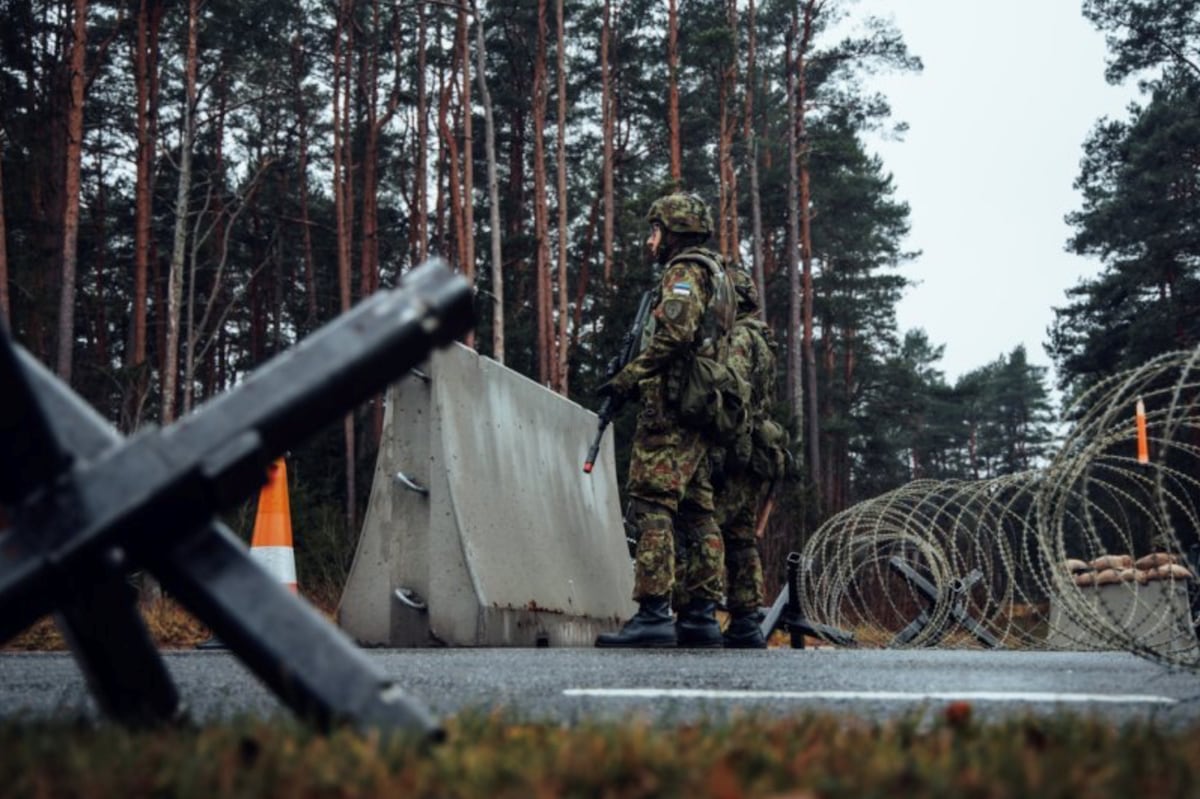
MILAN — Latvia, Estonia and Lithuania have approved the construction of defensive installations alongside their borders with Russia and Belarus, which will include a network of bunkers.
Friday’s decision to greenlight the project comes as Russia continues its invasion of nearby Ukraine , and Belarus unveils plans to create a military doctrine for the use of nuclear weapons .
“Russia’s war in Ukraine has shown that in addition to equipment, ammunition, and manpower, physical defensive installations on the border are also needed to defend Estonia from the first meter,” Estonian Defence Minster Hanno Pevkur said in a news release.
The agreement, signed by the three Baltic defense ministers, calls for the construction of “anti-mobility defensive installations” on their respective frontiers with Russia and Belarus, who are allies. The border security measures are meant to deter and counter military threats.
The timeline provided for the construction was not specific, but rather said the countries will establish the infrastructure in the coming years. It is to include in part a network of bunkers, support points and distribution lines.
The Estonian Defence Ministry further indicated in a statement that in “peacetime, no explosives, cutting wires or other obstacles are placed on the border of Estonia.”
Estonian Public Broadcasting service ERR News reported the building of the bunkers will begin in early 2025. The organization also said the cost of the defensive facilities is estimated at €60 million (U.S. $65 million), but it’s unclear if that price tag applies to just the bunkers or more.
This illustration shows plans for bunkers for border security. (Estonian Defence Ministry)
The border plan builds on commitments made by allies at the 2022 NATO Summit in Madrid, Spain, where alliance members agreed that they each must be ready to defend their territory from the onset of an attack in order to halt or repel enemy troops.
In similar fashion, Finland in 2022 began building a border barrier alongside Russia, which is to be about 124 miles.
The Latvian, Lithuanian and Estonian defense ministers also signed a letter of intent on Friday for High Mobility Artillery Rocket Systems to establish a framework for the joint use of the systems.
Elisabeth Gosselin-Malo was a Europe correspondent for Defense News. She covers a wide range of topics related to military procurement and international security, and specializes in reporting on the aviation sector. She is based in Milan, Italy.
米兰——拉脱维亚、爱沙尼亚和立陶宛已批准在其与俄罗斯和白俄罗斯接壤的边境沿线修建防御设施,其中包括一个掩体网络。
就在俄罗斯继续入侵邻国乌克兰,白俄罗斯公布制定核武器使用军事理论的计划之际,周五批准了该项目。
爱沙尼亚国防部长汉诺·佩夫库尔在一份新闻稿中表示:“俄罗斯在乌克兰的战争表明,除了装备、弹药和人力之外,还需要在边境建立实体防御设施,才能从第一米开始保卫爱沙尼亚。”
这项由波罗的海三国国防部长签署的协议要求在各自与俄罗斯和白俄罗斯(均为盟友)的边界上建设“反机动防御设施”。这些边境安全措施旨在威慑和应对军事威胁。
提供的建设时间表并未具体说明,只是表示各国将在未来几年内建成基础设施。该基础设施将包括掩体网络、支援点和物资输送管线。
爱沙尼亚国防部在一份声明中进一步指出,“和平时期,爱沙尼亚边境不会放置爆炸物、剪线器或其他障碍物。”
爱沙尼亚公共广播服务公司ERR新闻报道称,这些掩体的建设将于2025年初开始。该机构还表示,这些防御设施的成本估计为6000万欧元(6500万美元),但目前尚不清楚这个价格是否仅指掩体本身,还是还包括其他设施。
此图展示了边境安全掩体的规划方案。(爱沙尼亚国防部)
该边界计划建立在盟国在 2022 年西班牙马德里北约峰会上作出的承诺之上。在峰会上,盟国一致认为,为了阻止或击退敌军,他们必须从遭受攻击之初就做好准备保卫自己的领土。
同样,芬兰于 2022 年开始在俄罗斯边境修建隔离墙,全长约 124 英里。
拉脱维亚、立陶宛和爱沙尼亚国防部长周五还签署了一份关于高机动性火箭炮系统的意向书,旨在建立联合使用该系统的框架。
伊丽莎白·戈斯林-马洛曾任《防务新闻》欧洲通讯员。她的报道涵盖军事采购和国际安全等广泛领域,尤其擅长航空领域的报道。她常驻意大利米兰。