We Talk Suicide Drones And The Future Of Unmanned Warfare With AeroVironment’s Steve Gitlin我们与 AeroVironment 的 Steve Gitlin 探讨了自杀式无人机和无人作战的未来。
It led the small drone revolution over the modern battlefield, but many have never heard of AeroVironment or how it's quietly revolutionizing warfare.
新闻视频
Updated Jul 8, 2020 8:26 PM EDT
Even though AeroVironment’s products, or at least emulations of them, have starred in a number of Hollywood Blockbusters and extremely high-profile video games, few outside the defense community have ever really heard of the company. The reality is that AeroVironment is among the most fascinating and visionary aerospace companies on the planet. They saw the potential in lower-end drones that could be deployed by those on the front lines before pretty much anyone else did, and changed warfare as we know it as a result.
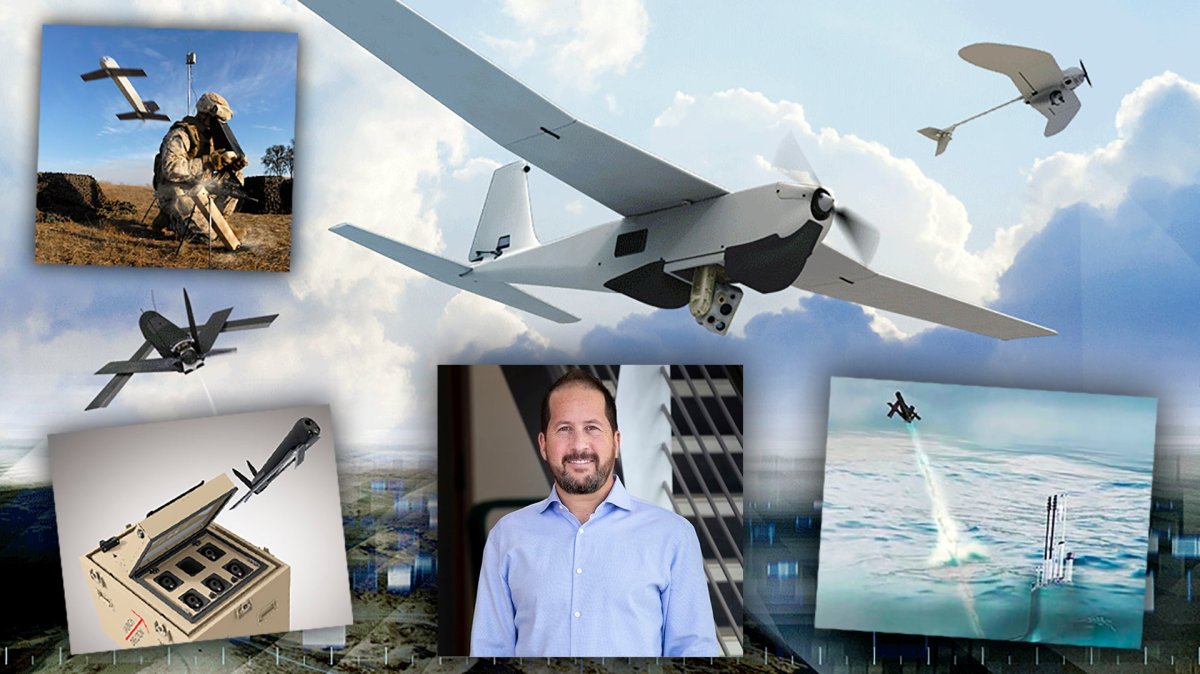
Though its hand-launched Raven reconnaissance drone is its most widely distributed product, AeroVironment’s Switchblade, which is launched like a mortar and works as both a reconnaissance drone and a deadly missile, is probably its most intriguing. Often referred to as a ‘suicide drone’ in informal parlance, in so many ways Switchblade was a harbinger of what was to come.
Now, with lower-end drones becoming consumer goods and new innovative concepts, like swarming, distributed reconnaissance, and other advanced networking architectures having begun to take center stage, AeroVironment sits with a pedigree like few if any other aerospace firms have to take full advantage of the drone revolution. This means migrating existing products to different launch platforms—like submarines, armored vehicles, and unmanned combat air vehicles—and the invention of totally new products that further break down the cost and temporal barriers of close air support, airborne reconnaissance, and even telecommunications.
With all this in mind, The War Zone talked in-depth with AeroVironment’s Chief Marketing Officer, Steve Gitlin, about the company’s storied lineage, its established game-changing product lines, and what is coming on the horizon not just for them, but for the brave new world unmanned warfare in general.
Steve Gitlin, AeroVironment Inc.
Tyler: Steve, can you just give us an idea of what your position is in the company and how you ended up with the AeroVironment?
Steve: So, I’m Chief Marketing Officer and I’m also in charge of our strategic planning at the company and I joined the company actually in 2002… I’ve kind of grown as the company has grown. When I came to the company, we were probably 200 and change people, $25 to $30 million in revenue. Last fiscal year, we were knocking on 800 people and $214 million in revenue…
The company was founded, as you probably know, by Dr. Paul MacCready , who was, among other things, known as the father of controlled human-powered flight. He designed the Gossamer Condor , the first human-controlled, human-powered airplane, that’s now in the Smithsonian collection… That led to a DNA of problem solving and innovation that has fortunately stayed in the bloodstream of the company and has powered the innovation that’s driven us to where we are today.
We really compete in three main areas, tactical unmanned aircraft systems primarily for reconnaissance and information collection, tactical missile systems for precision surgical strike, and high-altitude pseudo-satellites or high-altitude long-endurance [HALE] systems… We’re active in each one of those areas. We’ve been active really since—well, we’ve been active in tactical missile systems since the early 2000s and in tactical unmanned aircraft systems and high-altitude pseudo-satellites since the 1980s.
We believe in each of those spaces and support early adopters ensuring they are successful and then growing as the demand for solutions has grown. We’ve got a group called MacCready Works that’s working on far-reaching stuff that we believe has an opportunity to turn into meaningful new products and markets and capabilities in the future.
Tyler: Switchblade is probably your most known of your products, at least in the media, because it’s whatever you wanna call it, a missile system, or suicide drone. Can you describe the system as it exists today? What control concepts does it use? Is it all man-in-the-loop or is there any sort of movement to give it some sort of autonomy, both in terms of flying the aircraft and in the targeting and execution of those targets?
Steve: Great question. Let me begin by giving you a little bit of background of how Switchblade evolved. So, when we equipped soldiers and Marines and special forces with our tactical unmanned aircraft systems like Raven, Puma, and Wasp, Raven being the most prolific military drone in the world, they began recognizing the benefits of that on the frontline. Now, for the first time, frontline warfighters had the ability to gain situational awareness and actionable intelligence wherever they were, wherever they were, whatever the conditions at the time, and they didn’t have to depend on some other unit or some other asset to be made available to do that for them or have to send people into harm’s way to find out what’s over the next ridgeline or what’s on the other side of that wall.
So, having these portable tools, hand-launchable tools, organic assets, gave them incredible capabilities… But then, as they gained experience with them, they came back to us and said, “Wow, we love this, this is really… It helps us succeed, but what we would really like to do is that now that we can find the threat, we’d like to be able to address that threat, equally, rapidly, accurately.” So, that really led the development of Switchblade, which is the integration of many of the technologies underlying our tactical unmanned aircraft systems, but integrating them into a different architecture that you’ve launched, wing spring open type of an architecture and with a high explosive warhead.
As we began showing that to customers, they got really interested in it to the point where they began co-funding our development. Then the Army’s first public announcement that they were being used by the Army was in, I believe, December 2012, when they had been deployed to Afghanistan. Since that time, that’s grown to become a very important part of our business.
So, back to your question, what’s the concept of deployment? These are portable assets. They’re transported in the tube that they fire from. The tube is set up like a little mortar on the ground. And using the ground control system, the operator launches it. It exits the tube. Its wings spring open. Its propeller spins up, and it starts flying in the direction the operator wants it to and streaming live video back to that operator, viewable on the screen in the middle of that hand-control unit.
Once the operator identifies the threat, be it a sniper or somebody laying wait in ambush, they then designate that target on the control station screen, and the Switchblade then navigates itself in the terminal guidance mode and detonates on to that target. It does so in such a way that if there are non-combatants nearby, they won’t be harmed but the target will obviously be neutralized. So, that concept of operation involves a man-in-the-loop and it could also be GPS designated, for example, if something’s not moving. Because of the way we designed the system, because of the algorithms we developed, if the target moves or starts heading in a different direction, the Switchblade will actually follow that target, which is a very helpful capability.
Tyler: It’s a hybrid system with man-in-the-loop and some autonomy at the end there? It does its own end-game solution to kill that target basically?
Steve: Yeah, the designation of the target, the operator has to actually arm it. So, there’s a man-in-the-loop in the arming sequence.
Tyler: Right, but for it to actually find its way to hit the target really accurately, it’s not relying on a guy to basically fly the thing into the target itself. It does this in an automatic mode, once it’s been cleared to do so?
Steve: Similar to the way our tactical unmanned aircraft systems operate, unlike radio-controlled devices, the operator is not flying the aircraft, the operator’s simply indicating what he wants to look at, what he wants the camera to be pointing at, and the onboard computer flies the aircraft to that point and maintains on target. We have a similar capability in our tactical unmanned aircraft systems. You could lock in on a target and the aircraft will basically maintain position on that target, autonomous.
Switchblade., Aerovironment Inc.
Tyler: Is your team working on any ideas to make it where it’s more autonomous as far as autonomous target recognition? Any of those sorts of ideas moving forward?
Steve: We’re working on a number of enabling capabilities that will benefit our entire product line and make them more capable, reduce the cognitive load on the operator, and ultimately result in greater accuracy and operations in denied environments. So, there are a number of capabilities. I can’t really get into details of them, but they’re very much on our roadmap and we look forward to being able to introduce those to customers.
One other interesting capability I should mention is the Switchblade could actually be used in tandem with one of our tactical unmanned aircraft systems. For example, if a unit is operating a Puma overhead, circling up a few thousand feet away, zooming in using the incredible i45 sensor that we developed for the Puma system, if the operators at Puma then identify a threat, the information and the geolocation information can be passed digitally directly to the Switchblade, which we then task to that target.
Tyler: Is Switchblade reusable at all or is it that once it’s launched, it’s gone?
Steve: It’s a single-use.
Tyler: Who are the customers today? Can you disclose anybody outside like the U.S. Army that’s using it?
Steve: So the Army, and more recently, the Marine Corps in the government fiscal year ’20 budget appropriations, the Marine Corps were in there for a procurement of Switchblade. So, Army and Marine Corps are public.
Tyler: I want to move on to Blackwing because it’s something that I think people just have a hard time understanding how big of a deal this is… So, just to start, can you talk a little about it and its development status or deployment status?
Steve: We developed Blackwing as one of the variants of Switchblade. As we were demonstrating Switchblade to early customers, some of them would bring other potential customers who got very interested in the capability and said, “We really like this, but we need it to be operated in this slightly different way,” and we began working on some of the variations of Switchblade. One of those variants, the first one we disclosed is Blackwing, which is a Switchblade type of a solution, but instead of a warhead, it carries extra batteries for longer flight endurance. And then, instead of being carried in a rucksack and set up on the ground, it’s actually launched out of existing tubes in submerged submarines, which is then launched in another sort of a device that takes it to the surface, and from the surface, it launches like the regular Switchblade.
The way I describe it is a remote-controlled periscope, sort of a remote-controlled periscope that extends the range dramatically for any kind of a submarine operation… And it doesn’t have to launch right away. It could be sent to the surface and set to launch at some later time when no submarine’s in the area.
It can be programmed to conduct a mission and because it incorporates the digital data link that AeroVironment developed for all of our tactical unmanned aircraft systems and Switchblade, not only can it collect information and generate situational awareness, but it can also act as a pop-up mesh network in the middle of the ocean to connect surface vessels to undersea vessels to manned vessels to unmanned vessels, and create basically a pop-up mesh network in the ocean.
Tyler: So it can act as a connectivity gateway, through via data link once it’s up there?
Steve: Yep, exactly.
Tyler: How does the submarine stay connected to it?
Steve: I would leave that to our customers to answer.
Tyler: It has a beyond line of sight capability, generally speaking?
Steve: So, it can be programmed to go to wherever you want it to go.
Tyler: Right. On autopilot, right? On a pre-disposed, pre-planned course, but they can fly it man-in-the-the loop if they’re within line of sight, correct?
Steve: If they maintain line of sight, yes.
Tyler: Has it been looked at to carry electronic warfare or decoys payloads, or any other sort of secondary uses? I’m sure you can put different payloads on it, right?
Steve: It, like other members of the tactical missile systems family and our small UAS, it really does offer lots of possibilities with the modularity of payloads and interchangeability of payloads and the batteries, for example, but our customers haven’t really gone into that level of detail and we won’t either at this point.
Tyler: With Switchblade and Blackwing, because they’re so related, have you looked at using the airframes to create swarms… Disposable swarms of drones that are networked together and work cooperatively?
Steve: We actually also developed a multi-pack launcher for Switchblade, which can house up to nine or 12 different Switchblades. Imagine a large box. And that’s really useful, for example, in a forward operating base, where the military forces that are occupying that FOB may not want to expose themselves to enemy fire, but they may be taking fire. So, rather than they all get up and put their selves at risk to try to find, fix, and defeat the enemy, with a multi-pack launcher, they could actually stay in a secure area, launch one or more Switchblades and target them to the threat that they’re facing. So in a way, that’s a kind of an answer to the question you’re providing or you’re asking. It enhances the capability of the warfighter and takes advantage of the capabilities of a Switchblade system.
You can watch a short video from Aeroviromant about the multi-pack launcher and how the company’s reconnaissance drones like Puma can work with Switchblade to prosecute targets in the maritime environment here .
Tyler: Any way of looking at infusing autonomy into that swarming concept where they can work cooperatively together? That might not be for attacking targets on the ground, but for surveillance of different types, or anything of that nature?
Steve: Well, as I mentioned before, we’ve got a good number of people focused almost entirely on underlying technologies that will enable different levels of autonomy. Our systems already have levels of autonomy, basic levels as some would describe. But our road map calls for much higher levels of autonomy that are going to enable multi-domain operations across dynamic battlefields, and some very interesting capabilities that we think our customers are gonna find quite valuable.
Tyler: What does the Switchblade cost?
Steve: We’ve not disclosed that… It’s a very competitive space.
Tyler: So you’re talking about sea launch, like a submarine launch, which is a very challenging environment… Are you looking into an air-launch variant of any of these or other systems?
Steve: One of the big differences between our tactical missile systems, Switchblade and Blackwing, for example, and our tactical unmanned aircraft systems is, in the TUAS part of our business, all of our fixed-wing assets are portable and rely upon an individual tossing them in the air to get them into flight. They can land. They do a deep stall landing and they just almost vertically land in a very confined area, so getting them down is not an issue. But once you automate the launch process, the launch sequence, by putting it into a tube and making it a push-button launch mechanism, that launch tube can be installed in a wide variety of platforms.
Submarine is one example, a multi-pack launcher is another. We have a TMA agreement with General Dynamics Land Systems, where we’re working with them to integrate Switchblade into a next-generation armored vehicle system for a new Army program. So in that concept, think of it as… where a convoy of armored vehicles are heading into a town. Before they even get there, the commander can actually launch a small UAS to scout the road ahead and see if there are any threats, and if they find a threat, they can then launch a couple of Switchblades to neutralize those threats before the convoy gets in harm’s way. And be able to follow up on it…
Tyler: And being able to also ‘look over a wall,’ right? That’s kind of the biggest thing, right? To be able to just look behind things?
Steve: Look over a wall, on top of a building, behind obstacles, behind a corner. Well, you name it. The other relationship we’ve developed is with Kratos, whom I suspect you’re familiar with… We’re working with Kratos to equip their unmanned fighter jets with Switchblade systems, so that those Switchblades would effectively be air-launched from that system… Using a flyer, they could be transported a great distance in a short amount of time, and then be deployed to neutralize any number of targets, whether they be human threats or infrastructure, or whatever. Whatever the need is.
Tyler: You could just think of the disruption of enemy air defenses. I’m sure you could put an RF Seeker on it… Are you talking about XQ-58? Are you talking about the Valkyrie drone?
Steve: It’s that program, yeah.
Tyler: We’ve seen sort of the democratization, I don’t know what to call it exactly, of drone technology via it moving to the commercial space. Where you guys were innovative with Switchblade years ago, and now the enemy has figured out, “Well, we can take a commercial drone that we can buy for 1,500 bucks and make it a weapon.” Where do you see that going in the future? Obviously, I’m sure you guys have an eye on it with the Iranian attacks and everything else. Can you comment a bit about that, and where the company sees that space heading in the future, and how is the best way we can defend against such threats?
Steve: Let me begin by taking a giant step backwards. If we look ahead five, 10, 15 years in the future, it’s hard to imagine a future where drone technology does not become pervasive in society. And that means delivering goods, delivering people, surveilling borders, scanning pipelines and power lines in remote areas that are difficult to get to, and monitoring traffic, you name it. There are so many applications where drone technology that’s obviously proven to be safe and reliable, combined with regulations in unmanned traffic management schemes, can enable all kinds of benefits for society.
Similarly in the military domain, we’ve talked about a number of ways, what we’re working on, that have the potential to dramatically help our warfighters and those of our allies operate more safely, more effectively, and also much more accurately. Because we, our country, cares a lot about the people who are not in the fight, making sure that if possible, we can avoid the collateral damage that is often an unfortunate byproduct of warfare.
So, these technologies can find their way into lots of different places. But to your point, that means that Pandora’s Box is open. That means all kinds of people can use drone technology for all kinds of things. And in addition to making sure that what our forces use and what we deploy in the national airspace for commercial operations or war operations are safe and reliable and effective, we have to be very cognizant of how the technology can be used against us.
As you know, there’s a lot of investment going into counter-drone technologies and ideas, and we’re tracking mostly with that, we understand that space very well. We haven’t really talked about anything we’re doing there, but let’s just say we understand it well. We believe that that’s going to be an important part of the mix. Being able to defend against adversaries using that against us is important.
Tyler: On drones, just the design of them, you look at your team’s products and they’re really different-looking. They have a unique look to them visually. There have been some moves to be able to better mask drones from the enemy and one of them is to make drones look a little bit more like biological lifeforms, birds mainly. Have Aerovironment played around with that, trying to take a Switchblade type of concept and making it look more like something that would just be in an environment that wouldn’t draw so many eyeballs?
Steve: Have you ever seen the Nano Hummingbird, robotic hummingbird drone?
Steve: So we invented that. That was a DARPA project, but DARPA came to us with that same question, “We want you to develop a drone that looks and operates like a hummingbird,” and we created that demonstrator in about 2011, we showed it and it generated all kinds of interest. Now, that’s not a product, but it gives a sense for nanoscale, what you could possibly do to develop sort of a drone employing biological mimicry.
In terms of disguising any of our existing products to look like any other thing, we’re pretty focused on doing the things you see in front of you, the products you see on our website. There are certainly a number of other things that we do that we can’t talk about. But by and large… I’m not aware of any concerted effort to disguise any of our products to make it look like something they’re not.
Tyler: Let’s talk about High-Altitude Pseudo-Satellites… Obviously, there’s a huge commercial side of this, massive potential. But when we look at it from a defense side, is this something that could be used, say, with space being so contested… Could these systems be used to potentially replace certain communication capabilities or other satellite capabilities, like during a time of conflict?
Steve: We believe there are a number of potential applications for the technology. We think of it as a near-space asset above the clouds, above most air traffic that basically provides a platform. And on that platform, this platform is capable of carrying a certain amount of weight, size and provide a certain amount of power. So the commercial example is the Hawk30 that we’re developing for our joint venture with SoftBank that’s called HAPS Mobile, Inc that will carry a telecom payload into the stratosphere at about 65,000 feet and dwell there for months, acting as a stratosphere cell phone tower.
But you can imagine other kinds of payloads, whether they’d be remote sensing or communication or peering over the horizon types of things, or even looking up into space. There are all kinds of things and ideas out there that really provide a new value position because it’s so high. Command of the Earth below is very, very large. So, for example, the Hawk30 for telecom has a footprint of about 200-kilometer diameter, a circle 200-kilometer diameter. It’s a very big area to operate over. Obviously, depending on the payload, that can either be larger or smaller, depending on what’s needed.
So, one example of how a Hawk30 or a solar HAPS system could be deployed would be with a carrier battle group. Imagine it has its own carrier battle group satellite system dwelling overhead, providing network communications and remote observation and sensing over a very large distance. That is one example that would apply to the military.
Tyler: Just the networking ability to create an active net over the battlespace without depending on satellites, I mean you can place them anywhere. It’s just massive potential.
Steve: That’s right.
Tyler: How long can they stay up there? What sort of endurance do those craft have?
Steve: Well, what we’ve said is it’s designed to dwell for months in the stratosphere… We haven’t put a specific number on that yet. We’re in the test flight phase, the flight demonstration phase. We announced the first two successful test flights and we’ll look to announce subsequent test flights at the appropriate time.
Yeah, you could imagine the applications, the same thing could apply, let’s say there’s an operation in some part of the world where there’s not a great deal of connectivity or satellite availability overhead, simply re-deploying one of these assets over that area for the duration of that operation could be extremely helpful, whether it’s for network comms or for remote observation or other types of payloads.
Tyler: Are you seeing enhanced interest in it now that the space domain is becoming so openly contested?
Steve: Well, so I’m not in a position to speak to how… From renewed interest of space is influencing the reaction to this platform. The benefits of this platform stand alone; incremental bandwidth, remote observation, 24/7 surveillance capability, all those kinds of things are very valuable to a wide variety of customers, whether there’s a lot going on in space or not.
So we think that stratosphere is an un-tapped resource and we are aiming to be the ones to unlock that and then be able to deploy the technology in conjunction with our partners for the commercial market, and then on our own or with other partners, as the case may be, in the defense market.
Tyler: What type of altitudes are we talking about when it’s up there on station?
Tyler: So Global Hawk territory… Definitely is a lot of line of sight up there…
Where do you see the industry heading on the defense side? Both in terms of the lower-tier end of the drone space and just in general? Where do you see things heading in this unmanned space that’s become so dominant in our everyday lives?
Steve: Well like I said earlier, it’s hard to imagine a future where unmanned systems are not ubiquitous in society. We have been able to pioneer these market segments of tactical unmanned aircraft systems, tactical missile systems, and HAPS, and we believe we’re at the very, very early stages of adoption in those. Obviously that’s the case in HAPS because we’re still in the development stage, but even with the kind of reach we’ve achieved in tactical and aircraft systems, we sell to all branches of the U.S. DOD, 45+ allied customers around the world. We currently only sell the Switchblade to the U.S. government and that’s not yet been approved for export, but we believe at some point that capability is just going be too valuable not to be almost everywhere in every military force around the world, especially because at the tactical end of it, it’s much more affordable than the much larger, much more costly systems like the one you mentioned, at the high-altitude. Not a lot of countries can afford those.
So as we introduce more capabilities, we’re constantly developing new innovative systems. We’re really fortunate to be living at the intersection of these four future lining technologies of robotics, sensors, software analytics, and connectivity, and to be able to develop these advanced solutions to integrate those and take advantage of the developments in other industries such as smartphones with batteries and sensors and software development and put those together in very robust and reliable solutions that ultimately, when a warfighter reaches into the rucksack to pull out a Raven system, they’ve gotta know it works, and their lives may very well depend on that.
So developing more capabilities that go into those systems like the ones we talked about before, whether it be enabling operations in denied airspace against great peers or delivering specific kinds of payloads to different areas, there’s going be a lot more of that in the future and we’re fortunate to be in a very sweet spot in the market to help create that reality.
Tyler: Your company is probably known best for devolving the unmanned aerial capabilities down to the individual warfighter, at least from my perspective. Do you see that becoming maybe even a larger trend in the decade that we’re in now, in the near future?… Basically what I’m saying is are we going to move further away from high-end platforms like say an F-16 that needs to hit a target with a $30,000-$40,000 laser-guided bomb in support of ground troops when you can do it with a Switchblade by a guy right there on the front line. Do you see that as the strategy going forward or where do you see your company in that area?
S teve: So you mentioned a term earlier that we use a lot to describe what our innovations have done, the democratization. In our sense, it’s democratizing the access to information and the ability to take action. So if you think about what our small unmanned systems or tactical systems like Raven and Puma, and Wasp have done, those are to, let’s say reconnaissance satellites, what smartphones are to mainframe computers, if you follow the comparison.
Mainframes were few and far between, extremely expensive, very limited in access, and someone else controlled them, just like the strategic assets. Smartphones are in your pocket, so any time of the day, if you need to find out who won the 1962 National League Playoffs, you can find that out now. Information is democratized all of a sudden. That’s precisely the way our unmanned aircraft systems are operating on the front line. If we’re a squad somewhere and we come across some obstacle and we wanna know whether we need to go right at the fork or left at the fork, we don’t have to take the chance, we don’t have to wait for some other asset to be made available that may be two hours away and the situation can change dramatically. We can simply deploy a Raven, and in a couple of minutes, we’ll know the answer and we can make the decision, and the outcomes are much better.
Similarly, if we come under fire from a sniper somewhere, we’re gonna duck and cover, and we can either call in an Apache from some base if it’s indeed available, and if it is, it’s likely not gonna be there right away, or you can send me out there and put me in harm’s way and I can just see if I can find the threat. Now with Switchblade, you can deploy it, find a threat and neutralize it before the sniper has the ability to blend into the countryside, for example.
So, that democratization of the access to situational awareness and actionable intelligence and the ability to respond quickly and accurately with a precision strike is kind of like taking an air squadron from the deck of a carrier and putting it in your rucksack, if you think about it broadly. We’re not saying for a minute that it replaces the other, but it takes airpower and puts it into the rucksack with a very tactical reach.
Similarly, integrating these systems as I described into armored personnel carriers or armored vehicles takes an air squadron and puts it on a vehicle. This air squadron is small, it is relatively low-cost compared to other air—actually fraction of the cost of other aircraft. Not anywhere near the same capabilities, but enough capability to dramatically extend what those small teams can do and how they can keep themselves safe on the frontline.
Tyler: On deploying drones from combat vehicles, are you looking at adapting to this space in any unique ways in the future, such as tailoring capabilities to urban combat?
Steve: Well, certainly, we’re very much aware that the COIN [counter insurgency] threat environment that we’ve been facing for the last 19 years will remain. That’s not going away, but in addition to that, we’ve got to be prepared for the next fight which may very well end up being against a peer or near-peer and that could very well involve more urban types of battle and operating environment.
So, definitely we are looking at that and planning for that, and investing in the development of capabilities that are going to help our forces succeed in that. I would point out that the investment piece is really important. Unlike many traditional defense companies, we invest a very, very high percentage of our revenue every year in internally funded R&D, typically between 10% and 12%, and we also tend to attract up to 20% in customer-funded R&D. So at any given time, there’s a great deal of research and development going on in our company that’s working on the capability that I’ve been talking about to address the next threat down the road.
Tyler: I think that we’re missing the human element in this discussion… A lot of times it’s the guys on the frontline that are controlling these systems. What new technology or maybe even off-the-shelf technology are you looking at or is in development to make that interface between man and unmanned system even better? Is it VR goggles, is it an Xbox controller? Is there anything new that’s coming that will help you make it even easier for a soldier to pull out a Switchblade or a Raven and put it to use?
Steve: Oh yeah, absolutely. We’re very much aware that the ground control configuration that we’ve had in place for the last 15 years is not what’s gonna be needed for the next 15 years. And we’re actively involved in defining and developing the next kind of user experience and interface that will make it easier for frontline warfighters to get any information they need or take the actions they need. Because ultimately, that’s what it’s about. We’ve gotta put as little space as possible between the warfighter and the information they need to make better decisions, or the action they need to take to preserve lives and property. And we’re currently looking at ways of doing that… Keep following us, and in the not too distant future, we’ll probably be able to talk more about that.
Tyler: Is there anything else you’d like to add that we missed, or anything else you’d like to get across to readers as far as what your company does and what’s on the horizon?
Steve: Few people may be aware of our company. It’s hard to know really. Many people I talk to are, a lot of people aren’t. But what we’ve done and the market segments we’ve pioneered and are now leading really make a difference to those warfighters. We get emails and letters all the time from people who said because of our technology, they or their comrades have been able to go home, or they avoided a very bad situation.
To be able to deal with the most cutting-edge technologies and from our engineer’s perspective, create these incredible capabilities that ultimately help save lives is really important to us. We believe that what we do is very important, we take it very seriously. We’re very proud of our role supporting the military, our military, and those of our allies.
If you think what we’ve done in the past and up-to-date is interesting, wait till you see what’s coming.
Author’s note: This interview was conducted prior to the unveiling of AeroVironment’s Quantix Rcon VTOL drone . We hope to talk a bit about that with Steve in the future. Also, a huge thanks to Steve Gitlin for his time and to Sandra Loden for setting up the exchange.
Contact the author: Tyler@thedrive.com
Comments couldn’t be loaded. Please refresh the page.
更新于美国东部时间2020年7月8日晚上8:26
尽管AeroVironment的产品,或者至少是其模拟产品,曾在多部好莱坞大片和备受瞩目的电子游戏中亮相,但除了国防领域之外,鲜有人真正听说过这家公司。事实上,AeroVironment是全球最具魅力和远见的航空航天公司之一。他们比几乎所有人都更早地看到了低端无人机在前线部署方面的潜力,并因此改变了我们所知的战争模式。
尽管AeroVironment公司最畅销的产品是其手掷式“渡鸦”(Raven)侦察无人机,但其“弹簧刀”(Switchblade)无人机或许才是最引人入胜的。“弹簧刀”无人机像迫击炮一样发射,既可作为侦察无人机,也可作为致命导弹。在非正式场合,“弹簧刀”常被称作“自杀式无人机”,从很多方面来看,它都预示着未来无人机的发展方向。
如今,随着低端无人机逐渐成为消费品,集群飞行、分布式侦察等创新概念以及其他先进网络架构开始崭露头角,AeroVironment凭借其在航空航天领域独树一帜的优势,几乎可以充分利用无人机革命带来的机遇。这意味着要将现有产品迁移到不同的发射平台——例如潜艇、装甲车辆和无人作战飞机——并研发全新的产品,进一步降低近距离空中支援、空中侦察乃至通信领域的成本和时间限制。
考虑到所有这些因素,《战区》杂志与 AeroVironment 的首席营销官 Steve Gitlin 进行了深入的交谈,探讨了该公司悠久的历史、其已建立的颠覆性产品线,以及不仅对他们自己,而且对整个勇敢的新世界无人战争而言,即将到来的发展前景。
Steve Gitlin,AeroVironment 公司
泰勒:史蒂夫,你能简单介绍一下你在公司担任什么职位,以及你是如何加入 AeroVironment 的吗?
史蒂夫:我是首席营销官,也负责公司的战略规划。我实际上是2002年加入公司的……可以说,我和公司一起成长。我刚来的时候,公司大概只有两百多人,年收入2500万到3000万美元。上个财年,我们的员工人数接近800人,年收入达到2.14亿美元……
正如您可能知道的那样,这家公司是由保罗·麦克雷迪博士创立的,他被誉为“人力飞行之父”。他设计了第一架人力控制的“戈萨默秃鹰”飞机,如今这架飞机已被史密森尼博物馆收藏……这造就了公司解决问题和创新的基因,幸运的是,这种基因一直传承至今,并推动着我们不断创新,最终成就了今天的我们。
我们主要在三个领域展开竞争:主要用于侦察和情报收集的战术无人机系统、用于精确打击的战术导弹系统,以及高空伪卫星或高空长航时(HALE)系统……我们在每个领域都很活跃。事实上,我们从2000年代初就开始活跃于战术导弹系统领域,而从1980年代就开始活跃于战术无人机系统和高空伪卫星领域。
我们对上述每个领域都充满信心,并支持早期采用者,确保他们取得成功,并随着解决方案需求的增长而发展壮大。我们旗下有一个名为 MacCready Works 的团队,致力于一些具有深远意义的项目,我们相信这些项目未来有机会转化为意义非凡的新产品、新市场和新能力。
泰勒:Switchblade可能是你们最知名的产品,至少在媒体上是这样,因为它可以被称作导弹系统或自杀式无人机。你能描述一下这个系统目前的状况吗?它采用了哪些控制理念?是完全由人控制,还是有一些技术使其具备一定的自主性,包括飞行控制、目标定位和打击?
史蒂夫:问得好。首先,让我简单介绍一下“弹簧刀”系统的发展历程。当我们为士兵、海军陆战队员和特种部队配备诸如“渡鸦”、“美洲狮”和“黄蜂”(其中“渡鸦”是世界上产量最高的军用无人机)之类的战术无人机系统时,他们开始意识到这些系统在前线作战中的优势。现在,前线作战人员第一次能够随时随地获取态势感知和可操作的情报,无论当时情况如何,他们不必依赖其他部队或资源来获取这些信息,也不必派遣人员冒着生命危险去探明下一个山脊或墙另一边的情况。
因此,拥有这些便携式工具、手抛式工具和有机资产,赋予了他们强大的能力……但随着经验的积累,他们回来告诉我们:“哇,我们很喜欢这个,这真的……它帮助我们取得成功,但我们真正想做的是,既然我们已经能够发现威胁,我们也希望能够同样迅速、准确地应对威胁。” 因此,这促成了“弹簧刀”(Switchblade)的研发,它融合了我们战术无人机系统的多项底层技术,并将其整合到一个不同的架构中,例如您发射的那种机翼弹簧展开式架构,以及高爆弹头。
当我们开始向客户展示这项技术时,他们表现出了浓厚的兴趣,甚至开始共同资助我们的研发。之后,陆军首次公开宣布这项技术已被部署到阿富汗,我记得是在2012年12月。自那时起,这项技术已发展成为我们业务中非常重要的一部分。
回到你的问题,部署的概念是什么?这些都是便携式装备。它们装在发射管里运输。发射管像小型迫击炮一样架设在地面上。操作员通过地面控制系统发射。导弹从发射管中飞出,机翼展开,螺旋桨开始旋转,然后朝着操作员设定的方向飞行,并将实时视频传输回操作员手中的遥控器屏幕。
一旦操作员识别出威胁,无论是狙击手还是埋伏的敌人,他们都会将目标标记在控制站屏幕上,然后“弹簧刀”导弹便会进入末端制导模式,自动导航并引爆。其引爆方式确保附近有非战斗人员时不会受到伤害,但目标显然会被摧毁。因此,这种操作理念包含人机交互,例如,如果目标静止不动,也可以使用GPS定位。由于我们设计的系统以及我们开发的算法,即使目标移动或朝不同方向移动,“弹簧刀”导弹也会自动跟踪目标,这是一项非常有用的功能。
泰勒:这是一个混合系统,既有人在回路中操作,最后又具备一定的自主性?它基本上会自行制定最终解决方案来消灭目标?
史蒂夫:是的,目标被指定后,操作员必须实际启动它。所以,启动过程中存在人机交互环节。
泰勒:没错,但要让它真正精准地击中目标,它并不依赖人操控它直接飞向目标。一旦获得许可,它就会自动执行这些操作。
史蒂夫:这和我们战术无人机系统的运行方式类似。与无线电遥控设备不同,操作员无需亲自操控飞机,只需指示他想观察的目标,也就是摄像头的指向,机载计算机就会自动控制飞机飞到指定位置并保持对准。我们的战术无人机系统也具备类似的功能。你可以锁定目标,飞机基本上可以自主地保持在该目标上的位置。
Switchblade,Aerovironment Inc.
泰勒:你们团队有没有研究过如何让它在自主目标识别方面更加自动化?这方面有什么进展吗?
史蒂夫:我们正在研发一系列赋能功能,这些功能将惠及我们整个产品线,提升产品性能,减轻操作员的认知负荷,并最终提高在受限环境下的作战精度和操作能力。具体来说,有很多功能需要开发。我目前不便透露太多细节,但它们都已列入我们的产品路线图,我们期待着尽快将这些功能介绍给客户。
我还想提一下另一个有趣的功能:Switchblade 可以与我们的战术无人机系统协同使用。例如,如果一个单位正在上空操控 Puma 无人机,在几千英尺的高度盘旋,并利用我们为 Puma 系统开发的强大的 i45 传感器进行放大,那么当 Puma 的操作人员识别出威胁时,相关信息和地理位置信息可以直接以数字方式传输到 Switchblade,然后由我们指派它攻击该目标。
泰勒:Switchblade 可以重复使用吗?还是说一旦发射出去就彻底报废了?
史蒂夫:这是一次性用品。
泰勒:目前客户有哪些?能否透露一下是否有像美国陆军这样在外部使用该服务的客户?
史蒂夫:所以,陆军,以及最近的海军陆战队,在2020财年的政府预算拨款中,海军陆战队都参与了“弹簧刀”突击步枪的采购。所以,陆军和海军陆战队都是公开的。
泰勒:我想接下来谈谈 Blackwing,因为我觉得人们很难理解它的重要性……那么,首先,您能简单谈谈它及其开发状态或部署状态吗?
史蒂夫:我们开发“黑翼”导弹是“弹簧刀”导弹的衍生型号之一。在向早期客户演示“弹簧刀”导弹时,一些客户带来了其他潜在客户,这些客户对这项技术非常感兴趣,并表示:“我们很喜欢这个导弹,但我们需要它以略微不同的方式运行。”于是我们开始着手研发“弹簧刀”导弹的衍生型号。其中一个衍生型号,也是我们首次公开的型号,就是“黑翼”。它与“弹簧刀”导弹类似,但它没有弹头,而是携带额外的电池以延长飞行时间。此外,它不是装在背包里运到地面部署,而是从潜艇现有的发射管中发射,然后由另一种装置将其送至水面,最后像普通的“弹簧刀”导弹一样从水面发射出去。
我把它描述成一种遥控潜望镜,一种能大幅扩展潜艇作战范围的遥控潜望镜……而且它不必立即发射。它可以被送至水面,并设定在稍后某个没有潜艇靠近时发射。
它可以编程执行任务,并且由于它采用了 AeroVironment 为我们所有战术无人机系统和 Switchblade 开发的数字数据链,它不仅可以收集信息和生成态势感知,还可以作为海洋中央的弹出式网状网络,将水面舰艇与水下舰艇、有人舰艇和无人舰艇连接起来,基本上在海洋中创建一个弹出式网状网络。
泰勒:所以它一旦升空,就可以通过数据链路充当连接网关吗?
史蒂夫:没错,正是如此。
泰勒:潜艇是如何与它保持连接的?
史蒂夫:这个问题应该由我们的客户来回答。
泰勒:一般来说,它具有超视距攻击能力?
史蒂夫:所以,它可以被编程去你想让它去的任何地方。
泰勒:对。是自动驾驶模式,对吧?按照预先设定的航线飞行,但如果他们在视线范围内,也可以手动操控,对吧?
史蒂夫:如果他们能保持视线畅通,是的。
泰勒:有没有考虑过让它携带电子战或诱饵载荷,或者其他类型的辅助用途?我相信它可以搭载不同的载荷,对吧?
史蒂夫:它和战术导弹系统家族的其他成员以及我们的小型无人机系统一样,确实提供了许多可能性,例如有效载荷的模块化和有效载荷与电池的互换性,但我们的客户还没有真正深入了解到那种程度的细节,我们目前也不会深入探讨。
泰勒:鉴于 Switchblade 和 Blackwing 的关联性很强,你们有没有考虑过利用它们的机身来创建集群……即联网并协同工作的可抛弃式无人机集群?
史蒂夫:我们实际上还为“弹簧刀”导弹开发了一种多联装发射器,可以容纳多达9到12枚不同的“弹簧刀”导弹。想象一下一个大箱子。这在例如前沿作战基地中非常有用,驻守在那里的军事人员可能不想暴露在敌方火力之下,但他们可能正遭受攻击。因此,与其让他们冒着风险起身去寻找、定位和击败敌人,不如使用多联装发射器,让他们留在安全区域,发射一枚或多枚“弹簧刀”导弹,瞄准他们面临的威胁。所以从某种程度上说,这算是对你提出的问题的一种回答。它增强了作战人员的能力,并充分利用了“弹簧刀”系统的性能。
您可以在这里观看 Aeroviromant 提供的关于多包发射器的短视频,以及该公司的侦察无人机(如 Puma)如何与 Switchblade 配合,在海上环境中打击目标。
泰勒:有没有办法在集群作战的概念中融入自主性,让它们能够协同工作?这可能不是为了攻击地面目标,而是为了不同类型的监视,或者其他类似的用途?
史蒂夫:嗯,正如我之前提到的,我们有相当多的人专注于底层技术,这些技术将实现不同级别的自主性。我们的系统已经具备一定程度的自主性,有些人可能会称之为基础级别。但我们的路线图要求实现更高水平的自主性,这将使我们能够在动态战场上进行多域作战,并提供一些我们认为客户会觉得非常有价值的强大功能。
泰勒:这把弹簧刀多少钱?
史蒂夫:我们没有透露这一点……这是一个竞争非常激烈的领域。
泰勒:所以你指的是海上发射,比如潜艇发射,那是一个非常具有挑战性的环境……你是否在考虑这些或其他系统的空射版本?
史蒂夫:我们的战术导弹系统,例如“弹簧刀”和“黑翼”,与我们的战术无人机系统之间的一个主要区别在于,在我们战术无人机业务中,所有固定翼装备都是便携式的,需要人员将其抛掷升空才能起飞。它们可以着陆,采用深度失速着陆,几乎垂直降落在非常狭小的区域内,因此降落不成问题。但是,一旦将发射过程自动化,例如将其装入发射管并制成按钮式发射装置,该发射管就可以安装在各种各样的平台上。
潜艇就是一个例子,多联装发射器是另一个例子。我们与通用动力陆地系统公司签订了技术管理协议 (TMA),正在与他们合作,将“弹簧刀”无人机集成到陆军一项新项目的下一代装甲车辆系统中。在这个概念中,你可以想象一下……一支装甲车队正驶向某个城镇。在他们到达之前,指挥官可以放飞一架小型无人机侦察前方道路,查看是否存在任何威胁。如果发现威胁,指挥官可以放飞几枚“弹簧刀”无人机,在车队陷入危险之前将其清除。并且能够进行后续行动……
泰勒:还能“越过墙头”,对吧?这才是最重要的,对吧?能够看到东西后面?
史蒂夫:你可以越过墙头,爬上楼顶,躲在障碍物后面,或者拐角处。总之,你能想到的地方都可以。我们建立的另一个合作关系是和奎托斯公司,我想你对他们应该很熟悉……我们正在和奎托斯公司合作,为他们的无人战斗机配备“弹簧刀”系统,这样“弹簧刀”就能从该系统中空射出去……利用飞行器,它们可以在短时间内被运送到很远的地方,然后部署去消灭任何目标,无论是人为威胁、基础设施,还是其他任何东西。总之,满足任何需求。
泰勒:你可以想想它对敌方防空系统的干扰。我确信你可以给它装个射频导引头……你是说XQ-58吗?你是说女武神无人机吗?
史蒂夫:没错,就是那个节目。
泰勒:我们已经看到无人机技术通过向商业领域转移而走向某种程度的民主化,我不知道该如何准确描述这种趋势。你们几年前凭借Switchblade无人机展现了创新精神,而现在敌人已经意识到,“我们可以花1500美元买到一架商用无人机,然后把它改装成武器。”你们认为未来无人机技术会如何发展?显然,考虑到伊朗的袭击以及其他种种事件,我相信你们肯定也在密切关注着无人机技术的发展。你们能否就此谈谈看法?你们公司认为无人机技术的未来发展方向是什么?我们该如何最好地防御此类威胁?
史蒂夫:首先,让我们回顾一下。展望未来五到十年,甚至十五年,很难想象无人机技术不会在社会中普及。这意味着运送货物、运送人员、边境巡逻、扫描偏远地区难以到达的管道和电力线路、监控交通等等,不胜枚举。无人机技术已被证明安全可靠,如果再加上无人机交通管理方案的相关法规,就能在众多应用领域为社会带来各种益处。
同样,在军事领域,我们也讨论过许多我们正在努力的方向,这些方向有望极大地帮助我们的作战人员以及盟军作战人员更安全、更高效、更精准地执行任务。因为我们国家非常关心那些没有参战的人民,所以我们会尽一切可能避免战争中常常出现的附带损害。
所以,这些技术可以应用到很多不同的地方。但正如你所说,这意味着潘多拉的魔盒已经打开。这意味着各种各样的人都可以利用无人机技术做各种各样的事情。除了确保我们的部队使用以及我们在国家空域用于商业运营或战争行动的设备安全、可靠且有效之外,我们还必须高度警惕这项技术可能被用来对付我们。
正如您所知,反无人机技术和理念领域投入了大量资金,我们也主要关注这一领域,我们对这个领域非常了解。我们还没有具体透露我们在该领域的工作,但可以说我们对此非常了解。我们相信这将是战略组合中的重要组成部分。能够防御对手利用反无人机攻击我们至关重要。
泰勒:说到无人机,光是它们的设计就值得关注。看看你们团队的产品,它们的外观确实与众不同,极具视觉冲击力。目前有一些改进措施旨在更好地隐藏无人机,使其不被敌人发现,其中一项就是让无人机看起来更像生物,尤其是鸟类。Aerovironment公司是否也尝试过这种设计,比如借鉴Switchblade的概念,使其看起来更像一些不会引人注目的飞行器?
史蒂夫:你见过纳米蜂鸟无人机吗?
史蒂夫:所以我们发明了那个。那是DARPA的一个项目,DARPA当时也问过我们同样的问题:“我们希望你们开发一种外形和操作方式都像蜂鸟的无人机。”我们在2011年左右制造出了那个演示样机,并进行了展示,引起了各界的广泛关注。现在,它还不是一个产品,但它展示了在纳米尺度上,利用仿生技术开发无人机的可能性。
至于伪装现有产品使其看起来像其他东西,我们主要专注于做好您眼前所见的产品,也就是您在我们网站上看到的那些。当然,我们也做一些其他的事情,但这些不便透露。不过总的来说……我并不了解我们有任何刻意伪装产品,使其看起来像别的东西。
泰勒:我们来谈谈高空伪卫星……显然,它具有巨大的商业潜力。但从国防角度来看,鉴于太空竞争如此激烈,这种技术是否可能被利用……这些系统是否可能在冲突时期取代某些通信能力或其他卫星能力?
史蒂夫:我们相信这项技术有很多潜在应用。我们将其设想为一种位于云层之上、高于大多数空中交通的近太空资产,它本质上是一个平台。在这个平台上,它可以承载一定重量和尺寸的设备,并提供一定功率。例如,我们正在为与软银合资成立的HAPS Mobile公司开发的Hawk30,它将携带电信有效载荷进入约65,000英尺的平流层,并在那里停留数月,充当平流层手机信号塔。
但你可以想象其他类型的有效载荷,无论是遥感、通信、超视距探测,甚至是太空观测。各种各样的技术和理念都提供了全新的价值定位,因为其应用范围非常广阔。对地球的控制范围极其巨大。例如,用于通信的 Hawk30 的有效范围约为直径 200 公里的圆周。这是一个非常大的作业区域。显然,根据有效载荷的不同,有效范围可能会更大或更小,具体取决于实际需求。
因此,Hawk30或太阳能高空平台系统的部署示例之一是航母战斗群。想象一下,航母战斗群拥有自己的卫星系统,盘旋在空中,提供远距离的网络通信和远程观测传感服务。这是一个适用于军事领域的应用示例。
泰勒:仅仅是能够在战场上建立主动网络而无需依赖卫星的能力,我的意思是你可以把它们部署在任何地方。这潜力巨大。
史蒂夫:没错。
泰勒:它们能在那儿停留多久?这些飞行器有多大的续航能力?
史蒂夫:嗯,我们说过,它的设计目标是在平流层停留数月……我们还没有给出具体的时间跨度。目前我们正处于试飞阶段,也就是飞行演示阶段。我们已经宣布了前两次成功的试飞,我们会在适当的时候公布后续的试飞结果。
是的,你可以想象一下它的应用场景,同样的事情也可以适用。假设在世界某个地区开展一项行动,那里网络连接或卫星可用性资源有限,那么在行动期间,只需将其中一个设备重新部署到该地区,无论是用于网络通信、远程观测还是其他类型的有效载荷,都将非常有帮助。
泰勒:随着太空领域竞争日趋公开化,你是否看到人们对太空领域的兴趣有所增加?
史蒂夫:嗯,所以我不方便评论……人们对太空的兴趣重燃是如何影响对这个平台的反应的。这个平台本身的优势就非常显著:更高的带宽、远程观测、全天候监控能力等等,无论太空活动是否活跃,这些对各种客户来说都极具价值。
因此,我们认为平流层是一个尚未开发的资源,我们的目标是成为释放这一资源的人,然后与我们的合作伙伴一起将这项技术部署到商业市场,然后视情况,单独或与其他合作伙伴一起部署到国防市场。
泰勒:我们说的在空间站上的高度是指多高?
泰勒:所以这是全球鹰的领地……那里的视野肯定很开阔……
您认为国防领域的无人机行业未来发展方向是什么?无论是低端无人机领域还是整体而言?您认为在这个已经渗透到我们日常生活中如此重要的无人领域,未来的发展趋势会是什么?
史蒂夫:正如我之前所说,很难想象未来无人系统不会在社会中无处不在。我们已经成功开拓了战术无人机系统、战术导弹系统和高空平台系统(HAPS)等市场领域,并且我们相信,在这些领域,我们仍处于非常非常早期的应用阶段。显然,高空平台系统的情况更是如此,因为我们仍处于研发阶段。但即便我们在战术和飞机系统领域已经取得了如此巨大的成就,我们的产品也销往了美国国防部的各个分支机构以及全球45多个盟国客户。目前,我们只向美国政府出售“弹簧刀”(Switchblade)无人机,而且该产品尚未获得出口许可。但我们相信,在未来的某个时候,这项能力将变得极其宝贵,几乎应该被世界各地的所有军队所采用,尤其是在战术层面,它比你提到的那些体积更大、成本更高的高空平台系统要经济得多。很多国家都负担不起那些高空平台系统。
随着我们不断推出更多功能,我们也在持续开发创新系统。我们非常幸运地处于机器人、传感器、软件分析和连接这四项未来前沿技术的交汇点,能够开发出先进的解决方案,将这些技术整合起来,并借鉴其他行业(例如配备电池和传感器的智能手机)以及软件开发方面的最新进展,最终打造出非常强大可靠的解决方案。这样一来,当作战人员从背包中取出Raven系统时,他们必须确信系统能够正常工作,而他们的生命很可能就取决于此。
因此,开发更多能够融入这些系统的功能,例如我们之前讨论过的那些功能,无论是能够在被拒止空域对抗强大的对手,还是向不同区域运送特定类型的有效载荷,未来都会有更多这样的功能,我们很幸运能够处于市场上的一个非常有利的位置,帮助实现这一目标。
泰勒:贵公司最出名的可能是将无人机作战能力下放至单兵作战人员手中,至少在我看来是这样。您认为这在未来十年乃至不久的将来会成为更大的趋势吗?……我的意思是,我们是否会逐渐摆脱像F-16这样的高端平台?F-16需要用价值3万到4万美元的激光制导炸弹来支援地面部队,而前线的士兵却可以用“弹簧刀”无人机完成同样的任务。您认为这是未来的发展战略吗?或者您认为贵公司在这个领域处于什么位置?
史蒂夫:你之前提到过一个我们经常用来描述我们创新成果的词——民主化。在我们看来,它指的是信息获取和行动能力的民主化。想想我们的小型无人系统或战术系统,比如“渡鸦”、“美洲狮”和“黄蜂”,它们之于侦察卫星,就好比智能手机之于大型计算机,如果你能理解这个比喻的话。
大型机曾经数量稀少、价格昂贵、访问权限极其有限,而且就像战略资产一样,由他人控制。如今智能手机就在你口袋里,所以无论何时,如果你想知道谁赢得了1962年美国职棒大联盟国家联盟季后赛,你都能查到。信息突然间变得民主化了。这正是我们无人机系统在前线运作的方式。如果我们一个小队在某个地方遇到障碍,想知道在岔路口应该向右走还是向左走,我们不必冒险,不必等待可能在两小时车程之外的其他资源到位,而情况随时可能发生变化。我们只需部署一架“渡鸦”无人机,几分钟之内就能知道答案,然后做出决策,结果自然也更好。
同样,如果我们遭到狙击手的攻击,我们会寻找掩体躲避,然后要么从某个基地呼叫阿帕奇直升机(如果确实有的话),但即使有,它也可能不会立刻赶到;要么就派我出去,让我身处险境,看看能不能找到威胁。而有了“弹簧刀”系统,你可以部署它,找到威胁,并在狙击手有机会融入周围环境之前将其消灭。
所以,这种获取态势感知和可操作情报的民主化,以及快速准确地进行精确打击的能力,从广义上讲,就好比把航母甲板上的一个空军中队装进你的背包里。我们丝毫没有说它会取代其他方式,但它确实将空中力量装进了背包,并赋予其极强的战术影响力。
同样地,将我所描述的这些系统集成到装甲运兵车或装甲车辆中,就相当于把一个空军中队装到了一辆车上。这个空军中队规模很小,与其他空军相比成本也相对较低——实际上,它的成本仅为其他飞机的几分之一。虽然其作战能力远不及其他飞机,但足以显著扩展这些小型作战小组的作战范围,并增强他们在前线保障自身安全的能力。
泰勒:关于从作战车辆部署无人机,你们未来是否会考虑以任何独特的方式适应这一领域,例如调整能力以适应城市作战?
史蒂夫:当然,我们非常清楚,过去19年来我们一直面临的反叛乱威胁环境将会持续存在。这种威胁不会消失,但除此之外,我们还必须为下一场战斗做好准备,这场战斗很可能最终会与势均力敌或实力接近的对手交锋,而且很可能涉及更多城市作战和作战环境。
所以,我们当然会关注并规划这个问题,并投资研发能够帮助我们部队应对未来威胁的能力。我想强调的是,投资至关重要。与许多传统国防公司不同,我们每年都会将收入的很大一部分投入到内部研发中,通常在10%到12%之间,同时我们还能吸引高达20%的客户资助研发。因此,在任何时候,我们公司都在进行大量的研发工作,致力于开发我刚才提到的应对未来威胁的能力。
泰勒:我觉得我们在这个讨论中忽略了人的因素……很多时候,都是前线士兵在操控这些系统。你们正在关注或研发哪些新技术,或者甚至是现成的技术,来进一步改善人机交互界面?是VR眼镜,还是Xbox手柄?有没有什么新技术能够让士兵更轻松地拔出Switchblade或Raven之类的武器并投入使用?
史蒂夫:哦,当然。我们非常清楚,过去15年来一直沿用的地面控制配置无法满足未来15年的需求。我们正在积极参与定义和开发下一代用户体验和界面,以便让前线作战人员更容易获取所需信息或采取必要行动。因为归根结底,这才是关键所在。我们必须尽可能缩短作战人员与所需信息之间的距离,以便他们能够做出更明智的决策,或采取必要行动来保护生命和财产。我们目前正在探索实现这一目标的方法……请继续关注我们,在不久的将来,我们或许能够就此进行更深入的探讨。
泰勒:您还有什么想补充的吗?或者您还有什么想向读者传达的关于贵公司业务和未来发展方向的信息吗?
史蒂夫:可能很少有人了解我们公司。这很难说。我跟很多人聊过,他们知道,但也有很多人不知道。但我们所做的一切,以及我们开创并引领的市场领域,确实对那些作战人员产生了影响。我们经常收到电子邮件和信件,人们说因为我们的技术,他们或他们的战友得以回家,或者避免了一场非常糟糕的局面。
能够运用最前沿的技术,并从工程师的角度出发,创造出最终能够拯救生命的卓越能力,对我们来说至关重要。我们深信我们所做的一切意义非凡,我们对此无比认真。我们为能够支持军队、支持我们自己的军队以及支持我们盟国的军队而感到无比自豪。
如果你觉得我们过去和现在所做的事情很有趣,那就等着瞧我们即将推出的新作品吧。
作者注:本次采访是在AeroVironment公司发布Quantix Rcon垂直起降无人机之前进行的。我们希望未来能与Steve就此进行一些探讨。此外,非常感谢Steve Gitlin抽出时间接受采访,也感谢Sandra Loden安排了此次交流。
联系作者:Tyler@thedrive.com
评论加载失败,请刷新页面。