Your MP resigned: What happens to their Malaysian constituencies?你的国会议员辞职了:他们的马来西亚选区会怎么样?
KUALA LUMPUR, Oct 12 — What happens to a Malaysian constituency when their Member of Parliament (MP) resigns?The question has become a point of discussion after four...
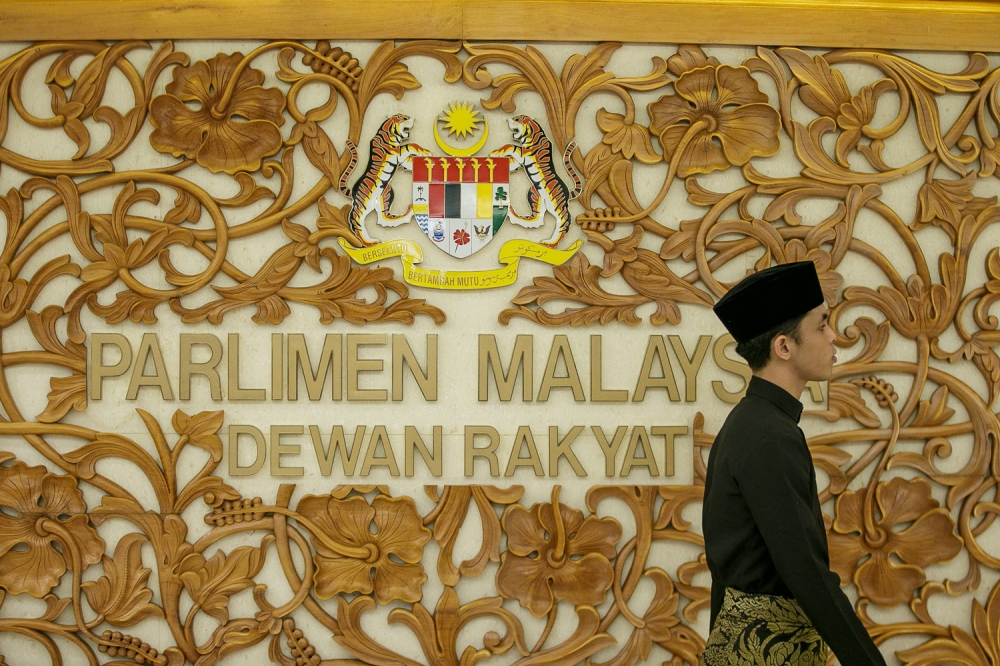
Following the resignations of MPs from Pandan, Setiawangsa, Subang, and Petaling Jaya, these constituencies are left without representatives as the Election Commission decides against holding by-elections.
The MPs resigned due to anti-party hopping laws, pursuing new political platforms, or in response to intra-party conflicts.
Constituencies remain intact, maintaining their electorate and boundaries, with political parties possibly continuing service provision through appointed representatives.
In Parliament, vacant seats mean no participation from those constituencies, but the current government maintains its two-thirds majority for constitutional amendments.
KUALA LUMPUR, Oct 12 — What happens to a Malaysian constituency when their Member of Parliament (MP) resigns?
The question has become a point of discussion after four parliamentary constituencies — Pandan, Setiawangsa, Subang and Petaling Jaya — were left without elected representatives (MPs) following the resignations of Datuk Seri Rafizi Ramli, Nik Nazmi Nik Ahmad, Wong Chen and Lee Chean Chung respectively.
To date, the Election Commission (EC) has determined that no by-elections will be held for the four seats, but there may still be questions surrounding what happens next, or why these resignations occurred.
Why did the four MPs resign?
Rafizi and Nik Nazmi resigned as MPs for Pandan and Setiawangsa respectively on May 18, after leaving PKR to pursue a new political platform, Parti Bersama Malaysia (Bersama).
The two said they were vacating the seats to avoid being seen as party-hopping and to return the mandate they received from voters — voting for reforms — when they were elected under the Pakatan Harapan and PKR tickets in the 2022 general election.
Wong resigned as Subang MP on August 10 after three terms in Parliament.
He subsequently said his decision was driven by concerns that he could no longer pursue reforms and defend democracy from within the government and PKR.
As for Lee, his resignation came shortly after PKR suspended his membership for three years.
So why didn’t they simply leave PKR and keep their seats?
Under Article 49A of the Federal Constitution, an MP elected as a member of a political party can lose their parliamentary seat if they resign from or cease to be a member of that party.
Malaysia’s anti-party hopping provisions were introduced through the Constitution (Amendment) (No. 3) Act 2022, which came into force on October 5, 2022.
Under Article 49A, an MP can lose their parliamentary seat if they resign from or otherwise cease to be a member of that party.
By resigning as MPs first, they instead vacated their seats voluntarily, allowing the Speaker and the EC to deal with the resulting vacancies under the separate provisions governing casual vacancies.
This was made possible by the repeal of Article 48(6), which had previously barred MPs who resigned from seeking re-election for five years, as part of the 2022 constitutional amendments that introduced the anti-party hopping law.
There are exceptions. For example, an MP does not lose the seat under Article 49A simply because they are expelled from their party.
The provision also covers certain changes involving independent MPs joining political parties.
This became relevant when Rafizi and Nik Nazmi left PKR and announced plans to join Bersama.
The two resigned as MPs before joining Bersama, saying they did not want to be seen as having switched parties with the parliamentary mandates they won through the PKR ticket under the Pakatan Harapan banner in the 2022 general election.
Rafizi said at the time that vacating their seats would “remove anti-hopping implications” because they were returning the mandate to voters.
Wong had also resigned in a similar route on August 10 before announcing his membership of Bersama two days later.
In Lee’s case, he left on different grounds.
So what happens next when an MP resigns?
The parliamentary seat becomes vacant
In the latest case involving Petaling Jaya, Lee submitted his resignation to Dewan Rakyat Speaker Tan Sri Johari Abdul on October 2.
Deputy Dewan Rakyat Speaker Datuk Seri Ramli Mohd Nor told the House on October 5 that Johari had informed the EC of the vacancy in accordance with Article 54(1) of the Federal Constitution.
Under Article 54(1) of the Federal Constitution, a casual vacancy in the Dewan Rakyat is generally required to be filled through an election within 60 days.
However, the provision makes an exception for a vacancy arising within two years of the date Parliament is due to dissolve. In such a case, the seat is not filled unless the Speaker notifies the Election Commission in writing that the vacancy affects the numerical strength of the party that constitutes a majority of the House.
The current Parliament began after the 2022 general election and its five-year term runs until December 2027, unless dissolved earlier.
A constituency stays intact
In case there are questions pointing to whether a constituency “disappears”, the answer is no.
Its electorate and boundaries are unchanged, while only the parliamentary seat becomes vacant.
Voters remain registered in the constituency and will elect an MP at the next general election, unless a by-election is held earlier.
Who represents the constituency after the MP resigns?
There is no automatic replacement.
Another MP does not take over the constituency simply because they belong to the same political party or have been asked to assist its constituents.
A political party may continue operating a service centre or appoint someone to handle constituency matters, but that person does not become the elected MP.
What happens to constituency services?
The resignation of an MP does not stop work or services carried out in a constituency.
Constituents or residents can continue dealing with government departments and agencies, while political parties may continue providing assistance through their service centres.
As an example, Wong explained his role as an MP and what happens after his resignation.
“The work of an MP is to pass laws, fight for policies — the right policies, pass debate for Budget, all the other things is not the job of an MP like throw makan-makan or gotong-royong.
“All those, people do it for political purposes, I still do mine, last Sunday I took the deaf and mute children to a mooncake festival,” Wong said.
After resigning in August, Wong had indicated continuing his work in Subang and will remain engaged with his former constituents.
“I have explained this situation to the people in Subang, they’re understanding and they’re fine with it.
“For example if they have an issue to deal with certain government agencies, I still help them, these are things that I can do without an office,” he added.
Wong’s case highlights the distinction: a former MP can continue helping constituents, but cannot perform the functions of an elected MP.
Prime Minister Datuk Seri Anwar Ibrahim had earlier assured that Lee’s resignation would not affect allocations or development projects in Petaling Jaya, saying projects involving schools, surau, mosques, temples and roads would continue as planned.
What happens in Parliament?
If the seat remains vacant while the Dewan Rakyat is sitting, there is no elected MP from that constituency to participate in proceedings.
Other MPs can raise issues affecting the area, however.
The vacant constituency also has no MP casting a vote in the House.
“The questions in Parliament come from us (MPs), although I do invite people to send in their questions,” Wong said.
As for two-thirds majority, Wong said the resignations did not affect the government’s ability to secure a two-thirds majority, although attendance remains important when such a vote is held.
The Dewan Rakyat has 222 seats and certain constitutional amendments require the support of not less than two-thirds of the total number of members of the House.
“A two-third majority is needed to pass constitution amendments and for that the government still has two-thirds,” he said.
Although only 218 of the Dewan Rakyat’s 222 seats are currently occupied, the two-thirds threshold for constitutional amendments remains 148 votes.
Article 159(3) of the Federal Constitution provides that the relevant threshold is two-thirds of the total number of members of the House, rather than two-thirds of the currently occupied seats.
The government currently has 149 MPs, meaning it remains one vote above the 148-vote threshold based on the current composition of the House.
So when will voters get a new MP?
If no by-election is required, the next opportunity for voters to choose a representative will be the next general election.
Temporary lane closures, diversions on Tun Dr Lim Chong Eu Expressway starting Oct 12 for elevated U-turn works
Sungai Golok river basin project: Scope, design adjustments aim to provide long-term flood protection
DPM Zahid to lead Malaysian delegation on five-day China working visit
由于潘丹、斯迪亚旺沙、梳邦和八打灵再也的国会议员辞职,选举委员会决定不举行补选,这些选区目前没有代表。
这些议员辞职的原因有:违反反跳槽法、追求新的政治纲领,或是为了应对党内冲突。
选区保持不变,选民和选区边界也保持不变,各政党可能会继续通过委任代表提供服务。
在议会中,空缺席位意味着这些选区没有代表权,但现任政府仍保持着三分之二的多数席位,可以对宪法进行修正。
吉隆坡,10月12日讯——当马来西亚国会议员辞职时,该选区会发生什么?
在拿督斯里拉菲兹·拉姆利、尼克·纳兹米·尼克·艾哈迈德、黄振和李昌忠分别辞职后,班丹、斯迪亚旺沙、梳邦和八打灵再也四个国会选区没有民选代表,这个问题成为了讨论的焦点。
迄今为止,选举委员会 (EC) 已决定不会为这四个席位举行补选,但接下来会发生什么,或者为什么会发生这些辞职,可能仍然存在疑问。
这四位议员为何辞职?
拉菲兹和尼克纳兹米在离开公正党并寻求新的政治纲领马来西亚团结党(Bersama)后,分别于5月18日辞去潘丹和塞蒂亚旺沙国会议员的职务。
两人表示,他们放弃这些席位是为了避免被视为跳槽,并回报选民在2022年大选中通过希望联盟和人民公正党的提名当选时所赋予的授权——投票支持改革。
黄在担任三届国会议员后,于8月10日辞去梳邦国会议员职务。
他随后表示,他做出这一决定是出于担心自己无法再在政府和人民公正党内部推行改革和捍卫民主。
至于李,他是在人民公正党暂停其党籍三年后不久辞职的。
那么,他们为什么不干脆离开人民公正党,保住自己的席位呢?
根据联邦宪法第 49A 条规定,以政党成员身份当选的议员,如果退出或不再是该政党的成员,可能会失去其议会席位。
马来西亚的反跳槽条款是通过 2022 年宪法(修正)(第 3 号)法令引入的,该法令于 2022 年 10 月 5 日生效。
根据第 49A 条规定,如果一名议员辞去党籍或不再是该党成员,则该议员可能会失去其议会席位。
他们先辞去议员职务,自愿放弃议席,让议长和选举委员会根据有关临时空缺的单独规定来处理由此产生的空缺。
这是由于废除了第 48(6) 条,该条款此前禁止辞职的议员在五年内寻求再次当选。废除第 48(6) 条是 2022 年宪法修正案的一部分,该修正案引入了反跳槽法。
但也有例外。例如,议员不会仅仅因为被党开除而依据宪法第49A条失去议席。
该条款还涵盖了独立议员加入政党的某些变更。
当拉菲兹和尼克·纳兹米离开人民公正党并宣布计划加入团结党时,这件事就变得重要起来。
两人在加入土著团结党之前辞去了国会议员职务,称他们不想被视为在2022年大选中通过希望联盟以人民公正党候选人身份赢得的议会席位而转换党派。
拉菲齐当时表示,放弃席位将“消除反跳槽的影响”,因为他们将授权交还给了选民。
黄先生也于 8 月 10 日以类似的方式辞职,两天后宣布加入 Bersama。
李的离开理由则有所不同。
那么,当一名议员辞职时,接下来会发生什么?
议会席位空缺
在涉及八打灵再也的最新案件中,李光耀于10月2日向下议院议长丹斯里佐哈里阿卜杜勒提交辞呈。
下议院副议长拿督斯里拉姆利·莫哈末·诺于10月5日向国会表示,佐哈里已根据联邦宪法第54(1)条将空缺情况告知了选举委员会。
根据联邦宪法第 54(1) 条规定,下议院的临时空缺一般需要在 60 天内通过选举填补。
然而,该条款对议会解散日期前两年内出现的空缺作出了例外规定。在这种情况下,除非议长以书面形式通知选举委员会,说明该空缺影响到议会多数党的席位数量,否则该席位不会填补。
本届议会于 2022 年大选后成立,其五年任期至 2027 年 12 月结束,除非提前解散。
选区保持完整
如果有人质疑某个选区是否会“消失”,答案是否定的。
其选民范围和边界保持不变,只有议会席位空缺。
选民仍保留在选区内的登记资格,并将在下次大选中选举一名国会议员,除非提前举行补选。
议员辞职后,谁将代表该选区?
没有自动替换功能。
另一位议员不会仅仅因为属于同一政党或被要求协助该选区的选民就接管该选区。
政党可以继续运营服务中心或任命人员处理选区事务,但该人员不会成为当选的议员。
选区服务会发生什么变化?
议员辞职并不会停止其选区内的工作或服务。
选民或居民可以继续与政府部门和机构打交道,而政党也可以继续通过其服务中心提供援助。
黄先生举例说明了他作为国会议员的职责以及他辞职后会发生什么。
“国会议员的工作是制定法律,争取正确的政策,推动预算辩论,其他所有事情,比如吃饭或互相帮助,都不是国会议员的工作。”
“所有这些人做这些事都是出于政治目的,我也一样,上周日我带聋哑儿童去参加了中秋节,”黄说。
黄在8月份辞职后曾表示,他将继续在梳邦工作,并将继续与他以前的选民保持联系。
“我已经向梳邦的人们解释了这种情况,他们表示理解,也接受了这种情况。”
“例如,如果他们在与某些政府机构打交道时遇到问题,我仍然会帮助他们,这些都是我无需办公室也能做的事情,”他补充道。
黄之锋的案例凸显了这一区别:前国会议员可以继续帮助选民,但不能履行民选国会议员的职能。
首相拿督斯里安华·易卜拉欣早前保证,李显龙的辞职不会影响八打灵再也的拨款或发展项目,并表示涉及学校、祈祷室、清真寺、寺庙和道路的项目将按计划继续进行。
议会里会发生什么?
如果下议院开会期间该席位仍然空缺,则该选区没有当选议员参加会议。
其他议员也可以提出影响该地区的问题。
该空缺选区也没有议员在议会投票。
黄循财表示:“议会中的问题都来自我们(议员),不过我也欢迎大家提交问题。”
至于三分之二多数制,黄之锋表示,这些辞职并不影响政府获得三分之二多数制的能力,尽管在进行此类投票时,出席率仍然很重要。
下议院共有 222 个席位,某些宪法修正案需要至少三分之二的下议院议员支持才能通过。
他说:“通过宪法修正案需要三分之二的多数票,而政府目前仍然拥有三分之二的多数席位。”
尽管目前下议院 222 个席位中只有 218 个有人担任,但宪法修正案所需的三分之二门槛仍然是 148 票。
联邦宪法第 159(3) 条规定,相关门槛是众议院成员总数的三分之二,而不是目前已占用席位的三分之二。
政府目前拥有 149 名议员,这意味着根据议会目前的组成,它仍然比 148 票的门槛高出一票。
那么选民何时才能选出新的国会议员呢?
如果没有补选,选民下次有机会选出代表就是下一次大选了。
自10月12日起,敦林苍佑大道将临时封闭部分车道并实施交通改道,以进行高架掉头工程。
双溪哥乐河流域项目:范围和设计调整旨在提供长期防洪保护
马来西亚副总理扎希德将率领马来西亚代表团对中国进行为期五天的工作访问