Ukraine is reshaping the armored battlefield. The US Army is trying to keep up.乌克兰正在重塑装甲战场格局。美国陆军正努力跟上这一步伐。
In armored brigades built around tanks and heavy firepower, lessons from Ukraine are pushing leaders to rethink how formations move and survive.
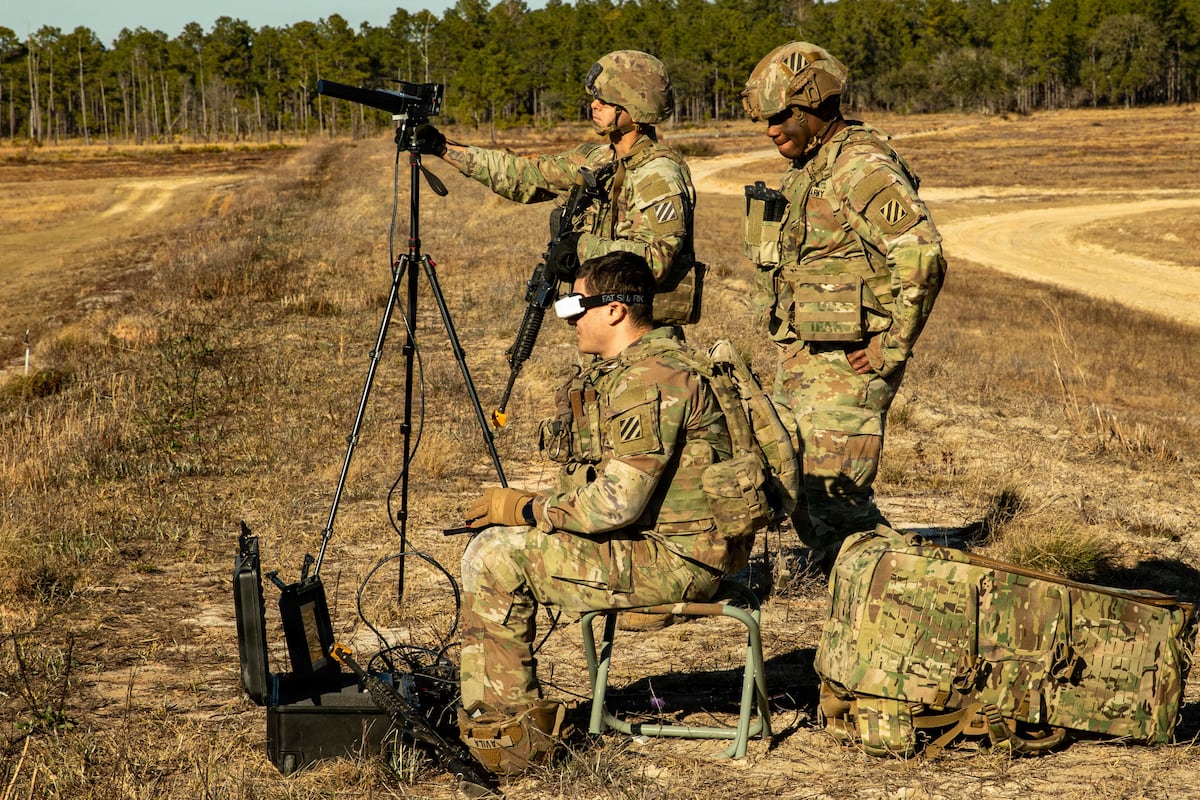
FORT STEWART, Ga. — Spc. Lathan Thomley enlisted in the Army to become a cavalry scout. Now, he spends hours practicing on a laptop simulator before piloting drones over Fort Stewart’s training area.
Thomley is part of 2nd Armored Brigade Combat Team’s Transformation in Contact initiative, or TIC, where junior soldiers on the ground are at the forefront of experimenting with new drone capabilities and helping to drive the direction of Army doctrine from the ground up.
In armored brigades built around tanks and heavy firepower, the approach reflects how lessons from Ukraine are pushing leaders to rethink how formations move and survive on a battlefield saturated with aerial surveillance.
Selected internally, soldiers at Fort Stewart say operators start on everyday computer simulation programs before transitioning to real flights.
“We really train on regular computers — it’s a little gaming app called Liftoff — and you fly drones on there,” Thomley said while demonstrating a small reconnaissance quadcopter’s capabilities on an unusually cool Georgia day. “From that, you learn how a drone moves and how you need to angle it to make it go a certain way.”
Liftoff is a commercially available drone flying simulator that allows all types of users to fly drones in first-person view. It can be purchased from Steam, a gaming platform that can be downloaded by soldiers and civilians alike.
First-person view lets a soldier watch and steer the drone as if they are flying on the front of it. Soldiers at Fort Stewart have been training to fly while wearing goggles, an immersive experience that can be disorienting and produce motion sickness.
“The controllers are inverted so it’s very confusing at first,” Thomley said.
If a user wants the drone to go up, they have to look down, and vice versa. Once a soldier masters flying in the simulation, they can practice piloting the real thing.
The approach marks a departure from the Army’s traditional training model, where new capabilities often move through formal schoolhouses and standardized programs before reaching operational units.
Under the TIC initiative, soldiers test technology first and shape how it is used before doctrine and acquisition catch up.
Selected brigades are given access to emerging innovations like drones, electronic warfare equipment and new communications devices.
Changes to drone capabilities within the brigade are informed through feedback from operators driving decisions about how equipment is used, how much equipment is fielded and how drones play into the armor-centric battle.
Unlike traditional weapons training, which follows a standardized Army progression, drone instruction is still evolving.
Thomley said he did not attend a formal drone school and that he volunteered to try out the brigade’s new capabilities when leadership presented the opportunity.
2ABCT, meanwhile, is part of the second TIC iteration, which is shifting the focus to Armor Brigade Combat Teams and division-level assets to apply lessons learned from Russia’s war on Ukraine.
The experimentation comes as Army leaders study how drones have drastically altered the battlefield overseas, where both sides use unmanned aerial vehicles to scout and strike.
“When you talk about looking at our adversaries across the world, everyone is watching the battles there in Ukraine,” said Col. Alexis Perez-Cruz, the brigade’s commander.
Perez-Cruz added that the Army — and the armor community — is consistently studying the conflict to see how new technology will change future wars, asking “How do we use our imagination to look at the future and be able to fight the way that we’re seeing it out there, and imagining how we will be able to fight in large-scale combat operations?”
For soldiers like Thomley, the shift is a new skill set layered onto a traditional cavalry mission — to spot and understand the battlefield before the enemy.
But instead of binoculars pressed into tired eyes peering out of a foxhole, that view increasingly comes from a camera mounted to a drone hovering hundreds of feet in the sky.
Eve Sampson is a reporter and former Army officer. She has covered conflict across the world, writing for The New York Times, The Washington Post and The Associated Press.
佐治亚州斯图尔特堡——陆军下士拉森·汤姆利应征入伍,成为一名骑兵侦察兵。如今,他会在驾驶无人机飞越斯图尔特堡训练区之前,花几个小时在笔记本电脑模拟器上进行练习。
汤姆利是第 2 装甲旅战斗队“接触中转型”计划 (TIC) 的一部分,该计划让地面上的初级士兵站在试验新型无人机能力的最前沿,并从基层开始帮助推动陆军条令的方向。
在以坦克和重型火力为核心的装甲旅中,这种做法反映了乌克兰的经验教训如何促使领导人重新思考部队如何在充斥着空中侦察的战场上移动和生存。
斯图尔特堡的士兵表示,这些操作员都是内部选拔出来的,他们先从日常的计算机模拟程序开始,然后再过渡到真正的飞行。
“我们实际上是在普通电脑上进行训练——用的是一款叫做Liftoff的小型游戏应用——你可以在上面操控无人机,”汤姆利一边演示一架小型侦察四轴飞行器的功能,一边说道。那天佐治亚州的天气异常凉爽。“通过这个应用,你可以学习无人机的飞行原理,以及如何调整角度才能让它朝特定方向飞行。”
Liftoff是一款商业化的无人机飞行模拟器,允许各类用户以第一人称视角操控无人机。该游戏可在Steam平台购买,Steam是一个军民皆可下载的游戏平台。
第一人称视角让士兵能够像坐在无人机前方一样观察和操控它。斯图尔特堡的士兵一直在接受佩戴护目镜飞行的训练,这种沉浸式体验可能会让人感到迷失方向并引发晕动症。
“控制器是倒置的,所以一开始会让人非常困惑,”汤姆利说。
如果用户想让无人机上升,就必须向下看,反之亦然。士兵一旦掌握了模拟飞行技巧,就可以练习驾驶真正的无人机。
这种方法标志着陆军传统训练模式的转变,在陆军的传统训练模式中,新能力通常会先经过正规的学校和标准化的课程,然后再传授给作战部队。
根据 TIC 计划,士兵们先测试技术,并在理论和采购跟上之前塑造技术的使用方式。
部分部队可以获得无人机、电子战设备和新型通信设备等新兴创新技术。
旅级单位无人机能力的改进,是通过操作员的反馈来指导有关装备的使用方式、装备的部署数量以及无人机在以装甲部队为中心的战斗中的作用的决策。
与遵循标准化陆军训练流程的传统武器训练不同,无人机训练仍在不断发展。
汤姆利表示,他没有参加过正规的无人机学校,当领导提供机会时,他自愿尝试该旅的新能力。
与此同时,第 2 装甲旅战斗队是第二次 TIC 迭代的一部分,该迭代将重点转移到装甲旅战斗队和师级资产,以应用从俄罗斯对乌克兰的战争中吸取的教训。
此次试验正值陆军领导人研究无人机如何彻底改变海外战场之际,在海外,交战双方都使用无人驾驶飞行器进行侦察和打击。
“当我们谈到关注世界各地的对手时,每个人都在关注乌克兰的战事,”该旅指挥官亚历克西斯·佩雷斯-克鲁兹上校说道。
佩雷斯-克鲁兹补充说,陆军和装甲兵部队一直在研究这场冲突,看看新技术将如何改变未来的战争,并提出这样的问题:“我们如何运用想象力来展望未来,并能够按照我们所看到的方式进行战斗,以及想象我们将如何在大规模作战行动中作战?”
对于像汤姆利这样的士兵来说,这种转变意味着在传统的骑兵任务上增加一套新的技能——在敌人之前发现并了解战场。
但是,人们不再像以前那样,用望远镜透过战壕向外眺望,而是越来越多地通过安装在数百英尺高空盘旋的无人机上的摄像头来观察。
伊芙·桑普森是一名记者,也是一名前陆军军官。她曾报道过世界各地的冲突,为《纽约时报》、《华盛顿邮报》和美联社撰稿。