Russia’s defense-spending surge tapers off in 2025, analysts find分析人士发现,俄罗斯国防开支的激增势头将在2025年放缓。
Russian defense spending could potentially fall this year from “a very, very high point,” said Fenella McGerthy, an expert on defense economics at IISS.
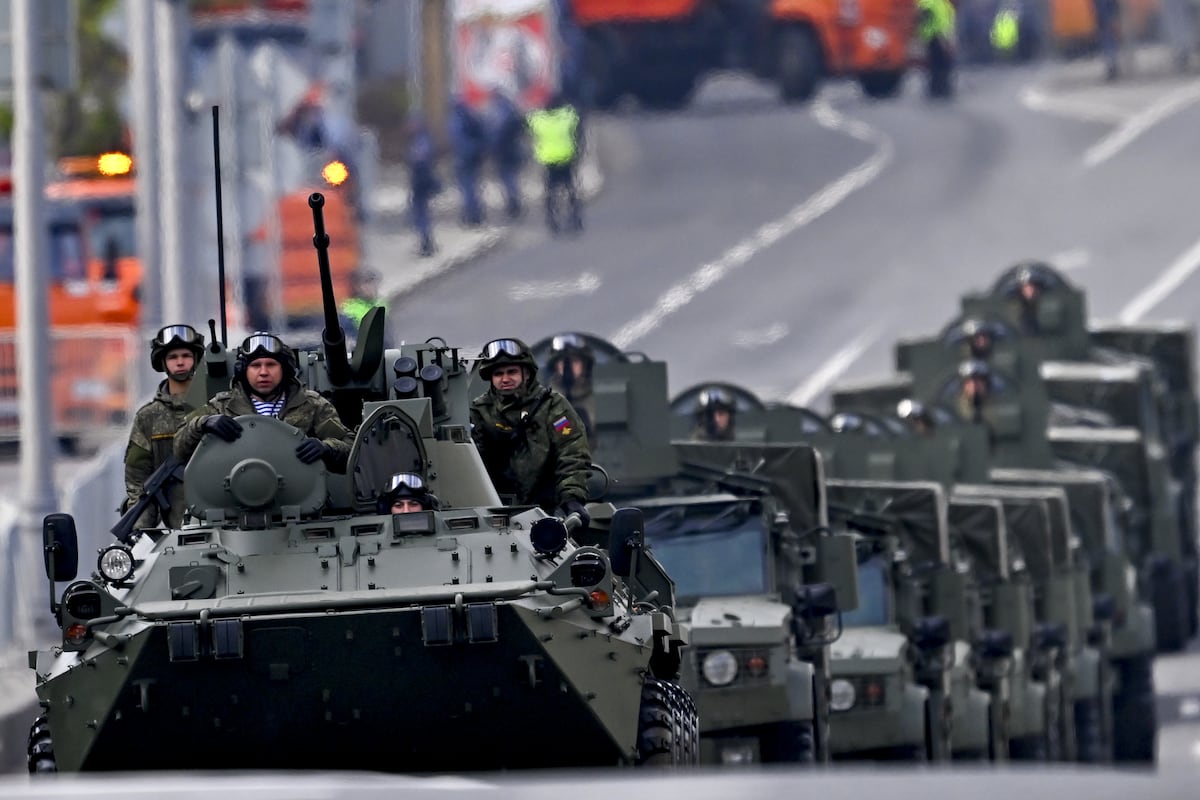
PARIS — Russia’s defense spending in 2025 rose at the slowest pace since the start of its full-scale invasion of Ukraine four years ago, impacted by financial reforms at the Ministry of Defence and a struggling economy in the face of Western sanctions, according to the International Institute for Strategic Studies.
Defense spending by Russia rose by 3% last year in real terms, after a 57% jump in 2024, according to the annual IISS Military Balance report published on Tuesday. Russia spent a record $186 billion on defense last year, compared with $44.4 billion for Ukraine, the IISS data showed.
Russian defense spending could potentially fall this year from “a very, very high point,” said Fenella McGerty, senior fellow for defense economics at the IISS, at a press briefing in London. After “significantly” raising defense spending over the past four years, Russia now faces stagnating growth, a widening deficit and falling revenues due to Western sanctions, according to McGerty.
“There’s been financial, fiscal reform throughout the Russian MoD in order to find efficiency savings to more effectively discharge spending,” McGerty said. “But also a recognition of that difficult economic environment and the inability to sustain such high levels of increases.”
Russia has tripled its defense spending since 2021, according to the think tank. Both Russia and Ukraine increased the share of their economy spent on defense in 2025 in their fourth year of war.
Marginal territorial gains by Russia have come at the cost of heavy casualties, though the country has been able to sustain the size of its deployed forces, the IISS said. There is “little indication” that Russia’s ability to fight its war against Ukraine for a fifth year has diminished, and the country’s threat to Europe is growing, IISS director-general Bastian Giegerich said.
Russia suffered higher loss rates at the end of last year and into 2026, partly as it pursued a more aggressive offensive stance, according to Henry Boyd, IISS senior fellow for military capability. Should the trend continue, Russia will face pressure on its current operational posture, though the armed forces can scale back offensive activity as a counterbalance, he said.
“Russia does have as an ultimate fallback option the ability to conduct a wider mobilization of the Russian state and the Russian people, should it really, really feel the need to bolster personnel resources for this war,” Boyd said. “As we’ve seen in the past, Russian loss rates tend to provoke a change in operational approach more than a kind of an abandonment of front-line operations altogether.”
Russia’s defense spending amounted to 7.3% of gross domestic production in 2025, from 6.7% a year earlier, IISS data show. Ukraine dedicated 21% of its GDP to defense, from 15% a year earlier.
European countries have been increasing their own defense spending in response to the perceived threat from Russia on NATO’s eastern flank, with European NATO members on average spending 2.16% of GDP on defense last year, according to Giegerich.
“Further spending growth in Europe will depend on sustained political and public support amid significant fiscal pressures,” Giegerich said. “Fiscally constrained allies will struggle to meet the new target of 3.5% of GDP for core defense capabilities by 2035.”
Europe now accounts for 21% of global defense spending from 17% in 2022, with Germany and Poland accounting for much of the growth, according to the IISS report. Belgium, the Nordic countries and Spain also saw “significant budget uplifts” in 2025.
For Europe, addressing shortfalls in air and missile defense remains a priority, while limited industrial capabilities and challenges in scaling production continue to be constraints on European rearmament, according to the IISS.
European countries have started to address some of the air-defense gaps, ordering $18 billion worth of short and very-short range air defense systems since 2022, compared to investments of $7.5 billion in all types of ground-based air defense in the preceding four years, according to Giegerich.
Global defense spending rose by 2.5% as Europe, the Middle East and Asia continued to expand and modernize their armed forces. The pace of growth slowed from 7.4% in 2024 and 6.5% in 2023 as the United States, the world’s biggest military spender, reduced defense expenditure last year.
Whereas the U.S. still outspent the 14 next-biggest countries in 2023, those nations combined outpaced American spending by more than $200 billion last year, the IISS data show. U.S. plans to boost defense spending to more than $1 trillion in 2026 will contribute to growing global defense spending this year, according to Giegerich.
As the world rearms, defense spending as a share of global GDP reached 2.01% from 1.89% a year earlier, and compared to 1.59% in 2022. That’s the highest level of spending since the 2000s, according to McGerty.
In Asia, China’s share of regional defense spending continues to increase, accounting for around 44% of the regional total in 2025, from an average 37% in the 2010-2020 period, according to the London-based think tank.
Editor’s note: This story was updated to correct a spelling error in the name of IISS analyst Fenella McGerty.
Rudy Ruitenberg is a Europe correspondent for Defense News. He started his career at Bloomberg News and has experience reporting on technology, commodity markets and politics.
巴黎——据国际战略研究所称,受国防部财政改革和西方制裁下经济困境的影响,俄罗斯2025年的国防开支增速将是自四年前全面入侵乌克兰以来最慢的。
根据国际战略研究所(IISS)周二发布的年度《军事平衡报告》,俄罗斯去年的国防开支实际增长了3%,此前预计2024年将增长57%。IISS的数据显示,俄罗斯去年的国防开支达到创纪录的1860亿美元,而乌克兰的国防开支为444亿美元。
国际战略研究所(IISS)国防经济高级研究员费内拉·麦格蒂在伦敦举行的新闻发布会上表示,俄罗斯今年的国防开支可能从“非常非常高的水平”下降。麦格蒂指出,过去四年俄罗斯大幅增加国防开支后,由于西方制裁,俄罗斯目前面临经济增长停滞、赤字扩大和财政收入下降的困境。
麦克格蒂表示:“俄罗斯国防部一直在进行财政改革,以提高效率、节省开支。但同时也认识到当前严峻的经济环境,以及无法持续如此高水平的增长。”
据该智库称,自2021年以来,俄罗斯的国防开支增加了两倍。俄罗斯和乌克兰在战争的第四年,即2025年,都提高了国防开支占经济总量的比例。
国际战略研究所(IISS)指出,俄罗斯虽然取得了一些微不足道的领土进展,但付出了惨重的伤亡代价,不过该国仍能维持其部署兵力的规模。IISS总干事巴斯蒂安·吉格里奇表示,几乎没有迹象表明俄罗斯有能力连续第五年与乌克兰作战,而且该国对欧洲的威胁正在加剧。
据国际战略研究所(IISS)军事能力高级研究员亨利·博伊德称,俄罗斯在去年底及2026年期间的损失率上升,部分原因是其采取了更为激进的进攻姿态。他表示,如果这一趋势持续下去,俄罗斯目前的作战态势将面临压力,不过俄罗斯军方可以通过缩减进攻活动来平衡这一压力。
博伊德说:“如果俄罗斯真的觉得有必要加强这场战争的人员力量,它完全可以采取更大规模的国家动员和人民动员的最终方案。正如我们过去所看到的,俄罗斯的伤亡率往往更会导致其改变作战方式,而不是彻底放弃前线作战。”
国际战略研究所(IISS)的数据显示,俄罗斯2025年的国防开支占国内生产总值(GDP)的比例将达到7.3%,高于前一年的6.7%。乌克兰的国防开支占GDP的比例则从前一年的15%上升至21%。
据吉格里奇称,欧洲各国一直在增加国防开支,以应对北约东翼俄罗斯构成的威胁,去年欧洲北约成员国平均将国内生产总值的 2.16% 用于国防。
吉格里希表示:“在财政压力巨大的情况下,欧洲国防开支的进一步增长将取决于持续的政治和公众支持。财政受限的盟国将难以实现到2035年核心国防能力支出占GDP 3.5%的新目标。”
根据国际战略研究所(IISS)的报告,欧洲目前占全球国防开支的21%,高于2022年的17%,其中德国和波兰的增长贡献最大。比利时、北欧国家和西班牙在2025年也实现了“预算的显著增长”。
国际战略研究所表示,对于欧洲而言,解决防空和导弹防御方面的不足仍然是首要任务,而有限的工业能力和扩大生产规模的挑战仍然是欧洲重新武装的制约因素。
据吉格里奇称,欧洲各国已开始着手解决一些防空方面的不足,自 2022 年以来订购了价值 180 亿美元的短程和超短程防空系统,而此前四年对各种地面防空系统的投资仅为 75 亿美元。
全球国防开支增长了2.5%,这主要得益于欧洲、中东和亚洲持续扩大和现代化其武装力量。由于全球最大的军费开支国美国去年削减了国防开支,全球国防开支增速较2023年的6.5%和2024年的7.4%有所放缓。
国际战略研究所(IISS)的数据显示,尽管美国在2023年的国防开支仍然高于排名其后的14个国家,但这些国家去年的国防开支总和比美国高出2000多亿美元。吉格里奇表示,美国计划在2026年将国防开支提高到1万亿美元以上,这将有助于今年全球国防开支的增长。
随着世界重新武装,国防开支占全球GDP的比例从一年前的1.89%上升至2.01%,而2022年这一比例为1.59%。据麦克格蒂称,这是自2000年代以来的最高水平。
据伦敦智库称,在亚洲,中国在区域国防开支中所占的份额持续增长,到 2025 年将占区域总额的约 44%,而 2010 年至 2020 年期间的平均比例为 37%。
编者按:本文已更新,更正了国际战略研究所分析师 Fenella McGerty 姓名中的拼写错误。
鲁迪·鲁伊滕贝格是《防务新闻》的欧洲记者。他的职业生涯始于彭博新闻社,拥有报道科技、大宗商品市场和政治方面的经验。