15 Questions With One of VP-5’s ‘Mad Foxes’ on Flying the P-8 Poseidon与VP-5中队“疯狂狐狸”飞行员之一的15个问题,畅谈驾驶P-8“海神”反潜巡逻机的体验
We talk with a P-8 pilot about how the jet is rapidly maturing into one of the Pentagon's most versatile and in-demand assets—one that has now been deployed to most of the major hotspots around the globe.
新闻视频
Updated Jul 3, 2020 4:18 AM EDT
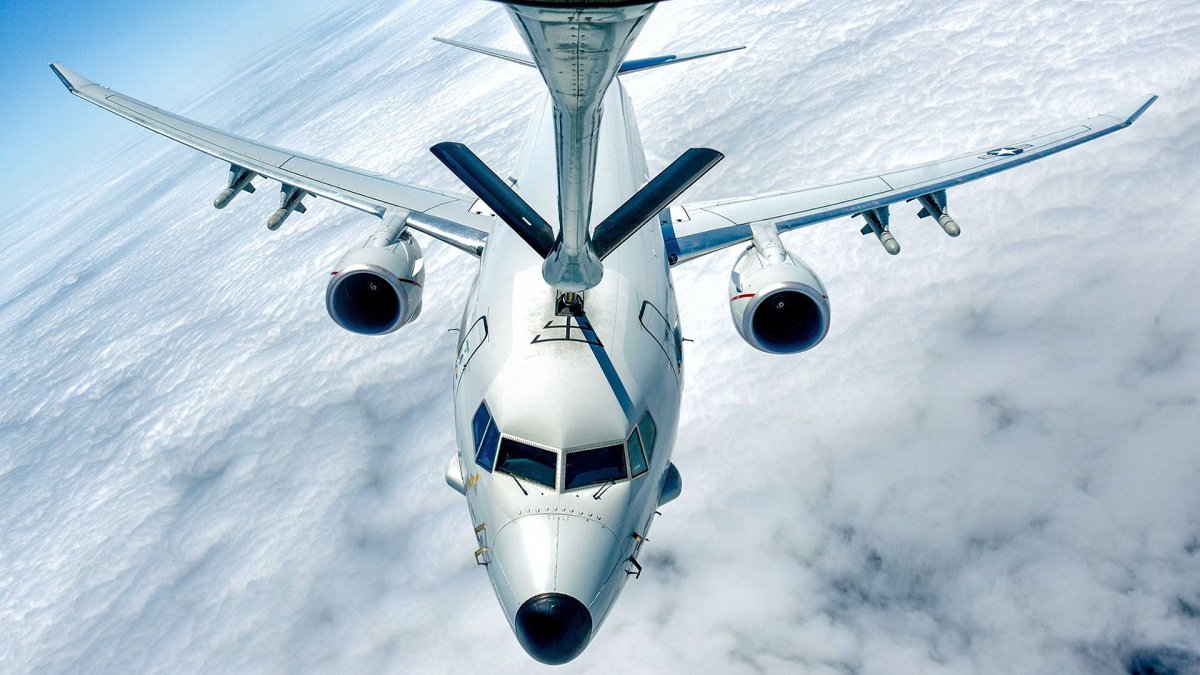
The P-8’s short career with the US Navy has been an outstanding one. The much doubted weaponized 737 has become one of the most in-demand assets in the Pentagon’s portfolio. It has made major news by rescuing castaways, searching for MH370, monitoring China’s man-made islands in the South China Sea, and even being threatened by Iranian air defenses. Four years after its introduction into service, it continues to evolve rapidly in exciting new ways, and the jet has become one of the America’s most successful new defense exports.
The last time we talked P-8s with a maritime patrol pilot , the jet was still very much an unknown commodity, with just a handful of squadrons having their hands on it. At that time, the nature of the P-8 future mission profile was very much up for debate. Now The War Zone has connected with one of Patrol Squadron Five ‘s, better known as the VP-5 the “Mad Foxes,” pilots to chat about how the storied unit has continued to break down new barriers with their still quite fresh P-8 Poseidons.
What can the P-8A Poseidon do better than the aircraft it replaces, the P-3C Orion?
The P-8 Poseidon has a significant leg up on the P-3 Orion when it comes to the airframe itself, crew coordination, and its ability to handle future capabilities. With both forward and aft auxiliary fuel tanks, we can load up with about 70,000 pounds of gas depending on our takeoff limitations. I have flown 10.5+ hour ISR (information, surveillance and reconnaissance) missions, with a comfortable amount of gas to land with.
By being able to fly higher, faster, and longer than the P-3, we can get on station faster than our predecessor. This also gives us the capability to easily cross the pond, and allows us to be a fairly mobile force if time and mission dictates us to have to pick up and take the plane wherever we need to go. This was also seen recently in the Clyde Challenger rescue in the Atlantic Ocean, where VP-45’s P-8s had to fly over 1500 miles just to get on station.
P-8 and P-3 together over PAX River. , USN
Secondly, as seen in a recent Boeing article, such a key aspect of passive sonar detection of enemy submarines is based on the ability of the acoustic operators to detect a contact on their grams . Arriving on station in a smoother platform, allows for a better rested crew, resulting in a more alert operator and a higher probability of detection.
Based on decades of 737 experience, the P-8 is also more reliable than their P-3 counterparts. The first P-8 I had ever flown in VP-30 had arrived from Boeing the week prior and had less than 30 hours on the whole airframe, and yeah, it did have that new plane smell.
All of this being said, the P-3 and EP-3 still provide an invaluable service via the LSRS pod , and ELINT/SIGINT (electronic intelligence/signals intelligence) capabilities that have not yet come online for the P-8. VP-5 will be the first squadron t o receive the new AAS pod following our next deployment.
The P-8 has had no problems handling low altitude ASW (anti submarine warfare) and ISR collection. The HUD in the left seat also greatly increases our situational awareness when operating at 200 feet and up to 45 degrees angle of bank. Also, the P-8 can monitor more sonobuoys than the P-3 and the integration of a single rail setup for the operators helps crew communication and crew resource management. By having the TACCO sit next to the COTAC, next to the EWO’s, it is easier to have everyone on the same page.
The P-8’s cabin is laid out in such a way that much of the non-flying aircrew sit next to each other at multi-function control stations that can be reconfigured for a variety of roles., USN
Any fighter jet or helicopter pilots need not read the next paragraph!: One of the biggest yet very superficial early gripes with the new platform was the coffee maker was never hooked up, and the head is located right next to the two “lay flat” seats that are used for crew rest. With missions sometimes briefing off at 2am, and lasting until 8pm the following evening, coffee is a mission essential item. I had my fiancé send out a Nespresso machine that we hooked up and soon we were brewing up some mean espressos at 39,000 ft over the Gulf of Oman. As if maritime pilots weren’t already known for being Gucci prima donnas, the looks I got from the Marine jet pilots as I stepped to the plane lugging my espresso machine were pretty priceless!
Can you give us a tour of the P-8’s sensors and what they bring to the table when it comes to executing real world missions?
The P-8 currently has a host of sensors for use during ASW, ASuW (anti-surface warfare) ISR, and SAR (search and rescue) missions. Our APY-10 radar can be used for SAR (synthetic aperture radar), ISAR (inverse synthetic aperture radar), WX (weather), and periscope detection modes. SAR is used to provide long distance imagery of ports, cities, runways, etc. SAR imagery can help identify targets at distances far outside standoffs. ISAR provides a two-dimensional image of ships that can be used to help identify vessels at long distance and used for target classification. ISAR can also be used to determine ship length and overall mast structure.
The AN/APY-10 radar being installed aboard a P-8 in 2009., Boeing
The EO/IR (electro-optical/infrared) camera can be used to visually identify both land and sea based targets, with the IR camera having both white hot and black hot images. IR can help to detect thermal scarring from submarines, fires during a search and rescue mission (as used on the fishermen rescue in the Pacific ), and other useful target characteristics.
ESM (electronic surveillance measures) is used to collect a wide range of emitters used by both commercial and military ship radars, aircraft, and land based facilities at extended ranges. It allows us to be able to geolocate emitters to find a foreign submarine, surface combatant, or land based surface-to-air site. It is also a passive system, which allows us to covertly monitor a wide area.
The P-8’s unique tail section with its DIRCM/GPTA defensive suite. , Mad Fox’s Facebook page
DIRCM/GPTA ( directional infrared countermeasures /guardian pointer tracker assembly) is our primary defense against surface-to-air missiles, which engages surface to air missiles with a laser to confuse the seeker on the missile. We also have four buckets of 30 flares apiece to also help defeat surface-to-air missiles threats. The P-8 is also equipped with a dry bay fire system. With sensors located throughout the aircraft, the system detects any sort of flames or explosions from small arms or other projectiles that damages the aircraft and immediately extinguishes it.
Your squadron deployed the P-8 operationally to the Middle East for the first time recently. What was the deployment like and how did the P-8 perform in the harsh desert environment ?
The first P-8 deployment to the 5th Fleet AOR was definitely a trial run for the platform. The P-8 flew missions in the Arabian Gulf, Strait of Hormuz, Gulf of Aden, Gulf of Oman, and the Red Sea. Before the P-8 arrived, these areas were often split up into several different missions for different aircraft during the course of one day. It was actually a suggestion from a junior officer Naval Flight Officer who simply asked “why can’t we just do it all in one flight?”
With the endurance and speed of the P-8, a single mission could cover the entire NAG, CAG, SAG, SOH,GOO,GOA, and BAM strait before returning home. The P-8 was also able to use several different airfields around the AOR as refueling points as the mission dictated. The inaugural 5th fleet deployment was also watched closely by our non-allied nations as well.
The biggest challenge our maintenance team faced was keeping the planes clean from the constant sand and dust blowing into the aircraft’s engines and equipment bays. Despite this, we still had over a 95% on time take off (OTTO) rate. Secondly, it can be incredibly difficult to keep an aluminum tube running literally tons of electronic equipment cool enough in 120+ degree heat. If the systems reach 100 degrees internally, we have to shut down the mission systems to protect the circuits. Eventually, through some MacGyver type work from the maintenance team and Boeing, we stuffed an external air cart connector through a sonobuoy free fall chute, which dumped cold air through the aircraft, and we never suffered a mission shutdown after that.
Secondly, from a pilots perspective, the aircraft performance aspect was often a limiting factor on takeoff and landing. The hot and humid air of the 5th fleet AOR made max gross weight takeoffs much more difficult than we normally experience while training stateside. Through a combination of speed increases, full 27,000 pound thrust, bleed air off takeoffs, we were able to take along enough fuel to execute each mission.
The P-8 can execute a ton of different mission sets, what were the main ones that you were called on to provide while in the 5th Fleet AOR?
Given how congested the waters are in the 5th Fleet AOR, there can be thousands of unidentified small fishing, merchant, and other vessels. Through a combined use of our radar, ISAR, and camera, the P-8 can transit the entire AOR, updating thousands of contacts through Link 11 and Link 16. The area of operation also contains some very popular smuggling routes for narcotic, weapons, and human smuggling. We would often provide overwatch for VBSS (visit, board, search and seizure) teams during boardings of suspected dhows for illicit cargo, often resulting in the successful interdiction of weapons, drugs, and human trafficking.
Cockpit of the P-8., USN
The P-8 also provided overwatch during US or allied ship transits through maritime choke points (or sea lines of communication) in order to provide the consistent and real time situational awareness required to deconflict any potential maritime interactions that might impede the safety of the maritime environment. We also participated in operations in support of Operation Inherent Resolve, providing support to coalition vessels operating in the vicinity of the Bab al Mandeb Straits.
How do the busy and tense littoral waters found in the Middle East, especially in the Persian Gulf and Red Sea, complicate submarine hunting ?
In the congested and relatively shallow waters in the Middle East, there is a significant amount of ambient noise, which makes the passive tracking of submarines more difficult. With thousands of small fishing vessels as well, it could be easy to miss a periscope on radar amongst hundreds of contacts.
The Arabian Gulf plays host for a few different flavors of submarine search. There are some nations who are very competent in their submarine tactics, and others who are still progressing through the early stages of quieting and tactics. The Arabian Gulf does play host to a variety of out of area-deployers that we were active in tracking, which also helped to maintain crew currency before transitioning to 7th fleet AOR.
Iran’s mix of attack and midget submarines poses a threat inside the tight confines of the Persian Gulf., AP
Did the P-8 partake in any interdiction missions to stop Iran from sending arms to Houthi rebels in Yemen?
Yes, as you saw in the article that I sent you , on one of the first missions in theater, one of our crews located and tracked a large dhow suspected of smuggling weapons to the Houthi rebels. Coordinating with the USS Sirocco , the crew stayed on station, resulting in the successful interdiction of hundreds of AK-47s, RPGs, and thousands of rounds of ammunition. This is also where the Triton is also extremely effective. Triton can stay on station significantly longer than the P-8, and is able to provide eyes on any vessels of interest until a P-8 or surface asset can arrive on station.
Some of the weapons destined for Houthi rebels seized by the USS Sirocco with an assist by the P-8, USN
Iran’s threat against a P-8 flying near its borders made national news . Did you experience any tense moments while flying ISR centric missions near potential enemy borders?
There were definitely some more interesting moments while conducting Strait of Hormuz transits in accordance with international law and the United Nations Convention of Law of the Sea (UNCLOS). The majority of the time, the questions from foreign controllers were professional; however, there was the occasional query that was a little more challenging. Conducting yourself in accordance with international law and UNCLOS, and responding in a professional and courteous manner is the standard.
There is usually at least carrier strike group in the region, along with other US Navy and allied ships, not to mention many aircraft. How does the P-8 integrate with carrier strike group operations?
I know that the initial talk was that P-8 might be assigned to specific CSGs, however, as the platform has developed we are not assigned directly to a strike group. Most of the time, we are working in direct support of the strike group or an allied ship in theater. We can provide armed reconnaissance, escorts through congested waterways, full motion video, and help building the common operating picture (COP). We also often use HH-60Rs to help localize and track submarines as well, as their dipper is an effective localization and tracking sensor.
How will the P-8 work with the Navy’s new MQ-4C Triton version of the USAF’s Global Hawk?
Currently, the MQ-4C is being used as a long endurance, maritime ISR asset, that often times feeds us updated posits on contacts of interest. They can fly significantly higher and longer than us and are able to provide a more constant feed of ISR. The Triton will be flown and monitored out of NAS Jacksonville, and we have already seen some pilots and NFO’s being selected to operate the aircraft.
How did operating in the Middle East differ to the time you spent in the P-8 over in Asia?
The biggest difference between operating in the Middle East and 7th fleet, is the necessity for the immediacy of information. In the middle east, our capability for full motion video, and Link 16 uplinks are extremely important to the on the ground/sea commanders. Things happen in the middle east at a much more explosive pace than in 7th fleet AOR. Sending live updates with encrypted radios and communication is crucial because the information might be too dated to be important by the time we land. In 7th fleet, it is a long game. We are tracking more submarines and building a pattern of life for how other nations are acting. Even the slightest change in phrasing on a challenge from a foreign nation or added infrastructure in the South China Sea can be huge to updating how the political and military situation is changing.
The Pacific Theatre compared to the Middle East offers its own, albeit very dissimilar environmental challenges , DoD
The big wigs in the Pentagon like to talk about “the tyranny of distance” when talking about operating in that area of the world, which can be very difficult to work around. Building and maintaining relationships was also a big sticking point from last deployment, so that we can work in conjunction with our allied partners and deploy from anywhere to provide ASW, ASuW, and ISR capabilities across thousands of miles. We had aircraft detached out of Misawa, Japan, Kadena, Singapore, Brunei, Thailand, Diego Garcia, and scores of other countries across both theaters.
China’s man-made islands in the South China Sea, and disputed territories off the coast of Japan are serious hotspots in the region, how was the P-8’s presence near and over these international hotspots important?
VP-5 has been pretty active in following the building of islands in the South China Sea. The entire first deployment was dedicated to following the buildup of these islands, with the second deployment, in conjunction with VP-8, we continued to see the increase in both AA/AD (anti-access/area denial) and airborne assets being deployed from these islands.
What weapons can the P-8 employ today and what are on the list for future integration?
Currently the P-8 can primarily employ the MK-54 torpedo and the AGM-84D Harpoon. The i ntegration of the LRASM , HAAWC mod torpedo, and other niche weapons are also on the horizon. Given how new of a platform the P-8 is, we are still in the infancy of truly using the aircraft to its full potential. The P-8 Weapons School is now a completely separate squadron that is pushing forward the newest capabilities for the P-8 down the road.
Preparing to load a torpedo onto a Poseidon. , USN
Torpedoes are going to be launched from our weapons bay stations, with the capability to carry up to five Mk-54 torpedoes. An ASW attack is currently carried out at a low altitude, with the capabilities for a high altitude ASW coming with the HAAWC kit for the MK-54.
For our primary ASuW weapon, we launch AGM-84D Harpoon missiles. The P-8 can carry up to four harpoons as well, and can shoot them in different modes and with both engine start before and after launches, from a wide variety of speeds and altitude regimes.
P-8 during a Harpoon test drop sortie., USN
The P-8 is the best ASW localize/track platform in the fleet, one of the best maritime ISR assets in the world, with the ability to identify and track hundreds of contacts, and complete the kill chain for both surface and subsurface contacts if necessary. The training wheels of the P-8 are only just starting to come off, and with the development of aerial refueling, AAS pod, Triton, and the Block 2 Harpoon, the P-8 is quickly becoming one of the most complete/multi mission aircraft in the US military.
There seems to be two different forms of thought within the maritime patrol community as to how the P-8 and its mission set will evolve. One points to a much broader set of missions, where P-8s may even support ground troops, or provide overland armed reconnaissance, or even work as an arsenal ship along with other functions. The French are doing some of this with their old Atlantique IIs today , kinetic missions included. On the other hand, more traditionalists in the maritime patrol community want to keep the aircraft locked more strictly in traditional ASW, ASuW, sea control and surveillance roles. How do you think the P-8 and its crews will evolve in the coming years?
This is purely my own opinion, but what we have seen from the fleet and combatant commanders, is that they want to keep the P-8 a maritime ISR and submarine tracking platform. The aircraft is optimized for this mission set, but it is being expanded with future capabilities like AAS. I believe that you will start to eventually see an evolution of the P-8 over time, in that as the P-3 and EP-3 begin to be phased out, the P-8 will slowly pick up those mission sets. I do not think it will ever become a true overland weapons truck asset; however, the plane definitely has the capability to accomplish these mission sets if the need arises.
If you could have three things added to the P-8 and/or its weapons menu what would it be?
Polled some of the guys in the squadron on this— Block 2 Harpoon will be a nice addition, but the addition of LSRASM is definitely something we are looking forward too, along with a search and rescue kit that can be dropped through the weapons bay for when we are tasked with that mission.
Can you tell us about a few missions or memories that you have had in the jet that really stand out as unique, exciting or personally special?
From a mission standpoint, it is often the ready launches or last minute tasking that always results in the most exciting days in the aircraft. One flight we were re-tasked to rig a foreign submarine, coming down to a few hundred feet and 300 knots. Seeing the submariners on the bridge while we flew by was a pretty humbling experience. Often times we are operating tens of miles away from our targets, looking through a camera lens. However, flying by and seeing that they’re just the same as your crew, some mid 20 year olds cruising around the world in your government’s couple hundred million dollar asset is a pretty funny realization.
P-8 high over the USS Zumwalt., USN
Lastly one of my personal favorites was flying into different airfields around the AOR that hadn’t been visited by a US maritime asset since my dad flew into them in a EP-3 in the 1980s. He has just a couple more hours than I do (about 16,000 more) and referring to him for some guidance before a flight was a pretty cool changing of the guard experience for both of us.
Mad Foxes Facebook page
A huge thanks to all the folks at VP-5 who made this interview possible.
Contact the author: Tyler@thedrive.com
Comments couldn’t be loaded. Please refresh the page.
更新于美国东部时间2020年7月3日凌晨4:18
P-8在美国海军的服役生涯虽短,却成就斐然。这款曾备受质疑的武装型737飞机,如今已成为五角大楼最炙手可热的资产之一。它曾多次参与救援遇难者、搜寻MH370航班、监视中国在南海的人工岛礁,甚至还曾受到伊朗防空系统的威胁,这些都让它频频登上新闻头条。服役四年后,P-8仍在以令人振奋的方式快速发展,并已成为美国最成功的新型国防出口产品之一。
上次我们与一位海上巡逻飞行员谈论P-8时,这种战机还鲜为人知,只有少数几个中队拥有它。当时,P-8未来的任务定位还存在诸多争议。如今,《战区》栏目采访到了第五巡逻中队(VP-5,绰号“疯狐”)的一位飞行员,和他聊了聊这支历史悠久的部队如何利用他们仍然相当新的P-8“海神”反潜巡逻机不断突破新的界限。
P-8A“海神”反潜巡逻机比它所取代的P-3C“猎户座”反潜巡逻机有哪些优势?
P-8“海神”反潜巡逻机在机身设计、机组人员协调以及未来升级能力方面都比P-3“猎户座”反潜巡逻机优势显著。凭借前后两个辅助油箱,根据起飞限制,我们可以携带约7万磅燃油。我曾多次执行超过10.5小时的情报、监视和侦察(ISR)任务,并且每次飞行后都有足够的燃油安全着陆。
由于P-3的飞行高度更高、速度更快、航程更远,我们能够比前代机型更快地抵达指定位置。这还使我们能够轻松跨越大西洋,并使我们成为一支相当灵活的部队,以便在时间和任务需要时能够迅速调动飞机前往任何目的地。最近在大西洋发生的“克莱德挑战者号”救援事件中也体现了这一点,当时VP-45中队的P-8飞机为了抵达指定位置,飞行距离超过1500英里。
P-8 和 P-3 联袂飞越帕图克森河。(美国海军)
其次,正如波音公司最近的一篇文章所述,被动声呐探测敌方潜艇的关键在于声呐操作员能否在雷达屏幕上探测到目标。更平稳的航行能够让船员得到更好的休息,从而使操作员更加警觉,并提高探测概率。
根据数十年的737经验,P-8也比P-3更可靠。我驾驶的第一架P-8隶属于VP-30中队,它前一周刚从波音公司运抵,整架飞机飞行时间不足30小时,没错,它确实有股新飞机的味道。
尽管如此,P-3 和 EP-3 仍然通过 LSRS 吊舱提供着极其宝贵的服务,并且具备 P-8 尚未具备的 ELINT/SIGINT(电子情报/信号情报)能力。VP-5 中队将在下次部署后成为第一个接收新型 AAS 吊舱的中队。
P-8 在低空反潜作战和情报、监视与侦察 (ISR) 方面表现出色。左座的平视显示器 (HUD) 也极大地提升了我们在 200 英尺高度和 45 度倾斜角下作战时的态势感知能力。此外,P-8 可以监测比 P-3 更多的声呐浮标,并且操作员采用的单轨式操作装置有助于机组人员之间的沟通和资源管理。战术空中控制员 (TACCO) 坐在战术空中控制员 (COTAC) 和电子战官 (EWO) 旁边,便于所有人员保持信息同步。
P-8的座舱布局使得大部分非飞行机组人员可以并排坐在多功能控制站旁,这些控制站可以根据需要重新配置以执行各种任务。(美国海军)
战斗机或直升机飞行员无需阅读下一段!:新平台早期最大的抱怨之一,也是最肤浅的抱怨之一,就是咖啡机从未连接过,而且卫生间就在两个供机组人员休息的“平躺式”座椅旁边。任务简报有时凌晨两点开始,一直持续到第二天晚上八点,咖啡是任务必需品。我让未婚夫送来一台Nespresso咖啡机,我们接好后,很快就能在阿曼湾上空39000英尺的高空煮出美味的意式浓缩咖啡了。海军飞行员本来就以爱炫耀著称,当我扛着咖啡机走向飞机时,海军陆战队喷气式飞机飞行员们投来的目光真是精彩绝伦!
能否带我们参观一下 P-8 的传感器,以及它们在执行实际任务时发挥的作用?
P-8目前配备了多种传感器,可用于反潜战(ASW)、反水面战(ASuW)、情报、监视与侦察(ISR)以及搜救(SAR)任务。我们的APY-10雷达可用于合成孔径雷达(SAR)、逆合成孔径雷达(ISAR)、气象探测和潜望镜探测模式。SAR用于提供港口、城市、跑道等的远距离图像。SAR图像有助于识别远距离目标。ISAR提供舰船的二维图像,可用于远距离识别舰船并进行目标分类。ISAR还可用于确定舰船长度和整体桅杆结构。
2009年,波音公司正在为一架P-8反潜巡逻机安装AN/APY-10雷达。
光电/红外(EO/IR)摄像机可用于目视识别陆地和海上目标,其中红外摄像机可拍摄白热和黑热图像。红外成像有助于探测潜艇的热损伤痕迹、搜救任务中的火灾(例如在太平洋渔民救援行动中的应用)以及其他有用的目标特征。
电子监视措施(ESM)用于远距离收集商用和军用舰船雷达、飞机以及陆基设施所使用的各种辐射源信号。它使我们能够对辐射源进行地理定位,从而发现外国潜艇、水面作战舰艇或陆基地对空导弹阵地。此外,它还是一种被动式系统,可以用于隐蔽地监视大片区域。
P-8独特的尾翼部分及其DIRCM/GPTA防御系统。(Mad Fox的Facebook页面)
定向红外对抗/守护者指示器跟踪组件(DIRCM/GPTA)是我们对抗地对空导弹的主要防御系统,它利用激光干扰地对空导弹的导引头。我们还配备了四桶各30枚的干扰弹,用于进一步拦截地对空导弹威胁。P-8还配备了干式灭火系统。该系统通过遍布机身的传感器,探测到小型武器或其他弹丸造成的任何火焰或爆炸,并立即将其扑灭。
你们中队最近首次将P-8反潜巡逻机部署到中东地区执行作战任务。这次部署情况如何?P-8在严酷的沙漠环境中表现如何?
P-8首次部署到第五舰队责任区无疑是对该平台的一次试飞。P-8在阿拉伯湾、霍尔木兹海峡、亚丁湾、阿曼湾和红海执行了任务。在P-8到来之前,这些区域的巡逻任务通常需要一天内由不同的飞机执行多次。实际上,这源于一位海军飞行军官的建议,他只是简单地问道:“为什么我们不能一次飞行就完成所有任务呢?”
凭借P-8的续航能力和速度,一次任务即可覆盖整个NAG、CAG、SAG、SOH、GOO、GOA和BAM海峡,然后返回基地。P-8还可以根据任务需要,利用战区周围的多个机场作为加油点。第五舰队的首次部署也受到了非盟国的密切关注。
我们维护团队面临的最大挑战是保持飞机清洁,因为沙尘会不断吹入飞机的发动机和设备舱。尽管如此,我们的准点起飞率(OTTO)仍然超过95%。其次,在120多度的高温下,要让一个装有数吨电子设备的铝制管道保持足够的冷却极其困难。如果系统内部温度达到100度,我们就必须关闭任务系统以保护电路。最终,在维护团队和波音公司的共同努力下,我们巧妙地将一个外部气罐连接器塞进声呐浮标的自由落体滑槽,让冷空气流入飞机内部,此后我们再也没有遇到过任务系统关闭的情况。
其次,从飞行员的角度来看,飞机性能往往是起飞和着陆的限制因素。第五舰队责任区炎热潮湿的空气使得最大起飞重量的起飞比我们在美国本土训练时遇到的情况要困难得多。通过提高速度、使用27000磅的最大推力以及引气起飞等多种方式,我们才能携带足够的燃料完成每次任务。
P-8 可以执行很多不同的任务,你在第五舰队责任区服役期间主要被要求执行哪些任务?
鉴于第五舰队责任区水域拥挤,可能有数千艘身份不明的小型渔船、商船和其他船只。P-8反潜巡逻机通过雷达、逆合成孔径雷达(ISAR)和摄像机的协同使用,可以穿越整个责任区,并通过Link 11和Link 16数据链更新数千个目标信息。该作战区域还包含一些非常热门的毒品、武器和人口走私路线。我们经常为登船检查(VBSS)小组提供掩护,协助他们登船检查疑似走私货物的帆船,往往能成功截获武器、毒品和人口贩运。
美国海军P-8反潜巡逻机的驾驶舱
P-8 还为美国或盟军舰艇通过海上咽喉要道(或海上交通线)提供空中监视,以提供持续、实时的态势感知,从而化解任何可能危及海上安全的潜在海上冲突。此外,我们还参与了“坚定决心行动”,为在曼德海峡附近活动的联军舰艇提供支持。
中东地区,特别是波斯湾和红海繁忙而紧张的沿海水域,是如何使潜艇猎杀变得复杂的?
在中东拥挤且相对较浅的水域,环境噪声很大,这使得被动追踪潜艇变得更加困难。此外,这里还有成千上万艘小型渔船,很容易在数百个目标中错过雷达探测到的潜望镜。
阿拉伯湾是多种潜艇搜索模式的交汇点。一些国家的潜艇战术非常娴熟,而另一些国家则仍在潜艇静默和战术方面处于起步阶段。阿拉伯湾也驻扎着许多我们积极追踪的外地部署潜艇,这也有助于我们在调往第七舰队责任区之前保持艇员的训练水平。
伊朗的攻击型潜艇和袖珍潜艇的组合,对波斯湾狭小的海域构成了威胁。(美联社)
P-8 是否参与过阻止伊朗向也门胡塞武装运送武器的拦截任务?
是的,正如您在我发给您的文章中看到的,在战区执行的首批任务之一中,我们的一个小组定位并追踪了一艘涉嫌向胡塞武装走私武器的大型阿拉伯帆船。该小组与“西罗科”号两栖攻击舰协调行动,坚守岗位,最终成功拦截了数百支AK-47步枪、火箭筒和数千发子弹。“特里顿”无人机在这方面也极其有效。“特里顿”的驻守时间比P-8长得多,能够持续监视任何目标船只,直到P-8或其他水面舰艇抵达现场。
美国海军“西罗科”号两栖攻击舰在P-8反潜巡逻机的协助下,缴获了部分原本要运往胡塞武装的武器。
伊朗威胁要对一架飞近其边境的P-8反潜巡逻机采取行动,此事成为全国新闻。您在潜在敌方边境附近执行以情报、监视和侦察(ISR)为重点的任务时,是否经历过任何紧张时刻?
在按照国际法和《联合国海洋法公约》(UNCLOS)进行霍尔木兹海峡通行时,确实遇到了一些有趣的时刻。大多数情况下,外国管制人员提出的问题都很专业;然而,偶尔也会遇到一些更具挑战性的问题。遵守国际法和《联合国海洋法公约》并以专业和礼貌的方式回应是基本准则。
该地区通常至少会部署一个航母打击群,以及其他美国海军和盟军舰艇,更不用说还有大量的飞机。P-8 如何与航母打击群的作战行动相整合?
我知道最初的设想是P-8可能会被分配到特定的航母打击群(CSG),但是随着平台的发展,我们现在并不直接隶属于任何打击群。大多数时候,我们都在战区内直接支援打击群或盟军舰艇。我们可以提供武装侦察、在拥挤水道中护航、全动态视频,并协助构建通用作战图(COP)。我们还经常使用HH-60R来协助定位和跟踪潜艇,因为它们的潜望镜是一种有效的定位和跟踪传感器。
P-8 将如何与海军新型 MQ-4C“海神”无人机(美国空军“全球鹰”无人机的改进型)协同工作?
目前,MQ-4C无人机被用作长航时海上情报、监视与侦察(ISR)工具,经常为我们提供目标目标的最新位置信息。它们的飞行高度和飞行时间都远超我们,能够提供更持续的ISR数据。Triton无人机将从杰克逊维尔海军航空站起飞并接受监控,我们已经看到一些飞行员和海军飞行观察员(NFO)被选中操作该机型。
在中东执行任务与你在亚洲驾驶 P-8 巡逻机执行任务有何不同?
在中东和第七舰队作战的最大区别在于对信息即时性的迫切需求。在中东,我们的全动态视频和Link 16上行链路对地面/海上指挥官至关重要。中东局势的瞬息万变远比第七舰队责任区更为迅猛。通过加密无线电和通信发送实时更新至关重要,因为等我们抵达时,信息可能已经过时而失去意义。在第七舰队,这是一场持久战。我们追踪着更多的潜艇,并逐步建立起其他国家行动模式的规律。即使是外国对挑战措辞的细微变化,或是南海新增的基础设施,都可能对政治和军事局势的演变产生巨大影响。
与中东相比,太平洋战区面临着自身独特的、尽管截然不同的环境挑战,国防部
五角大楼的高层在谈到在世界那个地区开展行动时,喜欢把“距离的桎梏”挂在嘴边,这的确是一个难以克服的难题。建立和维护关系也是上次部署的一大难点,这样我们才能与盟国伙伴协同作战,从任何地方部署,在数千英里的范围内提供反潜战、反水面战和情报、监视与侦察能力。我们曾从日本三泽、新加坡嘉手纳、泰国文莱、迪戈加西亚岛以及两个战区数十个其他国家/地区部署飞机。
中国在南海的人工岛礁和日本近海的争议领土是该地区的严重热点地区,P-8 在这些国际热点地区附近和上空的存在有何重要意义?
VP-5中队一直积极跟踪南海岛屿的建设情况。其首次部署的全部任务就是跟踪这些岛屿的建设;第二次部署中,VP-5中队与VP-8中队协同行动,我们继续看到从这些岛屿部署的防空/区域拒止(AA/AD)力量和空中力量都在不断增加。
P-8 目前可以使用哪些武器?未来计划集成哪些武器?
目前,P-8 主要可使用 MK-54 鱼雷和 AGM-84D 鱼叉导弹。远程反潜导弹 (LRASM)、HAAWC 改进型鱼雷以及其他一些特种武器的整合也在计划之中。鉴于 P-8 平台相对较新,我们仍处于充分发挥其全部潜能的初期阶段。P-8 武器学校现已成为一个完全独立的飞行中队,致力于推进 P-8 未来最新能力的研发。
准备将鱼雷装载到“海神”级潜艇上。(美国海军)
鱼雷将从我们的武器舱发射,最多可携带五枚Mk-54鱼雷。目前反潜作战主要在低空进行,而高空反潜作战能力将通过Mk-54鱼雷的HAAWC套件来实现。
我们的主要反舰武器是AGM-84D“鱼叉”导弹。P-8反潜巡逻机最多可携带四枚“鱼叉”导弹,并能以多种模式发射,且可在发射前后启动发动机,并可在各种速度和高度范围内进行发射。
P-8 在执行“鱼叉”导弹测试投放任务期间,美国海军
P-8是舰队中最佳的反潜定位/跟踪平台,也是世界上最优秀的近海情报、监视与侦察(ISR)装备之一,能够识别和跟踪数百个目标,并在必要时完成对水面和水下目标的杀伤链。P-8的训练阶段才刚刚开始,随着空中加油、空中加油吊舱、“海神”无人机和Block 2“鱼叉”导弹的研发,P-8正迅速成为美军中最全面、多用途的飞机之一。
在海上巡逻领域,对于P-8及其任务类型的未来发展似乎存在两种不同的观点。一种观点认为,P-8的任务范围将大大扩展,甚至可以支援地面部队、执行陆上武装侦察任务,或者作为武器库舰艇执行其他任务。法国目前就利用其老旧的“大西洋II”型飞机执行一些此类任务,包括实弹作战任务。另一方面,海上巡逻领域较为传统的人士则希望将P-8的用途更加严格地限定在传统的反潜作战、反舰作战、海上管制和监视任务中。您认为P-8及其机组人员在未来几年将如何发展?
这纯属我个人观点,但从舰队和作战指挥官的表态来看,他们希望P-8继续作为海上情报、监视与侦察(ISR)和潜艇跟踪平台。该机针对此类任务进行了优化,但未来也在不断扩展,例如增加主动空中支援(AAS)等功能。我相信,随着P-3和EP-3逐步退役,P-8最终会发展演变,承担起相应的任务。我不认为它会成为真正的陆上武器运输机;然而,如果需要,该机绝对有能力完成这些任务。
如果可以给 P-8 及其武器菜单添加三样东西,你会添加什么?
我询问了中队的一些队员——Block 2 鱼叉导弹会是一个不错的补充,但我们更期待的是 LSRASM 导弹的加入,以及一套可以通过武器舱投放的搜救装备,以便在接到搜救任务时使用。
您能否跟我们分享一下您在喷气式飞机上执行的一些任务或经历,哪些经历或经历让您印象深刻,觉得独特、刺激或具有特殊意义?
从任务角度来看,准备就绪的起飞或临时接到的任务往往能带来最激动人心的飞行体验。有一次,我们被临时调派去给一艘外国潜艇安装设备,飞行高度骤降至几百英尺,速度达到300节。飞越潜艇时看到舰桥上的潜艇兵,真是令人感慨万千。通常情况下,我们是在距离目标几十英里之外通过摄像头观察的。然而,飞越潜艇时,看到他们和我们一样,都是些二十出头的年轻人,驾驶着政府价值数亿美元的战机环游世界,这种感觉真是妙趣横生。
P-8 反潜巡逻机高空飞越“朱姆沃尔特”号航空母舰。
最后,我个人最喜欢的经历之一是飞往战区周围一些自上世纪80年代我父亲驾驶EP-3侦察机到访以来,美国海上力量就再也没有到访过的不同机场。他的飞行时间只比我多几个小时(大约多16000小时),每次飞行前向他请教一些经验,对我们俩来说都是一次很棒的“交接班”体验。
疯狐狸脸书页面
非常感谢VP-5的所有工作人员,是他们的努力让这次采访得以实现。
联系作者:Tyler@thedrive.com
评论加载失败,请刷新页面。