PAC-3 Edge Will Be The Most Capable Patriot Interceptor EverPAC-3 Edge 将成为有史以来性能最强的爱国者拦截器
The new interceptor will be sit at the top of Patriot missile family and promises more range, altitude, and maneuverability against rapidly-developing threats. New interceptor promises more range, altitude, and maneuverability against advanced threats, including hypersonic weapons, but still has to prove itself in testing.
新闻视频
Published Oct 12, 2026 4:49 PM EDT
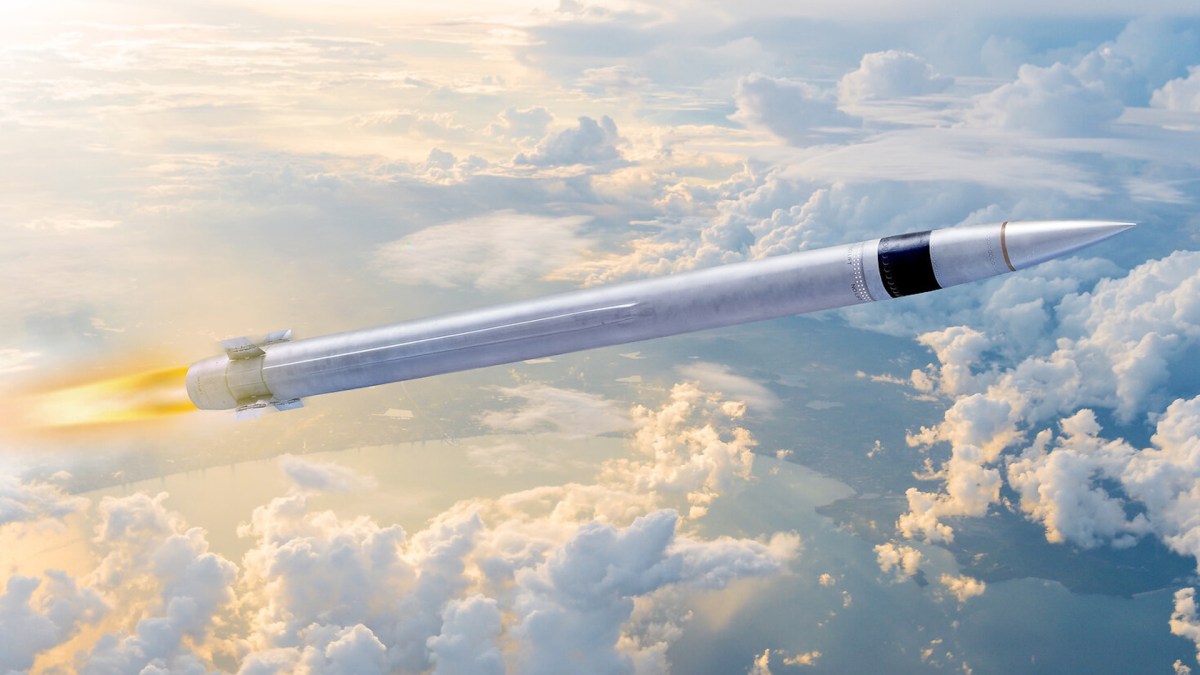
Lockheed Martin has unveiled the PAC-3 Edge, a new interceptor that would represent the top tier of the U.S. Army’s Patriot air defense missile family. The missile is being developed to deliver greater performance against advanced threats than the current PAC-3 Missile Segment Enhancement (MSE), as the Army advances a competition for its next-generation interceptor.
The PAC-3 Edge displayed at the Association of the U.S. Army’s (AUSA) main annual convention. Howard Altman
The company says PAC-3 Edge will offer improved performance against increasingly challenging aerial threats, including advanced ballistic and hypersonic missiles. The design builds on the PAC-3 MSE’s existing technology while incorporating a new seeker, an upgraded control system, and a more advanced solid rocket motor developed with Northrop Grumman.
In terms of appearance, PAC-3 Edge differs significantly from the PAC-3 MSE. It does away entirely with the mid-body strakes. The missile body also lacks the distinctive tapered section that separates the narrower forward section from the broader rear section on the MSE version.
An overview of the improvements found on the PAC-3 MSE variant over its predecessors. Lockheed Martin
Lockheed announced on October 9 that it had been selected to advance to the next phase of the Army’s Future Interceptor program. Company officials said testing is expected to begin in 2027, with initial deployment targeted for 2031.
The Army’s selection of Lockheed and another unnamed competitor marks a significant development in the service’s effort to improve the Patriot system’s ability to deal with more sophisticated threats. The Army previously abandoned its Lower-Tier Future Interceptor (LTFI) program in 2024, citing cost concerns, and instead emphasized incremental improvements to the existing PAC-3 MSE. The subsequent emergence of the Future Interceptor competition points to renewed interest in a more substantial leap in capability.
A PAC-3 interceptor seen at the moment of launch. U.S. Department of Defense
A More Capable Patriot Interceptor
PAC-3 Edge is intended to preserve the advantages of the existing PAC-3 family while improving the missile’s ability to engage targets at longer ranges and higher altitudes.
One of the central changes is a new seeker being developed by Lockheed Martin’s Strigo Product Center. The company says the technology will improve target detection and tracking, helping the interceptor deal with more demanding threats. The company has not disclosed the seeker’s technical details, but one possibility is a dual-mode or multimode configuration , combining different sensing methods to improve target acquisition and tracking in challenging conditions. Such an approach could help an interceptor maintain a reliable track against maneuvering targets and better distinguish real threats from decoys or other countermeasures.
Tim Cahill, president of Missiles and Fire Control (MFC) for Lockheed Martin, told TWZ that the same seeker technology that will be used in PAC-3 Edge will also find its way into future offensive and defensive systems going into the future. “So it isn’t just a one single seeker solution, but it will be a family of seekers that will operate across a number of regimes,” Martin explained. “Frankly, I’d like to not tell everybody exactly what we’re doing, but it is it is clearly different from what is out there right now, ” Martin said, adding that hardware assemblies and components are now being tested in the lab, and that seekers have been flown on aircraft testbeds.
The missile will also use a three-pulse (as opposed to two-pulse) solid rocket motor designed by Northrop Grumman. Unlike a conventional motor that provides most of its thrust in a single sustained burn, a multi-pulse design can deliver thrust at different points during flight. That can help preserve energy for the terminal engagement, when an interceptor may need to maneuver aggressively to reach a target.
Lockheed says the combination of the new seeker, propulsion system, and control system improvements will provide greater maneuverability and improve performance at extended ranges and higher altitudes. To ensure greater agility, Jason Reynolds, vice president and general manager of Integrated Air and Missile Defense (IAMD) at Lockheed Martin, explained that the new missile adds a greater number of more capable attitude control motors (ACMs), compared to the PAC-3 MSE. These small thrusters ring the missile’s forward body.
The new characteristics could be particularly important against maneuvering ballistic missile warheads and hypersonic weapons, which can pose difficult interception problems because of their speed, altitude and dynamic flight profiles. However, the company has yet to demonstrate PAC-3 Edge’s performance in flight testing.
The extent to which PAC-3 Edge could overlap with, or potentially augment, the capabilities of the Army’s Terminal High Altitude Area Defense (THAAD) system also remains unclear. THAAD is designed to intercept ballistic missiles at higher altitudes and longer ranges than Patriot, where midcourse window bleeds into the terminal intercept window. If PAC-3 Edge delivers a substantial improvement in engagement range and altitude over PAC-3 MSE, it could potentially provide at least some backfill for THAAD.
The announcement did not provide detailed performance figures for the new interceptor, including its maximum engagement range, speed, or specific target set. It also did not establish how much better the missile will perform than the PAC-3 MSE in operational conditions.
Addressing An Air Defense Force Under Pressure
The Army has a pressing need to improve its air and missile defense capabilities while expanding the number of interceptors available to its forces.
TWZ has been reporting on the strain facing the Patriot force and its interceptor supply for years. In July 2025, we reported on the Army’s plan to expand its Patriot air defense force by roughly a quarter , adding four battalions as the service sought to meet growing operational demands. More recently, we have detailed the challenges of replenishing interceptors after intensive combat operations, including the scale of U.S. missile and drone engagements in the Middle East , as well as transfers to Ukraine .
Related to this, the push for a more capable Patriot interceptor comes as the system faces increasingly sophisticated threats and adversaries that have learned from years of combat. Russia has improved its ballistic missile tactics to pierce the Patriot’s protective umbrella, while Iran has demonstrated ways to exploit gaps in layered missile defenses, including introducing extremely high-speed ballistic missiles and cluster warhead that open at high altitude.
A Patriot system received by Ukraine is seen on the Day of Ukrainian Air Force on August 4, 2024, at an unspecified airbase in Ukraine. Photo by Vitalii Nosach/Global Images Ukraine via Getty Images VITALII NOSACH
PAC-3 MSE is currently the most advanced operational member of the PAC-3 family. It is designed primarily as a hit-to-kill interceptor, destroying targets through the force of direct impact, but it also incorporates a small explosive charge known as a “lethality enhancer,” as TWZ has previously detailed .
PAC-3 Edge is intended to push those capabilities further still. Lockheed says the new missile is being designed to work within the Army’s existing and future integrated air and missile defense architecture, including the Integrated Battle Command System (IBCS) and the M903 Patriot launcher. The company has also identified containerized launchers and HIMARS Flex among the systems with which it intends to integrate the interceptor.
A graphic showing various load configurations for the M903 launcher, as compared to the previous M901 and M902 launchers. Lockheed Martin
Such compatibility could allow the service to retain much of its existing infrastructure while improving the performance of the weapons used within it.
The precise extent of that compatibility, however, will depend on development, testing, and integration work that remains ahead.
Lockheed is developing PAC-3 Edge as the company and the Pentagon work to expand production of the existing PAC-3 MSE.
In January, Lockheed Martin announced a seven-year agreement with the Pentagon to more than triple annual PAC-3 MSE production capacity , initially targeting an increase from roughly 600 interceptors to 2,000 a year. The effort subsequently received a major funding boost in July, when the U.S. government awarded Lockheed a contract modification worth up to $53.86 billion, bringing the total multiyear contract value to $58.62 billion. Lockheed says the effort is intended to more than triple production by the end of 2030, while expanding its workforce and investing in manufacturing infrastructure and its supply chain.
Those efforts could provide a foundation for producing PAC-3 Edge if the missile completes development and enters service. Lockheed has said the new interceptor will be manufactured on its existing PAC-3 production line in Camden , Arkansas, with factory modernization expected to support the eventual transition.
PAC-3 MSE in production in Camden, Arkansas. Lockheed Martin
The company has also highlighted substantial internal investment in the new missile and its seeker technology. That investment could reduce development risk and give Lockheed greater control over critical components, although the program’s final cost and production schedule remain important unknowns.
The broader challenge is not simply developing an interceptor with better performance. Advanced missiles can be expensive, and air defense forces must balance the capabilities of individual weapons against the number they can afford to procure and keep available. Sustained combat operations can rapidly consume interceptor inventories, making production rates and replacement costs central considerations.
Tim Cahill says the company has also identified the opportunity to mix and match components between PAC-3 Edge and other missile offerings from Lockheed Martin. “We are getting increasingly modular, and increasingly we’re mixing and matching pieces and parts,” he said.
Ultimately, if it chooses PAC-3 Edge, the U.S. government will decide exactly how to handle production of the PAC-3 MSE and the new missiles. “We would expect the typical thing is you’ll feather them, so you would expect that over time MSEs would come down,” Cahill continued. “We’re still talking, seven, eight, nine, 10 years away. You would expect that the Edge production would go up, but there’s plenty of capacity in the factory to manage whatever surges are going to be needed there.”
At the same time, it should be noted that Lockheed Martin is also working on a lower-cost PAC-3 development, the PAC-3 Adapted Capability Effector (ACE). The company says that this interceptor will cost less than half as much as the PAC-3 MSE, meaning it would have a price tag of around $2.5 million. The company says that the PAC-3 ACE will preserve two-thirds of the capability of the the PAC-3 MSE had says it has already generated considerable international interest.
A rendering of the PAC-3 Adapted Capability Effector (ACE). Lockheed Martin
Future Interceptor Competition
Lockheed has confirmed that it is one of two companies selected to continue in the Army’s Future Interceptor competition. The identity of the other competitor has not yet been disclosed, and the Army has not publicly provided a complete account of the competition’s requirements.
The effort follows the cancellation of the earlier Lower-Tier Future Interceptor (LTFI) program, which had involved Lockheed Martin and Raytheon. At the time, the Army opted to focus on upgrades to the PAC-3 MSE and on better integration of its existing air and missile defense systems.
❗Gen Lozano, PEO Missiles & Space, tells @JenJudson that they have cancelled the Lower Tier Future Interceptor program, which would have succeeded the PAC-3 MSE. Instead they will upgrade MSE, and want to move forward with THAAD integration into IBCS. #AUSA2024 pic.twitter.com/NZMPgDH4KP — Colby Badhwar (@ColbyBadhwar) October 15, 2024
❗Gen Lozano, PEO Missiles & Space, tells @JenJudson that they have cancelled the Lower Tier Future Interceptor program, which would have succeeded the PAC-3 MSE. Instead they will upgrade MSE, and want to move forward with THAAD integration into IBCS. #AUSA2024 pic.twitter.com/NZMPgDH4KP
The renewed competition suggests that incremental upgrades alone may not be sufficient to address the Army’s longer-term requirements. The development of faster, more maneuverable missiles and other advanced aerial threats is driving demand for interceptors capable of operating across a wider engagement envelope.
For PAC-3 Edge, which is designed to meet theat requirement, planned 2027 testing start and 2031 deployment target leave substantial development work to complete, including demonstrating the seeker’s performance, validating the propulsion system, and proving the missile’s ability to engage representative targets.
For now, the unveiling establishes the direction Lockheed wants to take the Patriot interceptor family. Whether PAC-3 Edge can deliver the promised increase in performance, while meeting the Army’s cost and production requirements, will become clearer as the program progresses. Regardless, from what is being experienced on the battlefield, a more capable, higher-reaching Patriot would be a very welcome addition to the Army’s Patriot family.
Contact the author: thomas@thewarzone.com
Comments couldn’t be loaded. Please refresh the page.
发布于美国东部时间2026年10月12日下午4:49
洛克希德·马丁公司发布了PAC-3 Edge新型拦截导弹,该导弹将成为美国陆军“爱国者”防空导弹家族的顶级产品。随着陆军推进下一代拦截导弹的竞标,PAC-3 Edge的研发旨在比现有的PAC-3导弹段增强型(MSE)更有效地应对先进威胁。
PAC-3 Edge 在美国陆军协会 (AUSA) 年度大会上展出。霍华德·奥特曼
该公司表示,PAC-3 Edge导弹将具备更优异的性能,能够有效应对日益严峻的空中威胁,包括先进的弹道导弹和高超音速导弹。该导弹的设计基于PAC-3 MSE的现有技术,并融合了新型导引头、升级的控制系统以及与诺斯罗普·格鲁曼公司联合开发的更先进的固体火箭发动机。
外观上,PAC-3 Edge 与 PAC-3 MSE 有显著区别。它完全取消了中部翼片,导弹弹体也缺少 MSE 版本上将较窄的前部与较宽的后部分隔开来的独特锥形部分。
本文概述了PAC-3 MSE改进型相较于其前代产品所取得的改进。洛克希德·马丁公司
洛克希德·马丁公司于10月9日宣布,其产品已被选中进入陆军未来拦截机项目的下一阶段。公司官员表示,测试预计将于2027年开始,初步部署目标是在2031年。
陆军选择洛克希德·马丁公司和另一家未具名的竞争对手,标志着陆军在提升“爱国者”导弹系统应对更复杂威胁的能力方面取得了重大进展。此前,陆军曾以成本为由,于2024年放弃了低级未来拦截器(LTFI)项目,转而着重改进现有的PAC-3 MSE导弹系统。如今,未来拦截器竞标的出现表明,陆军对大幅提升导弹系统能力的兴趣再次高涨。
一枚PAC-3拦截弹发射瞬间的影像。美国国防部
更强大的爱国者拦截器
PAC-3 Edge 旨在保留现有 PAC-3 系列的优势,同时提高导弹在更远距离和更高高度打击目标的能力。
其中一项核心改进是洛克希德·马丁公司Strigo产品中心正在研发的新型导引头。该公司表示,这项技术将提升目标探测和跟踪能力,帮助拦截器应对更复杂的威胁。该公司尚未披露该导引头的具体技术细节,但一种可能性是采用双模或多模配置,结合不同的传感方法,以增强在复杂环境下的目标捕获和跟踪能力。这种方法有助于拦截器在面对机动目标时保持可靠的跟踪,并更好地区分真实威胁与诱饵或其他对抗措施。
洛克希德·马丁公司导弹与火控(MFC)总裁蒂姆·卡希尔告诉TWZ,PAC-3 Edge导弹将采用的导引头技术也将应用于未来的进攻和防御系统。“所以这不仅仅是一种单一的导引头解决方案,而是一个可在多种作战环境下运行的导引头系列,”卡希尔解释道。“坦白说,我不想透露太多细节,但它显然与目前市面上的产品截然不同,”卡希尔说道。他还补充说,硬件组件和部件目前正在实验室进行测试,导引头也已在飞机试验台上进行了飞行测试。
该导弹还将采用诺斯罗普·格鲁曼公司设计的三脉冲(而非两脉冲)固体火箭发动机。与传统发动机在一次持续燃烧中提供大部分推力不同,多脉冲设计可以在飞行过程中的不同阶段提供推力。这有助于为末段拦截保存能量,因为拦截器在末段拦截时可能需要进行大幅度机动才能击中目标。
洛克希德·马丁公司表示,新型导引头、推进系统和控制系统的改进相结合,将显著提升导弹的机动性,并改善其在更远射程和更高飞行高度下的性能。洛克希德·马丁公司综合防空反导(IAMD)副总裁兼总经理杰森·雷诺兹解释说,为了确保更高的灵活性,与PAC-3 MSE导弹相比,新型导弹增加了更多性能更强大的姿态控制发动机(ACM)。这些小型推进器环绕导弹的前部弹体。
这些新特性对于拦截机动弹道导弹弹头和高超音速武器尤为重要,因为这些武器由于其速度、高度和动态飞行特性,会造成难以拦截的难题。然而,该公司尚未在飞行测试中验证PAC-3 Edge的性能。
PAC-3 Edge系统与陆军末段高空区域防御系统(THAAD)的能力重叠程度,或者说能否增强THAAD系统的能力,目前尚不明确。THAAD系统旨在拦截比“爱国者”导弹系统更高空、更远距离的弹道导弹,其拦截窗口与“爱国者”导弹系统的末段拦截窗口存在重叠。如果PAC-3 Edge系统在拦截距离和拦截高度方面比PAC-3 MSE系统有显著提升,则有可能至少在一定程度上弥补THAAD系统的部分功能不足。
公告并未提供新型拦截导弹的详细性能数据,包括最大交战距离、速度或具体目标类型。公告也未说明该导弹在实际作战条件下比PAC-3 MSE导弹的性能提升幅度。
应对压力下的防空部队
陆军迫切需要提高其防空和导弹防御能力,同时增加部队可用的拦截器数量。
多年来,TWZ 一直关注着“爱国者”导弹系统及其拦截器补给所面临的压力。2025 年 7 月,我们报道了陆军计划将其“爱国者”防空导弹系统扩充约四分之一,新增四个营,以满足日益增长的作战需求。最近,我们详细报道了在激烈的作战行动后补充拦截器所面临的挑战,包括美国在中东地区大规模的导弹和无人机作战行动,以及向乌克兰的导弹转移。
与此同时,由于“爱国者”导弹防御系统面临着日益复杂的威胁,对手也从多年的实战中吸取了经验教训,因此,研发性能更强大的“爱国者”拦截导弹势在必行。俄罗斯改进了弹道导弹战术,以突破“爱国者”导弹的防御屏障;而伊朗则展示了如何利用多层导弹防御系统的漏洞,包括发射超高速弹道导弹和高空开火的集束弹头。
2024年8月4日,乌克兰空军日当天,在乌克兰某未公开的空军基地,可以看到乌克兰接收的一套“爱国者”导弹系统。照片由Vitalii Nosach/Global Images Ukraine通过Getty Images提供。
PAC-3 MSE 是目前 PAC-3 系列中最先进的现役成员。它主要设计为直接撞击摧毁目标的拦截弹,但正如 TWZ 此前详细介绍的那样,它也包含一个被称为“杀伤力增强器”的小型爆炸装药。
PAC-3 Edge旨在进一步提升这些能力。洛克希德·马丁公司表示,这款新型导弹的设计旨在与陆军现有及未来的一体化防空反导体系兼容,包括一体化作战指挥系统(IBCS)和M903“爱国者”导弹发射系统。该公司还确定了集装箱式发射系统和HIMARS Flex系统,并计划将该拦截导弹与之集成。
图示展示了M903发射器与之前的M901和M902发射器相比的各种装载配置。洛克希德·马丁公司
这种兼容性可以让该服务保留其大部分现有基础设施,同时提高其中使用的武器的性能。
然而,这种兼容性的具体程度将取决于后续的开发、测试和集成工作。
洛克希德公司正在开发 PAC-3 Edge,同时该公司和五角大楼也在努力扩大现有 PAC-3 MSE 的生产。
今年1月,洛克希德·马丁公司宣布与五角大楼达成一项为期七年的协议,旨在将PAC-3 MSE拦截弹的年产能提高三倍以上,最初目标是从每年约600枚拦截弹增至2000枚。随后,该项目在7月获得了巨额资金支持,美国政府授予洛克希德·马丁公司一份价值高达538.6亿美元的合同修订,使这份多年期合同的总价值达到586.2亿美元。洛克希德·马丁公司表示,该项目计划到2030年底将产量提高三倍以上,同时扩大员工队伍,并投资于制造基础设施和供应链。
如果PAC-3 Edge导弹完成研发并投入使用,这些努力将为其生产奠定基础。洛克希德公司表示,新型拦截导弹将在其位于阿肯色州卡姆登的现有PAC-3生产线上生产,预计工厂现代化改造将支持最终的过渡。
PAC-3 MSE正在阿肯色州卡姆登市生产。洛克希德·马丁公司
该公司还强调,已对新型导弹及其导引头技术进行了大量内部投资。这些投资有望降低研发风险,并使洛克希德公司对关键部件拥有更大的控制权,尽管该项目的最终成本和生产进度仍存在诸多未知数。
更广泛的挑战并非仅仅在于研发性能更优的拦截弹。先进导弹造价昂贵,防空部队必须权衡单枚武器的性能与自身能够负担得起的采购和维护数量。持续的作战行动会迅速消耗拦截弹库存,因此生产速度和更换成本成为至关重要的考量因素。
蒂姆·卡希尔表示,公司还发现了将PAC-3 Edge导弹与洛克希德·马丁公司其他导弹产品中的组件进行混搭的机会。“我们的模块化程度越来越高,我们也越来越多地采用混搭不同的部件,”他说道。
最终,如果美国政府选择PAC-3 Edge导弹系统,将决定如何具体处理PAC-3 MSE导弹和新型导弹的生产。“我们预计通常会逐步降低导弹的重量,所以随着时间的推移,MSE导弹的产量也会下降,”卡希尔继续说道。“我们仍在讨论,这还只是七八九年甚至十年的时间。预计Edge导弹的产量将会增加,但工厂的产能充足,足以应对任何所需的产量激增。”
与此同时,值得注意的是,洛克希德·马丁公司也在研发一种成本更低的PAC-3改进型拦截器——PAC-3适应性能力效应器(ACE)。该公司表示,这种拦截器的成本将不到PAC-3 MSE的一半,这意味着其售价约为250万美元。该公司还表示,PAC-3 ACE将保留PAC-3 MSE三分之二的性能,并且已经引起了国际社会的广泛关注。
PAC-3 适应性能力效应器 (ACE) 的效果图。洛克希德·马丁公司
未来拦截器竞赛
洛克希德公司已确认,它是入选陆军未来拦截机竞标的两家公司之一。另一家竞标公司的身份尚未公布,陆军也未公开竞标要求的完整信息。
此前,由洛克希德·马丁公司和雷神公司参与的低层未来拦截器(LTFI)项目被取消,陆军随即启动了这项计划。当时,陆军选择将重点放在PAC-3 MSE的升级以及现有防空和导弹防御系统的更好整合上。
❗导弹与航天项目执行办公室(PEO Missiles & Space)的洛萨诺将军告诉@JenJudson,他们已经取消了低层未来拦截器(Lower Tier Future Interceptor)项目,该项目原本将取代PAC-3 MSE。取而代之的是,他们将升级MSE,并希望推进THAAD系统与IBCS的整合。#AUSA2024 pic.twitter.com/NZMPgDH4KP — Colby Badhwar (@ColbyBadhwar) October 15, 2024
美国国防部导弹与航天项目执行办公室(PEO Missiles & Space)的洛萨诺将军告诉@JenJudson,他们已经取消了原计划取代PAC-3 MSE的低层未来拦截器(Lower Tier Future Interceptor)项目。取而代之的是,他们将升级MSE,并希望推进THAAD系统与IBCS的整合。#AUSA2024 pic.twitter.com/NZMPgDH4KP
重新出现的竞争表明,仅靠渐进式升级可能不足以满足陆军的长期需求。速度更快、机动性更强的导弹和其他先进空中威胁的出现,正在推动对能够在更广泛交战范围内作战的拦截器的需求。
PAC-3 Edge 的设计旨在满足该要求,计划于 2027 年开始测试,并于 2031 年部署,但仍有大量的研发工作需要完成,包括验证导引头的性能、验证推进系统以及证明导弹打击代表性目标的能力。
目前来看,此次发布确立了洛克希德·马丁公司希望“爱国者”拦截导弹家族的发展方向。PAC-3 Edge能否在满足陆军成本和生产要求的同时,实现预期的性能提升,将随着项目的推进而逐渐明朗。无论如何,从战场上的经验来看,一款性能更强、射程更远的“爱国者”导弹无疑将是对陆军“爱国者”导弹家族的极大补充。
联系作者:thomas@thewarzone.com
评论加载失败,请刷新页面。