Mojave STOL and Gray Eagle® 25M: Complementary capabilities for the modern battlefield莫哈韦短距起降飞机和灰鹰® 25M:现代战场上的互补能力
Discover how GA-ASI’s Gray Eagle 25M and Mojave STOL provide complementary capabilities for Army operations in contested environments, from persistent surveillance to runway-independent access.
新闻视频
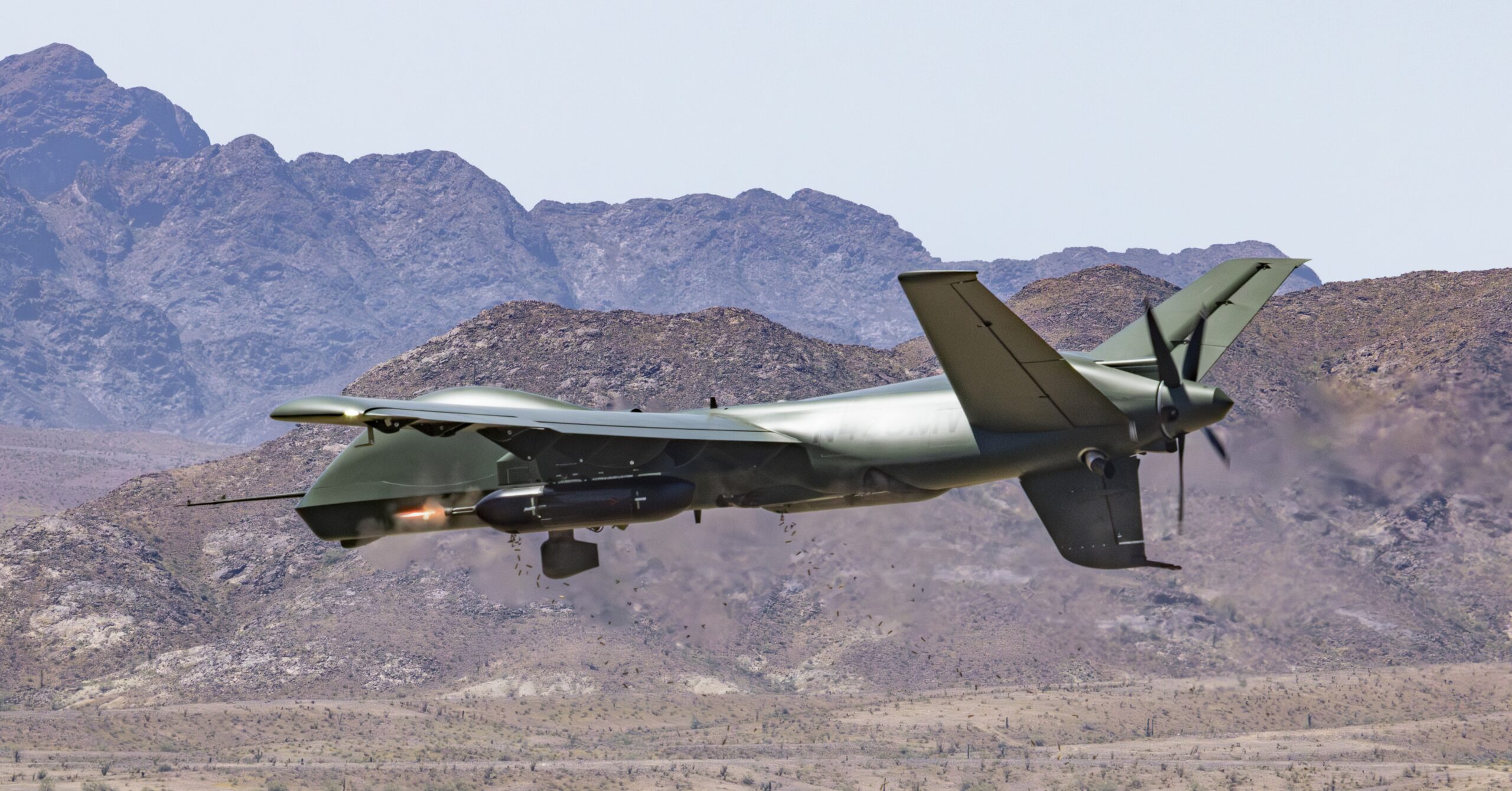
GA-ASI’s Mojave STOL supports airfields without airports, allowing soldiers to find, track, and eliminate adversaries using improvised launch and recovery sites.
A new, more challenging operational environment means the U.S. Army must field platforms that generate strategic advantages while conducting missions from the tactical edge.
Today’s battlefield is contested across all domains. The proliferation of low-cost, effective systems, as well as high-tech munitions, long-range missiles, and advanced air defenses, means platforms must operate effectively in denied conditions without imposing unsustainable costs or maintenance demands.
General Atomics Aeronautical Systems, Inc. (GA-ASI) offers two aircraft tailored to the Army’s need to operate in this threat environment, with the flexibility to adapt as those needs evolve: the Mojave Short Takeoff and Landing (STOL) aircraft and the Gray Eagle® 25M .
Although the aircraft share elements of the Gray Eagle family, they are optimized for different operational challenges.
Mojave STOL is designed to deliver expeditionary access from austere locations, while Gray Eagle 25M offers the endurance and range necessary for the Pacific theater, along with the payload capacity to support the Army’s multi-domain operations concept.
Bringing Aviation Closer to the Mission
Mojave STOL is designed for missions where runways are undesirable, unavailable, damaged, or vulnerable. Its STOL capability enables operations from unimproved surfaces, including roads and dirt tracks, as well as from amphibious vessels.
Runway independence expands commanders’ options in remote or contested areas. The aircraft can operate closer to distributed forces, take on fuel and munitions at austere locations, and return to the fight without relying on airfield infrastructure.
This approach reflects an enduring operational lesson: in demanding environments, rugged, reliable, and plentiful platforms can provide an advantage over systems that are more complex, expensive, or difficult to maintain.
Mojave STOL provides options for overwhelming mass at the right time and place while retaining key sensor and payload capabilities and supporting long-range, persistent mission profiles.
While modern electric and vertical-lift concepts offer tactical flexibility, their high unit costs, mechanical complexity, undetermined supply chain security, and maintenance burdens present challenges for sustained expeditionary operations driving cost, manpower, and risk.
Mojave STOL is built around a straightforward, time-tested aircraft, a proven design, and an established production and sustainment philosophy, enabling the flexibility to move with expeditionary forces while avoiding complex infrastructure demands.
Its ability to operate from smaller naval vessels also creates potential applications for maritime, contested logistics, and special operations missions.
Modernizing Gray Eagle for Contested Operations
Gray Eagle 25M is an extensively modernized version of the MQ-1C Gray Eagle, designed to support long-endurance missions in complex threat environments. Its roles include persistent, real-time threat detection/identification and support for long-range targeting operations.
A central feature of the aircraft is its Modular Open Systems Approach (MOSA) architecture.
MOSA uses defined interfaces and modular components to help integrate new technologies more quickly and affordably. This open architecture approach is intended to help the Army respond to changing threats while reducing the time and cost associated with future upgrades.
Another significant improvement comes in the form of the expeditionary laptop-based ground control station and ground support equipment. This portable system eliminates the need for large, containerized GCS satellite systems, transport vehicles, and ground support equipment, reducing equipment weight by 130,000 pounds per platoon.
Combined with the new, more powerful turbo-diesel Heavy Fuel Engine (HFE) 2.0, these improvements reduce field service representative and soldier workload while increasing maintenance-free operational periods, with a sustainment cost savings of roughly $200 million annually.
Gray Eagle 25M delivers critical RSTA capabilities for a decisive battlefield advantage.
The EagleEye® multi-mode radar , for example, is designed to provide substantially greater range than legacy systems, with an increase of up to five times.
Together, these capabilities support Gray Eagle 25M’s mission to maintain persistent awareness and contribute to decision-making in high-threat environments.
Complementary Aircraft for the Army
The two aircraft offer the Army a complementary range of capabilities.
Mojave STOL is optimized for expeditionary access, operational flexibility, and runway-independent operations in regions such as the Indo-Pacific, where forces cannot count on reliable access to paved runways.
Gray Eagle 25M is optimized for endurance, sensing, processing, and survivability in contested environments. Its advanced sensor suite, combined with tactics refined through millions of hours of combat operations by Gray Eagle and other GA-ASI aircraft, enables the platform to operate over long distances and remain effective in high-threat conditions.
Both aircraft are designed to evolve as threats and mission requirements change.
Gray Eagle 25M and Mojave’s open architecture support the integration of new capabilities, helping maintain relevance across different areas of operation. What’s more, they cover the full breadth of conflict, from peacetime to large-scale combat operations, with adaptable, responsive, critical capability.
Mojave STOL can likewise accommodate expanded payload options, including electronic warfare systems and air-launched effects.
Investing in Scalable Capability
Mojave STOL conducts short-field operations from a rough maneuver trail during a demonstration with Hanwha Aerospace in South Korea on September 16, 2026.
GA-ASI has made manufacturing and engineering investments intended to support continued modernization and larger-scale production.
Collaboration with Hanwha Aerospace is expanding production facilities and research and development activities, helping create the infrastructure needed to support scalable output.
The partnership is aimed at advancing Mojave STOL’s capabilities while supporting more affordable production. That means the Army will not necessarily have to choose between capability and mass.
In addition, GA-ASI’s existing millions of square feet of manufacturing infrastructure, skilled in-house workforce, and available capacity position the company to begin building and delivering aircraft today.
By choosing Gray Eagle 25M and Mojave STOL, the Army would be investing in mature, adaptable capabilities designed for rapid delivery and scalable employment.
Visitors to GA-ASI’s Booth 6619 at the Association of the United States Army’s Annual Meeting and Exposition can discuss with experts how these systems are prepared to support Army operations in today’s high-threat environments and adapt to the challenges ahead.
通用航空系统公司 (GA-ASI) 的 Mojave STOL 飞机支持没有机场的简易机场,使士兵能够利用临时起降点发现、追踪和消灭敌人。
新的、更具挑战性的作战环境意味着美国陆军必须部署能够在战术前沿执行任务的同时产生战略优势的平台。
当今战场竞争已遍及所有领域。低成本、高效系统以及高科技弹药、远程导弹和先进防空系统的扩散,意味着作战平台必须在敌方控制条件下有效作战,同时还要避免造成不可持续的成本或维护需求。
通用原子航空系统公司 (GA-ASI) 提供两款专为满足陆军在这种威胁环境下作战需求而量身定制的飞机,并可随着需求的演变而灵活调整:莫哈韦短距起降 (STOL) 飞机和灰鹰® 25M。
虽然这些飞机与灰鹰系列飞机有一些共同之处,但它们针对不同的作战挑战进行了优化。
Mojave STOL 的设计目的是从条件艰苦的地点提供远征通道,而 Gray Eagle 25M 则提供了太平洋战区所需的续航能力和航程,以及支持陆军多域作战概念的有效载荷能力。
让航空更贴近使命
莫哈韦短距起降飞机专为跑道不适宜、无法使用、损坏或易受攻击的场景而设计。其短距起降能力使其能够在包括公路、土路在内的简易地面以及两栖舰艇上起降。
跑道独立性扩大了指挥官在偏远或冲突地区的作战选择。飞机可以更靠近分散部署的部队作战,在条件简陋的地点补充燃料和弹药,并在不依赖机场基础设施的情况下重返战场。
这种方法反映了一个长期有效的操作经验:在严苛的环境中,坚固、可靠且数量充足的平台比那些更复杂、更昂贵或更难以维护的系统更具优势。
Mojave STOL 可在合适的时间和地点提供压倒性的质量选择,同时保持关键的传感器和有效载荷能力,并支持远程、持久的任务剖面。
虽然现代电动和垂直升降概念提供了战术灵活性,但其高昂的单位成本、机械复杂性、不确定的供应链安全性和维护负担给持续的远征行动带来了挑战,从而增加了成本、人力和风险。
Mojave STOL 飞机以简单、久经考验的飞机、成熟的设计以及成熟的生产和维护理念为基础,使其能够灵活地随远征部队移动,同时避免复杂的基建需求。
它在小型海军舰艇上进行操作的能力也为海上作战、对抗性后勤保障和特种作战任务创造了潜在的应用前景。
为对抗作战升级“灰鹰”导弹
灰鹰25M是MQ-1C灰鹰无人机的现代化升级版,旨在支持在复杂威胁环境下执行长时间任务。其任务包括持续、实时地探测/识别威胁,以及支持远程目标打击行动。
该飞机的核心特点是其模块化开放系统方法(MOSA)架构。
MOSA采用预定义的接口和模块化组件,旨在更快、更经济地集成新技术。这种开放式架构方法旨在帮助陆军应对不断变化的威胁,同时减少未来升级所需的时间和成本。
另一项重大改进体现在基于笔记本电脑的远征地面控制站和地面保障设备上。这套便携式系统无需大型集装箱式地面控制站卫星系统、运输车辆和地面保障设备,每个排可减轻13万磅的装备重量。
结合新型、更强大的涡轮柴油重燃料发动机 (HFE) 2.0,这些改进减少了现场服务代表和士兵的工作量,同时增加了免维护运行时间,每年可节省约 2 亿美元的维护成本。
Gray Eagle 25M 提供关键的 RSTA 能力,从而在战场上取得决定性优势。
例如,EagleEye® 多模式雷达的设计旨在提供比传统系统大得多的探测距离,探测距离最多可提高五倍。
这些能力共同支持 Gray Eagle 25M 执行其在高度威胁环境中保持持续感知和为决策做出贡献的任务。
陆军的补充飞机
这两款飞机为陆军提供了互补的能力。
Mojave STOL 针对远征准入、作战灵活性以及在印太地区等部队无法依赖可靠铺设跑道的地区开展的无需跑道的作战行动进行了优化。
Gray Eagle 25M 针对在对抗环境中的续航能力、传感能力、处理能力和生存能力进行了优化。其先进的传感器套件,结合 Gray Eagle 和其他通用航空系统公司 (GA-ASI) 飞机在数百万小时的实战中不断完善的战术,使该平台能够在远距离作战,并在高威胁条件下保持高效运行。
这两款飞机都设计成能够随着威胁和任务需求的变化而不断改进。
Gray Eagle 25M 和 Mojave 的开放式架构支持新功能的集成,有助于在不同作战领域保持相关性。此外,它们能够覆盖从和平时期到大规模作战行动的整个冲突范围,提供适应性强、响应迅速且至关重要的能力。
Mojave STOL 还可以容纳扩展的有效载荷选项,包括电子战系统和空射效应物。
投资于可扩展能力
2026 年 9 月 16 日,Mojave STOL 在韩国与韩华航空航天公司进行演示时,从一条粗糙的机动轨迹上进行了短场起降作业。
GA-ASI 已进行制造和工程方面的投资,旨在支持持续的现代化和更大规模的生产。
与韩华航空航天公司的合作正在扩大生产设施和研发活动,有助于建立支持可扩展产量的必要基础设施。
此次合作旨在提升莫哈韦短距起降飞机的性能,同时降低生产成本。这意味着陆军不必在性能和数量之间做出取舍。
此外,GA-ASI 现有的数百万平方英尺的制造基础设施、技术娴熟的内部员工队伍以及可用产能,使该公司能够立即开始制造和交付飞机。
通过选择 Gray Eagle 25M 和 Mojave STOL,陆军将投资于成熟、适应性强的能力,这些能力旨在快速交付和可扩展部署。
参观美国陆军协会年会暨展览会 GA-ASI 展位 6619 的来宾可以与专家讨论这些系统如何为支持陆军在当今高威胁环境下的作战行动做好准备,并适应未来的挑战。