Amid unease in Europe, NATO SACEUR bullish on ‘block, blunt, break’ theory of victory在欧洲局势动荡不安之际,北约欧洲司令部仍对“封锁、钝击、突破”的取胜策略充满信心。
"I want others to know who might be thinking about doing harm against us, that we've got this, and that they better not take any shot at the alliance," said Gen. Alexus Grynkewich, who also serves as commander of United States European Command.
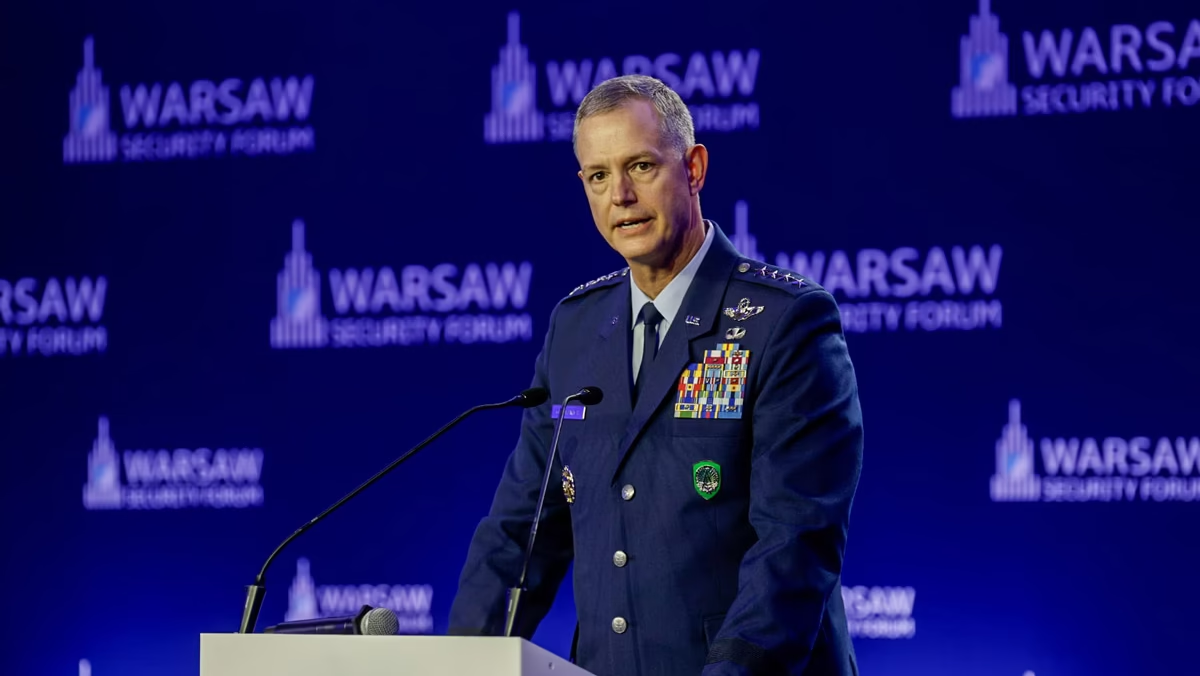
Gen. Alexus Grynkewich Supreme Allied Commander Europe, NATO, addresses the Warsaw Security Forum 2026 (Warsaw Security Forum)
BELFAST — Despite assuring an audience today that a conflict on NATO territory is neither “imminent or inevitable,” Gen. Alexus Grynkewich, the alliance’s Supreme Allied Commander Europe, outlined a strategic “theory of victory” and offered a warning to potential aggressors.
He told the Warsaw Security Forum that NATO’s aim is to deter adversaries, “but if someone is foolish enough to attack us, we will fight,” adding that “any attack against any ally” will end up “utterly futile.”
NATO is capable of carrying out this vision by implementing its “theory of victory,” a classified version of which was agreed upon by all 32 alliance members “about three months ago,” according to Grynkewich .
Grynkewich, who also serves as commander of United States European Command, did not say against whom, exactly, the alliance would fight, but the speech comes as European capitals have increasingly called out Russia for what they alleged are a string of sabotage cases across the continent. Grynkewich said the incidents were making allied populations “a bit nervous.”
“What I want to do is assure the one billion citizens of the alliance that we’ve got this. We know what we need to do,” he said.
Grynkewich warned, “I want others to know who might be thinking about doing harm against us, that we’ve got this, and that they better not take any shot at the alliance.”
The theory of victory is structured around blocking, blunting and breaking an enemy — beginning with stymieing an initial attack and preventing an enemy advance by weakening it. Drawing on the final part of the theory, said Grynkewich, “we will break the enemy’s forces and the operational warfighting system that is arrayed against us.”
Concentrating more on the warfighting elements to execute the new doctrine, he noted the “synchronized employment of multi-domain effects down to the tactical level” in order to “overwhelm enemy formations in contact.”
The end result would see enemy forces degraded to such an extent that they would be unable to continue an attack, explained Grynkewich.
“Across the alliance, we’re taking steps to operationalize this theory and maximize the readiness of our forces,” he made clear. “If attacked, we are ready to fight tonight.”
Grynkewich’s comments come as Polish Foreign Minister Radosław Sikorski warned today that NATO allies must be prepared to deal with a deadly Russian hybrid attack. Separately, when assessing the state of the Ukraine war, Grynkewich noted that the frontline has “largely stabilized” and that Russian long range attacks on Ukraine’s energy infrastructure, “probably” won’t break the will of the country’s civilian population.
Breaking Defense Video
New leaders, new drone command: What we expect from AUSA 2026
Unpacking Boeing’s F/A-XX win, plus a report from wartime Ukraine
How Hegseth envisions a new Autonomous Warfare Command
What Europe’s military air fleets will look like in 30 years
Riyadh gets closer to F-35s, Damascus presses sovereignty and an expert take on Iran
Drone-hunting on the border, plus turmoil at an Air Force think tank
The future of European airpower might be unmanned
The big news out of AFA, plus a guided tour of the show floor
Why the ‘right to repair’ matters to the Pentagon
What the Pentagon is testing along the US-Mexico border
北约欧洲盟军最高司令阿莱克西斯·格林克维奇将军在2026年华沙安全论坛上发表讲话(华沙安全论坛)
贝尔法斯特——尽管北约欧洲盟军最高司令亚历克西斯·格林克维奇将军今天向听众保证,在北约领土上发生冲突既“迫在眉睫”也不“不可避免”,但他还是概述了一项战略“胜利理论”,并向潜在的侵略者发出警告。
他在华沙安全论坛上表示,北约的目标是威慑对手,“但如果有人愚蠢到攻击我们,我们也会反击”,并补充说,“任何对盟友的攻击”最终都将“完全徒劳”。
格林克维奇表示,北约有能力通过实施其“胜利理论”来实现这一愿景,该理论的机密版本“大约三个月前”已由所有 32 个联盟成员国达成一致。
同时担任美国欧洲司令部司令的格林克维奇并未具体说明联盟将与哪个国家作战,但此次讲话正值欧洲各国首都越来越多地指责俄罗斯在欧洲大陆实施一系列破坏活动之际。格林克维奇表示,这些事件令盟国民众“有些不安”。
“我想向联盟的十亿公民保证,我们能做到。我们知道我们需要做什么,”他说。
格林克维奇警告说:“我想让那些可能想伤害我们的人知道,我们已经掌控了局面,他们最好不要对联盟下手。”
胜利理论的核心在于阻击、削弱和摧毁敌人——首先要挫败敌人的初期进攻,并通过削弱敌人来阻止其推进。格林克维奇说,根据该理论的最后一部分,“我们将摧毁敌人的力量以及他们为我们部署的作战体系。”
他更加注重执行新理论的作战要素,并指出“在战术层面同步运用多域效应”,以便“压倒接触中的敌军部队”。
格林克维奇解释说,最终结果是敌军实力被削弱到无法继续进攻的程度。
他明确表示:“在整个联盟范围内,我们正在采取措施将这一理论付诸实践,并最大限度地提高部队的战备水平。如果遭到攻击,我们今晚就做好了战斗准备。”
格林克维奇发表上述言论之际,波兰外长拉多斯瓦夫·西科尔斯基今日警告称,北约盟国必须做好准备应对俄罗斯可能发动的致命混合攻击。此外,格林克维奇在评估乌克兰战争局势时指出,前线“已基本稳定”,俄罗斯对乌克兰能源基础设施的远程攻击“可能”不会动摇乌克兰平民的意志。
突破性防御视频
新领导人,新无人机指挥部:我们对 AUSA 2026 的期待
深入剖析波音F/A-XX的竞标结果,以及来自战时乌克兰的报道
赫格塞斯设想的新型自主作战指挥部
30年后欧洲军用空军机队会是什么样子
利雅得距离F-35战机更近一步,大马士革强调主权,以及专家对伊朗的看法
边境无人机猎杀行动,以及空军智库的动荡
欧洲空军的未来或许在于无人化。
AFA展会最新动态,以及展会现场导览。
为什么“维修权”对五角大楼如此重要
五角大楼正在美墨边境测试什么?