Powerus unveils fully autonomous drone interceptorsPowerus推出全自动无人机拦截器
Once a threat is detected, the new Guardian 3 interceptors are immediately launched toward it. They strike using advanced AI and navigational systems.
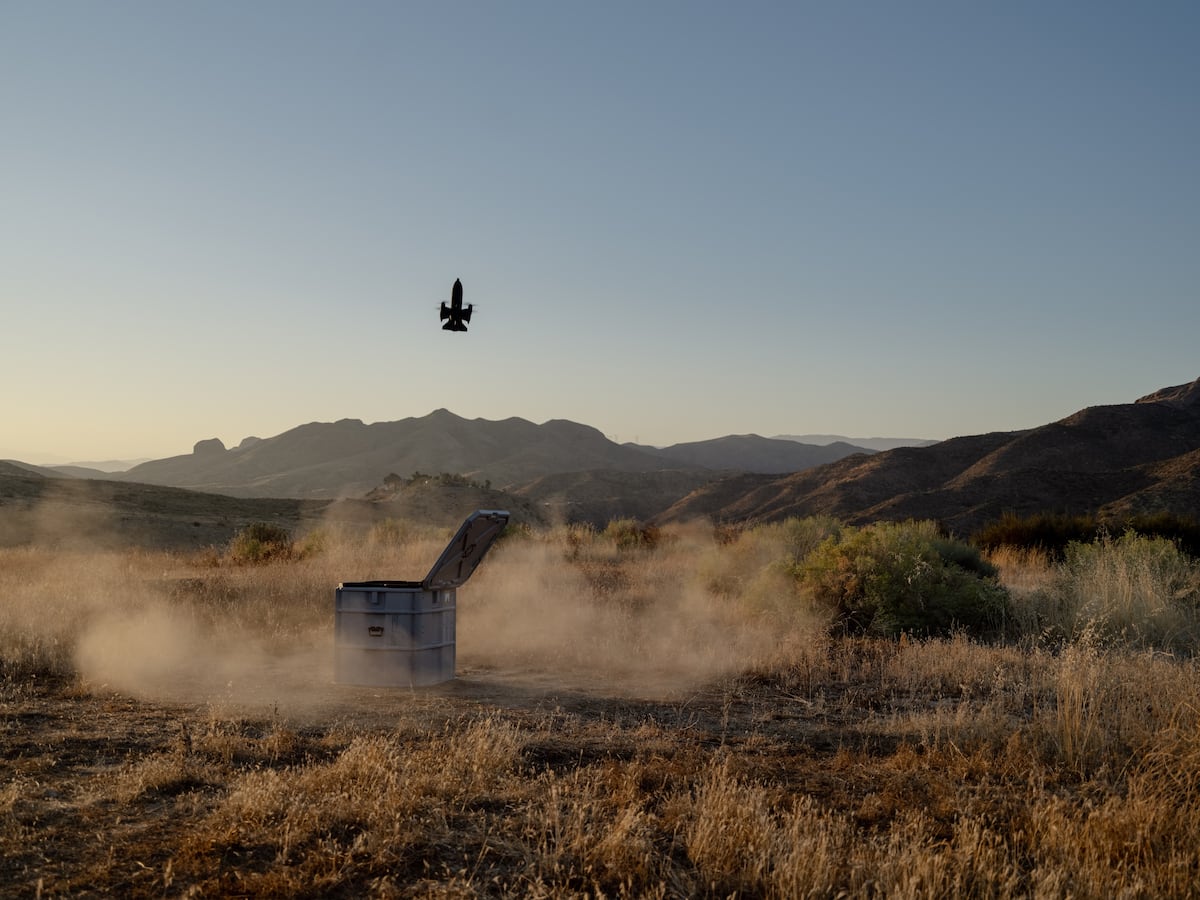
The South Carolina-based startup Powerus unveiled a fully autonomous version of its Guardian interceptor on Monday at the Association of the United States Army ’s annual meeting.
Brett Velicovich, the company’s president and co-founder, said in an interview with Military Times that logical product upgrades have been key to the company’s success. He explained how the company’s growth, the evolution of its interceptors and rising U.S. military demand for drone-defense systems amid the war in Iran have converged.
“You know, the U.S. government had a big problem at the beginning of the Iran war, when they sent a bunch of Ukrainian interceptors to the Middle East thinking that it was going to solve a problem,” he said.
According to analysis by the Congressional Budget Office, the U.S. used roughly two-thirds of its inventory of certain missile-defense interceptors by Aug. 1 to stop drones like Iran’s Shahed. Because rebuilding the supply could take years and cost billions, the government has sought quicker and cheaper solutions like those used in Ukraine, but implementing them hasn’t been easy.
“When you go to Ukraine, most of the interceptors, believe it or not, are manually controlled,” he said, explaining that Ukrainian operators are highly skilled at finding and stopping one-way attack drones in the air. “And that’s great for Ukraine, where you could probably throw a rock and hit a drone pilot.”
The problem with the government’s initial thinking, according to Velicovich, was that Ukraine has a “proper drone army,” as the country has “entire brigades that are pilots. So those guys have extreme combat experience in knowing how to take a drone and send it into another drone. In other countries, they don’t.”
With that understanding, Velicovich explained how Powerus provided the U.S. with the Guardian 1 — modeled after manually controlled Ukrainian drone interceptors — to the semi-autonomous Guardian 2, which, when paired with a radar to detect threats, will launch the interceptor in the direction of a drone.
“It’ll know the speed and the telemetry. It’ll launch it in that direction, but you still have to do that final phase of manual kill,” he said.
And finally, Powerus developed the fully autonomous Guardian 3. He explained that when the radar cues it, the system launches in the direction of the threat and can detect and strike using artificial intelligence and navigation systems.
“So you kind of take the human error out of it,” he said.
Velicovich credits this strategy, which he and his team derived from first-hand experience in the military and using drones in combat, to the company’s recent success.
In about one year, Powerus has transformed into a publicly traded company with a market capitalization of nearly $390 million. On Oct. 1, it completed a merger with Aureus Greenway Holdings Inc., a golf course holding company backed by the two eldest Trump sons .
As the U.S. government looks for ways to find low-cost drone interceptors, it’s also looking for low-cost missile interceptors. Power has partnered with the Netherlands-based defense company Destinus to help meet that challenge.
“Destinus brings this just overwhelming, incredible ownership of the technology,” Velicovich said, adding that Powerus will be its “business development channel in the U.S. to sell systems that otherwise had not really been sold here yet.”
He added that Powerus received the demand signal from the Pentagon and aims to deliver.
“We know you’d be crazy not to buy these products because of just how effective they are on the battlefield,” he said.
Daniel Terrill is a contributor to Military Times. He’s been reporting on military issues, the gun industry, and the outdoors for nearly two decades. Although writing is his passion, he’s been a Marine, police officer, and, perhaps the most dangerous job of his career, a substitute teacher.
总部位于南卡罗来纳州的初创公司 Powerus 于周一在美国陆军协会年会上发布了其 Guardian 拦截器的完全自主版本。
公司总裁兼联合创始人布雷特·维利科维奇在接受《军事时报》采访时表示,合理的产品升级是公司成功的关键。他解释说,公司的发展、拦截器的演进以及在伊朗战争期间美国军方对无人机防御系统日益增长的需求,三者是如何相互交织的。
“你知道,伊朗战争初期,美国政府遇到了一个大问题,他们向中东派遣了一批乌克兰拦截机,以为这样就能解决问题,”他说。
根据国会预算办公室的分析,截至8月1日,美国已动用约三分之二的导弹防御拦截器库存,用于拦截伊朗“沙赫德”等无人机。由于重建这批拦截器可能需要数年时间并耗资数十亿美元,美国政府一直在寻求更快捷、更经济的解决方案,例如在乌克兰使用的那些方案,但实施起来并非易事。
“信不信由你,在乌克兰,大多数拦截机都是人工操控的,”他解释说,乌克兰操作员非常擅长发现并拦截空中单向攻击无人机。“这对乌克兰来说太好了,因为在那里,你随便扔块石头都能砸到无人机飞行员。”
韦利科维奇认为,政府最初的想法存在问题,因为乌克兰拥有一支“正规的无人机部队”,该国拥有“整支飞行员旅。这些飞行员拥有丰富的实战经验,知道如何操控无人机并将其操控到另一架无人机上。其他国家则没有这样的经验。”
基于这种理解,韦利科维奇解释了 Powerus 如何向美国提供 Guardian 1(仿照手动控制的乌克兰无人机拦截器)和半自主的 Guardian 2,后者与用于探测威胁的雷达配合使用时,会将拦截器发射到无人机的方向。
“它会知道速度和遥测数据。它会朝那个方向发射,但你仍然需要进行最后的手动拦截阶段,”他说。
最后,鲍尔乌斯开发了完全自主的 Guardian 3。他解释说,当雷达发出信号时,该系统会朝着威胁方向发射,并能利用人工智能和导航系统进行探测和打击。
“这样就基本排除了人为错误的可能性,”他说。
Velicovich 将公司近期的成功归功于这一战略,该战略是他和他的团队从在军队中的亲身经历以及在战斗中使用无人机的经验中总结出来的。
短短一年左右的时间,Powerus 就转型成为一家市值近 3.9 亿美元的上市公司。10 月 1 日,该公司完成了与 Aureus Greenway Holdings Inc. 的合并,后者是一家高尔夫球场控股公司,由特朗普的两个长子支持。
美国政府在寻求低成本无人机拦截器的同时,也在寻找低成本导弹拦截器。为了应对这一挑战,鲍尔公司已与总部位于荷兰的国防公司Destinus建立了合作关系。
Velicovich 表示:“Destinus 对这项技术拥有压倒性的、令人难以置信的所有权。”他还补充说,Powerus 将成为其在美国的“业务发展渠道,销售此前尚未在美国销售过的系统”。
他还补充说,Powerus 已收到五角大楼的需求信号,并致力于满足该需求。
他说:“我们知道,鉴于这些产品在战场上的有效性,如果你不购买它们,那你就太傻了。”
丹尼尔·特里尔是《军事时报》的撰稿人。近二十年来,他一直报道军事问题、枪支行业和户外运动。虽然写作是他的挚爱,但他曾是一名海军陆战队员、一名警察,还做过一份或许是他职业生涯中最危险的工作——代课老师。